

A comprehensive B2B guide to export control compliance for carbon fiber products and raw materials, covering US BIS/EAR classification and licensing, Wassenaar Arrangement dual-use controls, EU and Chinese regulations, HS code classification, end-user screening, and compliance program best practices.
Introduction
The international trade in carbon fiber and carbon fiber composite products is subject to a complex web of export control regulations that vary significantly between producing countries and consuming markets. Carbon fiber's unique combination of high specific strength, high specific stiffness, low radar signature, and high thermal conductivity makes it a controlled dual-use material — a material with legitimate commercial applications that can also be used in the development or production of weapons of mass destruction, missile delivery systems, and conventional military equipment. The global carbon fiber trade, valued at approximately $4.5 billion in 2025 and projected to exceed $8.9 billion by 2028, operates within a regulatory framework that includes the Wassenaar Arrangement on Export Controls for Conventional Arms and Dual-Use Goods and Technologies, national export control laws in major producing countries (US Export Administration Regulations — EAR, EU Dual-Use Regulation 2021/821, and the Chinese Export Control Law of 2020), and international trade sanctions programs administered by the United Nations, the United States (OFAC), and the European Union.
For B2B buyers and sellers in the carbon fiber supply chain — including raw material producers, prepreg manufacturers, composite parts fabricators, and OEM procurement departments — navigating this regulatory landscape is essential for avoiding costly compliance violations that can result in penalties of $300,000+ per violation (up to $1,000,000 for willful violations under US law), denial of export privileges, criminal prosecution of corporate officers, and irreparable reputational damage. This article provides a comprehensive analysis of export control regulations applicable to carbon fiber products, covering the Wassenaar Arrangement classifications, US BIS/EAR controls, EU and Chinese regulations, harmonized system (HS) codes for carbon fiber, end-user due diligence requirements, licensing strategies and exceptions, customs clearance documentation, and best practices for building a compliant international trade program for carbon fiber products.
The Wassenaar Arrangement and Dual-Use Classification of Carbon Fiber
The Wassenaar Arrangement on Export Controls for Conventional Arms and Dual-Use Goods and Technologies (WA) is the multilateral export control regime that establishes the baseline classification for carbon fiber materials and products. The Arrangement's List of Dual-Use Goods and Technologies (the "Munitions List" equivalent for dual-use items) includes carbon fiber under Category 1 — Materials, Chemicals, Microorganisms and Toxins, specifically item 1.C.10.c, which controls "Fibrous or filamentary materials which may be used in organic matrix composite structures" with specific mechanical property thresholds. Carbon fiber prepregs (pre-impregnated with matrix material) and carbon fiber composite structures are controlled under related items in Category 1.C.10.e and 1.C.10.f. The commercial carbon fiber grades most commonly caught by Wassenaar controls are those with a specific modulus exceeding 15 × 10⁶ m (approximately 147 GPa density-normalized) or a specific tensile strength exceeding 47 × 10³ m (approximately 460 MPa·cm³/g density-normalized). In practical terms, this means that most intermediate-modulus and high-modulus carbon fiber grades (fiber tensile modulus ≥ 295 GPa) — including Toray T800, T1000, M40, M46, M55, and their equivalents from other manufacturers — are Wassenaar-controlled dual-use materials requiring export authorization.
Standard modulus carbon fiber grades (fiber tensile modulus 230–260 GPa, such as Toray T300, T700, and their equivalents) are generally NOT controlled under Wassenaar 1.C.10.c because their specific modulus falls below the 15 × 10⁶ m threshold. However, this does not mean that all standard modulus carbon fiber exports are unrestricted — national implementing regulations from Wassenaar member states often apply additional controls that capture materials below the Wassenaar thresholds. For example, the US EAR (Section 742 of the Export Control Reform Act) maintains controls on certain standard modulus carbon fiber products exported to embargoed destinations or for specific military end uses. Additionally, carbon fiber prepregs and composite structures may be controlled even if the constituent fiber is below the Wassenaar threshold, because the process of prepregging or composite manufacturing can enhance the material's mechanical properties beyond the control threshold. B2B exporters should always classify their specific carbon fiber product against their national control list, not simply rely on the fiber grade designation from the manufacturer's data sheet.
US Export Controls: BIS, EAR, and ECCN Classification
In the United States, export controls for carbon fiber products are administered by the Bureau of Industry and Security (BIS) within the Department of Commerce under the Export Administration Regulations (EAR). Carbon fiber materials and composites are classified under Export Control Classification Numbers (ECCNs) on the Commerce Control List (CCL). The primary ECCN for carbon fiber is 1C010 — "Fibrous and filamentary materials" — which controls materials with a specific modulus exceeding 3.17 × 10⁶ m (approximately 31 GPa density-normalized) or specific tensile strength exceeding 7.62 × 10³ m. This threshold is substantially lower than the Wassenaar threshold, meaning BIS controls capture essentially all commercial carbon fiber grades, including standard modulus fibers such as Toray T700 (specific modulus approximately 13 × 10⁶ m). The secondary ECCN 1C010.d specifically controls "Prepregs, preforms, and composite structures" incorporating controlled fibrous materials where the reinforcement is in the form of fibrous or filamentary materials controlled by 1C010.
Exporters must determine the reason for control — the matrix of applicable restrictions based on destination country, end user, and end use. For carbon fiber classified under 1C010, the reasons for control typically include AT (Anti-Terrorism), NP (Nuclear Nonproliferation), and in some cases RS (Regional Stability) or MT (Missile Technology) depending on the specific fiber mechanical properties. Country groups (A:1 through E:3, where Country Group E:1 is the most restricted, comprising embargoed destinations such as Iran, North Korea, Syria, and Cuba) determine the license requirements for each transaction. A standard modulus carbon fiber prepreg (Toray T700, 200 gsm 3K twill) for automotive applications exported to a civil end user in Country Group A:1 (most Western European countries) is No License Required (NLR) under 1C010 with AT-only reason for control. The same product exported to a civil end user in Country Group B (e.g., China) requires a BIS license with AT reason for control, which is typically granted under license exception ENC (Encryption commodities) if applicable, or through a standard individual license with a processing time of 45–90 days. The same product exported to a military end user in Country Group D:1 (e.g., a Chinese military research institute) is subject to a presumption of denial under the military end-use rule (EAR Section 744.21) and a license application is very unlikely to be approved.
The following table summarizes the export control classification and license requirements for common carbon fiber product categories under US EAR.
| Product Category | ECCN | Reason for Control | Country Group A:1 (EU, UK, JP, KR) | Country Group B (China, India, Brazil) | Country Group D:1 (Russia) | Country Group E:1 (Iran, NK, Syria) |
|---|---|---|---|---|---|---|
| Standard modulus CF fiber (T700, T300) | 1C010 | AT, NP | NLR | License req (AT — typically granted) | Denied | Denied |
| Intermediate modulus CF fiber (T800, T1000) | 1C010 | AT, NP, MT | NLR (non-MT uses) | License req (MT — presumption of denial) | Denied | Denied |
| High modulus CF fiber (M40, M46, M55) | 1C010 | AT, NP, MT, RS | NLR (non-MT uses) | License req (presumption of denial) | Denied | Denied |
| CF prepreg (standard modulus, epoxy) | 1C010.d | AT, NP | NLR | License req (AT — typically granted) | Denied | Denied |
| CF prepreg (intermediate modulus) | 1C010.d | AT, NP, MT | NLR (non-MT) | License req (presumption of denial) | Denied | Denied |
| CF composite parts (automotive/sports) | 1C010.f | AT | NLR | NLR (civil end use) | License req | Denied |
| CF composite parts (aerospace structural) | 1C010.f | AT, NP, MT | NLR (non-MT) | License req (presumption of denial) | Denied | Denied |
EU Dual-Use Regulation and Chinese Export Control Law
The European Union's Dual-Use Regulation (EU 2021/821) establishes a harmonized export control framework across all 27 EU member states, with carbon fiber classified under Annex I, Category 1C010, mirroring the Wassenaar Arrangement thresholds. The EU regulation introduces an "EU General Export Authorization" (EU001) for certain dual-use items exported to specific destinations, which may apply to standard modulus carbon fiber exports to non-embargoed countries. However, carbon fiber controlled under 1C010 is explicitly excluded from the EU001 authorization — meaning that each export of controlled carbon fiber from the EU to a non-EU country requires either a national individual license from the member state where the exporter is established (processing time 30–90 days) or a national general license if the member state has implemented one for low-risk carbon fiber exports. Member states including Germany, France, and Italy have implemented national general licenses for standard modulus carbon fiber (below the Wassenaar threshold) exported to NATO and EU member countries, but the specific scope and conditions vary — a German exporter's national general license may not be valid for carbon fiber exported from a French or Italian entity.
China's Export Control Law, effective December 2020, establishes the legal framework for controlling the export of dual-use items — including carbon fiber materials and technologies — under a consolidated licensing system administered by the Ministry of Commerce (MOFCOM). The Chinese "Catalogue of Dual-Use Items and Technologies Subject to Export Control" includes carbon fiber with a specific modulus exceeding 2.4 × 10⁷ m (approximately 235 GPa) — a threshold that captures intermediate and high-modulus fibers such as T800, M40 and above. Chinese carbon fiber producers — including Zhongfu Shenying, Weihai Guangwei, and Jilin Carbon Fiber — must apply for MOFCOM export licenses for controlled-grade carbon fiber, with the license processing involving both MOFCOM and the State Administration of Science, Technology and Industry for National Defense (SASTIND) review, taking 45–90 working days. The Chinese regulation also imposes an end-user and end-use certificate requirement, where the foreign importer must submit a signed end-use statement certifying that the carbon fiber will not be used in military applications, WMD development, or transferred to a third party without Chinese government approval. Penalties for violations of the Chinese Export Control Law include fines of up to 10× the value of the exported goods, revocation of export licenses, and criminal liability for responsible officers under Article 3 of the Criminal Law Amendment.
HS Code Classification for Carbon Fiber Products
Accurate classification of carbon fiber products within the Harmonized Commodity Description and Coding System (HS) is essential for both customs clearance and the correct application of tariff rates, trade preference programs, and export control screening. Carbon fiber products span multiple HS chapters depending on their form and processing stage. Carbon fiber filaments and tows (unidirectional continuous fiber bundles) are classified under HS 6815.19 — "Articles of carbon fibers for non-electrical purposes" — in most jurisdictions, with a general duty rate of 3.7–7.0% depending on importing country. Carbon fiber woven fabrics (2D and 3D weaves) are classified under HS 6815.19 or, in some jurisdictions, under HS 7019.69 (glass fiber and similar fabrics) by analogy, with duty rates of 5.0–8.0%. Carbon fiber prepregs (fabric pre-impregnated with resin) are classified under HS 6815.19 or the relevant plastics chapter (HS 3921 — plastics sheets, film, etc.) depending on whether the resin content exceeds 50% by weight and whether the product is presented in rolls or sheets — a distinction that can change the duty rate by 2–5 percentage points. Carbon fiber composite finished and semi-finished parts are classified under the section applying to the dominant material of their end-use category — automotive composite parts under HS 8708 (vehicle parts and accessories), aerospace parts under HS 8803 (aircraft parts), and sporting goods under HS 9506 (sports equipment). Exporters should obtain a Binding Tariff Information (BTI) ruling from their customs authority for novel or borderline carbon fiber products to establish a legally binding HS code classification that can be relied upon for future shipments — avoiding the risk of customs reclassification, penalties, and duty underpayment assessments.
End-User Due Diligence and Compliance Program Best Practices
- Know Your Customer (KYC) procedures: For each carbon fiber export transaction, the exporter should obtain and verify the following documentation from the foreign buyer: (1) the legal name, address, and registration number of the importing entity, verified against publicly available company registries; (2) a signed end-use/end-user certificate stating the specific application of the carbon fiber product, the final destination (including the specific building or facility address where the product will be physically located), and a certification that the product will not be re-exported or transferred to a third party without the exporter's consent; (3) identification of all intermediaries, freight forwarders, and consignees in the supply chain — with their respective export control compliance certifications where available; and (4) for sensitive destinations (Country Group D or E under US EAR, or equivalent lists under EU and Chinese regulations), purchase order documentation including the specific product specifications, quantities, and unit prices that can be cross-checked against market norms for the stated end use.
- Sanctions screening: All parties to the transaction — buyer, intermediary consignee, ultimate end user, and freight forwarder — must be screened against the applicable sanctions lists, including the US Office of Foreign Assets Control (OFAC) Specially Designated Nationals (SDN) list, the BIS Denied Persons List (DPL), the BIS Entity List, the EU Consolidated Sanctions List, the UN Sanctions List, and the Chinese export control list of restricted entities. Automated sanctions screening software (e.g., Descartes MK Denied Party Screening, Lloyd's List Intelligence) should be used for high-volume carbon fiber export operations, with manual review of hits that are not clear matches (potential false positives). False positive matches should be documented with the rationale for release, including visual comparison of names, addresses, and entity identifiers.
- Technical data and technology transfer controls: Export controls apply not only to physical carbon fiber products but also to technical data and technology related to carbon fiber manufacturing, processing, and application. Sharing controlled technical information — including fiber spinning process parameters, prepreg formulation data, mold design files, and process optimization algorithms — with foreign persons (including foreign employees of a domestic company, known as "deemed exports") requires the same export licensing as the physical product. Best practice is to implement a technical data access control system that restricts access to controlled technical data to employees who are either US persons (for US companies) or covered by an appropriate technology control plan (TCP) validated by trade counsel.
- Recordkeeping and audit trail: Export control regulations require that records of export transactions be maintained for a minimum of 5 years (US EAR Section 762) or 3 years (EU Dual-Use Regulation Article 15). The records should include: the export classification determination (ECCN for US exports, Annex I category for EU exports, or MOFCOM catalogue classification for Chinese exports, with the date and basis of the determination); all correspondence with the foreign buyer regarding end use and end user; the signed end-use certificate; the shipping documentation (commercial invoice, packing list, bill of lading, air waybill, and AES filing confirmation for US exports); and the license application and authorization (if a license was required). These records should be stored in a centralized, access-controlled electronic document management system with quarterly audit checks for completeness.
Licensing Strategies and Compliance Planning
For B2B carbon fiber exporters engaged in recurring shipments to the same foreign customers, several strategies can reduce the licensing burden. License exceptions: Under US EAR, the most commonly used license exceptions for carbon fiber exports are: GBS (Shipments to Country Group B — Civil End Users) for standard modulus fiber exports to civil customers in less-sensitive destinations; CIV (Civil End Users) for civil aircraft industry end users; and TSU (Technology and Software Unrestricted) for certain low-risk technology transfers. Each license exception has specific eligibility criteria and reporting requirements that must be carefully documented. Validated end-user (VEU) authorization: For large-volume, recurring exports, the exporter can apply for VEU authorization under the US EAR, which allows multiple shipments to a pre-approved foreign end user without individual license applications for each transaction. The VEU application process takes 6–12 months and requires a detailed compliance history, documented end-use verification procedures, and on-site compliance reviews by BIS. As of 2025, only approximately 15 VEU authorizations have been issued for carbon fiber-related end users globally, reflecting the high regulatory bar. International Import Certificate (IC) or Delivery Verification Certificate (DVC): Some importing countries require the importer to obtain an IC or DVC from their national authorities as a condition for the exporter to obtain an export license. B2B exporters should confirm the import documentation requirements with their foreign customers early in the transaction process, as IC/DVC processing can add 15–30 days to the delivery timeline.
Frequently Asked Questions
My company exports standard modulus carbon fiber prepreg (T700) to automotive parts manufacturers in Germany. Do we need an export license?
For exports from the United States to Germany (Country Group A:1), standard modulus carbon fiber prepreg (T700, 1C010 with AT-only reason for control) exported to a civil automotive end user is No License Required (NLR) — no BIS license is needed. However, you must maintain records of your NLR determination, including the ECCN classification, the reason for control analysis, and documentation that the end user is a civil entity (not a military or defense contractor). For exports from the European Union to Germany (intra-EU), no export license is required as Germany is an EU member state and the Dual-Use Regulation permits free movement within the EU customs territory. For exports from China to Germany, standard modulus CF prepreg (below the 2.4 × 10⁷ m specific modulus threshold) is not captured by the Chinese dual-use catalogue and does not require a MOFCOM license, but standard commercial export customs clearance documentation (customs declaration, commercial invoice, packing list, and bill of lading) is required. Note that if the German automotive parts manufacturer then re-exports the carbon fiber composite parts to a third country, they may be subject to the applicable re-export control regulations of the EU.
What is the difference between Wassenaar-controlled carbon fiber and BIS-controlled carbon fiber?
The key difference is the control threshold. Wassenaar controls apply to carbon fiber with specific modulus > 15 × 10⁶ m (~147 GPa density-normalized) or specific tensile strength > 47 × 10³ m (~460 MPa·cm³/g). This captures intermediate-modulus (T800, T1000) and high-modulus (M40, M46, M55) fibers but excludes standard modulus fibers (T300, T700). BIS controls under ECCN 1C010 apply a much lower threshold — specific modulus > 3.17 × 10⁶ m (~31 GPa) — which captures virtually all commercial carbon fiber grades including standard modulus fibers. The practical effect is that US carbon fiber exporters must apply BIS classification and licensing requirements to a much broader range of products than Wassenaar alone would require. For B2B exporters, the rule is simple: always classify against your national export control list, not the Wassenaar list directly. US exporters use the CCL and EAR; EU exporters use the Annex I dual-use list (which mirrors Wassenaar); Chinese exporters use the MOFCOM dual-use catalogue.
Can carbon fiber products be exported to military end users in allied countries?
Yes, with appropriate licensing. For US exports, military end users in Country Group A:1 (NATO countries, Japan, South Korea, Australia) can receive carbon fiber products classified under ECCN 1C010 with standard AT reason for control under a BIS individual license, which is typically reviewed under a standard processing timeline (45–90 days) with a presumption of approval — provided the end use is disclosed and verified as not related to WMD delivery systems or missile technology. For military end users in Country Group A:2–A:6 (other allied and partner nations), additional scrutiny applies, and the license review may require enhanced end-use verification by the Defense Trade Control Directorate (DTCL) or the embassy defense attaché in the destination country. Exports of intermediate and high-modulus carbon fiber (T800+, M40+) to any military end user — regardless of country — triggers the Missile Technology control reason (MT) under 1C010, which carries a presumption of denial unless the exporter can demonstrate that the specific carbon fiber product will not contribute to missile development capability (e.g., used in a non-missile, non-WMD application such as aircraft structural components for transport aircraft).
What are the compliance requirements for a Chinese carbon fiber exporter selling to European customers?
A Chinese carbon fiber exporter must comply with the Chinese Export Control Law of 2020. For carbon fiber grades with specific modulus below 2.4 × 10⁷ m (standard modulus fibers such as T700), no MOFCOM export license is required — the export proceeds under standard customs documentation. For controlled grades (intermediate modulus and above), the exporter must apply for a MOFCOM export license (processing time 45–90 working days) and obtain from the European buyer a signed end-use certificate that MOFCOM requires, stating the specific application and final destination, and certifying no military end use or third-party transfer without Chinese government approval. Additionally, the Chinese exporter should screen the European customer against the EU sanctions list (which is publicly accessible via the European Commission's sanctions map) to verify that the end user is not a sanctioned entity under an EU arms embargo or targeted sanctions program. The European importer, in turn, should verify that the carbon fiber import is compliant with EU Customs Code (UCC) requirements and that the tariff classification (typically HS 6815.19) and customs value declaration are accurate — particularly if the carbon fiber is being imported under a preferential tariff program. B2B buyers should note that the Chinese end-use certificate language may require notarization and legalization through Chinese diplomatic channels, which can add 2–4 weeks to the transaction timeline.
Part of topic
Related Articles
- Recycled Carbon Fiber Market Forecast 2030: Technology Maturity and Commercialization Path
- South Korea Carbon Fiber Market 2026: Hydrogen Economy and Shipbuilding Innovation
- Wind Turbine Blade Leading Edge Protection 2026: Polyurethane, Tape, and Metallic Shield Solutions
- China Carbon Fiber Overcapacity 2026: Price War Impact and Industry Consolidation
- India Carbon Fiber Market 2026: Wind Energy, Aerospace, and Defense Expansion
- PAN Precursor Market 2026: Acrylonitrile Supply and Carbon Fiber Cost Structure
Interested in Our Products?
Contact our team for competitive pricing and technical specifications.
Get a QuoteRelated Products
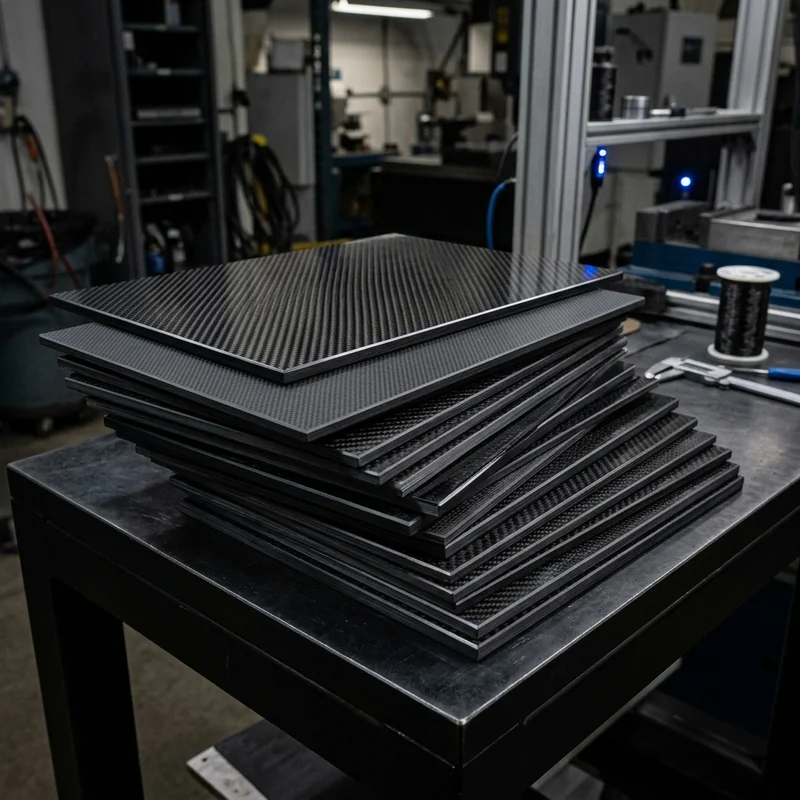
Carbon fiber standard plate-3k stripe
Lightweight, ultra-rigid standard sheets for drone fuselages, robot housings, facades and structural applications.

Carbon Fiber Plate — 3K Twill T700 1.5mm
Thin 1.5mm carbon fiber plate with 3K twill weave surface. Lightweight and stiff, commonly used for covers, panels, drone bodies, and applications requiring a premium aesthetic appearance.

Square Carbon Fiber Tube — 3K Twill T700
Square cross-section carbon fiber tube manufactured with 3K twill weave for torsional strength. Preferred for structural frames, trusses, and support columns where rectangular geometry offers design flexibility.

Carbon Fiber Plate — 3K Twill T700 3.0mm
Medium-thickness 3.0mm carbon fiber plate offering significantly higher load capacity while maintaining attractive 3K twill finish. Suitable for structural brackets, reinforcement plates, and load-bearing panels.
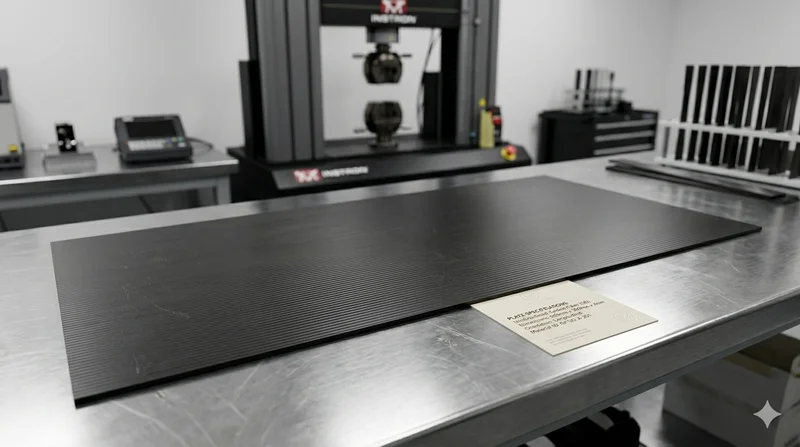
Carbon Fiber Plate — UD Unidirectional T700
Unidirectional carbon fiber plate with all fibers oriented in a single direction for maximum strength along the fiber axis. Essential for structural reinforcements, splints, and applications where load direction is predictable.