
Europe's defense spending trajectory has shifted dramatically in recent years, with NATO members committing to accelerated capability development programs that require significant increases in advanced materials procurement. Carbon fiber composites — essential for aerospace structures,
Introduction
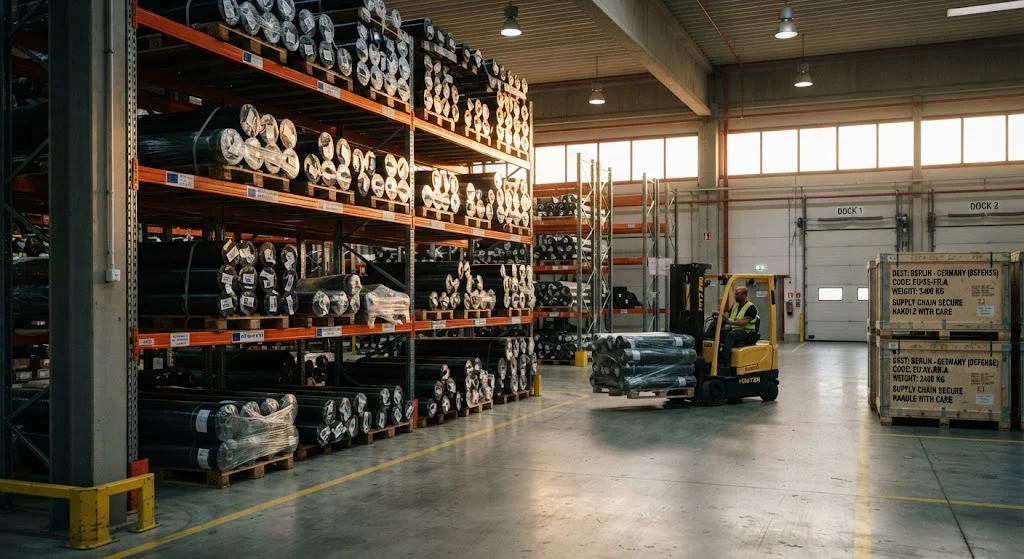
Europe's defense spending trajectory has shifted dramatically in recent years, with NATO members committing to accelerated capability development programs that require significant increases in advanced materials procurement. Carbon fiber composites — essential for aerospace structures, defense vehicles, and naval platforms — face a procurement environment where the traditional balance between long-term agreements (LTAs) and spot market purchasing is being fundamentally重新评估. Defense procurement authorities and aerospace manufacturers are increasingly recognizing that supply security for strategic materials like carbon fiber requires a different approach than the cost-optimized spot purchasing that characterized the post-Cold War era.
This article examines the forces driving European defense buyers toward long-term carbon fiber supply agreements, analyzes the economic trade-offs between LTA and spot market strategies, and provides guidance for both suppliers and buyers navigating this transitioning market.
European Defense Spending Trajectory
The European defense spending landscape has undergone structural change that directly impacts carbon fiber demand:
- NATO 2% GDP commitment acceleration: Multiple European nations have accelerated timelines for reaching the 2% GDP defense spending target, with some committing to 2.5-3% levels. This translates to €150-250 billion in additional annual defense spending across Europe.
- Major platform programs: Next-generation fighter programs (FCAS, Tempest/GCAP), main battle tank replacements, naval frigate and submarine construction, and missile defense systems all require significant carbon fiber composite content.
- Ammunition and stockpile replenishment:
- Industrial base expansion: Defense industrial capacity expansion requires both new production facilities and upgraded manufacturing equipment, many of which incorporate carbon fiber components.
Supply-Demand Balance Analysis
The European carbon fiber market faces a tightening supply-demand balance driven by defense and commercial aerospace recovery:
| Factor | 2023-2024 | 2025-2027 (Projected) | Impact on Supply |
|---|---|---|---|
| European defense carbon fiber demand | 8,000-10,000 tons/year | 14,000-18,000 tons/year | +75-100% increase |
| Commercial aerospace recovery | 60% of 2019 levels | 95-100% of 2019 levels | +40-60% demand increase |
| European carbon fiber production capacity | 25,000 tons/year | 30,000 tons/year (planned) | +20% capacity expansion |
| Import dependency (Asia, Americas) | 45% of supply | 35-40% (target reduction) | Strategic supply risk |
| Spot market price premium | 5-10% over LTA | 15-25% over LTA | Increasing spot premium |
| LTA contract duration | 1-2 years typical | 3-5 years typical | Longer commitment horizons |
The projected 75-100% increase in defense carbon fiber demand, combined with commercial aerospace recovery and limited European production expansion, creates a market environment where supply security outweighs short-term cost optimization for most defense buyers.
Long-Term Agreement Structure
European defense procurement long-term agreements for carbon fiber typically include several structural features that differentiate them from commercial supply contracts:
- Volume commitments: Multi-year minimum volume guarantees (typically 70-80% of estimated needs) that provide suppliers with production planning certainty and capacity reservation.
- Price indexing: Price adjustment mechanisms linked to raw material costs (precursor pricing) and production cost indices, rather than fixed pricing. This protects both parties against market volatility.
- Quality continuity: Freeze clauses that prevent specification changes during the agreement term, ensuring material qualification stability for multi-year platform programs.
- Capacity reservation: Dedicated production line reservation or priority allocation rights during periods of supply constraint. This is the primary value proposition for defense buyers willing to commit to LTAs.
- Strategic stock provisions: Buffer inventory arrangements that provide 3-6 months of safety stock, either held by the supplier or at buyer-controlled locations.
Spot Market Dynamics
Despite the trend toward LTAs, spot market purchasing remains relevant for certain buyer profiles and situations:
- Program uncertainty: Early-stage programs where design freeze and production volume are not yet established may prefer spot purchasing until requirements stabilize.
- Surge capacity: Production rate increases beyond LTA volumes require spot market supplementation. Defense programs frequently experience rate changes that exceed contracted volumes.
- New material evaluation: Qualification of new fiber grades or supplier sources often begins with spot purchases before committing to long-term agreements.
- Emergency procurement:
Strategic Considerations for Suppliers
Carbon fiber suppliers serving the European defense market should evaluate several strategic positioning factors:
- Capacity investment timing: Committing production capacity expansion ahead of confirmed demand requires risk tolerance but positions suppliers for first-mover advantage in a tightening market.
- Geographic positioning: European production facilities or bonded warehouses provide lead time and logistics advantages for defense procurement, which increasingly favors continental supply chains over transatlantic sources.
- Qualification investment: Defense qualification testing represents significant upfront cost but creates high switching barriers that protect market position over multi-decade platform lifecycles.
- Diversified customer base: Balancing defense allocation against commercial aerospace demand requires careful capacity management to serve both markets effectively.
Frequently Asked Questions
How do European defense carbon fiber LTAs differ from commercial aerospace supply agreements?
Defense LTAs typically include capacity reservation rights, strategic stock provisions, and security of supply clauses that are uncommon in commercial agreements. Price indexing in defense LTAs often includes government budget cycle considerations, with mechanisms to handle funding gaps or delays. Quality continuity provisions are more stringent in defense contracts, with specification freeze clauses that prevent mid-program material changes. Defense LTAs also frequently include ITAR or EAR compliance requirements for materials destined for programs with U.S. technology content, adding regulatory complexity not present in purely commercial agreements.
What is the typical lead time advantage of LTA allocation versus spot market procurement during supply constraints?
During supply constraints, LTA customers with capacity reservation rights typically receive allocation within 2-4 weeks, while spot market customers may face 6-12 month lead times or allocation denial entirely. The 2021-2023 carbon fiber supply constraints demonstrated this clearly: LTA customers maintained 85-95% fill rates while spot market customers experienced 40-60% fill rates with extended delivery timelines. For defense programs with production schedule commitments, this allocation priority represents the primary value proposition of LTA commitment.
How are European defense procurement authorities structuring carbon fiber LTAs in the current market?
European defense procurement is increasingly using framework agreements with 3-5 year terms, annual volume options, and price review mechanisms. Some programs employ consortium purchasing (multiple nations jointly procuring for shared platforms) to aggregate volume and improve negotiating position. Government-held strategic stock arrangements are being implemented in several nations, where the government maintains buffer inventory that supplements both LTA and spot market supply. The trend is toward fewer, larger agreements with established suppliers rather than fragmented purchasing across multiple sources.
Conclusion
Europe's accelerating rearmament programs are fundamentally restructuring carbon fiber procurement away from spot market optimization toward long-term supply security. The projected 75-100% increase in defense carbon fiber demand, combined with limited European production capacity expansion and growing strategic supply concerns, makes long-term agreements the rational choice for most defense and aerospace buyers. For suppliers, this transition rewards capacity investment, geographic positioning, and qualification commitment over short-term cost competitiveness. The winners in this market will be those who recognize that defense carbon fiber supply is a strategic partnership rather than a commodity transaction.
For carbon fiber suppliers and defense procurement professionals evaluating supply strategy, understanding the LTA versus spot market trade-offs is essential for both supply security and cost management. Explore our carbon fiber product range for defense and aerospace applications, including qualified intermediate-modulus and high-strength fiber grades, or contact our team to discuss supply agreement structures for European defense programs.
Part of topic
Related Articles
- Recycled Carbon Fiber Market Forecast 2030: Technology Maturity and Commercialization Path
- South Korea Carbon Fiber Market 2026: Hydrogen Economy and Shipbuilding Innovation
- Wind Turbine Blade Leading Edge Protection 2026: Polyurethane, Tape, and Metallic Shield Solutions
- China Carbon Fiber Overcapacity 2026: Price War Impact and Industry Consolidation
- India Carbon Fiber Market 2026: Wind Energy, Aerospace, and Defense Expansion
- PAN Precursor Market 2026: Acrylonitrile Supply and Carbon Fiber Cost Structure
Interested in Our Products?
Contact our team for competitive pricing and technical specifications.
Get a QuoteRelated Products

Carbon Fiber Watch Strap — 20mm/22mm Quick-Release
Premium carbon fiber watch strap with quick-release spring bars. Woven from T700 3K twill prepreg with a flexible resin system that conforms to the wrist. Available in 20mm and 22mm lug widths, compatible with Apple Watch, Samsung Galaxy Watch, Garmin, and traditional mechanical watches. Features a stainless steel buckle and carbon fiber keepers. The natural weave pattern makes each strap unique.

Carbon Fiber Fishing Rod Blank
High-quality carbon fiber fishing rod blank manufactured from multiple grades of Toray carbon fiber cloth. Available in a wide range of lengths, powers, and actions for freshwater and saltwater applications. Suitable for OEM rod building.

Carbon Fiber Plate — 3K Twill T700 1.5mm
Thin 1.5mm carbon fiber plate with 3K twill weave surface. Lightweight and stiff, commonly used for covers, panels, drone bodies, and applications requiring a premium aesthetic appearance.

Carbon Fiber Plate — 3K Twill T700 3.0mm
Medium-thickness 3.0mm carbon fiber plate offering significantly higher load capacity while maintaining attractive 3K twill finish. Suitable for structural brackets, reinforcement plates, and load-bearing panels.

Carbon Fiber Trekking Pole
Lightweight carbon fiber trekking pole manufactured from high-grade carbon fiber tube. Weighs only 160g per pole while providing superior shock absorption and durability for hiking, trail running, and backpacking.