

From regulatory frameworks to practical screening tools: navigating dual-use export controls for carbon fiber materials.
Introduction
Carbon fiber sits at the intersection of industrial manufacturing and national security. In 2026, the dual-use export control landscape for carbon fiber materials has tightened considerably, with major regulatory actions reshaping how manufacturers, distributors, and end-users manage compliance across international supply chains. The catalyst was the reported interception of approximately 46 tons of carbon fiber materials destined for sanctioned entities in Russia, which triggered a wave of new enforcement actions and regulatory clarifications across the United States, European Union, and allied nations.
For carbon fiber manufacturers and suppliers, understanding dual-use export controls is no longer optional. The regulatory framework now demands active supply chain screening, end-user verification, and documentation practices that go far beyond traditional commercial due diligence. This article provides a practical guide to the current regulatory landscape, key compliance requirements, and the tools manufacturers need to operate legally in the global carbon fiber market.
Regulatory Framework Overview
Dual-use export controls on carbon fiber are governed by multiple overlapping regimes, each with distinct jurisdictional reach and technical thresholds. The primary regulatory frameworks are summarized below:
| Regulation | Jurisdiction | Key Carbon Fiber Parameters | Licensing Threshold |
|---|---|---|---|
| EAR (US Commerce Control List) | United States | Tensile modulus ≥24 GPa, tensile strength ≥300 MPa | License required for E:1/E:2 countries |
| EU Dual-Use Regulation (2021/821) | European Union | Specific modulus ≥12.7×10⁶ m, tensile strength ≥3.5 GPa | Global authorization required |
| Wassenaar Arrangement | 42 participating states | Category 1 materials, controlled carbon fiber specifications | National licensing applies |
| China Export Control Law | People's Republic of China | Strategic material designation, T700+ grade | End-user certificate required |
| Japan Foreign Exchange and Foreign Trade Act | Japan | High-modulus carbon fiber (M-series, T1100+) | Ministry of Economy approval |
The complexity arises because carbon fiber products are not uniformly controlled across all regimes. A plain modulus carbon fiber tow that requires no license for export to Germany may require a license for the same product destined for China, depending on the end-use statement and end-user identity. This asymmetry forces suppliers to maintain country-by-country compliance assessments for every product line.
The 2026 Enforcement Shift
The 2026 enforcement landscape was defined by two major developments. First, the interception of 46 tons of carbon fiber chemicals and precursor materials destined for Russia exposed significant gaps in end-user screening practices. The materials were routed through third-party countries using falsified end-user certificates, demonstrating that traditional documentation-based compliance is insufficient against determined circumvention.
Second, in response to this incident, the US Bureau of Industry and Security expanded the Entity List to include dozens of additional carbon fiber intermediaries and distributors in countries known as transshipment points. The EU followed with parallel designations under its autonomous sanctions framework. These actions collectively signal that regulators are shifting from reactive enforcement to proactive supply chain monitoring.
- Enhanced screening requirements: US exporters must now verify not only the direct customer but also the customer's customer and the ultimate end-user for any carbon fiber shipment exceeding 50 kg to sensitive destinations.
- Red flag indicators expanded: Regulators have published updated guidance on suspicious order indicators, including unusual routing, payment from third-party jurisdictions, and refusal to provide end-use documentation.
- Penalty escalation: Civil penalties for willful violations have increased to $330,947 per violation or twice the transaction value, whichever is greater, with criminal penalties reaching $1 million and 20 years imprisonment.
- EU export credit restrictions: Export credit agencies in Germany, France, and Italy have been instructed to verify dual-use compliance before extending financing for carbon fiber equipment exports.
Practical Compliance Tools
For carbon fiber manufacturers and distributors, compliance requires integrating export control screening into daily operations. The following tools and practices form the foundation of an effective compliance program:
Automated screening platforms such as Descartes Visual Compliance, Dow Jones Risk & Compliance, and SAP Global Trade Services allow real-time screening of customers, end-users, and shipping routes against consolidated denied-party lists. The cost of these platforms ranges from $5,000 to $50,000 annually depending on transaction volume and screening scope.
End-user certificate templates must be customized for each destination country and product category. A generic end-use statement is insufficient for controlled carbon fiber grades. Best practice is to use destination-country-specific templates that reference the applicable regulatory threshold and require the buyer to declare the specific application, production facility location, and installation timeline.
Internal classification procedures should include a technical review of each product against the applicable control list parameters. For carbon fiber, this means testing or certifying modulus, tensile strength, and fiber diameter against the thresholds in CCL Category 1, EU Annex I, and any destination-country specific controls.
Record retention requirements typically span 5 years in the US and EU, but some jurisdictions require permanent retention of export control documentation. The records must include screening results, end-user certificates, technical specifications, and any license applications or approvals.
Impact on Global Supply Chains
The tightened regulatory environment is reshaping carbon fiber supply chain patterns in several measurable ways. First, lead times for controlled carbon fiber grades have increased by 2-4 weeks as suppliers implement additional verification steps before shipment. Second, some Asian manufacturers are establishing separate production lines for controlled and non-controlled grades to simplify export classification. Third, European distributors are consolidating their supplier base to reduce the number of export control assessments required per transaction.
For end-users, the compliance burden translates into higher procurement costs and longer qualification cycles. Aerospace and defense manufacturers report that dual-use compliance adds 5-15% to the total cost of controlled carbon fiber procurement, with the largest cost components being internal compliance staffing, screening platform subscriptions, and legal review of complex transactions.
Frequently Asked Questions
How do I determine if my carbon fiber product is controlled under dual-use regulations?
Product classification requires comparing your material's technical specifications against the control list thresholds in your destination country's regulations. For US exports, check the Commerce Control List (CCL) Category 1, specifically ECCN 1C007 for carbon fiber materials. For EU exports, refer to Annex I of Regulation 2021/821, Category 1. The key parameters are tensile modulus and tensile strength. If your product exceeds the applicable threshold, a license may be required depending on the destination country and end-use. When in doubt, request a formal classification from your national export control authority — the US BIS provides commodity classification rulings, and the EU member states offer similar services.
What are the penalties for non-compliance with carbon fiber export controls?
Penalties vary by jurisdiction but have been significantly increased in 2026. In the United States, civil penalties for willful violations can reach $330,947 per violation or twice the transaction value. Criminal penalties can reach $1 million in fines and 20 years imprisonment for individuals. The EU member states impose criminal penalties that vary by country but generally include substantial fines and imprisonment. Additionally, non-compliant companies may be added to denied-party lists, effectively cutting off access to the global carbon fiber supply chain. The reputational damage and loss of business relationships often exceed the direct financial penalties.
Can carbon fiber distributors use standard KYC procedures for export compliance?
Standard know-your-customer procedures are necessary but insufficient for dual-use export compliance. KYC verifies the identity and financial standing of your customer, but export compliance requires additional steps: verifying the end-use of the material, confirming the end-user is not a denied or sanctioned party, assessing whether the transaction requires a license, and maintaining documentation that demonstrates due diligence. The recommended approach is to integrate export control screening into your KYC workflow, adding specific red-flag checks for controlled materials. This includes verifying that the customer's stated end-use is consistent with the ordered quantity and specifications, and that the shipping route does not suggest transshipment to a controlled destination.
Conclusion
The dual-use export control landscape for carbon fiber has entered a new phase of active enforcement and expanding regulatory scope. The 2026 enforcement actions following the Russia-bound shipment interception demonstrate that regulators are willing to impose severe penalties and expand controls in response to compliance failures. For carbon fiber manufacturers, distributors, and end-users, the path forward requires investment in screening infrastructure, staff training, and legal review processes that keep pace with evolving regulations.
Compliance is not just a legal obligation — it is a competitive advantage. Companies that can demonstrate robust export control procedures to customers and regulators will be better positioned to serve high-value markets in aerospace, defense, and advanced manufacturing. Explore our carbon fiber product range with full export documentation support, or contact our compliance team to discuss material classification and export licensing requirements for your supply chain.
Part of topic
Related Articles
- Recycled Carbon Fiber Market Forecast 2030: Technology Maturity and Commercialization Path
- South Korea Carbon Fiber Market 2026: Hydrogen Economy and Shipbuilding Innovation
- Wind Turbine Blade Leading Edge Protection 2026: Polyurethane, Tape, and Metallic Shield Solutions
- China Carbon Fiber Overcapacity 2026: Price War Impact and Industry Consolidation
- India Carbon Fiber Market 2026: Wind Energy, Aerospace, and Defense Expansion
- PAN Precursor Market 2026: Acrylonitrile Supply and Carbon Fiber Cost Structure
Interested in Our Products?
Contact our team for competitive pricing and technical specifications.
Get a QuoteRelated Products
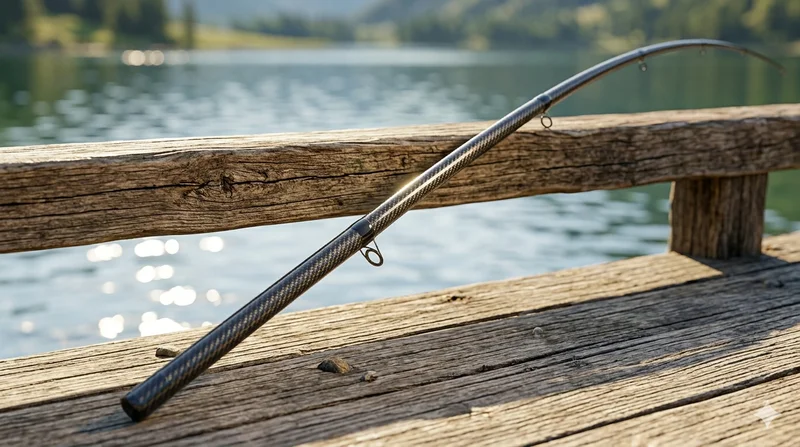
Carbon Fiber Fishing Rod Blank
High-quality carbon fiber fishing rod blank manufactured from multiple grades of Toray carbon fiber cloth. Available in a wide range of lengths, powers, and actions for freshwater and saltwater applications. Suitable for OEM rod building.

Carbon Fiber Plate — 3K Twill T700 3.0mm
Medium-thickness 3.0mm carbon fiber plate offering significantly higher load capacity while maintaining attractive 3K twill finish. Suitable for structural brackets, reinforcement plates, and load-bearing panels.

Carbon Fiber Plate — 3K Twill T700 1.5mm
Thin 1.5mm carbon fiber plate with 3K twill weave surface. Lightweight and stiff, commonly used for covers, panels, drone bodies, and applications requiring a premium aesthetic appearance.
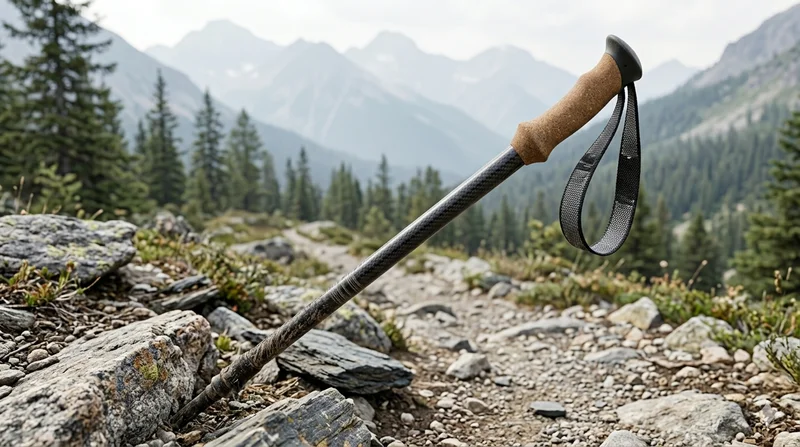
Carbon Fiber Trekking Pole
Lightweight carbon fiber trekking pole manufactured from high-grade carbon fiber tube. Weighs only 160g per pole while providing superior shock absorption and durability for hiking, trail running, and backpacking.

Square Carbon Fiber Tube — 3K Twill T700
Square cross-section carbon fiber tube manufactured with 3K twill weave for torsional strength. Preferred for structural frames, trusses, and support columns where rectangular geometry offers design flexibility.