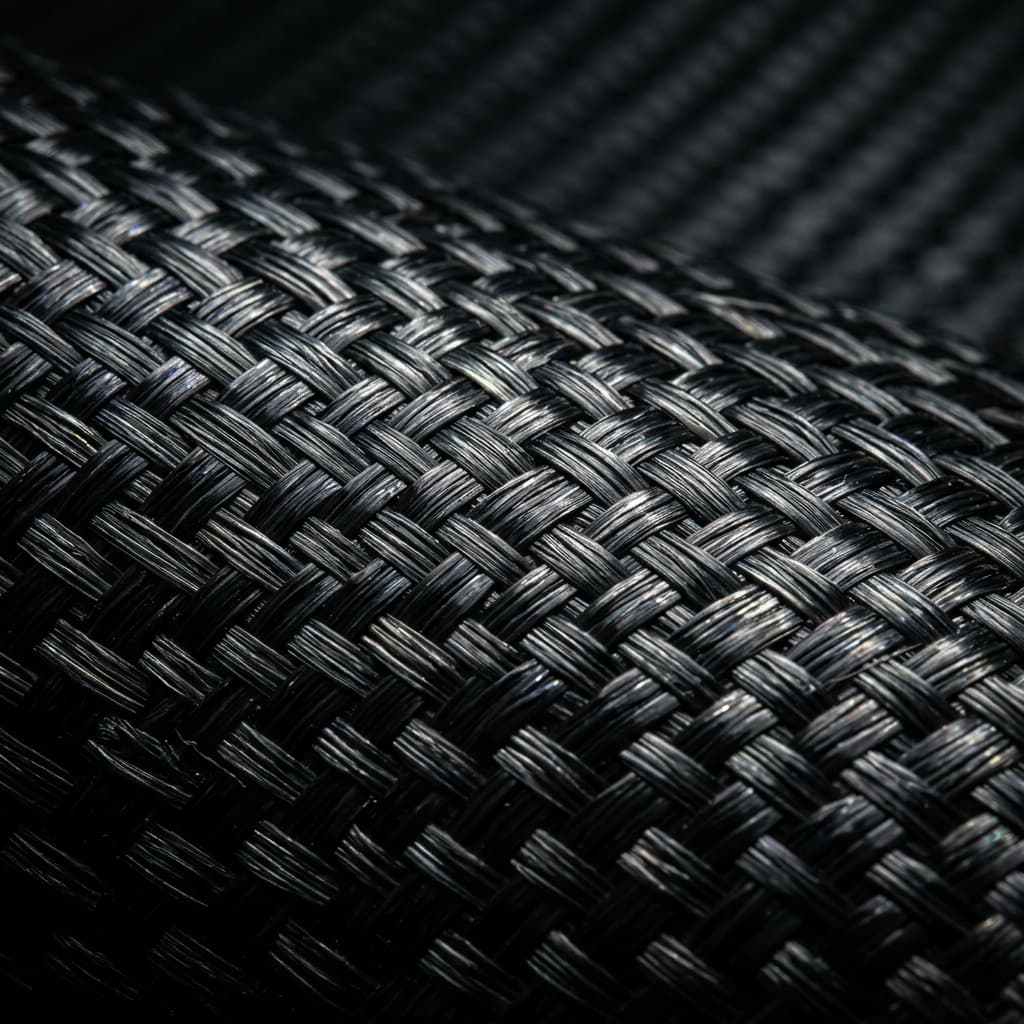
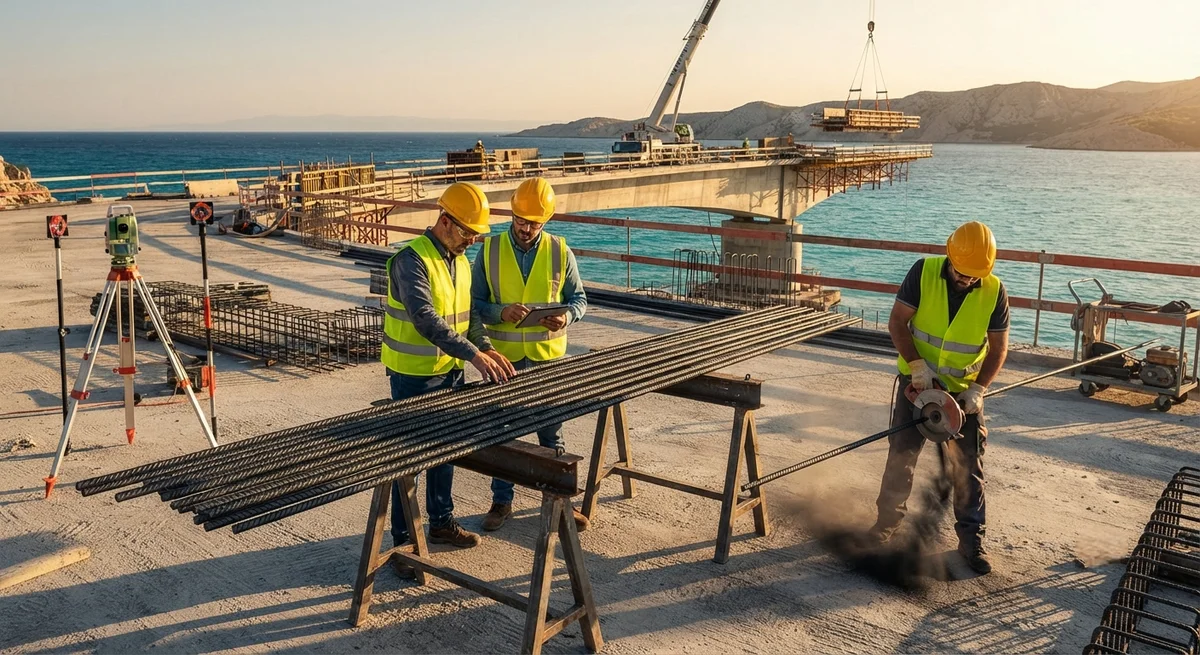
CFRP rebar is emerging as a high-performance alternative to traditional steel reinforcement in concrete structures, offering corrosion resistance 5–10× greater than epoxy-coated steel, a tensile strength of 1,800–2,500 MPa, and a service life exceeding 75 years in marine environments. This article provides B2B buyers with technical specifications, cost comparison data, installation guidelines, and application case studies.
Introduction to CFRP Rebar in Modern Construction
The global construction industry faces an escalating challenge: steel reinforcement corrosion in concrete structures costs an estimated $150–250 billion annually in repair and maintenance worldwide. In marine environments, de-icing salt-exposed bridge decks, and chemical processing facilities, traditional steel rebar begins corroding within 5–15 years of installation, leading to concrete spalling, structural degradation, and ultimately, premature replacement. Carbon Fiber Reinforced Polymer (CFRP) rebar offers a compelling alternative — a non-metallic, corrosion-proof reinforcement material that delivers tensile strengths exceeding that of steel at only one-quarter the weight.
CFRP rebar is manufactured through a pultrusion process where continuous carbon fibre filaments are impregnated with a thermosetting resin — typically epoxy, vinyl ester, or polyurethane — and pulled through a heated die to form a rod with surface deformations (ribs, helical wraps, or sand-coated finishes) engineered to ensure adequate bond with concrete. The resulting product combines the exceptional tensile strength of carbon fibre (3,500–5,000 MPa in the fibre direction) with the chemical resistance and dimensional stability of the polymer matrix, yielding a reinforcement material that neither rusts, conducts electricity, nor suffers from electrolytic corrosion.
This article provides B2B buyers in construction, civil engineering, and infrastructure procurement with a comprehensive technical and commercial overview of CFRP rebar — covering mechanical properties, cost analysis, design considerations, installation practices, quality standards, and real-world application case studies.
Mechanical Properties and Performance Characteristics
| Property | CFRP Rebar | Steel Rebar (Grade 60) | Stainless Steel Rebar | GFRP Rebar |
|---|---|---|---|---|
| Tensile strength (MPa) | 1,800–2,500 | 420–550 | 480–700 | 600–1,000 |
| Elastic modulus (GPa) | 120–150 | 200 | 190–200 | 40–55 |
| Density (g/cm³) | 1.55–1.65 | 7.85 | 7.90–8.00 | 1.80–2.10 |
| Yield behaviour | Linear-elastic to failure | Elasto-plastic (yield plateau) | Elasto-plastic (ductile) | Linear-elastic to failure |
| Ultimate strain (%) | 1.2–1.8 | 8–12 | 15–25 | 1.5–2.5 |
| Thermal expansion (×10⁻⁶/°C) | 0.6–1.0 (longitudinal) | 11.7 | 10.5–12.0 | 6.0–10.0 |
| Corrosion resistance | Excellent (immune) | Poor (rusts rapidly) | Good (slow pitting) | Excellent (immune) |
| Electrical conductivity | Low (10³ S/m) | High (10⁷ S/m) | High (10⁷ S/m) | Insulator |
| Thermal conductivity (W/m·K) | 5–10 (axial) | 50–60 | 15–20 | 0.3–0.5 |
| Service temperature (°C) | 60–120 (resin-dependent) | 400+ | 400+ | 60–100 |
Key Mechanical Considerations for Structural Design
- Linear-elastic behaviour: Unlike steel, CFRP rebar does not exhibit a yield plateau — it remains linear-elastic until sudden brittle failure at ultimate strain. This fundamentally changes the design philosophy: structures must be designed with higher safety factors (typically 2.5–3.5 vs 1.5–1.8 for steel) to prevent unexpected failure modes.
- Lower elastic modulus: At 120–150 GPa, CFRP's modulus is 25–40% lower than steel's 200 GPa. This means that for equivalent reinforcement ratios, CFRP-reinforced concrete members exhibit higher deflections and wider crack widths under service loads. Designers must account for this with modified crack control provisions and deflection limits.
- Anisotropic properties: CFRP rebar derives virtually all of its tensile strength from the longitudinally oriented carbon fibres. Transverse strength (perpendicular to the fibre direction) is only 5–15% of the longitudinal value, making shear, bearing, and anchorage details critical design considerations.
- Creep and relaxation: CFRP exhibits significantly less creep than GFRP under sustained loads. Sustained stress levels should be limited to 30–40% of ultimate tensile strength to prevent creep rupture over 50+ year design lives. This is comparable to the 40% sustained stress limit for prestressing steel under ACI 440 guidelines.
- Fire performance: At temperatures above 300–400°C, the epoxy resin matrix begins to degrade, and the CFRP rebar loses structural capacity. For fire-critical applications (buildings, tunnels), additional cover thickness (5–10 mm extra), fire-resistant coatings, or supplementary steel reinforcement in the compression zone are recommended.
Cost Comparison: CFRP vs Steel Rebar
| Cost Component | CFRP Rebar (#4, 12.7 mm) | Steel Rebar (#4, Grade 60) | Stainless Steel (#4, 316L) |
|---|---|---|---|
| Material cost per linear metre | $8.50–15.00 | $0.60–1.20 | $3.50–7.00 |
| Material cost per kg | $22.00–35.00 | $0.80–1.50 | $3.00–6.00 |
| Transportation cost (per tonne-km) | $0.08–0.12 (1/5 of steel weight) | $0.35–0.55 | $0.35–0.55 |
| Installation labour factor | 0.8–0.9× steel (lighter, easier handling) | 1.0× (baseline) | 1.0–1.1× (harder to cut/bend) |
| Required concrete cover | 20–30 mm (corrosion-proof) | 40–75 mm (corrosion-controlled) | 30–50 mm |
| Projected service life | 75–100+ years | 25–50 years (marine: 10–20) | 50–75 years |
| Lifecycle cost ratio (50-year) | 0.6–0.9× steel baseline | 1.0× (baseline, incl. 1–2 repairs) | 1.2–1.8× (high initial cost) |
| Replacement/maintenance cost avoidance | Eliminates corrosion repairs | 2–3 major repairs over 50 years | 0–1 repairs over 50 years |
While CFRP rebar carries a material-cost premium of 7–12× over standard steel rebar on a per-unit-length basis, this disparity narrows dramatically — and in many cases reverses — when lifecycle costs, reduced concrete cover requirements, eliminated cathodic protection systems, and avoided traffic disruption costs are factored in. A 2025 study by the Florida Department of Transportation found that CFRP-reinforced bridge decks in coastal environments achieved breakeven against epoxy-coated steel at year 18 and delivered net savings of 32% over a 75-year design life.
Primary Application Areas
Marine and Coastal Infrastructure
Seawalls, piers, jetties, and offshore platforms in saltwater environments benefit most immediately from CFRP rebar's corrosion immunity. The Burj Al Arab Jumeirah wave break project in Dubai (2023–2025) utilised 380 tonnes of CFRP rebar in its concrete armour units, specifying a 100-year design life with zero maintenance for the reinforcement. The project saved an estimated $12 million in avoided cathodic protection system installation and lifecycle monitoring costs compared to a steel-reinforced alternative.
Bridge Decks and Highway Structures
Bridge decks exposed to de-icing salts represent the single largest market for CFRP rebar in North America. The Sierrita de la Cruz Creek Bridge in Texas (completed 2024) — the first all-CFRP-reinforced bridge deck in the United States — used 43 tonnes of CFRP rebar in its 1,400 m² deck, achieving a 28% reduction in total deck weight and eliminating the need for epoxy coating, galvanising, or cathodic protection. Inspection results at year one showed zero signs of corrosion or concrete degradation.
Chemical and Wastewater Treatment Facilities
Concrete tanks, channels, and containment structures in chemical plants, refineries, and wastewater treatment facilities are exposed to aggressive chemical environments — chlorides, sulphates, acids, and alkalis — that rapidly attack steel reinforcement. CFRP rebar's chemical inertness eliminates this failure mode entirely. A wastewater treatment plant expansion in Singapore (PUB Changi Water Reclamation Plant, 2025) specified CFRP rebar for all chlorine-contact and acid-wash basins, citing a 60-year maintenance-free service life requirement.
Magnetic Resonance Imaging (MRI) Suites and Sensitive Facilities
Hospitals and research facilities requiring non-magnetic, RF-transparent reinforcement are a niche but high-value application for CFRP rebar. The new St. Jude Children's Research Hospital wing in Memphis (2024) used CFRP rebar in the MRI suite floor slabs to eliminate electromagnetic interference with imaging equipment while maintaining structural performance equivalent to steel-reinforced concrete. The CFRP solution added 15% to the floor slab material cost but eliminated $280,000 in magnetic shielding modifications that would have been required with steel rebar.
Prestressed Concrete Elements
CFRP tendons and bars are increasingly specified for prestressed concrete applications where corrosion of prestressing steel is a critical concern. The Tendon-to-Concrete bond performance of sand-coated CFRP bars typically achieves 12–18 MPa average bond strength per ACI 440.3R-12 test methods, comparable to 7-wire steel strand bond performance. CFRP prestressing tendons are currently 3–5× the cost of steel prestressing strand but eliminate the grouting and corrosion-monitoring requirements that add 15–25% to steel prestressed system installed costs.
Design and Installation Considerations
Bond and Anchorage
CFRP rebar achieves bond with concrete through three mechanisms: (1) surface deformations — helical wrapping, sand coating, or ribbed surfaces provide mechanical interlock; (2) friction — the rebar surface texture generates frictional resistance along the embedment length; and (3) chemical adhesion between the resin matrix and cement paste. The development length for CFRP rebar in tension typically ranges from 40–60 diameters for sand-coated bars and 50–70 diameters for ribbed bars — approximately 1.5–2× longer than steel rebar development lengths per ACI 318.
Cutting and Bending
- CFRP rebar cannot be field-bent like steel — once cured, the thermoset resin matrix cannot be plastically deformed. All bends must be pre-formed during manufacturing.
- Cutting requires abrasive diamond blades or high-speed carborundum saws. Standard steel rebar cutters (bolt cutters, rebar shears, and angle grinders with steel-cutting wheels) will not cut CFRP effectively and will damage the fibre-resin composite structure.
- Temporary bending for field fit-up is possible with heat (140–180°C for epoxy systems) using hot-air guns, but this should be minimised to avoid micro-cracking of the resin matrix near the heated zone.
- All cutting should be performed in well-ventilated areas with proper respiratory protection — carbon fibre dust is an irritant and can cause skin and respiratory issues.
Quality Control and Testing Standards
| Standard | Title | Scope |
|---|---|---|
| ACI 440.1R-15 | Guide for the Design and Construction of Concrete Reinforced with FRP Bars | Design methodology, strength reduction factors, serviceability limits |
| ACI 440.3R-12 | Guide Test Methods for FRP Bars | Standardised test methods for tensile, bond, shear, and creep rupture |
| ASTM D7205 | Standard Test Method for Tensile Properties of FRP Bars | Tensile strength, modulus, and strain-to-failure determination |
| ASTM D7913 | Standard Test Method for Bond Strength of FRP Bars | Beam-end and direct pull-out bond testing |
| CSA S806-12 (R2021) | Design and Construction of Building Structures with FRP | Canadian code for FRP-reinforced concrete design |
| ISO 10406-1 | FRP Reinforcement for Concrete — Test Methods | International test methods for FRP reinforcing bars |
| GB/T 26743 | FRP Composite Rebars for Civil Engineering (China) | Chinese national standard covering material, testing, and quality control |
Supplier Selection Criteria for B2B Buyers
- Third-party certification: Verify that CFRP rebar products carry ICC-ES (International Code Council Evaluation Service) or equivalent certification, confirming compliance with ACI 440 / ASTM standards. Uncertified products may have 30–50% lower actual tensile strength than stated.
- Creep rupture data: Request manufacturer tensile creep data at 30%, 40%, and 50% of ultimate tensile strength over 10,000 hours minimum. ACI 440 limits sustained stress to 30–40% of ultimate; manufacturers should provide this supporting data.
- Fibre volume fraction: Minimum 55% fibre volume fraction is recommended for structural-grade CFRP rebar. Lower fractions (<50%) reduce tensile modulus and creep performance significantly.
- Surface treatment consistency: The quality of sand coating or rib pattern directly affects bond strength. Request bond strength test reports from 3+ independent laboratories using ASTM D7913.
- Manufacturing traceability: Each production batch should be traceable to raw material lots, pultrusion parameters (temperature, pull speed, die pressure), and QA test results. ISO 9001:2015 certification of the manufacturing facility is standard for B2B procurement.
- Lead time and MOQ: Standard CFRP rebar diameters (10–25 mm) typically have 4–8 week lead times with minimum order quantities of 5–10 tonnes per diameter. Custom diameters and surface treatments require 10–16 weeks and 15+ tonne MOQs.
Frequently Asked Questions
Q: Can CFRP rebar completely replace steel rebar in all concrete structures?
A: No — CFRP rebar is not a drop-in replacement for steel in all applications. Its linear-elastic-to-failure behaviour, lower modulus, and limited fire resistance at >400°C make it unsuitable for structures requiring ductile failure modes (seismic applications), high-temperature environments (industrial furnaces, chimneys and reactors), or compression-dominant members (columns, piles) where steel's 200 GPa modulus in both tension and compression is advantageous. The primary role of CFRP rebar is in corrosion-critical applications where steel's durability limits dominate the design. For general building construction in benign environments, steel rebar remains more economical. Hybrid reinforcement — CFRP in corrosion-exposed regions (cover zone, top mat of bridge decks) with steel in internal compression zones — is an increasingly popular cost-optimisation strategy.
Q: How long does CFRP rebar last in marine environments?
A: Accelerated ageing tests conducted by the U.S. Naval Facilities Engineering Command (NAVFAC) indicate that CFRP rebar retains 85–95% of its initial tensile strength after the equivalent of 50 years of seawater immersion at 60°C. Field samples retrieved from a CFRP-reinforced seawall at Yokosuka Naval Base, Japan — in service since 2004 — showed no measurable degradation after 21 years of continuous tidal-zone exposure. The epoxy and vinyl ester resin systems used in CFRP rebar absorb 0.5–2.0% moisture by weight over extended immersion, but this moisture uptake occurs primarily in the resin matrix and does not attack the carbon fibres themselves. Manufacturers typically warrant CFRP rebar for 75–100 years in marine environments, and most design codes permit a 100-year design life when appropriate safety factors are applied.
Q: What are the fire resistance requirements for CFRP-reinforced concrete?
A: Building codes generally require concrete structures to maintain structural integrity for a specified fire resistance rating — typically 1–4 hours depending on occupancy and building height. CFRP's epoxy-based resin matrix begins to soften at 80–100°C, and the polymer-glass transition temperature (Tg) of standard epoxy systems is 100–140°C. At temperatures approaching 300°C, the resin decomposes and the CFRP loses virtually all tensile capacity. To achieve fire ratings, designers specify minimum concrete cover (30–50 mm for CFRP vs 20–25 mm for standard steel in protected environments), add supplementary steel reinforcement in the compression zone (sacrificial, designed to carry loads after concrete spalling), or apply fire-resistant coatings (intumescent epoxy, cementitious sprays) to exposed CFRP surfaces. For tunnels and high-rise buildings, hybrid CFRP-steel reinforcement systems are typical, with steel providing fire resistance and CFRP providing corrosion resistance in the cover zone.
Q: How does the cost of CFRP rebar compare globally?
A: CFRP rebar pricing varies significantly by region and manufacturer. As of mid-2026, typical ex-works pricing for standard-grade (#3–#8, 10–25 mm diameter) epoxy-based CFRP rebar is: China (USD $8–14 per linear metre for 12 mm), North America ($12–18/m), Europe ($14–22/m), Middle East ($15–25/m, imported). Chinese manufacturers — including YongXian CarbonFiber's strategic partners — offer competitive pricing driven by lower energy costs ($0.06–0.08/kWh vs $0.12–0.20/kWh in the EU) and integrated PAN precursor-to-fibre supply chains. However, B2B buyers must factor in logistics costs, import duties (typically 3–8% for CFRP products), third-party certification fees ($15,000–40,000 for initial ICC-ES evaluation), and quality assurance verification independent of the manufacturer's in-house testing reports.
Conclusion
CFRP rebar represents a mature, code-compliant solution for corrosion-critical concrete reinforcement with over two decades of field performance data and an expanding global manufacturing base. While the upfront material cost premium of 7–12× over steel rebar limits its use to applications where corrosion durability or electromagnetic transparency is essential, lifecycle cost analysis consistently shows breakeven within 15–25 years and net savings of 20–35% over 75–100-year design lives. For B2B buyers in marine construction, bridge engineering, chemical processing, and sensitive-facility infrastructure, CFRP rebar is no longer an experimental alternative — it is a specification-grade material with third-party-certified performance data, established design codes, and a growing track record of successful large-scale installations worldwide.
Part of topic
Related Articles
- Carbon Fiber Mooring for Floating Offshore Wind: Fatigue and Corrosion in Deep Water
- Carbon Fiber Bicycle Frame Optimization: Layup Design and Manufacturing for Competitive Racing
- Carbon Fiber CFRP Retrofit for Infrastructure: Bridge and Building Seismic Strengthening
- Carbon Fiber Medical Imaging Equipment: Lightweight Gantry and Couch Structures for MRI/CT
- Carbon Fiber EV Battery Enclosures: Crash Safety and Electromagnetic Shielding Design
- Carbon Fiber Structures for Low-Altitude Economy: UAV Airframes and eVTOL Components