
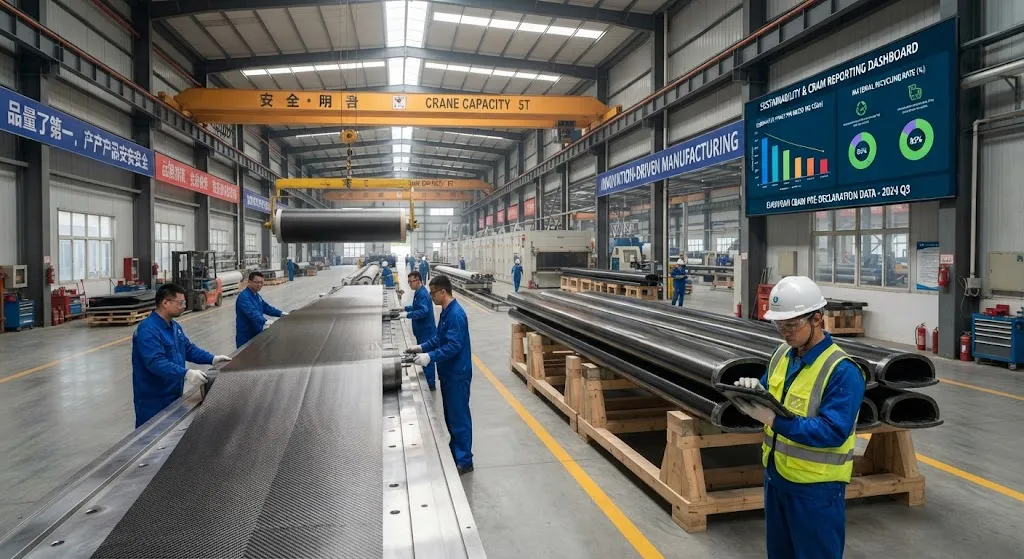
For years, carbon fiber reinforced plastic was treated as a niche complication in trade policy — too small in volume and too complex in footprint to regulate. That assumption ended on August 12, 2026, when the European Union formally extended its Carbon Border Adjustment Mechanism, or C
Introduction
For years, carbon fiber reinforced plastic was treated as a niche complication in trade policy — too small in volume and too complex in footprint to regulate. That assumption ended on August 12, 2026, when the European Union formally extended its Carbon Border Adjustment Mechanism, or CBAM, to wind blade CFRP structural components. From that date, main spar caps, shear webs, beam sections and blade shells containing at least 15 percent carbon fiber by weight became declarable goods at the EU border, subject to the same embedded-emissions accounting that already applies to steel, aluminum, cement, fertilizers, electricity and hydrogen.
The expansion is significant for Chinese exporters because the wind blade supply chain is heavily concentrated there. China produces the majority of the world's carbon fiber and a large share of the blade structural parts shipped into European wind projects. The new rule transforms compliance from a policy-watch item into a shipment-blocking requirement: without a valid pre-declaration, goods can be held at customs, and importers face certificate obligations from January 1, 2027. This article walks through what is covered, what data must be provided, and how suppliers can build the LCA evidence chain before the transitional reporting deadline arrives.
Scope of the CBAM Expansion for Blade Components
The mechanism operates on embedded emissions, not on the physical weight of the product. For a CFRP spar cap, embedded emissions include three layers: the carbon fiber precursor and carbonization footprint, the resin system's production footprint, and the energy consumed during winding, pultrusion or layup of the component itself. The Commission's technical note for the August 2026 expansion defines the carbon content threshold at 15 percent by weight of carbon fiber in the finished part, with dedicated CN codes for spar caps, shear webs, blade shells and pre-fabricated beam sections.
Goods that fall below the threshold remain outside CBAM, which matters for hybrid designs where glass fiber dominates and carbon is used only for local reinforcement. Composite structural components that use discontinuous or recycled carbon fiber are also included, provided the 15 percent weight threshold is met, but the embedded-emissions calculation for recycled fiber is treated differently: the carbonization stage is excluded from the upstream footprint, reflecting the avoided virgin production. This creates an immediate commercial incentive for the recycled-fiber supply chain, because the accounting advantage flows straight into the declared carbon price.
Embedded Emissions Accounting for CFRP
CBAM certificates are priced against the EU Emissions Trading System allowance, so every tonne of embedded CO2 declared carries a direct cost that rises with the ETS price. The table below summarizes the emission sources an exporter must now document for a typical wind blade spar cap:
| Emission Source | Typical Share | Data Required | Verification Route |
|---|---|---|---|
| Carbon fiber precursor + carbonization | 45-55% | Furnace energy per kg, precursor yield, grid emission factor | Fiber producer LCA or default value |
| Resin system production | 15-25% | Epoxy resin cradle-to-gate footprints | Resin supplier EPD |
| Component forming energy | 10-20% | kW-h per part, line utilization, process type | Plant energy meter data |
| Transport to EU border | 5-10% | Distance, mode, load factor | Logistics documentation |
Two calculation routes exist. The default-value route applies a conservative Commission-defined intensity per CN code, which is simple but expensive because the default is deliberately set above typical plant performance. The actual-value route requires facility-level data verified by an accredited verifier, which is more work but typically cuts the declared emissions per kilogram by 20-35 percent compared with defaults. For wind blade components, where the carbon fiber alone can represent half the embedded footprint, exporters who can provide verified fiber-producer LCA data gain a measurable cost advantage over competitors relying on defaults.
LCA Data and Recycling Rate Evidence
The August 2026 expansion adds a requirement that was not present in the original CBAM scope: the declared carbon footprint must include the recycling rate of the carbon fiber contained in the component, and the percentage must be supported by third-party evidence. The Commission's justification is that the mechanism must not penalize the circular supply chain at the same rate as virgin production, and it needs a verifiable basis to differentiate the two. Exporters must therefore document:
- Fiber provenance: manufacturer, grade, carbonization route, and whether the fiber is virgin, mechanically recycled, or recovered by pyrolysis or solvolysis.
- Avoided-emission credit: the mass balance calculation showing how recycled fiber content reduces the upstream carbonization share of the embedded footprint.
- Recovery rate evidence: the end-of-life recycling rate used in the calculation, supported by commissioned studies or industry benchmarks such as the EU's composite waste routes.
- Mass balance tracing: batch-level records linking the declared recycled content to actual material inputs across the supply chain.
For most exporters the recycling-rate evidence is the hardest new item, because carbon fiber recycling data is still thin across the supply chain. The practical approach is to commission an updated cradle-to-gate LCA that explicitly models the recycled-content scenario, then have it verified once rather than recreating the evidence for every shipment. Fiber producers in China are already responding with facility-level carbonization footprints, and resin suppliers with environmental product declarations, so the data chain is becoming available to component manufacturers who request it in purchase orders.
Compliance Checklist for Chinese Exporters
Exporters shipping CFRP blade components to the EU should treat the August 12, 2026 date as the start of a short runway. The transitional period runs through December 31, 2026, during which quarterly reporting is required but certificate purchases are not yet due. From January 1, 2027, importers must surrender certificates, and customs enforcement becomes fully active. Key steps in order:
- Confirm whether the exported part meets the 15 percent carbon fiber threshold and map it to the new CN codes.
- Open a CBAM registry account for each EU importer, because the declaration is filed by the importer with data supplied by the exporter.
- Request cradle-to-gate LCA data from fiber and resin suppliers now, while the transitional period still allows methodological corrections.
- Commission a verified component-level LCA covering forming energy, transport, and the recycling-rate scenario.
- Establish a data handover template per shipment so the importer can complete the quarterly report without chasing missing fields.
Suppliers who delay the data chain face a compounding problem: default values are applied automatically when actual data is missing, and the cost penalty per shipment accumulates while the paperwork is still being assembled. The verification window is also finite — accredited verifiers in China are booking months out, and late 2026 slots are already scarce.
Frequently Asked Questions
Does CBAM apply to wind blade components with less than 15 percent carbon fiber content?
No. The August 2026 expansion sets the coverage threshold at 15 percent carbon fiber by weight in the finished component. Hybrid blades where glass fiber dominates and carbon is limited to local reinforcement, and parts made purely of glass fiber reinforced plastic, fall outside the CBAM scope. The threshold is evaluated per product at the CN-code level, so an exporter should verify the classification of each shipped part rather than assuming the blade as a whole is treated as one item.
Who files the CBAM declaration — the exporter or the EU importer?
The EU-based importer files the declaration and surrenders certificates, but the embedded-emissions data must be supplied by the exporter. This is why the compliance burden lands on Chinese component manufacturers in practice: their LCA data, recycling evidence, and shipment-level documentation determine what the importer can declare. Exporters without the data chain will typically see the importer apply default values or renegotiate pricing to reflect the certificate cost, so building the verified dataset is now a commercial requirement, not just an administrative one.
How does recycled carbon fiber affect the declared carbon price?
Recycled fiber changes the calculation in two ways. First, the carbonization stage of the upstream fiber footprint is excluded for the recycled content, because that emission is attributed to the original virgin production. Second, the recycling-rate evidence requirement rewards components with documented end-of-life recovery, since a higher verified rate lowers the effective future burden. The mass balance must still be auditable, so the practical advice is to commission an LCA that models the recycled-content scenario and keep batch-level tracing of where recycled fiber enters the part.
Conclusion
The CBAM expansion to wind blade CFRP components converts carbon accounting from an ESG exercise into a line item on every export invoice. The scope is clear — spar caps, shear webs, beam sections and shells at or above 15 percent carbon fiber content — and the compliance path is a data path: verified fiber and resin footprints, component forming energy, transport, and recycling-rate evidence assembled into a shipment-ready dataset. The 2026 transitional period is the window to build this chain while certificate obligations are still one year away.
For suppliers evaluating their export position, the immediate priorities are mapping product classifications, requesting LCA data from upstream producers, and commissioning component-level verification before verifier capacity tightens further. Review our carbon fiber profiles and structural products built for spar cap and blade applications, or contact our engineering team for material documentation support and compliance data for your next EU-destined shipment.
Part of topic
Related Articles
- Recycled Carbon Fiber Market Forecast 2030: Technology Maturity and Commercialization Path
- South Korea Carbon Fiber Market 2026: Hydrogen Economy and Shipbuilding Innovation
- Wind Turbine Blade Leading Edge Protection 2026: Polyurethane, Tape, and Metallic Shield Solutions
- China Carbon Fiber Overcapacity 2026: Price War Impact and Industry Consolidation
- India Carbon Fiber Market 2026: Wind Energy, Aerospace, and Defense Expansion
- PAN Precursor Market 2026: Acrylonitrile Supply and Carbon Fiber Cost Structure
Interested in Custom Carbon Fiber Products?
Contact our team for competitive pricing and technical specifications.
Get a QuoteRelated Products
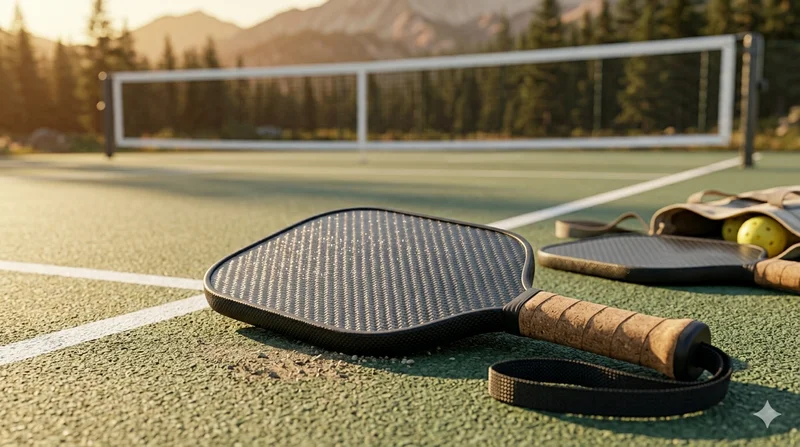
Carbon Fiber Pickleball Paddle
High-performance pickleball paddle with Toray T700 carbon fiber face and polypropylene honeycomb core. Delivers excellent power-to-weight ratio, spin generation, and vibration dampening for competitive play.
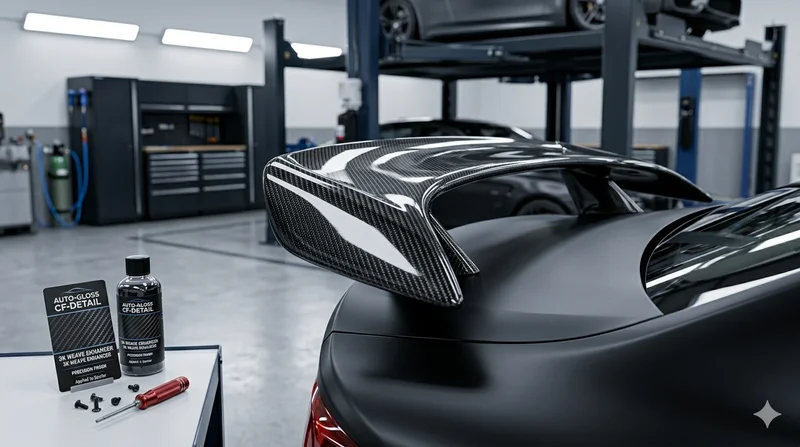
Carbon Fiber Automotive Spoiler
Automotive-grade carbon fiber spoiler manufactured using autoclave-cured pre-preg technology. Each spoiler is vacuum-bagged and oven-cured for optimal fiber-to-resin ratio, strength, and a flawless cosmetic finish.
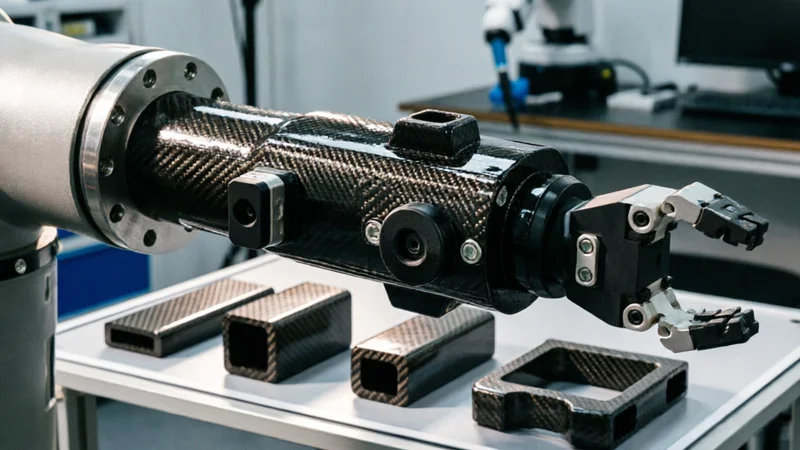
Carbon Fiber Robot End Effector Link — Custom Shape & Sensor Integration
Custom-shaped carbon fiber end effector links for robotic arms. Designed for automation integrators and research labs requiring lightweight, rigid connections between the robot wrist and gripper/tool. Can incorporate sensor mounting bosses, cable routing channels, and quick-change interfaces.

Custom Carbon Fiber Medical Device Components
Medical-grade carbon fiber components manufactured for imaging equipment, surgical instruments, and patient support systems. Carbon fiber's radiolucency (X-ray transparency) and high strength-to-weight ratio make it ideal for CT scanner beds, wheelchair frames, surgical robot arms, and MRI-compatible accessories. Biocompatible resin systems available.

Custom Carbon Fiber Musical Instrument Parts
Carbon fiber components for musical instrument manufacturing offering superior dimensional stability, low weight, and consistent acoustic properties. We produce carbon fiber bows, guitar necks, violin chin rests, drum shells, and wind instrument bodies. Carbon fiber instruments are immune to humidity changes and temperature fluctuations that affect wooden instruments.