
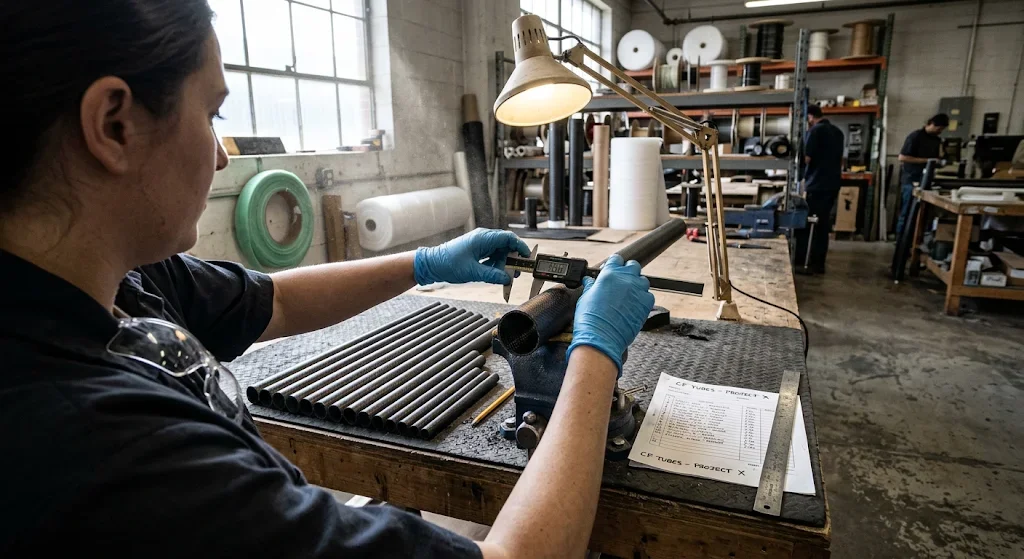
Choosing a carbon fiber tube is rarely about finding the strongest option on paper. Most buyers arrive with a load case already in hand — a drone arm, a mast, a robotic link — and need the winding, wall thickness, and diameter that match it. The carbon fiber tube market splits into three manufacturi
Introduction
Choosing a carbon fiber tube is rarely about finding the strongest option on paper. Most buyers arrive with a load case already in hand — a drone arm, a mast, a robotic link — and need the winding, wall thickness, and diameter that match it. The carbon fiber tube market splits into three manufacturing families with different stiffness profiles, run lengths, and price points, and picking the wrong family costs a rebuild rather than a few dollars.
This guide maps the three winding types, then walks through the checks that separate a reliable carbon fiber tube supplier from a catalog reseller, and closes with a buying sequence you can run before sending a purchase order.
Carbon Fiber Tube Types: Roll-Wound, Pultruded, and Filament Wound
Roll-wound (also called roll-wrapped) tubes place pre-impregnated fabric on a mandrel and cure under heat and pressure, giving quasi-isotropic lay-ups with tight outside-diameter tolerance. Pultruded tubes pull continuous fiber through a resin bath and a heated die, producing constant cross-section stock at the lowest cost per metre but with predominantly axial fiber direction. Filament-wound tubes wrap continuous tow around a rotating mandrel, producing high hoop strength for pressure and torsion loads at the cost of coarser outside surfaces and looser diameter control.
- Roll-wound: best stiffness-to-weight for structural arms and masts; outside-diameter tolerance typically ±0.1 mm; minimum orders often start at 5 to 10 pieces rather than single metres, and custom diameters carry a mandrel setup fee.
- Pultruded: cheapest per metre and available in stock diameters from 3 to 40 mm; fiber is mostly 0-degree, so bending stiffness in one plane dominates and multi-axis loads need a different lay-up family.
- Filament-wound: hoop-dominated walls suit pressure sleeves and torsion shafts; outside diameter varies more and surface finish is rougher unless the tube is post-ground after cure.
| Type | Fiber direction | OD tolerance | Typical use | Relative cost |
|---|---|---|---|---|
| Roll-wound | Quasi-isotropic | ±0.1 mm | Drone arms, masts, robotic links | High |
| Pultruded | Mostly 0° | ±0.2 mm | Bracing, rods, lightweight struts | Low |
| Filament-wound | Hoop-heavy | ±0.3 mm | Pressure sleeves, torsion shafts | Medium |
Match the family to the load path before comparing prices. A pultruded tube quoted against a roll-wound tube of the same diameter is not an equivalent part; the fiber architecture is different, and the bending stiffness can differ by a factor of two or more in the off-axis direction.
Where to Buy Carbon Fiber Tubes: Supplier Checks That Matter
Where to buy carbon fiber tubes comes down to what the supplier can verify, not what the catalog claims. Ask for the fiber grade (T300-class versus T700-class), the resin system (standard epoxy versus high-temperature grade), and the wall tolerance in writing. A supplier who cannot state outside-diameter tolerance or fiber specification on the quote is acting as a reseller, not a manufacturer, and the margin for error on a structural build is thin.
Lead time separates stock diameters from custom mandrels. Stock pultruded sizes ship in days; roll-wound custom diameters typically run 15 to 25 working days including mandrel cost, which is amortized across the batch. For first builds, request a sample length before committing to a full order — the cost of one sample is always lower than a batch of tubes with the wrong wall thickness or a bore that will not seat in a bearing.
Geography also changes the math. Domestic suppliers quote higher unit prices but shorter lead times and easier returns; overseas manufacturers typically win on price at quantities above 50 pieces, with freight and inspection cost added to the landed figure. For both routes, payment terms tied to a first-article dimensional report protect the buyer better than a discount.
Carbon Fiber Tube Supplier Selection: Grade, Tolerance, and Cut Length
Three fields on a carbon fiber tube supplier quote decide whether the part fits the design. Fiber grade sets stiffness and price: T300-class suits general structures, while T700-class raises tensile strength roughly 20 percent for the same diameter and wall, at a unit price typically 15 to 30 percent higher. Wall and outside-diameter tolerance determine fit in mounts and bearings — for press-fit motor mounts, hold OD to ±0.05 mm and specify the bore finish so the bearing seat does not walk under vibration. Cut length tolerance matters when tubes slot into frames: specify ±0.5 mm square-cut ends, and ask whether ends are cut dry or wet and whether they are deburred on both faces.
Finally, confirm documentation before wiring payment. Mill certificates for the fiber lot, resin batch traceability, and a dimensional report for the first article prevent surprises when a second order is placed six months later from a different production batch. A supplier who keeps those records is a supplier you can re-order from without re-qualifying the part.
Frequently Asked Questions
What wall thickness should a carbon fiber tube have for a drone arm?
For a 200 mm drone arm on a 1.5 kg all-up-weight quad, a roll-wound tube of 16 to 20 mm outside diameter with 1.0 to 1.5 mm wall is typical. Size against the motor-mount bending moment first, then check arm mass against the weight budget; wall thickness beyond what the moment requires only adds mass without adding usable stiffness.
Is pultruded carbon fiber tube good enough for structural use?
Yes, within its fiber architecture. Pultruded tubes are strong and stiff along the axis but weak in transverse bending and split more easily under hoop stress. Use them for struts and braces loaded along the axis; choose roll-wound or filament-wound for multi-axis loads or for parts that take side impact.
How do I verify a carbon fiber tube supplier before a large order?
Request three things: a written wall and OD tolerance, a fiber grade certificate (T300 or T700 class), and a sample length of the exact diameter. Verify sample straightness and cut-square on a surface plate before releasing the full purchase order, and keep the sample as the golden reference for incoming inspection.
Conclusion
Choosing a carbon fiber tube means matching the winding family to the load path, then verifying grade, tolerance, and cut length in writing before payment. Roll-wound suits structural arms, pultruded suits axial bracing, filament-wound suits pressure and torsion. YongXian manufactures roll-wound and pultruded carbon fiber tubes to spec: browse carbon fiber tubes or send your diameter and load requirements for a quote.
Part of topic
Related Articles
- Prusament PETG Carbon Fiber: Print Settings and Mechanical Behavior
- Small Carbon Fiber Rods: Diameters, Stock Lengths, and Uses
- How to Create Carbon Fiber Parts: Tooling Choices Compared
- A sheet of carbon fiber: Anatomy of Cloth, Resin, and Cure
- Full Carbon Fiber Plates: 100% Laminate vs Hybrid Layups
- How to Make Carbon Fiber Parts: Wet Layup to Autoclave
Interested in Our Products?
Contact our team for competitive pricing and technical specifications.
Get a QuoteRelated Products

Round Carbon Fiber Tube — 3K Plain Weave T700
Standard round carbon fiber tube manufactured from Toray T700 grade fiber with 3K plain weave. Offers balanced strength and stiffness for general industrial applications including robotics, automation, sports equipment, and aerospace structures.
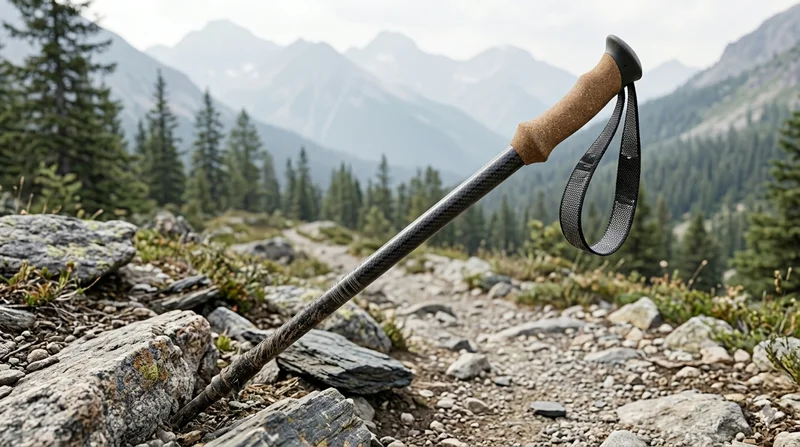
Carbon Fiber Trekking Pole
Lightweight carbon fiber trekking pole manufactured from high-grade carbon fiber tube. Weighs only 160g per pole while providing superior shock absorption and durability for hiking, trail running, and backpacking.

Carbon Fiber Pickleball Paddle
High-performance pickleball paddle with Toray T700 carbon fiber face and polypropylene honeycomb core. Delivers excellent power-to-weight ratio, spin generation, and vibration dampening for competitive play.

Square Carbon Fiber Tube — 3K Twill T700
Square cross-section carbon fiber tube manufactured with 3K twill weave for torsional strength. Preferred for structural frames, trusses, and support columns where rectangular geometry offers design flexibility.

Round Carbon Fiber Tube — 3K Twill
Lightweight and ultra-stiff round tubes ideal for drone frames, robotics, and structural applications.