
Choosing a carbon fiber rod for rc plane structures comes down to three decisions: diameter, solid versus hollow section, and how the rod joins its neighbors. Carbon rod replaces pine and fiberglass spars in almost every scratch build above two hundred grams because it removes weight from the tip of
Introduction
Choosing a carbon fiber rod for rc plane structures comes down to three decisions: diameter, solid versus hollow section, and how the rod joins its neighbors. Carbon rod replaces pine and fiberglass spars in almost every scratch build above two hundred grams because it removes weight from the tip of the leverage arm — the further out a gram sits on a wing, the more flutter and tip-heavy balance it costs you in the air. This article gives working diameter ranges for fuselage longerons, wing spars, and bracing, then covers when a carbon fiber tube for rc plane work is the better section, and finishes with the joining and cutting methods that keep ends from crushing or delaminating.
The advice applies to balsa, EPO foam, and composite kit builds alike; the loads change with scale but the selection logic does not.
Carbon Fiber Rod for RC Plane Airframes
Solid pultruded rod is the default because it is cheap, straight, and available in long stock. On a typical four-channel park flyer, a three-millimeter rod doubled through the wing spar carry-through handles hard loops without permanent set; on a one-two meter glider the same job often needs a four or five millimeter rod, or a hollow tube of similar outer diameter to keep wing root moment reasonable. Fuselage longerons on mid-size models commonly run three to four millimeter rods in pairs, triangulated with two millimeter bracing so the truss does not rely on the skin for shear.
- 1.5-2 mm rod: control horns, small brace wires, motor mount gussets on micro indoor models.
- 2.5-3 mm rod: park flyer wing spars, fuselage diagonals, tail boom inserts on foamies.
- 4-5 mm rod: two-meter glider spars, larger foamy wing joiners, primary longerons on 3D aerobatic planes.
- 6 mm and above: turbine-scale jet joiners and heavy scale fuselages; consider tube instead at this size for weight.
Carbon Fiber Tube for RC Plane: When Hollow Wins
A hollow tube of the same outer diameter as a solid rod carries bending load far more efficiently, because material sits at the outer radius where bending stress is highest. The practical trade is crush resistance and join complexity: tube ends crush under over-tightened screws and need glue-on hard points or inserts, while solid rod accepts a simple drilled pin or a press-fit into a drilled balsa block. As a rule of thumb, once the required rod diameter passes four millimeters, price out a carbon fiber tube for rc plane service at the same outer size — you will usually save two to four grams per meter and gain torsional stiffness as a free side effect.
Tube also solves the classic glider problem of a wing that must pass a spar through a narrow fuselage slot: a two-part tube with a captive internal joiner keeps alignment better than two solid rods butted in a sleeve.
| Section | Outer size | Weight (typical) | Best fit |
|---|---|---|---|
| Solid rod | 2 mm | ~4.6 g/m | braces, horn pins |
| Solid rod | 3 mm | ~10 g/m | park flyer spars |
| Solid rod | 4 mm | ~18 g/m | glider spars, longerons |
| Hollow tube | 4 x 3 mm | ~7 g/m | same job as 4 mm rod, lighter |
| Hollow tube | 6 x 4 mm | ~15 g/m | two-meter glider joiners |
Joining Carbon Fiber Rod and Tube
Three joint families cover most builds. Adhesive butt joints with a thin CA or epoxy fillet work for low-load diagonals cut square; prepare the rod ends with fine sanding and a solvent wipe so the resin surface is clean. Sleeve joints — a shorter length of tube slid over two rod ends — handle spar segments and tail booms, and should be bonded with thickened epoxy so the sleeve carries shear rather than relying on friction. Pin joints use a short steel or carbon pin through drilled rod ends for break-apart wings; drill at low speed with a carbide bit and support the exit side to avoid breakout.
Never clamp a tube directly under a metal screw head. Glue a hardwood or glass-fiber hard point into the tube end first, or use a threaded insert bonded with epoxy; the hard point spreads the clamp load so the laminate does not micro-crush and telegraph a crack down the tube.
Frequently Asked Questions
What diameter carbon fiber rod should I use for a 1.2 m foam wing spar?
For a sport flyer under about eight hundred grams all-up, a single three-millimeter rod through the carry-through, or two two-millimeter rods in a twin-spar layout about one-third chord apart, is the usual starting point. Push to four millimeters if the model is a pattern plane or you expect hard negative-g maneuvers.
Can I use carbon fiber rod for RC plane control pushrods?
Yes — one-and-a-half to two millimeter rod is standard for pushrods on models up to about two kilograms, terminated with a light pushrod end or a bent Z-bend at the horn. Rod stiffer than needed saves trim flutter; too thick a rod simply adds nose weight you must offset with ballast.
How do I cut carbon fiber rod without fraying the ends?
Use a fresh fine-tooth razor saw or a rotary tool with a diamond cutoff wheel at moderate speed, support the rod close to the cut, and finish the face with a light touch on flat sandpaper. Avoid diagonal cutters — they crush the section and start a split that travels under load.
Conclusion
Pick the carbon fiber rod for rc plane work by load path first and diameter second: bracing at two millimeters, park flyer spars at three, glider spars at four to five, and price out hollow tube once you pass four millimeters outside. Sleeve joints with thickened epoxy and hard points at every clamp location turn a bag of rods into a structure that survives hard landings. YongXian cuts and ships pultruded carbon rod and roll-wrapped tube to hobby and OEM orders — browse rod and tube stock or send your spar drawing for diameter advice.
Related Articles
- Carbon Fiber License Plate: Legality, Durability, and Custom Builds
- Carbon Fiber License Plate Frame Guide: Materials and Corrosion Notes
- Carbon Fiber Plate for Shoes Manufacturing: Line Walkthrough and Buyer Checks
- Best Carbon Fiber Plate Basketball Shoes: Court Performance Tradeoffs
- Carbon Fiber Plate for Big Toe: Hallux Rigidus Bracing Options
- Best Carbon Fiber Rod Blanks: Power, Action, and Build Tips
Interested in Our Products?
Contact our team for competitive pricing and technical specifications.
Get a QuoteRelated Products

Round Carbon Fiber Tube — 3K Plain Weave T700
Standard round carbon fiber tube manufactured from Toray T700 grade fiber with 3K plain weave. Offers balanced strength and stiffness for general industrial applications including robotics, automation, sports equipment, and aerospace structures.

Square Carbon Fiber Tube — 3K Twill T700
Square cross-section carbon fiber tube manufactured with 3K twill weave for torsional strength. Preferred for structural frames, trusses, and support columns where rectangular geometry offers design flexibility.
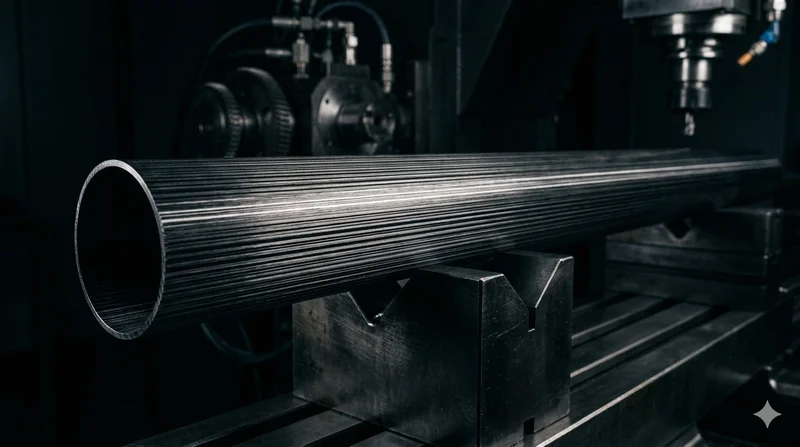
Round Carbon Fiber Tube — UD Unidirectional T700
Unidirectional (UD) round tube with all fibers aligned axially for maximum longitudinal stiffness. Ideal for applications requiring high bending rigidity with minimal weight, such as shafts, struts, and structural reinforcements.
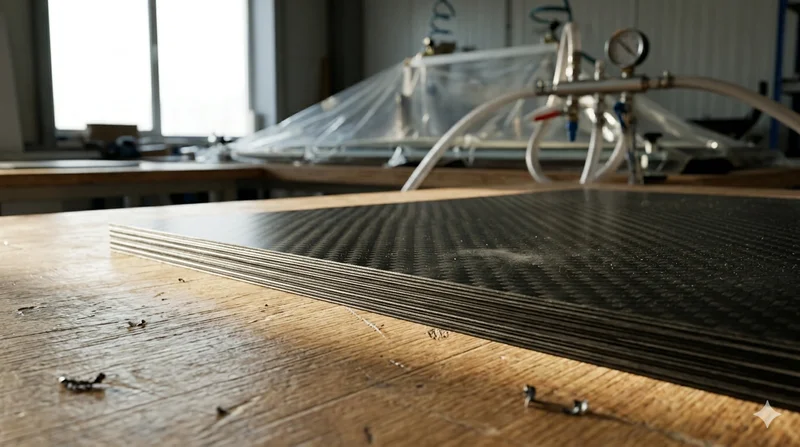
Carbon Fiber Plate — 3K Twill T700 3.0mm
Medium-thickness 3.0mm carbon fiber plate offering significantly higher load capacity while maintaining attractive 3K twill finish. Suitable for structural brackets, reinforcement plates, and load-bearing panels.

Round Carbon Fiber Tube — 3K Twill
Lightweight and ultra-stiff round tubes ideal for drone frames, robotics, and structural applications.