
The best carbon fiber plate basketball shoes are not the stiffest plated shoes on the rack, because basketball loads a plate sideways during cuts and landings in ways that forward-running racers never face. A full-length racing outline that feels snappy on a straight line can feel like a plank under
Introduction
The best carbon fiber plate basketball shoes are not the stiffest plated shoes on the rack, because basketball loads a plate sideways during cuts and landings in ways that forward-running racers never face. A full-length racing outline that feels snappy on a straight line can feel like a plank under a crossover, and a plate that ignores lateral torsion can push the ankle outward instead of locking the foot over the cushioning. Court performance therefore trades some rolling efficiency for containment, and the tradeoffs decide whether the plate helps or hurts.
This guide explains how carbon fiber plate basketball shoes differ from running builds at the laminate level, how to compare best carbon fiber plate shoes when the use case is court rather than road, and how carbon fiber plate for shoe longevity changes cleaning, rotation, and storage so the plate keeps its response past the first season.
Best Carbon Fiber Plate Basketball Shoes: What Changes on Court
Three design shifts separate court-ready plated shoes from racers, and each one is a deliberate trade against straight-line speed.
- Plate outline: shorter, often forked or midfoot-only, stopping before the lateral edge so the foot can still roll through a cut without fighting the laminate.
- Heel and sidewall structure: stiffer heel counters and foam sidewalls keep the foot stacked over the plate when the ankle rolls, instead of letting the foot slide off the carbon.
- Outsole compound: herringbone or multidirectional patterns with a rubber that grips dusty floors; a plate cannot compensate for a slippery outsole.
Mass follows these changes: plated basketball shoes land around 380 to 450 grams per shoe, heavier than racers because containment hardware is not free. If a model claims plate benefits at racer weight, ask where the sidewall foam and heel counter were cut.
Carbon Fiber Plate Basketball Shoes vs Running Builds
Running plates optimize forward roll: curved full-length laminates, low drop, and foams that return energy in the sagittal plane. Basketball builds optimize multi-directional stability: flatter plate geometry, higher or mid-range drop, and foams chosen for compression set resistance under repeated landings rather than pure bounce. The same laminate grade can serve both, but the outline and the surrounding structure change how force travels through the shoe.
Practical implication for buyers: a running plated shoe can work for casual shooting, but repeated lateral cuts accelerate foam collapse beside a full-length plate and can debond the edges. Court-first builds reinforce those zones. If you already own a plated racer and want court use, limit it to straight-line drills and buy a court model for full games.
How to Compare Best Carbon Fiber Plate Shoes for Court Use
Comparison tables for plated shoes usually quote stiffness and drop without saying which plane those numbers describe. For court use, reframe the criteria around containment and fatigue.
| Criterion | Road racer bias | Court bias | What to check |
|---|---|---|---|
| Plate outline | Full-length curved | Midfoot or forked | Does the laminate stop before the lateral edge? |
| Drop | 4 - 6 mm | 6 - 10 mm | Does the heel feel locked on landings? |
| Foam | PEBA-class bounce | Dense EVA or hybrid | Does the foam bag after two sessions? |
| Containment | Minimal sidewall | Wide base + sidewall | Does the foot slide over the plate on cuts? |
| Mass | 180 - 230 g | 380 - 450 g | Is the extra mass named and visible? |
Two sessions on a dusty court tell you more than any spec sheet: if the plate window shows crease lines, if the lateral foam compresses permanently, or if the bond line opens at the edge, that model is not court-ready regardless of marketing.
Carbon Fiber Plate for Shoe Longevity: Care and Rotation
Plates fail at the bond line and at the foam beside them long before the carbon itself wears out. Three habits extend life. First, rotate: two pairs in weekly rotation cut peak strain roughly in half compared with one pair worn daily. Second, dry after play — pull the insoles, open the tongues, and let the midsole dry away from direct heat; heat guns and radiators cook the adhesive. Third, inspect the plate window monthly for white crease marks or a visible gap along the bond; catching a small delamination early is a re-glue, catching it late is a replacement.
- Rotation: two pairs, alternating days, reduces peak bond strain.
- Drying: insoles out, tongues open, ambient heat only.
- Inspection: monthly check of the plate window and bond line.
- Storage: cool, dry, not stacked under heavy boxes.
Dust management matters as much as the plate itself: a dusty outsole multiplies the lateral force the plate has to resist, because the foot slips and the ankle compensates. Brush the outsole after every session and store shoes with the tongues open; dried mud in the herringbone pattern behaves like sandpaper against the rubber and shortens both traction and plate life.
Frequently Asked Questions
Are the best carbon fiber plate basketball shoes worth it over solid rubber court shoes?
For players who value a stiffer platform on jump landings and a clearer forefoot lever on push-off, yes — if the plate is court-designed. For players with a history of ankle sprains, containment geometry matters more than the plate, so prioritize sidewall structure first.
Can I use running carbon fiber plate basketball-adjacent shoes for full games?
Not recommended. Running outlines load the lateral edge during cuts and accelerate foam collapse and edge debonding. Use racers for straight-line work only and choose a court-specific build for games.
How long should a carbon fiber plate for shoe last under regular play?
With rotation and proper drying, plate response typically holds for a full season of regular play for most players; the foam often ages first. Inspect the bond line monthly and treat any edge gap as a stop-play signal until re-glued.
Conclusion
The best carbon fiber plate basketball shoes win by trading rolling efficiency for containment: shorter outlines, structured sidewalls, and foams that resist compression set. Compare court models on plate outline, containment, and foam fatigue rather than on racer stiffness numbers alone, and rotate and dry pairs so the bond line outlasts the season.
YongXian supplies carbon fiber plate stock and stamped midfoot inserts for footwear brands building court models: controlled-stiffness laminates, forked and midfoot outlines, and batch bond-test data for plate-to-foam systems. Review plate specifications for court builds or request a sample insert for your next mold trial.
Part of topic
Related Articles
- Carbon Fiber Plate for Big Toe: Hallux Rigidus Bracing Options
- Best Carbon Fiber Rod Blanks: Power, Action, and Build Tips
- Best Carbon Fiber License Plate Frames: Fit, Finish, and Fade Resistance
- Best Carbon Fiber Plate Shoes: How to Compare Stiffness and Drop
- Carbon Fiber Plate Shoes: What the Insert Changes
- Carbon Fiber Plate for Running Shoes: Stiffness vs Energy Return
Interested in Our Products?
Contact our team for competitive pricing and technical specifications.
Get a QuoteRelated Products

Round Carbon Fiber Tube — 3K Plain Weave T700
Standard round carbon fiber tube manufactured from Toray T700 grade fiber with 3K plain weave. Offers balanced strength and stiffness for general industrial applications including robotics, automation, sports equipment, and aerospace structures.

Square Carbon Fiber Tube — 3K Twill T700
Square cross-section carbon fiber tube manufactured with 3K twill weave for torsional strength. Preferred for structural frames, trusses, and support columns where rectangular geometry offers design flexibility.
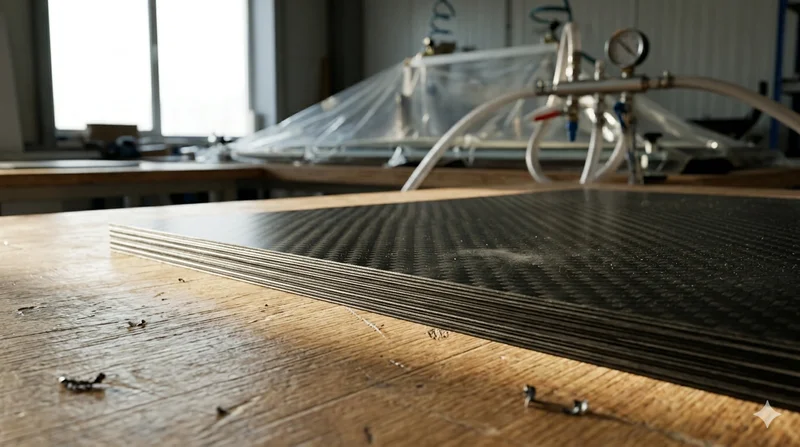
Carbon Fiber Plate — 3K Twill T700 3.0mm
Medium-thickness 3.0mm carbon fiber plate offering significantly higher load capacity while maintaining attractive 3K twill finish. Suitable for structural brackets, reinforcement plates, and load-bearing panels.
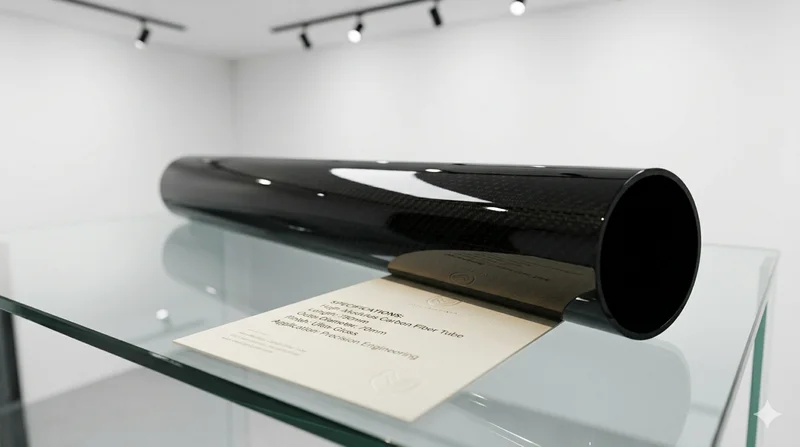
High Modulus Round Carbon Fiber Tube — M40
High modulus round tube manufactured with M40 grade fiber (tensile modulus 400 GPa). Designed for applications where maximum stiffness-to-weight ratio is critical, such as optical systems, precision machinery, and aerospace structures.
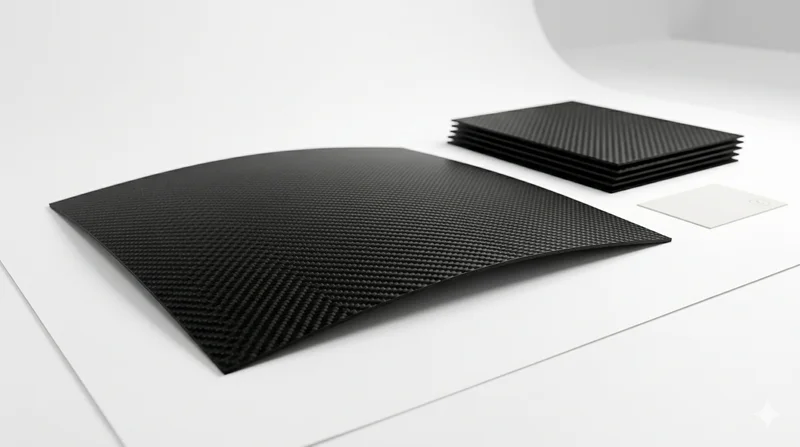
Carbon Fiber Plate — 3K Twill T700 1.5mm
Thin 1.5mm carbon fiber plate with 3K twill weave surface. Lightweight and stiff, commonly used for covers, panels, drone bodies, and applications requiring a premium aesthetic appearance.