
Carbon fiber plate shoes are trainers whose midsole hides a thin composite leaf spring, and the category grew from a racing curiosity into the default build for competitive road running in under a decade. The plate itself is a laminate — usually unidirectional plies stacked to roughly 0.8 to 1.3 mil
Introduction
Carbon fiber plate shoes are trainers whose midsole hides a thin composite leaf spring, and the category grew from a racing curiosity into the default build for competitive road running in under a decade. The plate itself is a laminate — usually unidirectional plies stacked to roughly 0.8 to 1.3 millimeters — curved to follow the rocker of the sole and bonded between foam layers. What it changes is not simply "more energy": it alters how the foam is loaded, how the foot rolls over the forefoot, and where stiffness sits along the shoe.
This overview explains what a carbon fiber plate in shoe construction actually does, how manufacturers build and position the plate, what fit and break-in require from the wearer, and how to decide whether carbon fiber plate for shoes suits your training — or whether an unplated midsole serves you better.
What a Carbon Fiber Plate in Shoe Construction Actually Does
The plate has three mechanical jobs. First, it spreads the point load under the metatarsal heads across a wider area of foam, so the midsole compresses more evenly instead of bulging locally. Second, its curvature acts as a lever: as the foot pivots over the toe spring, the loaded plate helps roll the body forward rather than letting energy dissipate into foam deformation. Third, it stiffens the forefoot as a structure, reducing how much the shoe itself bends at the metatarsophalangeal joint.
- Load spreading: the laminate bridges the metatarsals, cutting peak local compression in the foam by a meaningful margin during push-off.
- Rolling lever: a curved plate with 15 to 25 millimeters of toe spring engages early in stance and shortens the perceived transition.
- Bending control: by taking over forefoot flex, the plate shifts work from the small joints of the foot toward the calf complex.
- Foam protection: the plate limits how far the foam can shear and crease, which slows the permanent set that makes a trainer feel dead.
None of these effects create energy. They redirect and preserve it, which is why the foam underneath matters as much as the plate above it.
Carbon Fiber Plate Shoes: How the Plate Is Built
Plates are cut from flat laminates rather than molded as complex shapes. A factory lays up unidirectional carbon plies — or spread-tow fabric for a thinner, flatter sheet — in a resin system, cures the panel, then waterjet or CNC cuts the plate outline to a tolerance of a fraction of a millimeter. Curvature comes later: the flat blank is stamped over a form or laid into the midsole tooling so the finished plate carries a fixed arc. Edges are sanded and sealed because a sharp cut edge is where delamination starts.
Resin choice drives temperature behavior. Standard epoxy plates are light and stiff but soften noticeably on a black outsole surface above 60 degrees Celsius; high-temperature systems hold their modulus in summer asphalt conditions. Fiber grade matters less than people assume: T300-class and T700-class carbon both deliver far more stiffness than a shoe geometry can use, so the real variables are ply count, orientation, and thickness — not the fiber brand on the datasheet.
Carbon Fiber Plate for Shoes: Fit, Sizing, and Break-In
Plated shoes fit differently from trainers without a plate, because the insert removes midsole flex exactly where a conventional shoe creases. The shoe should feel snug through the midfoot and heel with about a thumb's width of room in the toe box; a plate that is too long levers against the wrong pivot point and the transition feels late and clunky.
- First week: introduce plated shoes over 20 to 30 percent of weekly volume, keeping hard sessions in your old pair until the calves adapt.
- Lacing: a secure midfoot lock keeps the foot stacked over the plate; a loose upper lets the foot slide and wastes the lever.
- Sock and insole: thin racing socks preserve the intended stack height, while a bulky aftermarket insole can tilt the foot off the plate's curvature.
- Inspection: check for edge lift or a white crease line along the plate window after the first 100 kilometers — early delamination is a bonding issue, not a wear issue.
Plate Types Compared: Full-Length, Half-Length, and Forked
Manufacturers choose plate outlines to trade stiffness against weight and flexibility, and the outline matters more than small thickness differences. The table compares the three common builds at typical road-running specifications.
| Plate type | Thickness | Toe spring | Added weight (pair) | Best suited to |
|---|---|---|---|---|
| Full-length flat | 0.9 - 1.2 mm | 18 - 25 mm | 45 - 60 g | Marathon pace, neutral gait |
| Full-length curved | 0.8 - 1.1 mm | 20 - 28 mm | 50 - 65 g | Front and midfoot strikers |
| Half-length | 1.0 - 1.4 mm | 15 - 22 mm | 30 - 45 g | Tempo runs, lighter runners |
| Forked or split | 0.9 - 1.3 mm | 18 - 25 mm | 35 - 50 g | Runners needing forefoot flexibility |
| No plate | - | 12 - 20 mm | baseline | Easy days, injury rehab |
Weight figures include the plate alone, not the denser foam that often accompanies it; a plated racing shoe therefore gains far more than the raw plate weight suggests.
Who Should Wear Carbon Plate Shoes — and Who Should Not
Plated shoes reward runners who hold form under fatigue: the plate amplifies an efficient roll and punishes a collapsing one. Runners logging consistent quality sessions, targeting a race in the next several months, or racing 10 kilometers and beyond are the natural audience. Recovery-day joggers, runners with a history of metatarsal stress reactions, and athletes in early return-from-injury phases usually do better in flexible, unplated trainers where the foot does the work. A sensible middle path is a single plated pair in rotation rather than a full conversion — you keep the advantage on hard days and the adaptation risk stays low.
Frequently Asked Questions
Do carbon fiber plate shoes actually make you faster?
They can, but the mechanism is indirect: the plate preserves foam energy and smooths the roll, so the gain depends on your gait and the foam beneath it. Well-documented improvements show up at threshold and race paces for runners with efficient form; easy-day jogging gains almost nothing from the same insert.
How long does a carbon fiber plate in shoe last?
The plate itself outlives the foam. Expect the midsole cushioning to fade between 500 and 800 kilometers while the laminate keeps its stiffness, so retirement is usually decided by the foam rather than the insert. Edge lift or clicking sounds mean bonding has failed and the pair should come out of rotation early.
Can beginners train in carbon fiber plate for shoes?
Yes, in moderation. Start with one or two sessions per week, keep easy runs in conventional trainers, and give your calves four to six weeks to adapt. Beginners benefit most from the plate on steady efforts, not on every run.
Conclusion
A plate changes load spreading, rolling leverage, and forefoot stiffness — it redirects the foam's energy instead of creating new energy, which is why foam quality and plate geometry must be judged together. Match the outline to your gait, introduce the shoe gradually, and let the fit keep your foot stacked over the insert. The overview above should let you read a specification sheet — thickness, ply count, toe spring, resin grade — and know which numbers describe your stride.
YongXian manufactures carbon fiber plates for footwear programs: unidirectional and spread-tow laminates from 0.6 to 1.5 millimeters, stamped curvature, waterjet-trimmed edges, and batch bonding tests. Review plate materials or send your plate drawing for a quote.
Part of topic
Related Articles
- Best Carbon Fiber Plate Basketball Shoes: Court Performance Tradeoffs
- Carbon Fiber Plate for Big Toe: Hallux Rigidus Bracing Options
- Best Carbon Fiber Rod Blanks: Power, Action, and Build Tips
- Best Carbon Fiber License Plate Frames: Fit, Finish, and Fade Resistance
- Best Carbon Fiber Plate Shoes: How to Compare Stiffness and Drop
- Carbon Fiber Plate for Running Shoes: Stiffness vs Energy Return
Interested in Our Products?
Contact our team for competitive pricing and technical specifications.
Get a QuoteRelated Products

Round Carbon Fiber Tube — 3K Plain Weave T700
Standard round carbon fiber tube manufactured from Toray T700 grade fiber with 3K plain weave. Offers balanced strength and stiffness for general industrial applications including robotics, automation, sports equipment, and aerospace structures.

Square Carbon Fiber Tube — 3K Twill T700
Square cross-section carbon fiber tube manufactured with 3K twill weave for torsional strength. Preferred for structural frames, trusses, and support columns where rectangular geometry offers design flexibility.
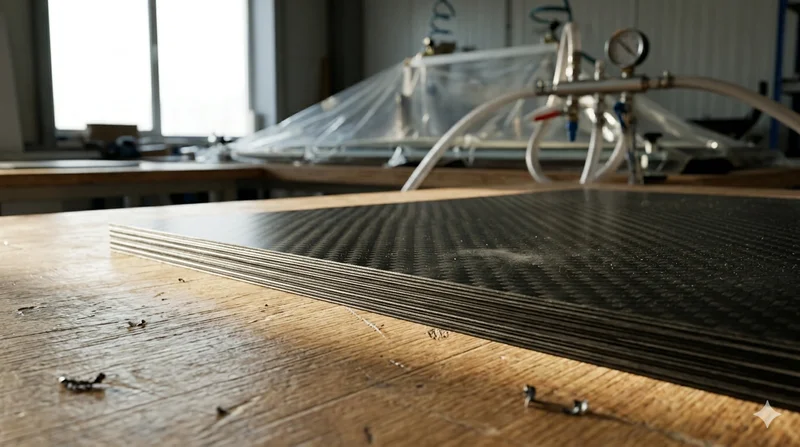
Carbon Fiber Plate — 3K Twill T700 3.0mm
Medium-thickness 3.0mm carbon fiber plate offering significantly higher load capacity while maintaining attractive 3K twill finish. Suitable for structural brackets, reinforcement plates, and load-bearing panels.
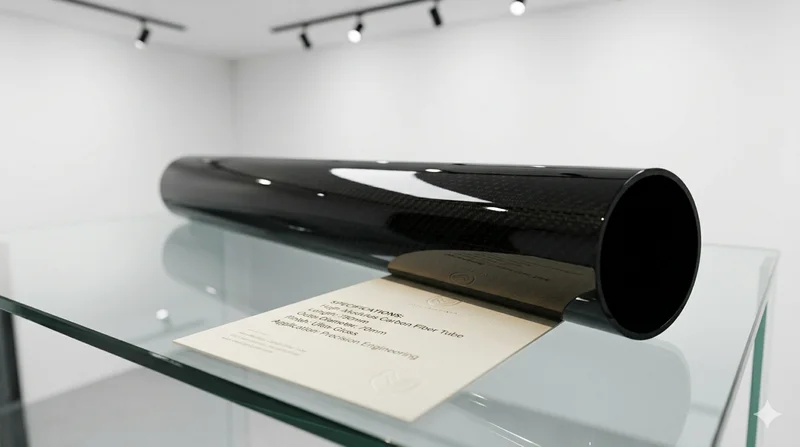
High Modulus Round Carbon Fiber Tube — M40
High modulus round tube manufactured with M40 grade fiber (tensile modulus 400 GPa). Designed for applications where maximum stiffness-to-weight ratio is critical, such as optical systems, precision machinery, and aerospace structures.
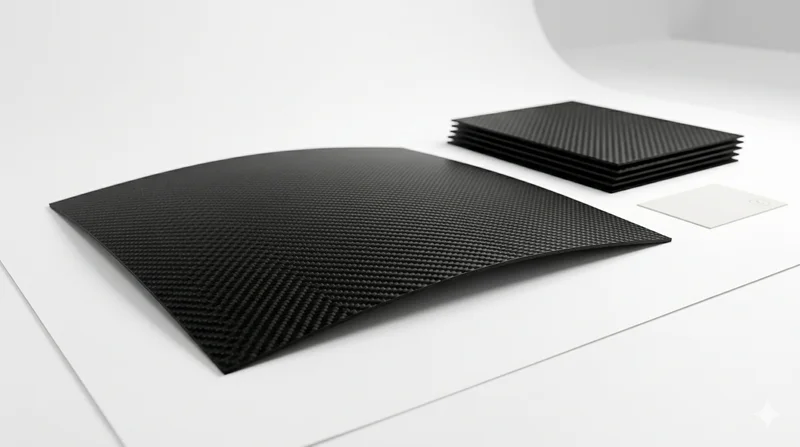
Carbon Fiber Plate — 3K Twill T700 1.5mm
Thin 1.5mm carbon fiber plate with 3K twill weave surface. Lightweight and stiff, commonly used for covers, panels, drone bodies, and applications requiring a premium aesthetic appearance.