
A carbon fiber license plate is not one product but two very different ones: the reflective plate the state issues, and the composite structure people build to carry, frame, or replace it. Almost every legal problem starts when those two get confused — the plate itself is a regulated safety item wit
Introduction
A carbon fiber license plate is not one product but two very different ones: the reflective plate the state issues, and the composite structure people build to carry, frame, or replace it. Almost every legal problem starts when those two get confused — the plate itself is a regulated safety item with retroreflective sheeting, serial numbers, and issued ownership, while a carbon fiber license plate frame is unregulated trim that mounts around it. This article separates the two, covers what carbon actually survives on a bumper, then walks through custom plate builds for show cars, track days, and off-road rigs without steering anyone into a traffic stop.
The short version for readers in a hurry: keep the state-issued plate face legal and legible, put the carbon into frames, backers, and hidden mounts, and treat any full-carbon plate as a show piece unless a jurisdiction explicitly permits it. Owners who skip this split end up with expensive tickets and a box of unused carbon in the garage, while owners who respect it get the look and the weight saving without a second traffic stop. Everything below expands on that split with concrete build details and durability numbers.
Is a Carbon Fiber License Plate Legal on Public Roads?
In nearly every jurisdiction that issues plates, the answer is no for a fully home-made plate. Regulated plates carry retroreflective sheeting bonded under controlled conditions, embossed or laser-serialized characters, and a physical description that matches a registration record; a fabricated carbon plate cannot reproduce the retroreflection class, and in many places even painting over reflective sheeting voids the plate. What remains legal almost everywhere is carbon hardware around the plate: a carbon fiber license plate frame with open top and bottom so the state name and registration stickers stay visible, carbon bolt caps, and carbon backing panels that sit behind the plate without covering characters.
- Legal in most places: open-face frames, bolt caps, backing panels, hidden camera mounts behind the plate.
- Gray area: tinted covers over the plate, frames that shade the top registration sticker, illuminated frames that wash out retroreflection at night.
- Effectively illegal for road use: fully fabricated plates, plates with non-reflective faces, any plate that obscures characters, borders, or stickers.
Track-only and show cars can run whatever the sanctioning body allows off public roads, but the same car on the highway is held to the traffic code, not the show rules.
Durability: Carbon Fiber License Plate Frame in Real Conditions
Carbon laminate itself is chemically stable, but the assembly lives in one of the harshest places on a vehicle: road spray with salt and de-icers, bug acid, driveway chemicals, and constant UV from a low rear window angle. The failure mode is rarely the fiber — it is the clear coat chalking, the edge sealer wicking moisture, and galvanic corrosion where a carbon part touches an aluminum or steel fastener. A carbon fiber license plate frame that is edge-sealed with a UV-stable clear coat, drilled with isolation bushings at the bolts, and finished in a two-part polyurethane will still look right after several winters; an unsealed frame will craze and go chalk-white at the edges within a year in a salt-belt climate.
| Threat | Carbon plate / frame | Aluminum | ABS plastic |
|---|---|---|---|
| UV chalking (3 years outdoor) | clear coat dependent | anodize holds | yellows, stays tough |
| Road salt corrosion | none in fiber | pitting possible | none |
| Galvanic pair with steel bolt | needs isolation bushing | isolated by default | none |
| Impact from road debris | cracks, does not dent | dents | flexes back |
| Typical weight (frame) | 40-80 g | 90-140 g | 60-100 g |
Carbon Fiber License Plate Custom Builds
Custom work splits into three tiers. The first is a true carbon fiber license plate custom plate made as a backing or novelty face: a two or three millimeter laminate cut to the jurisdiction's plate outline, clear-coated, and used as a show piece or as a rigid backer behind the real plate so the metal does not flutter at highway speed. The second tier is a frame build — molds or CNC-machined formers wrapped in twill, vacuum-bagged or infused, then trimmed to open-face geometry so stickers stay legal. The third tier is structural: hidden camera brackets, lock housings, and anti-theft plate frames with captive hardware, all machined from plate stock where fasteners already isolate galvanic pairs.
For any build intended to see road spray, specify edge sealer in the drawing, isolation bushings at every steel fastener, and a clear coat with a documented UV package; asking a shop for "just carbon" without those three notes is how frames come back chalky in one season.
Frequently Asked Questions
Can I put a carbon fiber license plate frame on a leased vehicle?
Usually yes — frames are trim, not modifications to the plate or the vehicle structure, and lessors rarely restrict bolt-on cosmetic hardware. Check the lease terms for anything that counts as exterior modification, and keep the original frame for return day.
Does a carbon fiber license plate custom plate pass inspection?
Not for the plate face itself in any jurisdiction we track — inspections check retroreflection, character embossing, and serial match. Custom carbon work passes when it lives in the frame, backer, or hidden mounts around a state-issued plate.
What is the best carbon fiber license plate frame for salt-belt winters?
An open-face frame with edge-sealed laminate, polyurethane clear coat, and non-metallic or isolated mounting bushings. Avoid frames that fully enclose the plate or cover stickers; no amount of carbon quality compensates for a design that hides registration markers.
Conclusion
Keep the state-issued plate legal and put the carbon where it belongs: frames, backers, and hidden mounts built with edge sealer, isolation bushings, and a real UV clear coat. That combination survives salt winters, stays inspection-clean, and still shows the weave. YongXian molds and machines carbon plate and frame stock to drawing — browse carbon plate inventory or send your frame outline for a layup proposal.
Part of topic
Related Articles
- Carbon Fiber Rod for RC Plane Builds: Diameters, Joins, and Sizing
- Carbon Fiber License Plate Frame Guide: Materials and Corrosion Notes
- Carbon Fiber Plate for Shoes Manufacturing: Line Walkthrough and Buyer Checks
- Best Carbon Fiber Plate Basketball Shoes: Court Performance Tradeoffs
- Carbon Fiber Plate for Big Toe: Hallux Rigidus Bracing Options
- Best Carbon Fiber Rod Blanks: Power, Action, and Build Tips
Interested in Our Products?
Contact our team for competitive pricing and technical specifications.
Get a QuoteRelated Products

Round Carbon Fiber Tube — 3K Plain Weave T700
Standard round carbon fiber tube manufactured from Toray T700 grade fiber with 3K plain weave. Offers balanced strength and stiffness for general industrial applications including robotics, automation, sports equipment, and aerospace structures.

Square Carbon Fiber Tube — 3K Twill T700
Square cross-section carbon fiber tube manufactured with 3K twill weave for torsional strength. Preferred for structural frames, trusses, and support columns where rectangular geometry offers design flexibility.
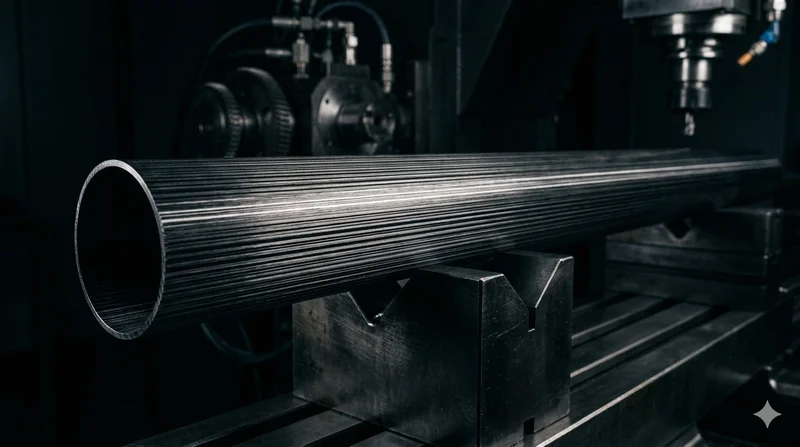
Round Carbon Fiber Tube — UD Unidirectional T700
Unidirectional (UD) round tube with all fibers aligned axially for maximum longitudinal stiffness. Ideal for applications requiring high bending rigidity with minimal weight, such as shafts, struts, and structural reinforcements.
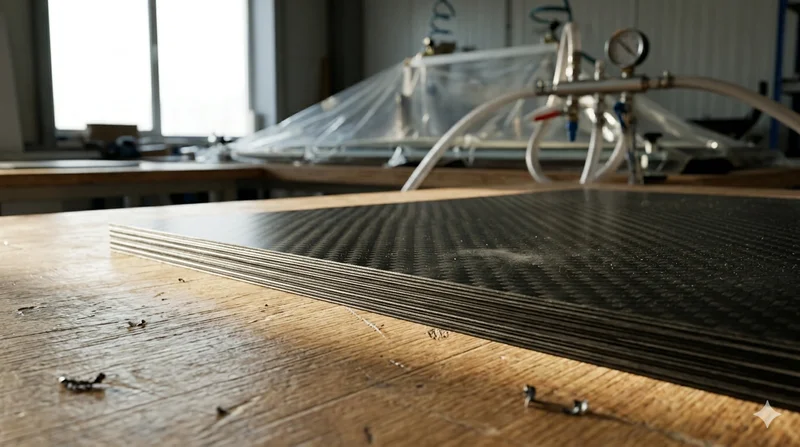
Carbon Fiber Plate — 3K Twill T700 3.0mm
Medium-thickness 3.0mm carbon fiber plate offering significantly higher load capacity while maintaining attractive 3K twill finish. Suitable for structural brackets, reinforcement plates, and load-bearing panels.

Round Carbon Fiber Tube — 3K Twill
Lightweight and ultra-stiff round tubes ideal for drone frames, robotics, and structural applications.