
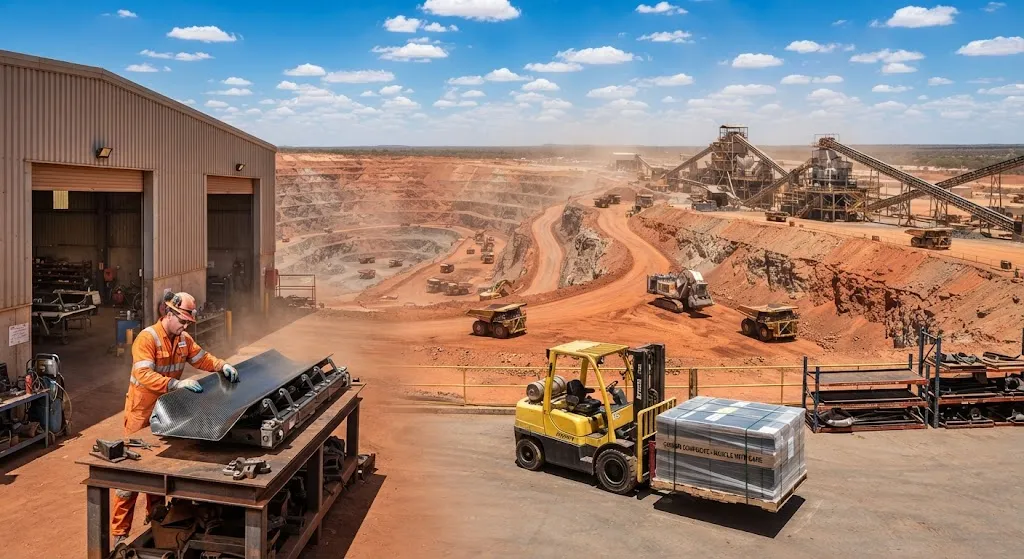
Botswana is Africa's largest diamond producer by value, with the diamond sector contributing approximately 30% of GDP and 70-80% of export earnings. The country's mining industry operates in extreme conditions, with open-pit and underground mines in the Kalahari Desert experiencing temperature...
Introduction
Botswana is Africa's largest diamond producer by value, with the diamond sector contributing approximately 30% of GDP and 70-80% of export earnings. The country's mining industry operates in extreme conditions, with open-pit and underground mines in the Kalahari Desert experiencing temperature swings from -5 degrees Celsius in winter to 42 degrees Celsius in summer. These harsh operating environments create specific demands for materials that resist abrasion, impact, and thermal cycling while minimizing maintenance downtime. Carbon fiber reinforced polymer composites are increasingly being adopted for mining equipment protection, structural components, and specialized tools that must withstand these conditions.
This article analyzes the Botswana mining market's composite material requirements, the infrastructure development projects driving demand, and the supply chain considerations for carbon fiber suppliers entering the Southern African market.
For composite suppliers evaluating the Botswana market, the critical success factors are material performance under extreme abrasion, supply chain reliability to remote mine sites, and partnerships with established mining equipment distributors. Explore our carbon fiber and abrasion-resistant composite range, including mining-grade systems for harsh environment applications, or contact our technical team to discuss material specifications for the Botswana mining sector.
Botswana Mining Industry Overview
Botswana's mining sector is dominated by diamond extraction, with major operations at Jwaneng (the world's richest diamond mine by value) and Orapa (one of the largest by area). The industry is evolving from pure extraction toward beneficiation and value addition, creating new opportunities for advanced materials. Key market characteristics include:
- Production scale: Botswana produces approximately 20-25 million carats annually, with Jwaneng alone contributing 10-12 million carats. The total mining sector employs approximately 8,000-10,000 workers directly, with an additional 20,000-30,000 in support services.
- Equipment investment: Major mining companies Debswana (a joint venture between De Beers and the Botswana government) and Lucara Diamond Corp invest $200-400 million annually in equipment replacement and upgrades, including haul trucks, drilling equipment, conveyor systems, and processing plant components.
- Operational challenges: The Kalahari environment creates specific equipment challenges including high dust loads that accelerate abrasive wear, extreme temperature cycling that causes thermal fatigue in metal components, and remote site locations that make maintenance logistics costly.
- Local content policy: The Botswana government has implemented local content requirements that mandate increasing percentages of domestic procurement, creating opportunities for local composite fabrication facilities and repair workshops.
- Diamond beneficiation: Botswana has established diamond cutting and polishing facilities in Gaborone, with plans to expand sorting and valuation capabilities. These precision operations require vibration-damping workstations and contamination-free handling equipment where composites offer advantages over metals.
The mining sector's equipment modernization cycle, combined with government infrastructure spending, is creating a growing market for advanced materials including carbon fiber composites.
Composite Applications in Diamond Mining
Carbon fiber composites address specific pain points in diamond mining operations, from equipment protection to processing efficiency. The primary applications include:
- Conveyor belt scrapers and guides: Diamond ore is extremely abrasive, with kimberlite containing hard silicate minerals that rapidly wear steel components. Carbon fiber-reinforced polyurethane scrapers last 3-5 times longer than steel equivalents, reducing replacement frequency and downtime. The weight reduction also reduces conveyor motor energy consumption by 15-20%.
- Drill pipe and rod protection: Diamond drilling uses HQ and NQ diameter drill rods that experience severe abrasion from kimberlite cuttings. Carbon fiber protective sleeves and centralizers extend rod life by 40-60%, reducing the cost per meter drilled.
- Crusher liner reinforcement: Primary and secondary crusher liners in kimberlite processing experience impact and abrasion that causes rapid wear. Composite overlay patches applied to high-wear zones extend liner life by 20-30%, reducing the frequency of costly crusher shutdowns.
- Screen mesh and sieve panels: Diamond recovery uses vibrating screens with fine mesh apertures (1-5 millimeters). Carbon fiber composite screen panels offer higher wear resistance than polyurethane alternatives while maintaining the aperture precision needed for accurate diamond recovery.
- Operator cabin insulation: Mining equipment cabins in the Kalahari require thermal insulation to manage the extreme temperature range. Composite sandwich panels with reflective foil cores provide superior insulation compared to fibreglass blankets while adding structural rigidity to the cabin frame.
Infrastructure Development and Composite Demand
Botswana's infrastructure development program, funded by diamond revenues, is creating additional demand for carbon fiber composites in transportation, water, and energy projects. The table below summarizes key infrastructure projects with composite material potential:
| Project | Value (USD) | Timeline | Composite Application Potential |
|---|---|---|---|
| Trans-Kalahari Railway expansion | 2.5-3.0 billion | 2026-2032 | Rail bridge reinforcements, signal enclosures, cable protection |
| Masama coal mine development | 400-500 million | 2025-2028 | Conveyor systems, crusher components, processing equipment |
| Mohembo Bridge replacement | 150-200 million | 2026-2029 | Deck panels, railing systems, expansion joint covers |
| Northern Water Utilities upgrades | 300-400 million | 2025-2030 | Pipe rehabilitation, tank reinforcement, valve components |
| Solar farm installations (500 MW) | 600-800 million | 2026-2030 | Solar panel mounting structures, cable trays, junction boxes |
| Gaborone-Sir Seretse Khama Airport expansion | 200-300 million | 2027-2030 | Terminal cladding, canopy structures, luggage handling systems |
The combined infrastructure pipeline represents $4-5 billion in investment over the next five years, with composite materials applicable to approximately 5-8% of total project value, creating a potential market of $200-400 million for carbon fiber and advanced composites.
Supply Chain Considerations
Supplying carbon fiber composites to Botswana presents unique logistics challenges that suppliers must address to be competitive:
- Import routes: Botswana is landlocked, with primary import routes through Durban (South Africa), Walvis Bay (Namibia), and Maputo (Mozambique). Transit times from European or Asian suppliers range from 14-28 days, requiring careful inventory planning.
- Cold chain requirements: Epoxy resin systems and pre-impregnated carbon fiber materials require temperature-controlled storage and transport. The Kalahari climate, with summer temperatures exceeding 40 degrees Celsius, makes cold chain logistics critical for maintaining material properties.
- Customs and duties: Botswana is a member of the Southern African Customs Union (SACU), with unified external tariffs. Carbon fiber materials attract import duties of 10-15%, though mining equipment may qualify for duty exemptions under the Mining Equipment Importation Program.
- Local fabrication capability: Currently, no domestic carbon fiber manufacturing exists in Botswana. Composite fabrication is limited to glass fiber laminates for construction applications. Establishing local carbon fiber processing capability would reduce lead times and qualify for local content incentives.
- Distribution network: Mining sites are located in remote areas with limited road infrastructure. Suppliers must establish distribution hubs in Gaborone and Francistown with 4x4 vehicle capability for last-mile delivery to mine sites.
Market Entry Strategy
Carbon fiber suppliers targeting the Botswana mining and infrastructure market should consider a phased approach:
- Phase 1 — Direct supply to mining companies: Establish relationships with Debswana, Lucara Diamond Corp, and other mining operators through their Johannesburg-based procurement offices. Provide material samples and technical data for conveyor, drilling, and crusher applications.
- Phase 2 — Partnership with equipment distributors: Collaborate with established mining equipment distributors such as Barloworld Equipment and Bell Equipment who have existing relationships with Botswana mines and can provide local sales and technical support.
- Phase 3 — Local fabrication facility: Establish a small composite fabrication workshop in Gaborone or Francistown to produce custom mining components, repair damaged equipment, and provide on-site technical service. This facility can serve as a hub for the broader Southern African mining market.
- Phase 4 — Infrastructure project supply: Bid on composite material supply contracts for the infrastructure pipeline, targeting bridge deck panels, water pipe rehabilitation, and solar mounting structures where carbon fiber composites offer durability advantages.
Frequently Asked Questions
Why should diamond mining operations consider carbon fiber composites over traditional steel and rubber?
Carbon fiber composites offer three advantages for diamond mining applications. First, the abrasion resistance of carbon fiber-reinforced polyurethane exceeds steel by 3-5 times in kimberlite environments, dramatically reducing replacement frequency and the associated downtime costs that can exceed $50,000 per hour for major processing equipment. Second, the weight reduction of 60-80% compared to steel components reduces conveyor energy consumption and makes equipment handling safer and faster during maintenance. Third, composite components can be molded to complex geometries that optimize material flow and reduce dead zones where diamond-bearing material can accumulate, improving recovery efficiency. The higher initial material cost is typically recovered within 6-12 months through reduced maintenance and downtime.
What are the main challenges for composite materials in the Kalahari Desert environment?
The Kalahari environment presents three primary challenges for composite materials. Extreme UV exposure can degrade resin systems if proper UV stabilizers are not included in the formulation, causing surface chalking and reduced mechanical properties over 2-5 years. Temperature cycling from -5 to 42 degrees Celsius creates thermal stresses at material interfaces, requiring composites with matched coefficients of thermal expansion. High dust loads can abrade exposed composite surfaces, making protective coatings or gel-coat finishes essential. These challenges can be addressed through proper material selection, UV-resistant resin systems, and protective surface treatments that are standard in mining-grade composite specifications.
How does the local content requirement affect carbon fiber suppliers entering Botswana?
Botswana's local content policy requires mining companies to increase domestic procurement percentages over time, with targets typically ranging from 30-50% of total procurement value. For carbon fiber suppliers, this means that pure import strategies face long-term disadvantage. Establishing local fabrication capability, even at modest scale, qualifies for local content credits and provides preferential access to mining company procurement. Joint ventures with Botswana-owned companies further strengthen the local content proposition. The government has also announced tax incentives for manufacturing investment, including accelerated depreciation and reduced corporate tax rates for qualifying manufacturing facilities.
Conclusion
Botswana's diamond mining industry and infrastructure development program are creating a growing, if specialized, market for carbon fiber composites. The harsh Kalahari operating environment creates genuine performance advantages for composites over traditional materials in equipment protection, processing efficiency, and maintenance cost reduction. The $4-5 billion infrastructure pipeline adds diversified demand beyond mining, while local content requirements incentivize supplier investment in domestic fabrication capability. For carbon fiber suppliers willing to invest in the logistics and market development required for this remote but high-value market, Botswana offers a gateway to the broader Southern African mining and infrastructure sector.
For composite suppliers evaluating the Botswana market, the critical success factors are material performance under extreme abrasion, supply chain reliability to remote mine sites, and partnerships with established mining equipment distributors. Explore our carbon fiber and abrasion-resistant composite range, including mining-grade systems for harsh environment applications, or contact our technical team to discuss material specifications for the Botswana mining sector.
Part of topic
Related Articles
- Recycled Carbon Fiber Market Forecast 2030: Technology Maturity and Commercialization Path
- South Korea Carbon Fiber Market 2026: Hydrogen Economy and Shipbuilding Innovation
- Wind Turbine Blade Leading Edge Protection 2026: Polyurethane, Tape, and Metallic Shield Solutions
- China Carbon Fiber Overcapacity 2026: Price War Impact and Industry Consolidation
- India Carbon Fiber Market 2026: Wind Energy, Aerospace, and Defense Expansion
- PAN Precursor Market 2026: Acrylonitrile Supply and Carbon Fiber Cost Structure
Interested in Our Products?
Contact our team for competitive pricing and technical specifications.
Get a QuoteRelated Products
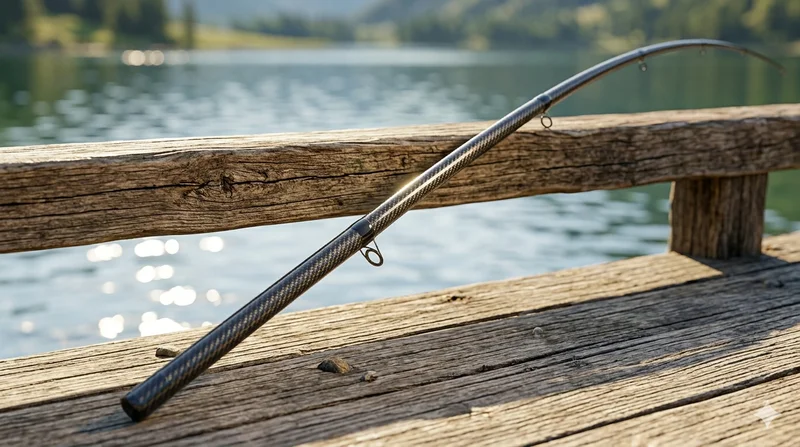
Carbon Fiber Fishing Rod Blank
High-quality carbon fiber fishing rod blank manufactured from multiple grades of Toray carbon fiber cloth. Available in a wide range of lengths, powers, and actions for freshwater and saltwater applications. Suitable for OEM rod building.

Carbon Fiber Plate — 3K Twill T700 3.0mm
Medium-thickness 3.0mm carbon fiber plate offering significantly higher load capacity while maintaining attractive 3K twill finish. Suitable for structural brackets, reinforcement plates, and load-bearing panels.

Carbon Fiber Plate — 3K Twill T700 1.5mm
Thin 1.5mm carbon fiber plate with 3K twill weave surface. Lightweight and stiff, commonly used for covers, panels, drone bodies, and applications requiring a premium aesthetic appearance.
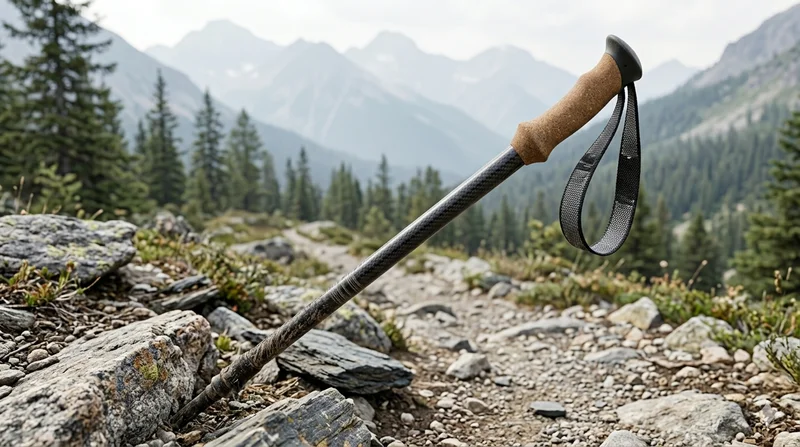
Carbon Fiber Trekking Pole
Lightweight carbon fiber trekking pole manufactured from high-grade carbon fiber tube. Weighs only 160g per pole while providing superior shock absorption and durability for hiking, trail running, and backpacking.

Square Carbon Fiber Tube — 3K Twill T700
Square cross-section carbon fiber tube manufactured with 3K twill weave for torsional strength. Preferred for structural frames, trusses, and support columns where rectangular geometry offers design flexibility.