

A comprehensive guide to B2B payment terms in the carbon fiber industry — comparing L/C, T/T, open account, and trade finance instruments with real cost data and risk mitigation strategies for international composite procurement.
Introduction: The Financial Architecture of Carbon Fiber Trade
The global carbon fiber market, valued at approximately USD 5.2 billion in 2025 and projected to reach USD 13.8 billion by 2032, is characterized by complex cross-border supply chains. Carbon fiber raw materials — PAN precursor, carbon fiber tow, and prepreg — move between manufacturers predominantly based in Japan, the United States, China, and Germany, while fabricated composite parts flow from specialized fabricators in Southeast Asia, Eastern Europe, and North America to end users worldwide. Each cross-border transaction carries currency risk, counterparty risk, and transit risk that must be managed through appropriate payment terms and trade finance instruments. A poorly structured payment agreement can erode 3–8% of transaction value through adverse exchange rates, financing costs, or default losses — a significant margin impact given that carbon fiber material margins typically range from 15–35%.
This article provides a practical framework for selecting and structuring payment terms in carbon fiber B2B transactions, covering letters of credit (L/C), telegraphic transfer (T/T), open account, documentary collection, and specialized trade finance instruments such as supply chain finance and export credit insurance. We include real cost comparisons, risk assessment matrices, and negotiation strategies specific to the carbon fiber supply chain.
Payment Method Comparison for Carbon Fiber Transactions
| Payment Method | Risk to Seller | Risk to Buyer | Typical Cost (% of Transaction) | Processing Time | Best For |
|---|---|---|---|---|---|
| L/C at sight (confirmed) | Low — bank guarantee on presentation of documents | Low — payment only against compliant documents | 0.5–2.0% | 5–10 banking days | First-time trades, orders >$100K, high-risk jurisdictions |
| L/C usance (30–90 days) | Low — bank guarantee, deferred payment | Low — goods received before payment | 0.8–2.5% | 3–10 days + tenor | Ongoing relationships |
| T/T in advance (100% prepayment) | Lowest — full payment before shipment | Highest — no leverage if goods defective | 0.1–0.5% | 1–3 banking days | Small orders <$20K, new suppliers |
| T/T with deposit (30–50% + balance vs docs) | Moderate — advance covers materials | Moderate — deposit at risk | 0.1–0.5% | 1–3 days per transfer | Custom parts, $20K–$100K |
| Open account (net 30–90 days) | Highest — full exposure until payment | Lowest — pay after inspection | 0–0.1% | Ship now, pay in 30–90 days | Established relationships, strong credit |
| Documentary collection (D/P or D/A) | Moderate-high | Low-moderate | 0.2–0.6% | 5–15 banking days | Medium-risk, where L/C cost is prohibitive |
Risk Assessment for Cross-Border Carbon Fiber Trade
Carbon fiber B2B transactions carry specific risk factors that influence the optimal payment structure. These risks are magnified by the high unit value of carbon materials — standard modulus carbon fiber tow at $25–$45/kg, intermediate modulus at $60–$120/kg, and aerospace-grade prepreg at $80–$250/kg — and the specialized nature of the product, which limits alternative buyers if a transaction fails.
- Counterparty credit risk: The carbon fiber supply chain includes a mix of large multinational corporations (Toray, Mitsubishi Chemical, Hexcel, Teijin) with investment-grade credit ratings and hundreds of smaller specialty converters and fabricators with limited credit histories. For small-to-medium enterprises (SMEs), obtaining credit insurance or using confirmed L/Cs reduces the risk of non-payment or non-delivery. Credit insurance for carbon fiber buyers typically costs 0.3–0.8% of insured value annually, depending on the buyer country and buyer credit rating.
- Product quality risk: Carbon fiber materials must meet strict specifications — tensile modulus (e.g., 230 GPa for standard modulus T700S), fiber areal weight (FAW) tolerance (±2–3%), resin content for prepreg (±1–2%), and void content (<1% for aerospace-grade). Payment terms tied to documented quality verification — such as L/C requiring a certificate of analysis (CoA) issued by an accredited third-party laboratory — protect the buyer from paying for non-conforming materials. A typical CoA cost is $150–$500 per batch depending on testing scope.
- Shipping and transit risk: Carbon fiber materials are sensitive to moisture absorption (epoxy prepreg requires cold chain shipping at −18°C to −5°C with maximum 10-day cumulative out-of-cold-storage time), physical damage (carbon fiber bobbins are fragile), and electrostatic discharge (carbon fiber dust is conductive). Incoterms selection — particularly CIF, FOB, or DAP — determines which party bears these risks during transit. Insurance premiums for carbon fiber cargo average 0.15–0.35% of declared value, versus 0.05–0.15% for standard industrial goods.
- Currency and exchange rate risk: Carbon fiber is predominantly priced in USD for global trade, but PAN precursor and intermediate products may be denominated in JPY, EUR, or CNY. For a 12-month contract covering 50,000 kg of carbon fiber at $35/kg ($1.75 million total), a 5% adverse exchange rate movement represents $87,500 in unexpected cost. Forward contracts or currency hedging clauses should be negotiated for contracts exceeding $500,000 or 6-month duration.
- Regulatory and sanctions risk: Carbon fiber is a dual-use material controlled under international export control regimes (Wassenaar Arrangement, EU Dual-Use Regulation 2021/821). High-modulus fibers (>450 GPa tensile modulus) and aerospace-grade prepreg require export licenses that can add 4–12 weeks to delivery timelines. Payment terms must account for the possibility of delayed or denied export licenses.
Trade Finance Instruments for Carbon Fiber Procurement
Beyond basic payment methods, several trade finance instruments are specifically relevant to carbon fiber B2B transactions:
- Supply chain finance (SCF) / reverse factoring: The buyer's bank pays the supplier early (typically 10–15 days after invoice approval) at a discount rate tied to the buyer's credit rating, while the buyer pays the bank at the original invoice maturity (net 60–90 days). This benefits both parties: the supplier receives early payment at financing rates 2–4% lower than their own borrowing cost, and the buyer extends payment terms without penalizing the supplier. In carbon fiber trade, SCF is particularly suitable for fabricators supplying major aerospace or automotive OEMs. Annual SCF program costs range from $5,000–$25,000 for setup plus per-invoice fees of 0.1–0.3%.
- Export credit insurance: Insures the seller against non-payment by the foreign buyer. National export credit agencies (ECAs) — such as Euler Hermes (Germany), SACE (Italy), Sinosure (China), or NEXI (Japan) — provide coverage for carbon fiber exports, typically covering 85–95% of the invoice value. Premiums range from 0.3–2.5% of the insured amount depending on buyer country risk and buyer creditworthiness. For a carbon fiber fabricator exporting $2 million annually, ECA insurance at 0.5% premium costs $10,000/year but eliminates the risk of a catastrophic bad debt loss.
- Stock financing / warehouse receipts: For carbon fiber distributors holding inventory in bonded warehouses, inventory-backed financing allows borrowing against the value of stored carbon fiber materials. Lending rates are typically SOFR + 2.5–4.5%, with loan-to-value ratios of 60–75%. This enables distributors to offer open account terms to buyers while maintaining their own cash flow. Carbon fiber inventories for financing valuation are typically marked at 70–80% of current market price to account for price volatility and specialized market liquidity.
- Performance bonds and advance payment guarantees: For custom tooling and large composite part orders requiring upfront mold investment ($20,000–$200,000), a performance bond (typically 5–15% of contract value) protects the buyer if the supplier fails to deliver. Conversely, an advance payment guarantee protects the buyer's deposit if the supplier defaults. Bank charges for these guarantees range from 0.5–2.0% per annum of the guaranteed amount.
Structuring an Optimal Payment Terms Package
| Transaction Type | Order Value | Recommended Payment Structure | Estimated Transaction Cost |
|---|---|---|---|
| First-time order, standard modulus tow | $10,000–$50,000 | 100% T/T in advance or confirmed L/C at sight | 0.5–2.0% |
| Repeat order, established supplier | $50,000–$250,000 | 30% T/T deposit + 70% against shipping documents; or L/C at sight | 0.3–0.8% |
| Long-term contract, qualified supplier | $250,000–$1,000,000 | Open account net 60 days + SCF or export credit insurance | 0.1–0.5% |
| Custom tooling + production order | $100,000–$500,000 | 50% advance (secured by advance payment guarantee) + 50% against FAI report | 1.0–2.5% |
| Aerospace-grade prepreg, new buyer | $20,000–$100,000 | Confirmed L/C at sight, requiring CoA + Certificate of Conformity | 1.5–3.0% |
Negotiation Strategies for Carbon Fiber Payment Terms
- Anchor with L/C then migrate: Start new supplier relationships with confirmed L/C at sight. After 3–4 defect-free transactions, migrate to T/T with deposit (30–50% advance). After 6–12 months of consistent quality, transition to open account net 30 days with periodic review. This graduated approach minimizes cumulative risk while building trust.
- Use Incoterms to balance control: Pairing an L/C with CIF terms gives the seller control over shipping and insurance while providing the buyer with document control. For high-value composite part shipments, consider CIP (Carriage and Insurance Paid To) which requires the seller to insure at 110% of contract value.
- Negotiate partial shipments: For large carbon fiber orders (multiple pallets or containers), negotiate L/C terms that allow partial shipments and partial drawings. This enables the supplier to ship completed portions without waiting for the entire order, reducing the buyer's inventory holding costs and the supplier's working capital requirements.
- Build quality verification into payment triggers: For fabricated carbon fiber parts, link milestone payments to documented inspection stages: 20% at mold approval, 30% at first article inspection (FAI) sign-off, 30% at shipment, and 20% at final acceptance. This aligns cash flow with value creation and provides leverage for quality compliance.
Frequently Asked Questions
What are the typical bank charges for a letter of credit in carbon fiber trade?
For a standard L/C in carbon fiber trade (transaction value $50,000–$500,000), total bank charges typically range from 0.5% to 2.5% of the L/C value. This includes: issuance fee (0.1–0.3%, minimum $50–$150), advice fee ($30–$80), confirmation fee (0.2–0.8% per quarter, applied if the L/C is confirmed by a bank in the seller's country), negotiation fee (0.1–0.3%, minimum $50–$100), and amendment fees ($30–$80 per amendment). For example, a $200,000 confirmed L/C with 60-day usance would cost approximately $1,800–$3,800 in total bank charges (0.9–1.9%). The cost varies significantly by jurisdiction: L/C charges in Hong Kong and Singapore are typically 30–40% lower than in African or South American markets.
How does payment term structure affect carbon fiber pricing?
Suppliers incorporate financing costs into their pricing. A supplier offering net 30-day open account terms effectively provides 30 days of working capital to the buyer — this cost (typically SOFR + 2–4% annualized) is priced into the material cost. For carbon fiber prepreg at $80/kg, the 30-day financing cost at 6% annual rate adds approximately $0.39/kg. For net 90-day terms, the cost triples to $1.18/kg. Conversely, a buyer offering 100% T/T advance can typically negotiate a 2–5% discount from the quoted open-account price. The differential is largest for high-value intermediates like aerospace prepreg and smallest for commodity-grade carbon fiber tow where margins are thinner.
What documentation is typically required for carbon fiber L/C transactions?
A standard carbon fiber L/C requires the following documents, typically in triplicate: commercial invoice (with full product description, unit price, total value, HS code 6815.11 for carbon fibers or 3921.90 for prepreg), bill of lading (ocean) or air waybill (air freight), packing list (with bobbin/roll weights, batch numbers, and pallet dimensions), certificate of analysis (CoA) from an ISO 17025-accredited laboratory certifying fiber tensile strength, tensile modulus, density, and areal weight, certificate of origin (for customs duty assessment, particularly relevant for EU–UK or USMCA trade), and insurance certificate (if using CIF or CIP terms). For aerospace-grade materials, additional documents may include: Certificate of Conformity (CoC) per AS9102, material traceability records per batch, and storage condition logs confirming cold chain compliance for prepreg.
What are the common pitfalls when using T/T payment for carbon fiber orders?
Three common pitfalls: (1) Prepayment without quality protection: 100% T/T advance gives the buyer no leverage if the carbon fiber material does not meet specifications. Mitigation: request a pre-shipment inspection (PSI) by a third-party inspection agency such as SGS or Bureau Veritas, costing $300–$800 per inspection. (2) Hidden wiring fees and currency conversion costs: Correspondent banking chains can add $25–$60 per wire for intermediary bank fees, plus unfavorable exchange rate spreads of 1–3% for smaller currencies. Mitigation: use multi-currency accounts or fintech platforms (Wise, Revolut Business) that offer mid-market exchange rates with 0.4–0.8% total fees. (3) Delayed payment triggering shipment hold: If the balance T/T payment is delayed by 2–3 banking days, the supplier may hold the shipment, incurring demurrage charges ($50–$150 per day per container). Mitigation: execute balance T/T payment 3–5 banking days before the planned shipment date, with documented payment confirmation shared with the supplier's logistics team.
Can payment terms be linked to carbon fiber quality grades and specifications?
Yes, this is a growing practice in the carbon fiber industry. Payment terms can be scaled to material specification compliance: (1) Base payment (e.g., 95% of invoice) released against standard documentation and shipment. (2) Retainer (5%) held until full mechanical testing results confirm compliance with agreed specifications — tensile modulus within ±3%, fiber areal weight within ±2%, and void content below specified maximum. (3) Performance bonus (0.5–2% of invoice) for materials exceeding specified tolerances (e.g., tensile strength 5% above minimum specification). Conversely, contracts should specify penalties for non-conforming material: a 5–15% price reduction for re-graded material (e.g., standard modulus fiber downgraded from 230 GPa to 210 GPa), and full rejection with replacement cost for materials below minimum acceptable specification.
Conclusion
Selecting the right payment terms for carbon fiber B2B transactions requires balancing security, cost, and relationship considerations. For new supplier relationships and high-value orders, confirmed letters of credit — despite their 1–2% transaction cost — provide the strongest risk mitigation. As relationships mature, migrating to T/T with deposit or open account terms backed by supply chain finance or export credit insurance reduces transaction costs while maintaining adequate protection. The key for carbon fiber procurement professionals is to align payment terms with the specific risk profile of each transaction — considering counterparty creditworthiness, material value, quality verification requirements, shipping complexity, and regulatory exposure. By implementing a graduated payment strategy that evolves with supplier relationships, B2B buyers can optimize their financing costs while maintaining the supply chain resilience that the specialized carbon fiber market demands.
Part of topic
Related Articles
- Recycled Carbon Fiber Market Forecast 2030: Technology Maturity and Commercialization Path
- South Korea Carbon Fiber Market 2026: Hydrogen Economy and Shipbuilding Innovation
- Wind Turbine Blade Leading Edge Protection 2026: Polyurethane, Tape, and Metallic Shield Solutions
- China Carbon Fiber Overcapacity 2026: Price War Impact and Industry Consolidation
- India Carbon Fiber Market 2026: Wind Energy, Aerospace, and Defense Expansion
- PAN Precursor Market 2026: Acrylonitrile Supply and Carbon Fiber Cost Structure
Interested in Our Products?
Contact our team for competitive pricing and technical specifications.
Get a QuoteRelated Products
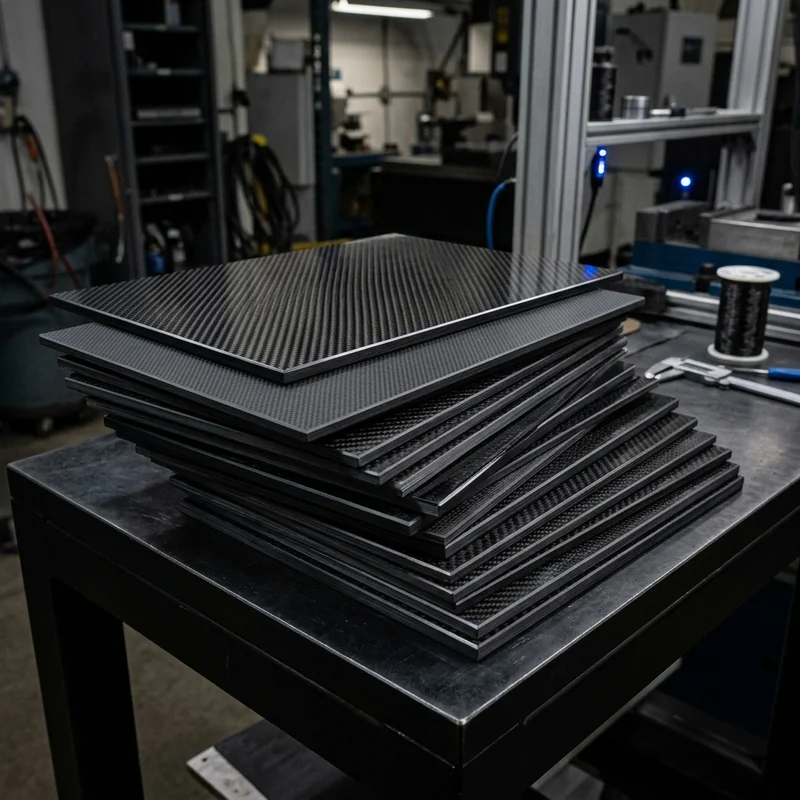
Carbon fiber standard plate-3k stripe
Lightweight, ultra-rigid standard sheets for drone fuselages, robot housings, facades and structural applications.

Carbon Fiber Plate — 3K Twill T700 1.5mm
Thin 1.5mm carbon fiber plate with 3K twill weave surface. Lightweight and stiff, commonly used for covers, panels, drone bodies, and applications requiring a premium aesthetic appearance.
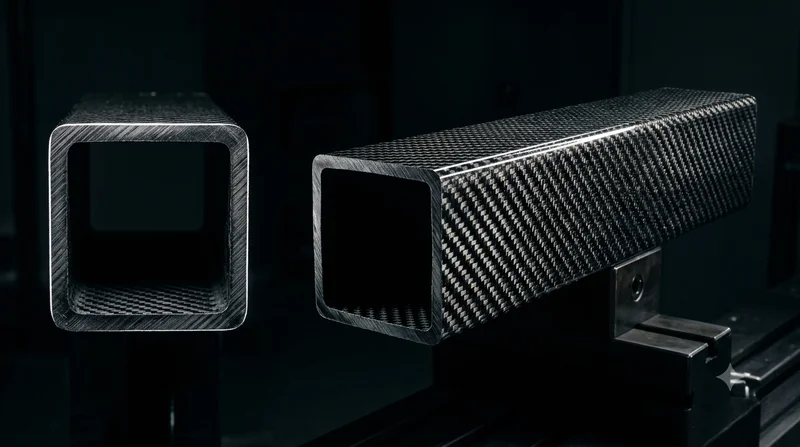
Square Carbon Fiber Tube — 3K Twill T700
Square cross-section carbon fiber tube manufactured with 3K twill weave for torsional strength. Preferred for structural frames, trusses, and support columns where rectangular geometry offers design flexibility.
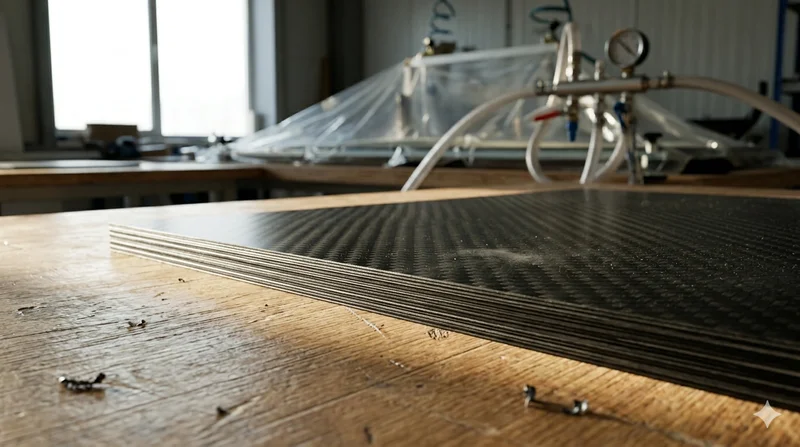
Carbon Fiber Plate — 3K Twill T700 3.0mm
Medium-thickness 3.0mm carbon fiber plate offering significantly higher load capacity while maintaining attractive 3K twill finish. Suitable for structural brackets, reinforcement plates, and load-bearing panels.
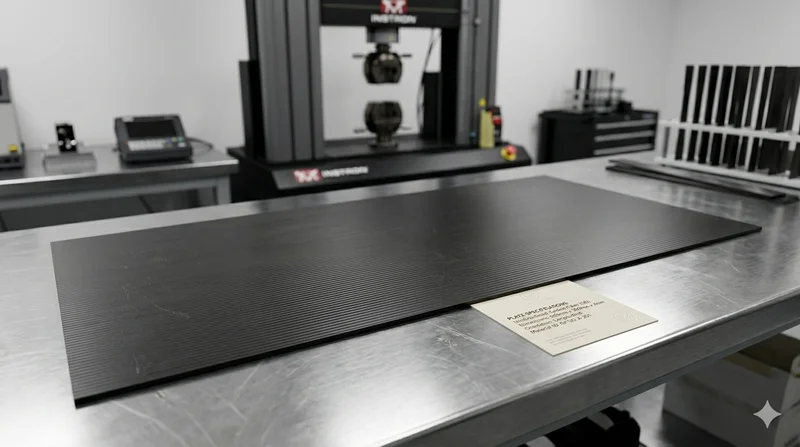
Carbon Fiber Plate — UD Unidirectional T700
Unidirectional carbon fiber plate with all fibers oriented in a single direction for maximum strength along the fiber axis. Essential for structural reinforcements, splints, and applications where load direction is predictable.