
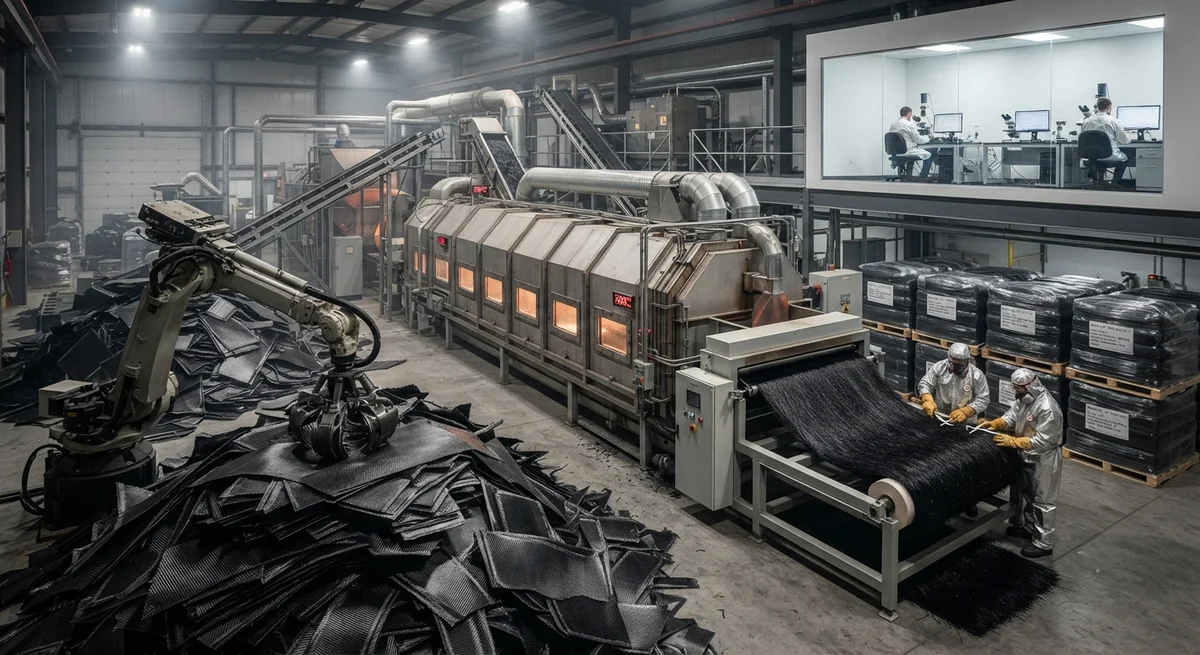
Market analysis of the recycled carbon fiber (rCF) industry projected to reach $514 million by 2035, covering key applications in automotive (50% weight saving), aerospace secondary structures, cost comparison of virgin vs recycled fiber, and EU regulations driving adoption.
Recycled Carbon Fiber Market to $514M by 2035: Automotive and Aerospace Opportunities
The global recycled carbon fiber (rCF) market is projected to reach $514 million by 2035, growing at 12.7% CAGR from a 2026 baseline of ~$175 million. This growth is driven by stringent EU end-of-life vehicle regulations, automotive electrification weight reduction, aerospace sustainability targets, and widening virgin carbon fiber supply-demand gaps. This article examines market opportunities, material performance data, and B2B sourcing strategies for recycled carbon fiber.
Market Size and Growth by Application
The highest-growth segments through 2035 are structural automotive parts and aerospace secondary structures, together expected to account for 58% of market value by 2035.
| Application Segment | 2026 ($M) | 2035 ($M) | CAGR | Key Drivers |
|---|---|---|---|---|
| Automotive structural | $48 | $162 | 14.5% | ELV regulations, 50% weight saving vs steel |
| Aerospace secondary | $22 | $89 | 16.8% | EASA 2026 CRI pathway, 30% rCF target by 2035 |
| Consumer electronics & sporting goods | $41 | $97 | 10.1% | Brand ESG commitments |
| Industrial & construction | $35 | $86 | 10.5% | Wind turbine recycling, rebar replacement |
| Automotive non-structural | $29 | $63 | 9.0% | Cost-driven non-woven mat supply |
| Defense & marine | $7 | $17 | 10.3% | Specification-driven, slower adoption |
| Total | $175 | $514 | 12.7% |
The aerospace segment shows the highest CAGR (16.8%), reflecting the February 2026 EASA CRI that provisionally accepted rCF in secondary aerospace structures — a regulatory breakthrough opening an $89 million annual market by 2035. Automotive structural applications remain the largest absolute growth segment, driven by the EU ELV Regulation (effective 2028) mandating 25% recycled content in composite components by 2030, rising to 30% by 2035.
Virgin vs Recycled Carbon Fiber: Properties and Cost
| Property | Virgin CF | rCF (Pyrolysis) | rCF (Solvolysis) | rCF Retention |
|---|---|---|---|---|
| Tensile strength (MPa) | 3,500–5,000 | 2,800–4,200 | 3,200–4,600 | 80–90% |
| Tensile modulus (GPa) | 230–240 | 210–230 | 220–235 | 92–98% |
| Strain to failure (%) | 1.5–2.0 | 1.2–1.7 | 1.4–1.9 | 80–93% |
| Fiber length after processing | Continuous | 6–25 mm chopped | 15–50 mm | Length-dependent |
| Interfacial shear strength (MPa) | 45–55 | 30–40 | 38–48 | 72–87% |
| Batch CV (strength) | 5–8% | 12–18% | 8–12% | — |
| Cost ($/kg — 2026) | $18–55 | $8–14 | $12–18 | 25–45% of virgin |
| Carbon footprint (kg CO₂/kg) | 25–35 | 3–6 | 5–9 | 15–25% of virgin |
Pyrolysis-based rCF (~75% of current capacity) achieves 80–90% tensile strength retention at 25–45% of virgin fiber cost. Solvolysis achieves 88–96% property retention at a higher cost, making it suitable for aerospace-grade applications where the EASA CRI requires batch CV ≤15% for strength. The carbon footprint advantage (3–6 vs 25–35 kg CO₂/kg) is the primary driver for OEM sustainability roadmaps targeting 30–50% rCF content in non-structural composites by 2030.
Regulatory Drivers and Timeline
- EU ELV Regulation (2028 effective): Mandates 25% recycled content in composite components by 2030, 30% by 2035. A 1,500 kg vehicle with 10% composites would require 37.5 kg recycled material per vehicle — an estimated 12,000–15,000 tonnes/year rCF demand across EU automotive by 2035.
- EU Waste Framework Directive (2025 revision): Reclassifies carbon fiber waste as a "priority material stream," requiring 55% separate collection by 2028 and 70% by 2032, potentially driving rCF prices to $6–10/kg by 2030 through 3–4× feedstock availability increase.
- EASA CRI on rCF (February 2026): Provisional acceptance in secondary aerospace structures with batch variability limits of ±15% tensile strength and ±10% modulus. Opens 3,000–5,000 tonnes/year rCF demand from commercial aerospace by 2035.
- EU CBAM (full phase-in 2030): Imposes carbon costs on imported virgin CF. At €75–100/tonne CO₂, this adds $2.25–3.50/kg to virgin CF, narrowing the rCF price gap by 25–30%.
Supply Chain Considerations for B2B Buyers
- Feedstock quality and traceability: rCF properties depend heavily on the original fiber grade, matrix system, and recycling process. Buyers should require full traceability documentation including original fiber type, pre-processing contamination level, and post-processing mechanical test data per batch.
- Form factor limitations: Current rCF is primarily available as chopped fibers (6–50 mm), milled fibers (100–500 µm), or non-woven mats. Continuous rCF tow production remains at pilot scale. For aligned discontinuous fiber (ADF) preforms approaching 80–85% of continuous fiber properties, specialty processors like Carbon Conversions and Gen 2 Carbon have proprietary lines.
- Cost-volume trajectory: Current rCF at $8–18/kg offers a 55–75% discount to aerospace-grade virgin fiber ($55–85/kg) while being comparable to commercial-grade fiber ($18–22/kg) for short-fiber applications. EU ELV regulation is expected to drive rCF production from ~15,000 tonnes/year (2026) to ~65,000 tonnes/year (2035), with projected prices of $5–10/kg (pyrolysis) and $8–14/kg (solvolysis).
- Qualification risk for aerospace: The EASA 2026 CRI requires in-line quality testing (NIR spectroscopy, single-fiber tensile per ASTM C1557) to meet the ±15% CV requirement. Estimated qualification cost per rCF grade: $500,000–1,500,000.
What are the main carbon fiber recycling technologies?
Three commercial technologies: (1) Pyrolysis (400–800°C in inert atmosphere) — dominant at ~75% of capacity, 80–90% strength retention at $8–14/kg, but shorter fibers (6–25 mm) with char residue. (2) Solvolysis (200–400°C using supercritical fluids or acid) — 88–96% retention, longer fibers (15–50 mm) at $12–18/kg. (3) Fluidized bed (450–550°C oxidative) — lowest projected cost ($5–10/kg at scale) but only 60–75% strength retention. ELG Carbon Fibre and Mitsubishi Chemical are the largest processors with combined ~8,000 tonnes/year capacity in 2026.
Which automotive components are best suited for recycled carbon fiber?
Optimal candidates: (1) EV underbody shields and battery enclosures — 40–50% weight saving vs steel at 60–70% lower cost than virgin CF. (2) Interior structural trim (seat backs, console carriers). (3) Class A exterior panels (roofs, hoods) using rCF SMC. (4) Suspension components using rCF at 80–85% of virgin CF fatigue performance. Parts requiring tensile strength above 400 MPa or continuous service above 150°C are not suitable for current rCF grades.
How can B2B buyers qualify recycled carbon fiber for their supply chain?
A structured approach: (1) Define minimum property requirements. (2) Request qualification samples from ≥2 rCF suppliers across ≥3 batch lots to assess variability. (3) Perform in-house coupon-level testing per ASTM standards. (4) Complete sub-element testing covering the target process (compression molding, injection molding, or AFP with ADF preforms). (5) Audit quality management per ISO 9001 or AS9100D (aerospace). Total qualification timeline: 6–18 months — considerably faster than the 18–36 months for virgin fiber due to existing property databases and the "statistical similarity" pathway available under both EASA and FAA certification frameworks.
Conclusion
The recycled carbon fiber market is poised for growth from $175 million in 2026 to $514 million by 2035, driven by mandatory EU recycled content regulations, automotive mass reduction for EVs, and the first regulatory pathway for rCF in aerospace secondary structures. Pyrolysis-recycled fiber at $8–14/kg with 80–90% strength retention offers a compelling cost-performance proposition for non-aerospace applications, while solvolysis-recycled fiber at $12–18/kg meets EASA CRI batch variability requirements. For B2B buyers, key considerations are feedstock traceability, form factor limitations, the cost-volume trajectory as EU regulations drive capacity expansion, and the qualification investment needed for aerospace applications. As regulatory mandates and OEM sustainability targets converge, recycled carbon fiber is transitioning from a cost-reduction alternative to a compliance-required material in both automotive and aerospace supply chains.
Part of topic
Related Articles
- Recycled Carbon Fiber Market Forecast 2030: Technology Maturity and Commercialization Path
- South Korea Carbon Fiber Market 2026: Hydrogen Economy and Shipbuilding Innovation
- Wind Turbine Blade Leading Edge Protection 2026: Polyurethane, Tape, and Metallic Shield Solutions
- China Carbon Fiber Overcapacity 2026: Price War Impact and Industry Consolidation
- India Carbon Fiber Market 2026: Wind Energy, Aerospace, and Defense Expansion
- PAN Precursor Market 2026: Acrylonitrile Supply and Carbon Fiber Cost Structure
Interested in Our Products?
Contact our team for competitive pricing and technical specifications.
Get a QuoteRelated Products
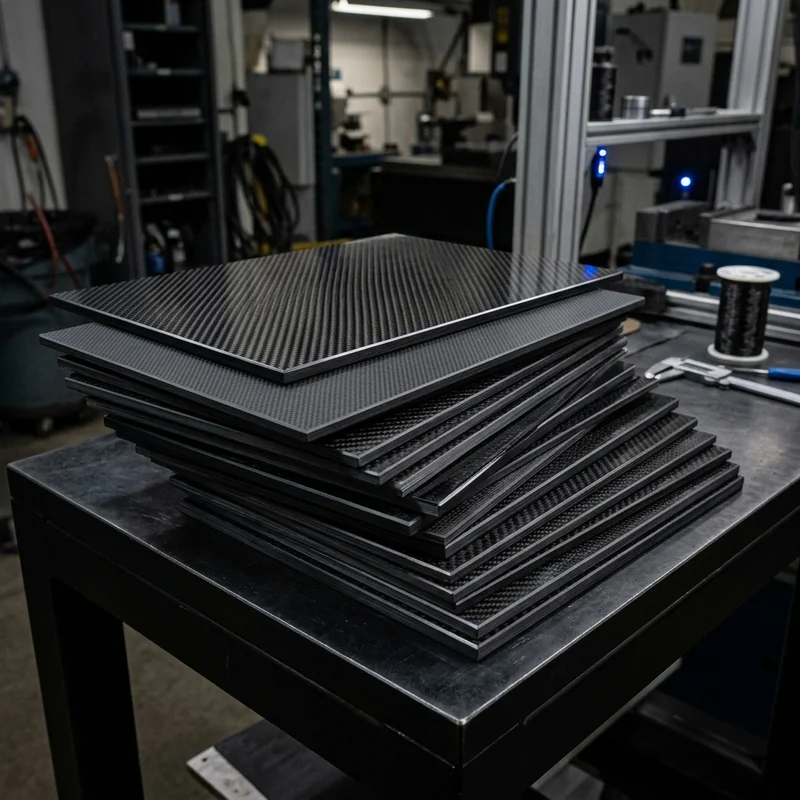
Carbon fiber standard plate-3k stripe
Lightweight, ultra-rigid standard sheets for drone fuselages, robot housings, facades and structural applications.

Carbon Fiber Plate — 3K Twill T700 1.5mm
Thin 1.5mm carbon fiber plate with 3K twill weave surface. Lightweight and stiff, commonly used for covers, panels, drone bodies, and applications requiring a premium aesthetic appearance.

Square Carbon Fiber Tube — 3K Twill T700
Square cross-section carbon fiber tube manufactured with 3K twill weave for torsional strength. Preferred for structural frames, trusses, and support columns where rectangular geometry offers design flexibility.

Carbon Fiber Plate — 3K Twill T700 3.0mm
Medium-thickness 3.0mm carbon fiber plate offering significantly higher load capacity while maintaining attractive 3K twill finish. Suitable for structural brackets, reinforcement plates, and load-bearing panels.
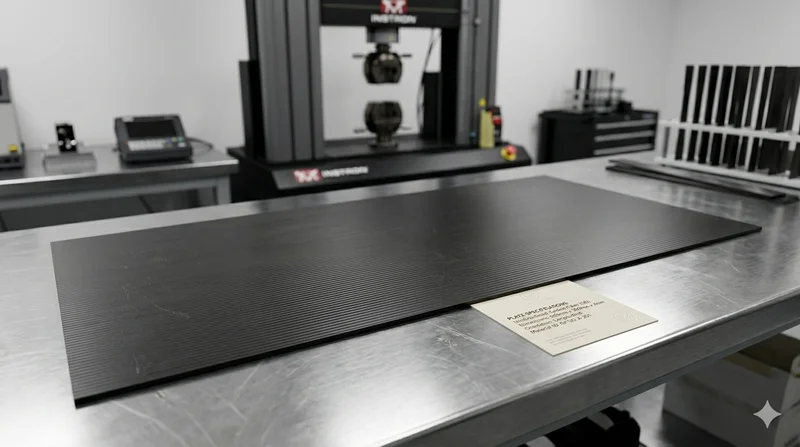
Carbon Fiber Plate — UD Unidirectional T700
Unidirectional carbon fiber plate with all fibers oriented in a single direction for maximum strength along the fiber axis. Essential for structural reinforcements, splints, and applications where load direction is predictable.