
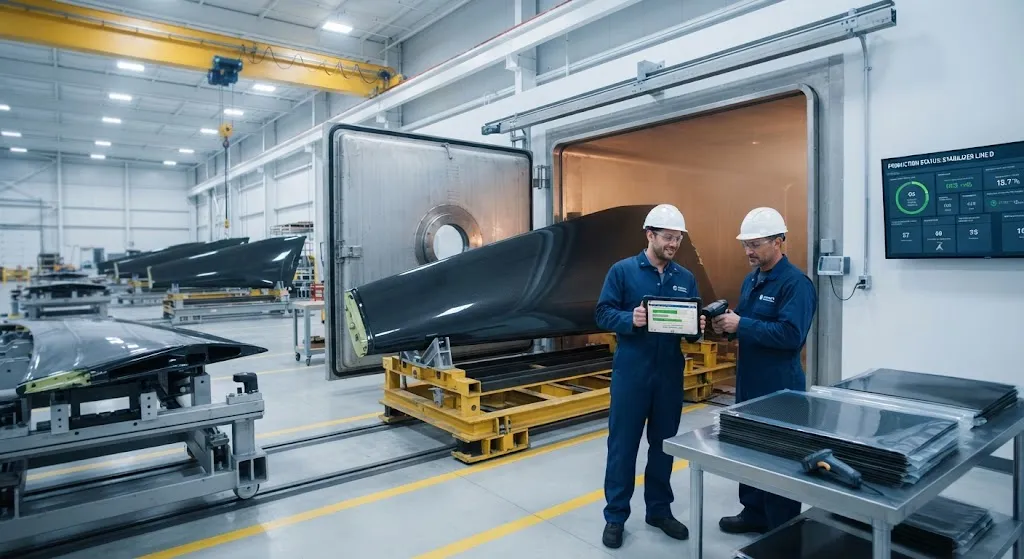
Aerospace composite demand in 2026 is being shaped by two forces pulling in different directions. On one side, commercial aircraft production is ramping: narrowbody rates have climbed for three consecutive years, and airframe makers are under sustained pressure from airlines to raise ou
Introduction
Aerospace composite demand in 2026 is being shaped by two forces pulling in different directions. On one side, commercial aircraft production is ramping: narrowbody rates have climbed for three consecutive years, and airframe makers are under sustained pressure from airlines to raise output further. On the other side, the wide-body recovery is delayed — industry forecasts consistently place the return of wide-body build rates to 2019 levels as late as 2027 — and the next generation of single-aisle aircraft, which will define the largest composite content demand of the next decade, is not expected to enter service before the mid-2030s. For carbon fiber suppliers and composite fabricators, the consequence is a demand profile that strengthens in steps rather than in a single surge.
This article examines the three elements that define the 2026 demand picture: the commercial build-rate ramp and its composite content, the timing of wide-body recovery, and the schedule of new aircraft programs that will reset long-term composite volumes. It also looks at the defense side, where rising spending in several major markets is adding a second, more predictable demand channel for high-performance carbon fiber.
The Narrowbody Ramp and Composite Content
Narrowbody aircraft are the volume engine of aerospace composites. The two dominant single-aisle families — the Airbus A320neo and the Boeing 737 MAX — together consume a large share of all aerospace-grade carbon fiber, mainly through carbon fiber reinforced plastic components in the empennage, secondary structure, and increasingly in primary wing structure. Both programs have been raising their production rates, and the ramp is visible across the supply chain: prepreg producers, tape layers, and autoclave capacity are all being rebalanced toward single-aisle demand.
Composite content is not uniform across narrowbodies. The A320 family uses composites for about 25% of its structural weight, concentrated in the tail cone, vertical and horizontal stabilizers, and flap track fairings. The 737 MAX uses a lower but still substantial share, with a full composite tail structure. The next narrowbody generation — the A320-neo successor and the 737 MAX successor, usually grouped by analysts as the late-2020s or mid-2030s replacements — is expected to push structural composite share toward 50% or more, driven by the need to cut weight for the next fuel-efficiency step. Until those programs launch, however, narrowbody composite demand is dominated by production-rate growth on existing designs rather than by content migration.
| Narrowbody Program | Composite Share (structural weight) | 2026 Rate Direction | Composite Drivers |
|---|---|---|---|
| Airbus A320neo | ~25% | Rising toward 75 per month | Tail cone, stabilizers, flap tracks |
| Boeing 737 MAX | ~20% | Recovering toward 50 per month | Full composite tail structure |
| COMAC C919 | ~12% | Stable, small volumes | Tail and secondary structure |
| Next-generation single-aisle | Forecast 45-55% | Not yet launched | Wing and fuselage primary structure |
For suppliers, the narrowbody ramp is a volume story with tight margins: qualification cycles are long, pricing is negotiated against multi-year agreements, and the value lies in reliable delivery at scale rather than in premium material grades. The strategic question is whether to build capacity for the current ramp or to wait for the next-generation content leap, and most major producers are doing both — investing incrementally for today while positioning technology for the mid-2030s reset.
Wide-Body Recovery: The 2027 Question
Wide-body aircraft carry substantially more composite material per unit than narrowbodies, both because they are larger and because their structures use composites more aggressively. The Boeing 787 uses composites for about 50% of its structural weight, including the fuselage barrels and wings; the Airbus A350 reaches over 50% with composite wings and fuselage panels. This makes wide-body production the highest-value channel for aerospace carbon fiber, and its slow recovery is the single largest drag on the 2026 demand picture.
Industry forecasts have repeatedly pushed the return of wide-body build rates to 2019 levels out to 2027. The reasons are structural rather than cyclical: airline wide-body orders are growing, but the supply base — engines, landing gear, and long-lead fuselage and wing tooling — was disrupted by the pandemic-era cuts and has been slow to rebuild. Repair and overhaul demand absorbs part of the fleet, and the wide-body used-aircraft market continues to compete with new production. The result is a recovery that trails the narrowbody ramp by two to three years, with 2026 wide-body output still below 2019 in most forecast scenarios.
For composite suppliers, the wide-body slowdown has a specific effect: the highest-margin, highest-composite-content aircraft are consuming less fiber than expected, while the lower-content narrowbody programs absorb the volume. This shifts the demand mix toward higher-volume, lower-value applications and puts pressure on producers that had positioned capacity around 787 and A350 rate increases. The recovery, when it comes, will be sharp — wide-body backlogs have grown during the stall, and catch-up production will compress into a short window.
New Program Timing: The Mid-2030s Reset
The next generation of single-aisle aircraft is the event that will redefine aerospace composite demand, and its timing is now understood with reasonable confidence. Several major program assumptions point to an entry-into-service window in the mid-2030s, with engineering definition work beginning before that and material selection frozen several years ahead of first flight. The composite implications are substantial: next-generation narrowbodies are expected to use composites for 45-55% of structural weight, roughly doubling the single-aisle composite content relative to current designs, with candidate applications including the wing structure, the aft fuselage, and potentially the entire pressure cabin.
The delay matters because it pushes the largest composite demand inflection beyond the planning horizon of the current capacity cycle. A fabricator making capacity decisions in 2026 must serve the current narrowbody ramp and the wide-body recovery without knowing the exact specification of the next-generation wing structure, which may use different fiber forms, different resin systems, and different manufacturing processes than today's aerospace baseline. The prudent strategy is to keep technology options open: pull-winding and automated fiber placement capacity, thermoplastic composite capabilities, and resin systems compatible with out-of-autoclave and integrated processes are all positioned to serve whichever architecture the next programs choose.
- Engineering definition: expected to begin before the 2030s, with material selection frozen several years ahead of first flight.
- Entry into service: forecast in the mid-2030s for the A320neo and 737 MAX successor families.
- Composite content: 45-55% structural weight share, doubling current single-aisle composite usage.
- Process implications: likely emphasis on automated deposition, thermoplastics, and out-of-autoclave curing.
Defense Demand: The Second Channel
Defense is the second, steadier demand channel for aerospace composites. Major markets — the United States, Europe, and increasingly Asia-Pacific — have raised defense budgets, and the growth has a composite-heavy profile: new fighter programs, unmanned aerial systems, and missile and hypersonic programs all consume high-performance carbon fiber at premium prices. Unlike commercial programs, defense demand is less sensitive to airline traffic, financing cycles, and used-aircraft competition, which makes it a natural hedge for suppliers exposed to commercial volatility.
The composite mix in defense differs from commercial aerospace. Defense programs use a higher share of intermediate- and high-modulus fibers, more exotic matrix systems, and tighter specification control; volumes per program are smaller, but margins are structurally higher and qualification barriers protect incumbents. The 2026 outlook is positive on both volume and value: fighter production rates are stable or rising, unmanned systems are scaling rapidly, and the strategic stockpile debate in several countries is adding a new layer of government-driven demand for aerospace-grade fiber.
What It Means for Suppliers and Program Planners
The 2026 aerospace composite demand picture rewards suppliers that can read the timing. The near-term opportunity is the narrowbody ramp, where volume growth is real but margins are thin; the medium-term inflection is the wide-body catch-up, which should arrive with force once the 2027 recovery materializes; and the long-term reset is the next-generation single-aisle program, which will roughly double single-aisle composite content but is still a decade away from service entry. Defense provides a stabilizing second channel through all three phases.
For program planners, the operational priority is flex capacity that can shift between the current narrowbody demand and the future wide-body and next-generation requirements, without betting early on a single process architecture. For material suppliers, the priority is qualification breadth — being qualified on the platforms that will see near-term rate increases while holding technology options open for a wing structure whose manufacturing route is not yet fixed.
Frequently Asked Questions
Why is wide-body production still below 2019 levels in 2026?
Wide-body output is held back by supply-side constraints rather than demand: airline orders have grown, but the engine, landing gear, and long-lead tooling supply base was disrupted by pandemic-era cuts and has rebuilt slowly. Repair and overhaul demand absorbs part of the fleet, and the used wide-body market continues to compete with new production, pushing the full recovery to 2027 in most forecasts.
When will the next-generation single-aisle aircraft enter service?
Industry program assumptions point to an entry-into-service window in the mid-2030s for the successors to the A320neo and 737 MAX. Engineering definition work is expected to begin before 2030, with material selection frozen several years ahead of first flight. The new programs are expected to use composites for 45-55% of structural weight, roughly doubling current single-aisle composite content.
How does defense demand differ from commercial aerospace demand?
Defense demand is steadier — it is less sensitive to airline traffic, financing cycles, and used-aircraft competition. It uses a higher share of intermediate- and high-modulus fibers and premium matrix systems with tighter specification control. Volumes per program are smaller, but margins are higher and qualification barriers protect incumbents, making defense a natural hedge against commercial volatility.
How should a supplier position capacity for the 2026-2035 demand profile?
Build flex capacity that can serve the current narrowbody ramp today, shift to the wide-body catch-up when the 2027 recovery arrives, and remain compatible with whichever process architecture the next-generation programs choose. Prioritize qualification breadth across platforms with near-term rate increases while holding technology options open on fiber forms, resin systems, and manufacturing processes.
Conclusion
Aerospace composite demand in 2026 strengthens in steps rather than in a single surge. The narrowbody ramp provides steady volume growth as existing designs raise production rates; the wide-body recovery, carrying the highest composite content per aircraft, is delayed until roughly 2027; and the next-generation single-aisle program — the event that will roughly double single-aisle composite content — is not expected in service before the mid-2030s. Defense spending adds a stable second channel across all three phases. The competitive advantage lies in reading that timing: capacity, qualification, and technology choices made today must serve three different demand waves over the next decade.
YongXian supplies aerospace-grade carbon fiber materials and engineering support for commercial and defense programs. Explore our aerospace product range or contact our engineering team to discuss material qualification for your build-rate or next-generation program requirements.
Part of topic
Related Articles
- Recycled Carbon Fiber Market Forecast 2030: Technology Maturity and Commercialization Path
- South Korea Carbon Fiber Market 2026: Hydrogen Economy and Shipbuilding Innovation
- Wind Turbine Blade Leading Edge Protection 2026: Polyurethane, Tape, and Metallic Shield Solutions
- China Carbon Fiber Overcapacity 2026: Price War Impact and Industry Consolidation
- India Carbon Fiber Market 2026: Wind Energy, Aerospace, and Defense Expansion
- PAN Precursor Market 2026: Acrylonitrile Supply and Carbon Fiber Cost Structure
Interested in Our Products?
Contact our team for competitive pricing and technical specifications.
Get a QuoteRelated Products

Carbon Fiber Fishing Rod Blank
High-quality carbon fiber fishing rod blank manufactured from multiple grades of Toray carbon fiber cloth. Available in a wide range of lengths, powers, and actions for freshwater and saltwater applications. Suitable for OEM rod building.

Custom Carbon Fiber Medical Device Components
Medical-grade carbon fiber components manufactured for imaging equipment, surgical instruments, and patient support systems. Carbon fiber's radiolucency (X-ray transparency) and high strength-to-weight ratio make it ideal for CT scanner beds, wheelchair frames, surgical robot arms, and MRI-compatible accessories. Biocompatible resin systems available.

Carbon Fiber Pickleball Paddle
High-performance pickleball paddle with Toray T700 carbon fiber face and polypropylene honeycomb core. Delivers excellent power-to-weight ratio, spin generation, and vibration dampening for competitive play.
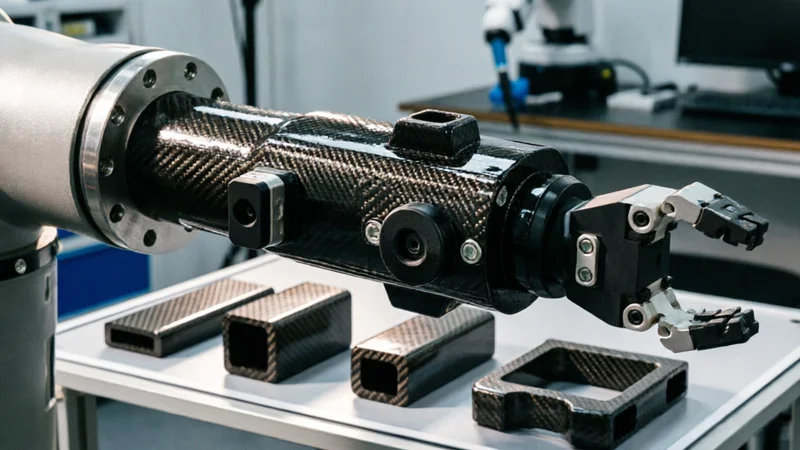
Carbon Fiber Robot End Effector Link — Custom Shape & Sensor Integration
Custom-shaped carbon fiber end effector links for robotic arms. Designed for automation integrators and research labs requiring lightweight, rigid connections between the robot wrist and gripper/tool. Can incorporate sensor mounting bosses, cable routing channels, and quick-change interfaces.
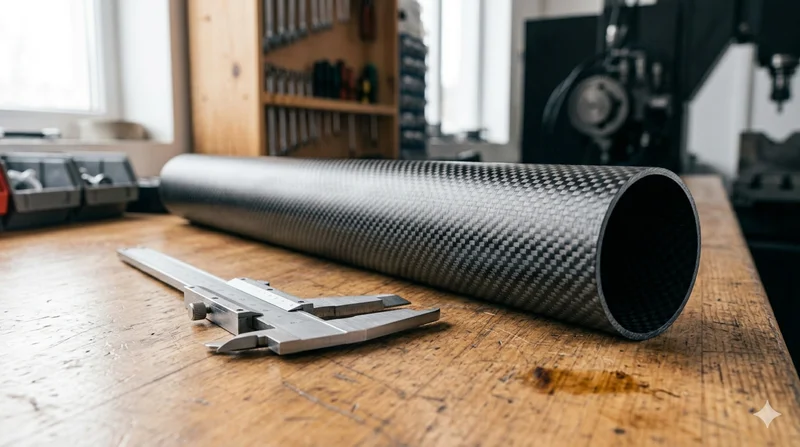
Round Carbon Fiber Tube — 3K Plain Weave T700
Standard round carbon fiber tube manufactured from Toray T700 grade fiber with 3K plain weave. Offers balanced strength and stiffness for general industrial applications including robotics, automation, sports equipment, and aerospace structures.