
The carbon fibre manufacturers UK market occupies a distinctive position: it imports nearly all of its raw carbon fibre, yet it converts and fabricates that fibre into some of the highest-value composite structures in the world. For an engineering buyer, understanding carbon fibre manufacturers UK m
Introduction
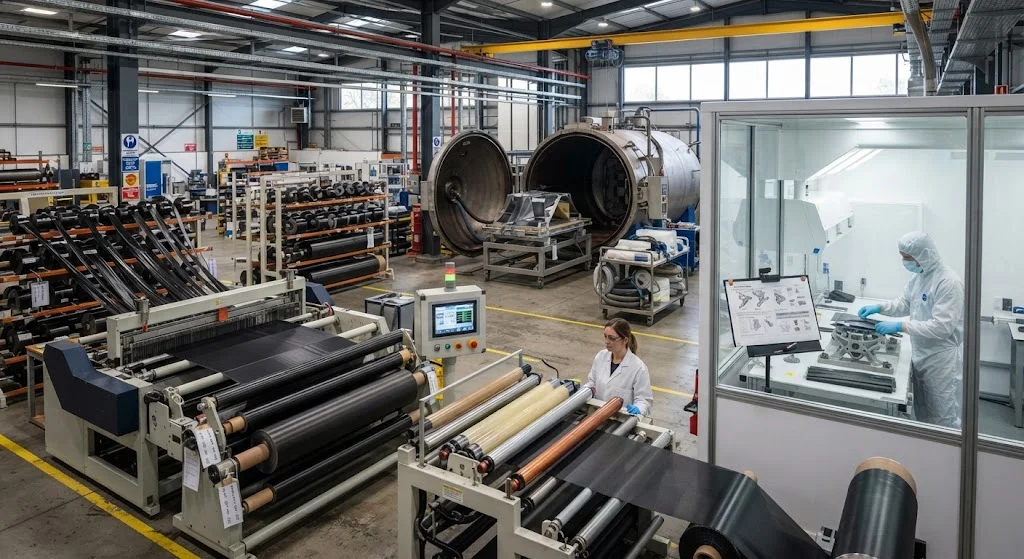
The carbon fibre manufacturers UK market occupies a distinctive position: it imports nearly all of its raw carbon fibre, yet it converts and fabricates that fibre into some of the highest-value composite structures in the world. For an engineering buyer, understanding carbon fibre manufacturers UK means understanding a converter-led supply chain rather than a fibre-production one. The United Kingdom has no large domestic PAN precursor plant, so aerospace-grade tow arrives from Japan, the United States, and continental Europe, and the domestic industry adds value through weaving, prepreg manufacture, kitting, molding, and assembly. This article maps that chain layer by layer, explains the role of the National Composites Centre, and shows how to read a British CFRP supplier's real position.
The practical question for most buyers is not who makes the fibre, but who can be trusted to convert it consistently to an aerospace or industrial specification. That answer lives in the converter and fabricator tier, and it is where the UK is strongest.
Carbon Fibre Manufacturers UK: A Converter-Led Supply Chain
The UK supply chain is best understood as three layers, with raw fibre at the top and finished structures at the bottom. Because the top layer is almost entirely imported, the domestic industry's identity sits in the middle and lower layers. The table below summarizes the structure and the kind of companies that occupy each layer:
| Supply Chain Layer | What Happens Here | Representative UK Capability |
|---|---|---|
| Raw fibre and tow | PAN precursor carbonization into tow and yarn | Almost entirely imported: Toray, Hexcel, Teijin supply UK converters |
| Textile conversion | Weaving, multiaxial fabrics, braiding, commingling | Sigmatex in Runcorn; Formax in Leicester; specialist weavers |
| Prepreg and resin | Impregnation, resin formulation, kitting | Hexcel UK in Duxford; SHD Composites in Sleaford; Scott Bader resins |
| Component fabrication | Layup, RTM, autoclave, OoA, machining, assembly | GKN Aerospace, Spirit AeroSystems Belfast, Airbus Broughton |
| Recycling and reclaim | Pyrolysis and solvolysis of scrap and end-of-life parts | Gen 2 Carbon in the West Midlands (formerly ELG Carbon Fibre) |
This structure has an important commercial consequence. A buyer who approaches a UK converter is dealing with a company that sources tow on the global market and adds textile, resin, or fabrication value domestically. Lead times and pricing therefore track imported fibre availability, while quality and process control are genuinely local strengths.
The National Composites Centre as the Research Hub
The National Composites Centre (NCC), based at the Bristol and Bath Science Park, is the anchor of the UK's composites ecosystem and a member of the High Value Manufacturing Catapult. It operates industrial-scale equipment for automated fibre placement, resin transfer molding, out-of-autoclave processing, and continuous-fibre additive manufacturing, and it connects over a thousand organizations, from global primes to small specialists, to shared facilities that no single company could justify owning. For the carbon fibre manufacturers UK market, the NCC matters in three ways: it de-risks new processes before commercial adoption, it trains the engineers who staff the converter base, and it provides a neutral qualification environment where a novel material or process can be tested against aerospace standards.
Beyond the NCC, the UK research base includes university groups at Bristol, Cranfield, and Nottingham that feed process knowledge into industry. The practical effect for buyers is that the UK converter tier is unusually good at adopting new processes quickly, because the R&D-to-production pipeline is short and well funded.
UK Carbon Fiber Manufacturer Landscape by Segment
A UK carbon fiber manufacturer is rarely a fibre producer and usually a converter or fabricator serving one or more segments. Aerospace is the largest and most demanding, with GKN Aerospace, Spirit AeroSystems in Belfast, and Airbus in Broughton and Filton consuming large volumes of prepreg and dry fibre for wing and engine structures. Motorsport and automotive form a second segment, centered on the motorsport valley around Oxfordshire and Northamptonshire, where rapid tooling and short-run fabrication are routine. Marine, wind energy, and industrial applications form a third segment, where pultruded profiles, fabrics, and repair materials dominate.
Across these segments, UK converters typically offer the following, which buyers should confirm during evaluation:
- Textile conversion from imported tow into woven, multiaxial, and braided fabrics in aerospace and industrial formats.
- Prepreg manufacture with controlled resin content and documented environmental handling for out-of-life management.
- Kitting and near-net preform supply that reduces customer cutting waste and layup time.
- Component fabrication through autoclave, RTM, and out-of-autoclave routes, with machining and assembly to drawing.
- Recycled fibre supply for non-critical and semi-structural applications from established UK reclaimers.
Certification and the British CFRP Supplier Base
Certification is where a British CFRP supplier earns or loses aerospace work. The UK operates under the Civil Aviation Authority and, for many programmes, aligned European and international approvals, so an aerospace converter should hold AS9100 quality certification and Nadcap approval for its composite special processes, with material qualification data generated to aerospace test methods. Defense work adds UK Ministry of Defence and export-control obligations. For industrial and motorsport customers, ISO 9001 and consistent datasheet-backed properties are usually sufficient, though buyers should still request the test methods behind published values.
Because the UK imports its raw fibre, traceability deserves particular attention: a strong supplier can trace a delivered fabric or prepreg back to the imported tow lot and its original producer, which is what makes a field issue investigable. Buyers evaluating a composite manufacturer in Britain should treat that traceability, not the country of fibre origin, as the real measure of supply security.
The motorsport valley deserves a closer look because it operates differently from aerospace. Companies around Oxfordshire and Northamptonshire have built a cluster where tooling cycles of two to three weeks and prototype runs measured in dozens of parts are normal, and where a converter's ability to respond quickly matters more than its certification breadth. For buyers sourcing carbon fibre parts in the UK for motorsport, the practical difference is lead time: a supplier embedded in that cluster will quote weeks where an aerospace-oriented fabricator quotes months, at the price of tighter performance documentation. Marine and industrial buyers sit between the two, usually selecting on price and consistent datasheet properties rather than certification depth.
Frequently Asked Questions
Does the UK produce its own carbon fibre?
Not at scale. The UK has no large domestic PAN precursor or carbonization plant, so aerospace-grade tow is imported from Japan, the United States, and Europe. The domestic industry adds value through weaving, prepreg manufacture, kitting, molding, and assembly rather than raw fibre production.
What is the role of the National Composites Centre?
The National Composites Centre at the Bristol and Bath Science Park is the UK's flagship composites research facility. It provides industrial-scale equipment, connects over a thousand organizations, de-risks new processes before commercial adoption, and supplies a neutral qualification environment for aerospace material and process development.
What certification should a British CFRP supplier hold for aerospace work?
An aerospace converter should hold AS9100 quality certification and Nadcap approval for its composite special processes, with material qualification data generated to aerospace test methods. Defense work adds UK Ministry of Defence and export-control obligations that must be confirmed before contract award.
Why is traceability especially important for UK carbon fibre suppliers?
Because raw fibre is imported, a strong UK supplier can trace a delivered fabric or prepreg back to the imported tow lot and its original producer. That traceability, rather than the country where the fibre was made, is the practical measure of supply security for a British CFRP supplier.
Conclusion
The carbon fibre manufacturers UK market rewards buyers who look past fibre origin and evaluate the converter chain. Raw tow is imported, but the UK's strength sits in textile conversion, prepreg manufacture, fabrication, and a research base anchored by the National Composites Centre. A British CFRP supplier that holds aerospace certification, documents its imported-tow traceability, and can fabricate to drawing is a genuinely capable partner for aerospace, motorsport, marine, and industrial programmes alike.
YongXian supplies carbon fibre fabrics, prepregs, profiles, and finished composite components with full engineering support. Explore our carbon fibre product range or contact our engineering team to match a UK or international source to your programme.
Part of topic
Related Articles
- Carbon Fiber Tube Manufacturers: Procurement Guide for Engineering Buyers
- Carbon Fiber Manufacturers USA: Aerospace-Grade Capacity and Certification Status
- Carbon Fiber Supplier Philippines: Southeast Asian Manufacturing Hub Emergence
- US Carbon Fiber Manufacturers: Hexcel, MAGNA and Emerging Domestic Capacity
- Carbon Fiber Pultrusion Suppliers USA: Domestic Capacity and Lead Time Comparison
- Carbon Fiber Products Manufacturer Guide: Evaluating Certification, Capacity, and Delivery Capabilities
Interested in Our Products?
Contact our team for competitive pricing and technical specifications.
Get a QuoteRelated Products
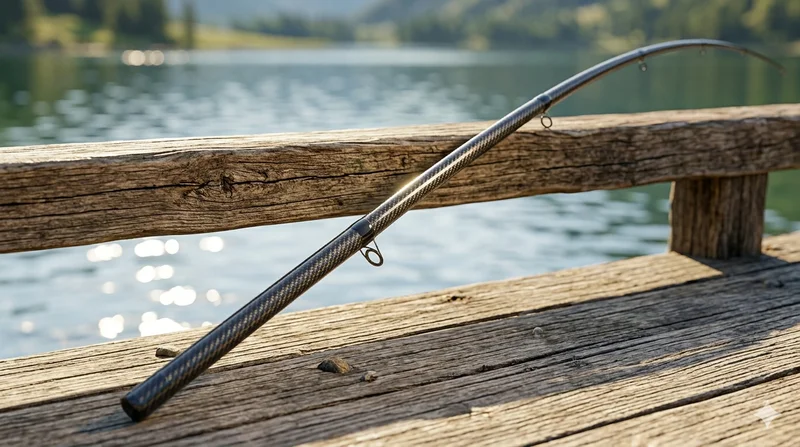
Carbon Fiber Fishing Rod Blank
High-quality carbon fiber fishing rod blank manufactured from multiple grades of Toray carbon fiber cloth. Available in a wide range of lengths, powers, and actions for freshwater and saltwater applications. Suitable for OEM rod building.
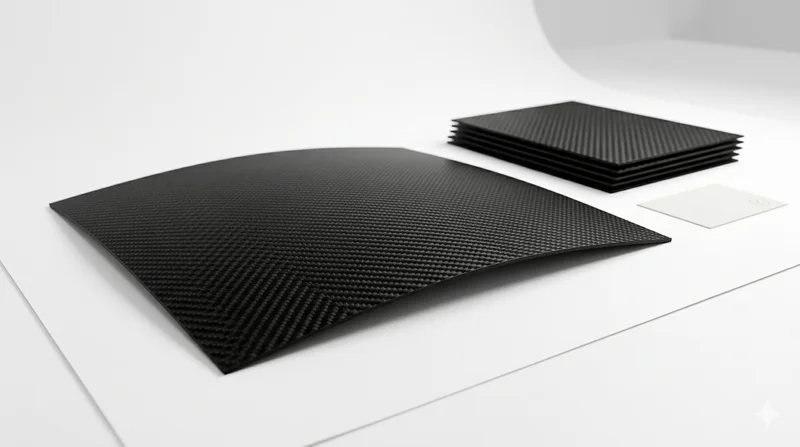
Carbon Fiber Plate — 3K Twill T700 1.5mm
Thin 1.5mm carbon fiber plate with 3K twill weave surface. Lightweight and stiff, commonly used for covers, panels, drone bodies, and applications requiring a premium aesthetic appearance.
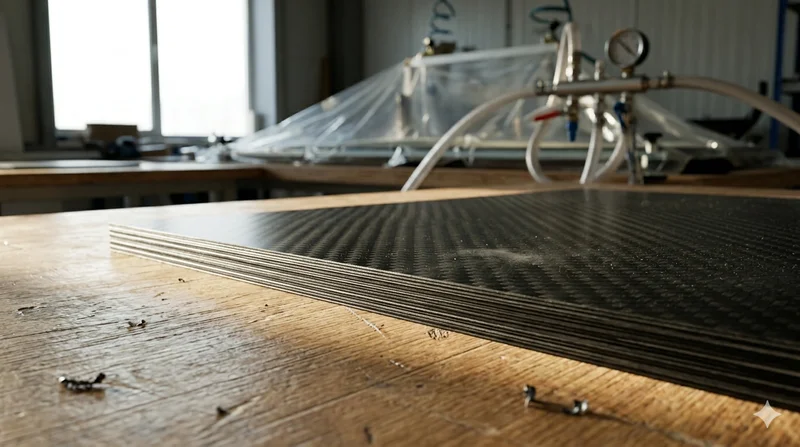
Carbon Fiber Plate — 3K Twill T700 3.0mm
Medium-thickness 3.0mm carbon fiber plate offering significantly higher load capacity while maintaining attractive 3K twill finish. Suitable for structural brackets, reinforcement plates, and load-bearing panels.
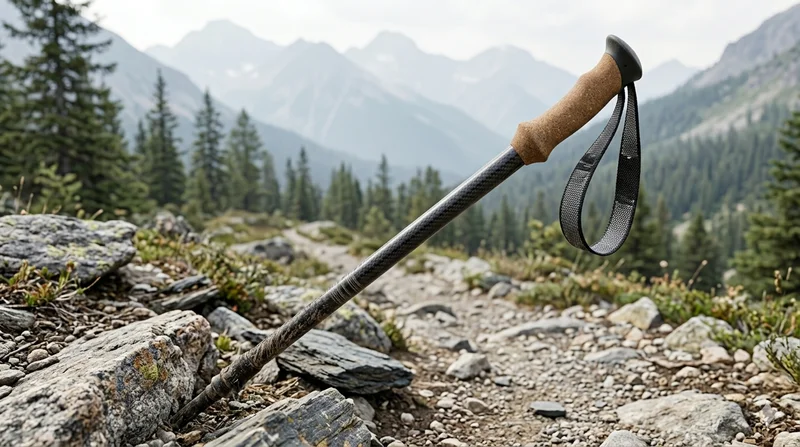
Carbon Fiber Trekking Pole
Lightweight carbon fiber trekking pole manufactured from high-grade carbon fiber tube. Weighs only 160g per pole while providing superior shock absorption and durability for hiking, trail running, and backpacking.
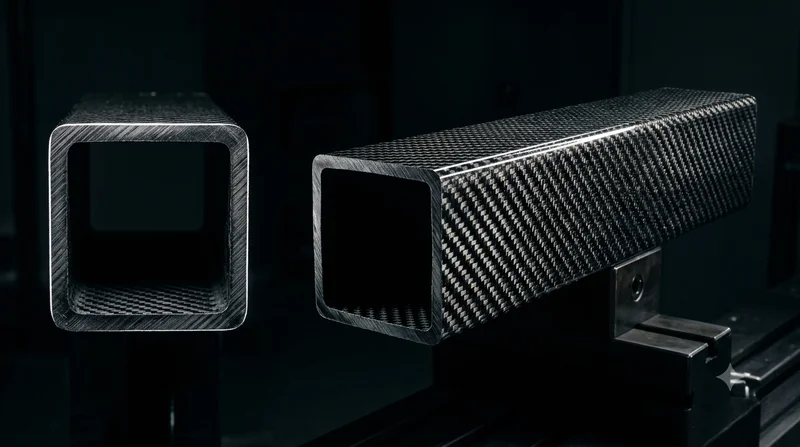
Square Carbon Fiber Tube — 3K Twill T700
Square cross-section carbon fiber tube manufactured with 3K twill weave for torsional strength. Preferred for structural frames, trusses, and support columns where rectangular geometry offers design flexibility.