
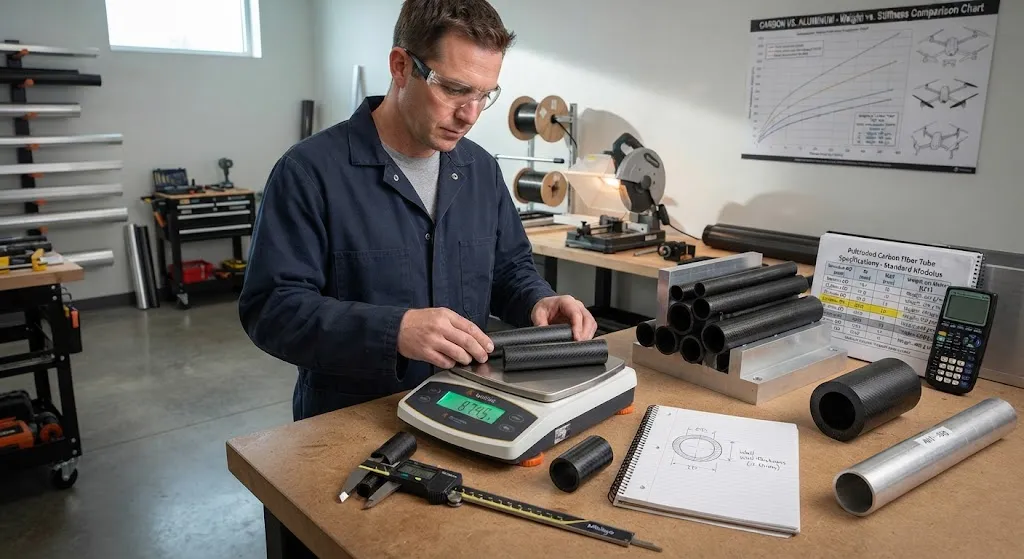
Carbon fiber tube weight is often the number that decides whether a design is viable, because the whole appeal of a composite tube is a high stiffness at a low mass. A drone arm, a quadcopter boom, a tripod leg, a telescopic mast and a drive shaft all live or die on the ratio between how stiff the t
Introduction
Carbon fiber tube weight is often the number that decides whether a design is viable, because the whole appeal of a composite tube is a high stiffness at a low mass. A drone arm, a quadcopter boom, a tripod leg, a telescopic mast and a drive shaft all live or die on the ratio between how stiff the tube is and how much it weighs. The good news is that this weight can be estimated accurately before a single tube is ordered, using nothing more than the tube geometry and the density of the laminate.
A carbon fiber tube is a hollow cylinder of carbon fibers in an epoxy matrix. Its density sits in a narrow band, around 1.55 to 1.60 grams per cubic centimetre, which is close to that of many pultruded and roll-wrapped tubes. With that density, the outside diameter and the wall thickness, the mass per meter follows from a simple calculation. This guide sets out the formula, tabulates the weight of common tube sizes, and shows how wall thickness and the choice between carbon fiber and aluminum change the answer.
Carbon Fiber Tube Weight: Understanding the Basics
Three numbers control the weight of any tube: the outside diameter (OD), the inside diameter (ID), and the density of the material. The difference between OD and ID gives the wall thickness, and only the material inside that wall carries mass. Everything inside the bore is empty, which is exactly why a tube is so efficient: a solid cylinder of the same OD would weigh many times more while adding relatively little to bending stiffness.
The density of a carbon fiber tube is usually quoted between 1.55 and 1.60 grams per cubic centimetre for standard-modulus, epoxy-based tubes. Higher-modulus fibers and higher fiber volume fractions push the value slightly higher, while tubes with a larger resin fraction sit slightly lower. For estimating, 1.55 is a reasonable figure, and 1.60 gives a small safety margin. It is worth confirming the supplier's figure, because a tube sold as carbon fiber can vary in fiber content, and density is the single input that most affects the final weight.
Estimating Carbon Fiber Tube Weight per Meter
The weight of a tube is the volume of its wall multiplied by its density. For a tube one meter long, the calculation runs in three steps:
- Cross-sectional area: A equals pi divided by four, multiplied by the outside diameter squared minus the inside diameter squared, in square millimetres.
- Volume per meter: because the tube is one meter long, the volume in cubic centimetres equals the area in square millimetres; a factor of 1,000 links the millimetre and centimetre units.
- Mass per meter: multiply the volume by the density in grams per cubic centimetre to get grams per meter, then divide by 1,000 for kilograms per meter.
As a worked example, take a tube with an outside diameter of 20 millimetres and a 1.5 millimetre wall, which gives an inside diameter of 17 millimetres. The cross-sectional area is about 87 square millimetres, and multiplying by a density of 1.55 gives about 135 grams per meter, or 0.135 kilograms per meter. That single figure is enough to compare a design against a weight budget before any material is committed.
Weight per Meter Table for Common Tube Sizes
The table below gives the calculated mass per meter for a range of common carbon fiber tubes, alongside the same geometry in aluminum for comparison. Carbon fiber is taken at 1.55 grams per cubic centimetre and aluminum at 2.70.
| Outside diameter (mm) | Wall (mm) | Inside diameter (mm) | Carbon fiber (kg/m) | Aluminum (kg/m) |
|---|---|---|---|---|
| 16 | 1.0 | 14 | 0.073 | 0.127 |
| 20 | 1.5 | 17 | 0.135 | 0.235 |
| 25 | 2.0 | 21 | 0.224 | 0.390 |
| 30 | 2.0 | 26 | 0.273 | 0.475 |
| 40 | 3.0 | 34 | 0.541 | 0.941 |
The pattern is consistent: at the same geometry, a carbon fiber tube is about 43 percent lighter than an aluminum tube, because its density is lower by that share. In practice the real saving is often larger, because a carbon fiber tube can be sized thinner while meeting the same stiffness target, or a thinner carbon tube can replace a thicker aluminum one outright.
Wall Thickness and Tube Weight
Wall thickness is the variable a designer controls most directly, and it moves weight roughly in proportion. Doubling the wall of a given outside diameter roughly doubles the mass per meter, because the cross-sectional area nearly doubles for a thin-to-medium wall. Bending stiffness, however, grows faster than weight as the wall thickens, up to the point where the tube approaches a solid rod. That is why a thick-walled carbon fiber tube is chosen for drive shafts, rollers and heavy-duty booms: the extra wall buys far more stiffness than it costs in weight, until the wall grows so thick that the benefit flattens out. A tube with a thick wall and a small bore behaves more and more like a solid rod, and the weight advantage over a metal bar narrows.
Carbon Fiber Tube vs Aluminum Tube Weight
The most common comparison is carbon fiber against aluminum, the two materials used for most lightweight tubular structures. At equal dimensions, carbon fiber wins on weight by the density ratio, about 1.55 to 1.60 against 2.70, or roughly 43 percent. Aluminum, however, is isotropic and cheap, and it tolerates clamping and bolted joints more forgivingly, so it still appears where weight is less critical. The deciding question is not the density alone but the stiffness per unit weight: a carbon fiber tube reaches the target stiffness at a lower mass, which is why the material dominates drone arms, racing components and precision booms. Where cost, simple machining or electrical conductivity matter more than mass, aluminum remains the practical choice.
Using a Strength Calculator Alongside Weight Data
Weight and strength are decided together. A carbon fiber tube strength calculator uses the same geometry as the weight formula, plus the wall thickness and the fiber modulus, to estimate bending and torsional capacity. The two figures should be read as a pair: a tube is only useful if it meets its stiffness target at an acceptable weight, and a calculator that ignores weight will happily suggest a wall so thick that the weight advantage disappears. Entering the outside diameter, wall and desired stiffness into a strength calculator, then checking the mass per meter from the formula above, gives a complete first-pass design before any test part is made.
Frequently Asked Questions
How much does a carbon fiber tube weigh per meter?
It depends on the diameter and wall. A 20 millimetre tube with a 1.5 millimetre wall weighs about 0.135 kilograms per meter, a 25 millimetre tube with a 2 millimetre wall about 0.224 kilograms per meter, and a 40 millimetre tube with a 3 millimetre wall about 0.541 kilograms per meter. The mass follows directly from the cross-sectional area and a density of about 1.55 to 1.60 grams per cubic centimetre.
Is a carbon fiber tube lighter than an aluminum tube of the same size?
Yes. At the same outside diameter and wall, a carbon fiber tube is about 43 percent lighter, because its density is 1.55 to 1.60 grams per cubic centimetre against 2.70 for aluminum. The real saving is often larger, because a carbon fiber tube can be made thinner while still meeting the same stiffness target, allowing a lighter section to replace a heavier one.
How does wall thickness affect the weight and stiffness of a carbon fiber tube?
A thicker wall adds weight roughly in proportion to the increase in cross-sectional area, but it adds bending stiffness faster, up to the point where the tube approaches a solid rod. This is why thick-walled tubes are used for drive shafts and rollers: the added stiffness is worth the added mass, until the wall becomes so thick that the tube behaves like a solid bar and the weight penalty stops being justified.
Conclusion
Carbon fiber tube weight is easy to estimate once the diameter, wall thickness and density are known. The cross-sectional area times the density gives the mass per meter, and a short table covers the sizes most designers use. Wall thickness is the lever a designer controls most directly, and the carbon fiber versus aluminum comparison confirms a weight saving of roughly 43 percent at equal geometry, often more when the carbon tube is sized to the same stiffness. With the weight formula and a strength calculator used together, a tube can be specified on paper before any material is cut.
If you need carbon fiber tubes with published diameter, wall thickness and mass per meter data, browse our carbon fiber tube range, or contact our team for datasheets and help sizing a tube to your weight budget.
Part of topic
Related Articles
- Carbon Fiber Tube Repair: Methods, Limits and When to Replace
- Carbon Fiber Tube Thick Walled: Design Considerations and Applications
- Carbon Fiber Rod vs Fiberglass: Stiffness, Fatigue and Cost
- Carbon Fiber Rod vs Graphite: Key Differences Explained
- Carbon Fiber Tube vs Steel: Strength-to-Weight Analysis
- Carbon Fiber Tube vs Aluminum: Which Material Wins for Your Application
Interested in Our Products?
Contact our team for competitive pricing and technical specifications.
Get a QuoteRelated Products
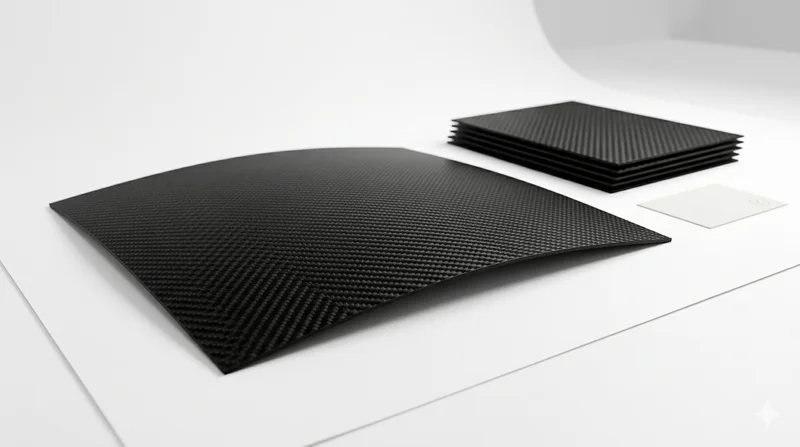
Carbon Fiber Plate — 3K Twill T700 1.5mm
Thin 1.5mm carbon fiber plate with 3K twill weave surface. Lightweight and stiff, commonly used for covers, panels, drone bodies, and applications requiring a premium aesthetic appearance.
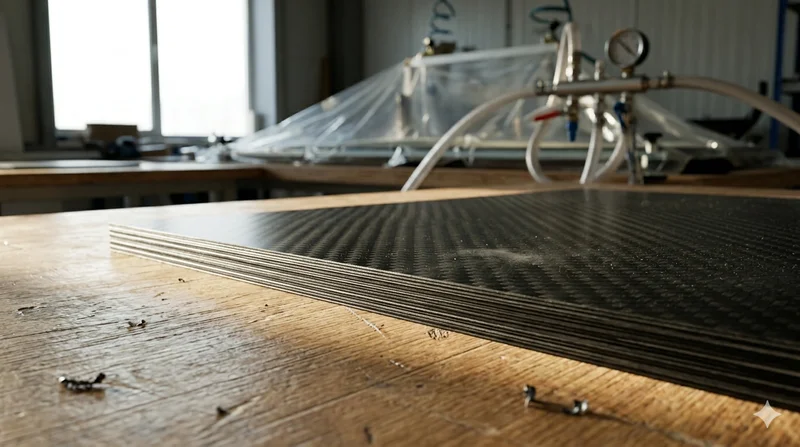
Carbon Fiber Plate — 3K Twill T700 3.0mm
Medium-thickness 3.0mm carbon fiber plate offering significantly higher load capacity while maintaining attractive 3K twill finish. Suitable for structural brackets, reinforcement plates, and load-bearing panels.
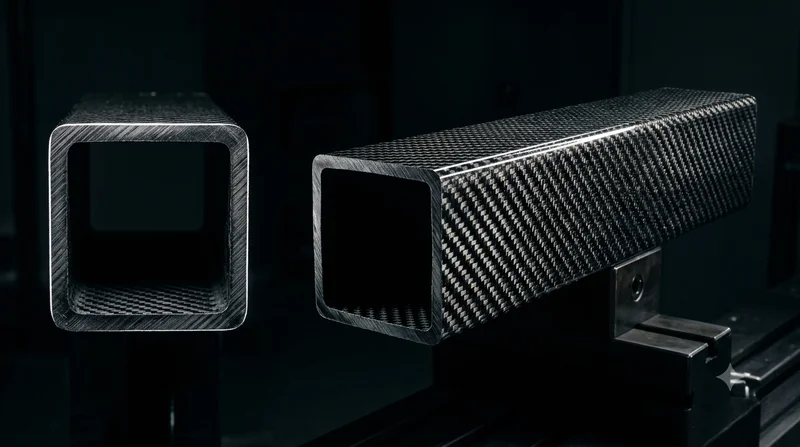
Square Carbon Fiber Tube — 3K Twill T700
Square cross-section carbon fiber tube manufactured with 3K twill weave for torsional strength. Preferred for structural frames, trusses, and support columns where rectangular geometry offers design flexibility.
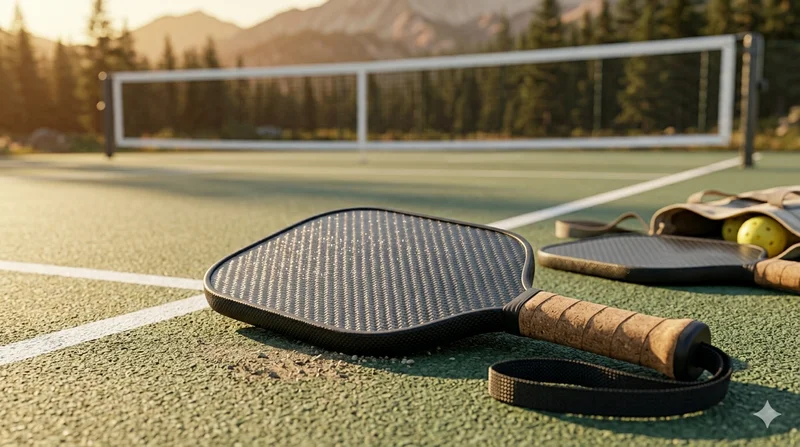
Carbon Fiber Pickleball Paddle
High-performance pickleball paddle with Toray T700 carbon fiber face and polypropylene honeycomb core. Delivers excellent power-to-weight ratio, spin generation, and vibration dampening for competitive play.

Carbon Fiber Trekking Pole
Lightweight carbon fiber trekking pole manufactured from high-grade carbon fiber tube. Weighs only 160g per pole while providing superior shock absorption and durability for hiking, trail running, and backpacking.