
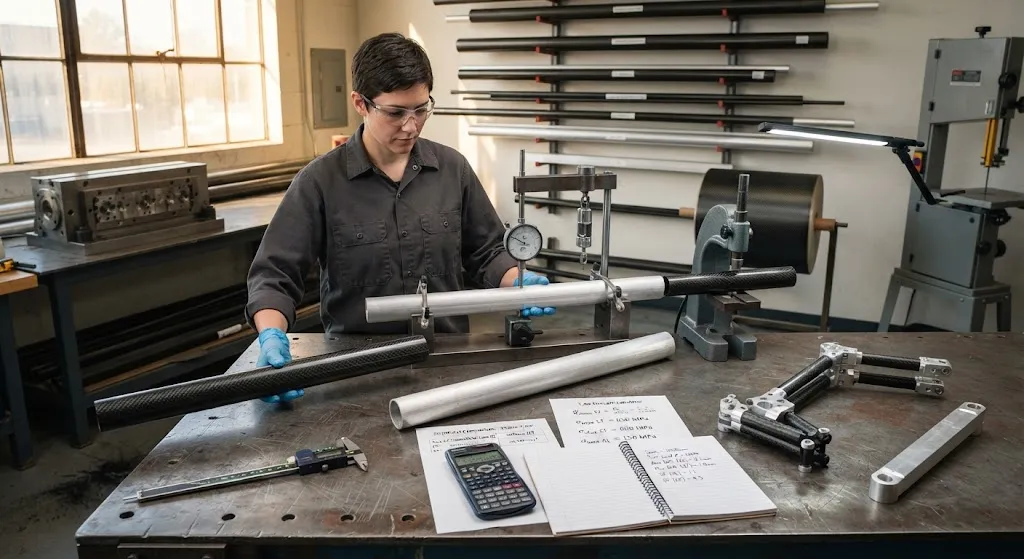
Carbon fiber tube vs aluminum decides the material for drone arms, robot links, bicycle frames, tripods, camera booms and drive shafts, all of which use round tubes to carry bending and torsion. The comparison is not simply about the raw material, because a tube's stiffness depends on its diameter a
Introduction
Carbon fiber tube vs aluminum decides the material for drone arms, robot links, bicycle frames, tripods, camera booms and drive shafts, all of which use round tubes to carry bending and torsion. The comparison is not simply about the raw material, because a tube's stiffness depends on its diameter and wall thickness far more than on density, and the directional stiffness of carbon fibre changes the answer again. A carbon fiber tube is about 40 percent lighter than an aluminum tube of the same size, but it behaves differently depending on how the fibres run. This guide compares the two on weight, bending stiffness, torsion, strength, cost and durability, with a worked example.
The short answer is that a carbon fiber tube wins where weight and stiffness per kilogram matter, especially for long tubes in bending, while an aluminum tube wins on cost, uniform properties and easy machining. Which case applies depends on the load and the geometry, and the sections below show how to decide.
Carbon Fiber Tube vs Aluminum: Why Geometry Changes the Answer
For a round tube, bending stiffness is the product of the material modulus and the second moment of area, and the second moment of area grows with the fourth power of diameter. That means a small increase in diameter adds far more stiffness than a change of material ever could. A designer comparing carbon fiber tube vs aluminum should therefore fix the outer diameter and wall thickness first, and only then compare materials. Within a fixed geometry, carbon fibre's tensile modulus ranges from about 70 gigapascals for a quasi-isotropic lay-up to 120 gigapascals or more for a pultruded tube with fibres running along the axis, against 69 gigapascals for aluminum in all directions.
The practical effect is that a pultruded carbon fiber tube, with fibres aligned to the length, is roughly 1.7 times stiffer in bending than an aluminum tube of the same dimensions, while weighing about 40 percent less. A roll-wrapped tube with fibres at many angles is closer to aluminum in modulus, but still lighter. Which tube is right depends on whether the load runs along the tube, as in a drive shaft, or bends it, as in a drone arm.
Carbon Fiber Tube vs Aluminum in Weight and Bending Stiffness
The table compares a 25 millimetre outer diameter, 1.5 millimetre wall tube, one metre long, in standard-modulus carbon fibre and in aluminum 6061-T6.
| Property | Carbon Fiber Tube | Aluminum Tube |
|---|---|---|
| Density | 1.5-1.6 g/cm³ | 2.70 g/cm³ |
| Axial modulus | 70-180 GPa depending on lay-up | 69 GPa |
| Mass of 1 m of 25 mm by 1.5 mm tube | about 0.17 kg | about 0.30 kg |
| Bending stiffness relative to aluminum | 1.0-2.6 times | 1.0 |
| Tensile strength | 600-1,500 MPa | 310 MPa |
| Torsional stiffness | Lower than bending unless fibres are wound at 45 degrees | Uniform |
| Thermal expansion | 0-3 ppm per °C axial | 23 ppm per °C |
| Relative cost per metre | 8-20 times aluminum | Baseline |
The worked example behind those numbers shows why geometry and material interact. For a 25 millimetre outer diameter tube with a 1.5 millimetre wall, the second moment of area is about 7,700 millimetres to the fourth power. With a pultruded carbon modulus near 120 gigapascals, the bending stiffness reaches about 9.2 million newton square millimetres, against 5.3 million for aluminum. The carbon tube is therefore about 1.7 times stiffer and, at roughly 0.17 kilograms per metre against 0.30, about 43 percent lighter. That combination is why carbon fiber tubes dominate drone arms and racing bicycle frames.
Using a Carbon Fiber Tube Strength Calculator
A carbon fiber tube strength calculator helps convert those stiffness figures into a safe working load, and using one correctly depends on feeding it the right inputs:
- Outer and inner diameter: These fix the second moment of area and the section modulus, which drive both bending deflection and bending stress.
- Fibre lay-up and modulus: A pultruded tube with axial fibres has a much higher modulus than a roll-wrapped tube, and the calculator needs the right value.
- Wall thickness: Thin walls fail by local buckling or ovalisation before the material reaches its tensile strength, so the calculator should check buckling, not only stress.
- Support conditions and span: A tube fixed at both ends carries far more load than a simply supported one, and the effective length changes the result.
- Safety factor: Carbon fibre fails without yielding, so a higher safety factor than for aluminum is normal in dynamic applications.
Run the calculator at the required span and load, then check both the deflection limit and the buckling limit. If deflection governs, a larger diameter with a thinner wall is usually the cheapest way to gain stiffness, because diameter scales stiffness so strongly.
Carbon Fiber Tube vs Steel and Aluminum in Durability and Cost
For durability, a carbon fiber tube resists corrosion, so it suits marine, outdoor and humid environments where a steel tube would rust. Against steel, carbon fiber tube is far lighter and, per kilogram, far stiffer, which is why it replaces steel in competition bicycles and racing structures. The weaknesses are different: carbon tubes are brittle in impact, they can crack rather than dent, and they need protection at clamp points, whereas aluminum tubes dent and steel tubes bend but rarely shatter. Cost is the other divider: a carbon fiber tube is typically eight to twenty times the price of an aluminum tube per metre, so it is chosen when the weight and stiffness saving justifies it. Where a part must survive rough handling, aluminum or steel may still be the safer choice even at higher weight.
One more practical point: tubes are usually joined, not used alone. A bonded sleeve joint or a clamped insert changes the load path, and a joint that is weaker than the tube will govern the assembly. When comparing carbon fiber tube with aluminum tube, check how each is fixed at the ends, because an aluminum tube with a bolted through-joint can outperform a carbon tube whose joint crushes it under the bolt. The tube is only as strong as its connection, and that connection belongs in the comparison from the start.
Frequently Asked Questions
Is a carbon fiber tube stronger than an aluminum tube?
Per kilogram, yes. A carbon fiber tube reaches 600 to 1,500 megapascals of tensile strength at a density of 1.5 to 1.6 grams per cubic centimetre, while an aluminum 6061-T6 tube sits near 310 megapascals at 2.70. Per unit weight the carbon tube is two to five times stronger, and its stiffness per kilogram is higher still. In absolute terms, a thick aluminum tube can out-perform a thin carbon tube, so the comparison must fix the geometry first.
How much lighter is a carbon fiber tube than an aluminum tube?
For the same outer diameter and wall thickness, a carbon fiber tube is about 40 to 45 percent lighter. A 25 millimetre by 1.5 millimetre tube one metre long weighs roughly 0.17 kilograms in carbon fibre against 0.30 kilograms in aluminum. A carbon fiber tube weight figure this much lower is the main reason it dominates drone arms and bicycle frames.
When should I choose carbon fiber tube vs steel?
Choose carbon fiber tube when weight and stiffness per kilogram matter and the part is protected from sharp impact, as in competition bicycles, drone arms and robot links. Choose steel when toughness, low cost and damage tolerance matter more, as in scaffolding, utility frames and parts exposed to heavy abuse. Carbon fiber tube resists corrosion better but is more brittle, so impact protection at the joints is essential.
Conclusion
Carbon fiber tube vs aluminum rarely has one right answer, because tube stiffness depends on diameter and wall thickness as much as on the material. In a fixed geometry, a pultruded carbon fiber tube is about 1.7 times stiffer in bending and roughly 43 percent lighter than an aluminum tube, while a roll-wrapped tube trades some stiffness for lower cost. Carbon fiber tube wins where weight and stiffness per kilogram matter and the part is impact-protected; aluminum tube wins on cost, uniform properties and toughness. Fixing the geometry, then checking deflection, stress and buckling with a calculator, is the honest way to choose.
If you need carbon fiber tubes supplied with clear diameter, wall, lay-up and stiffness data, browse our carbon fiber tube range, or contact our team for datasheets and application support.
Part of topic
Related Articles
- Carbon Fiber Tube Repair: Methods, Limits and When to Replace
- Carbon Fiber Tube Thick Walled: Design Considerations and Applications
- Carbon Fiber Tube Weight: How to Estimate Weight per Meter
- Carbon Fiber Rod vs Fiberglass: Stiffness, Fatigue and Cost
- Carbon Fiber Rod vs Graphite: Key Differences Explained
- Carbon Fiber Tube vs Steel: Strength-to-Weight Analysis
Interested in Our Products?
Contact our team for competitive pricing and technical specifications.
Get a QuoteRelated Products

Carbon Fiber Plate — 3K Twill T700 1.5mm
Thin 1.5mm carbon fiber plate with 3K twill weave surface. Lightweight and stiff, commonly used for covers, panels, drone bodies, and applications requiring a premium aesthetic appearance.

Carbon Fiber Plate — 3K Twill T700 3.0mm
Medium-thickness 3.0mm carbon fiber plate offering significantly higher load capacity while maintaining attractive 3K twill finish. Suitable for structural brackets, reinforcement plates, and load-bearing panels.

Square Carbon Fiber Tube — 3K Twill T700
Square cross-section carbon fiber tube manufactured with 3K twill weave for torsional strength. Preferred for structural frames, trusses, and support columns where rectangular geometry offers design flexibility.
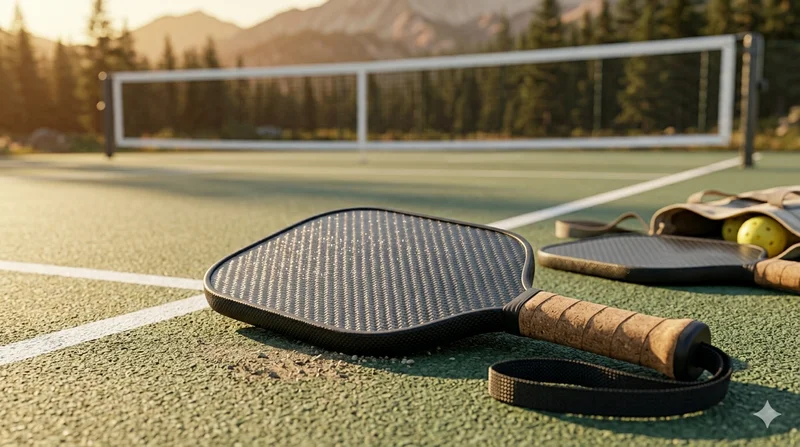
Carbon Fiber Pickleball Paddle
High-performance pickleball paddle with Toray T700 carbon fiber face and polypropylene honeycomb core. Delivers excellent power-to-weight ratio, spin generation, and vibration dampening for competitive play.
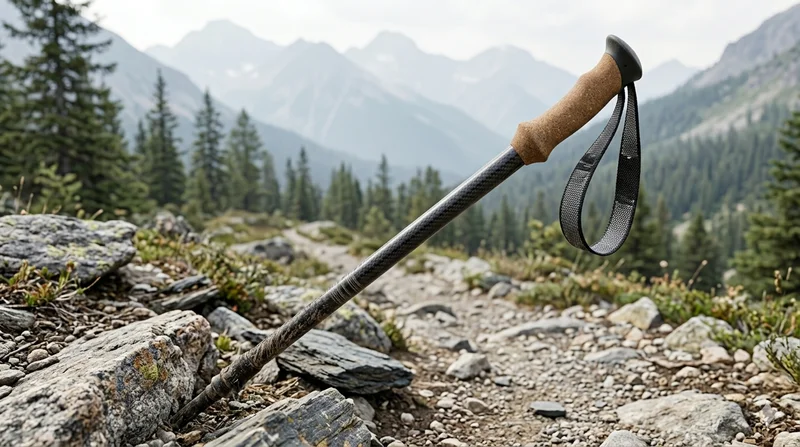
Carbon Fiber Trekking Pole
Lightweight carbon fiber trekking pole manufactured from high-grade carbon fiber tube. Weighs only 160g per pole while providing superior shock absorption and durability for hiking, trail running, and backpacking.