
Carbon fiber suppliers Canada have become an increasingly attractive option for companies that want to diversify their North American supply chains while keeping logistics simple. Canadian distributors and manufacturers sit inside the USMCA trade zone, ship quickly across the border, and serve the a
Introduction
Carbon fiber suppliers Canada have become an increasingly attractive option for companies that want to diversify their North American supply chains while keeping logistics simple. Canadian distributors and manufacturers sit inside the USMCA trade zone, ship quickly across the border, and serve the aerospace, automotive, marine and industrial sectors with a wide range of carbon fiber formats. For a procurement team evaluating carbon fiber suppliers Canada, the practical question is no longer whether Canadian sourcing is viable — it is which type of supplier fits the program: a distributor for materials in stock, a converter for cut and shaped products, or a manufacturer for finished CFRP parts. This article maps the Canadian supplier landscape, explains what each supplier type stocks and delivers, and provides a qualification checklist for working with a Canada CFRP supplier.
The Carbon Fiber Supplier Landscape in Canada
Canada does not host a domestic production line for PAN-based carbon fiber tow, so the Canadian market is served by importers, distributors and converters who source fiber from global producers in the United States, Japan, China and Europe. This structure has a practical benefit for buyers: Canadian suppliers compete on service, inventory depth and technical support rather than on commodity fiber pricing. Four supplier types dominate the landscape:
| Supplier type | Typical offer | Example profile | Best for |
|---|---|---|---|
| Full-line distributor | Tow, fabric, prepreg, resin, cores and consumables | Composites Canada (Mississauga, ON) with a 26,000 sq ft warehouse | Fast delivery of stock materials, mixed BOMs |
| Sheet and tube converter | Cut-to-size carbon fiber sheets, panels, custom laminates | STEVS design (Vaughan, ON) making sheets to order | Prototype and low-volume sheet parts |
| Parts manufacturer | Molded CFRP parts and assemblies, in-house processing | Spartec Composites (Erin, ON), 40+ years of composite fabrication | Production components and assemblies |
| Aerospace-grade fabricator | AS9100 tooling and parts, prepreg and infusion | Fibrotek Advanced Materials (Quebec) with autoclave capability | Certified aerospace and defense work |
This layered structure means a single Canadian procurement relationship can often cover both raw material supply and part manufacturing, simplifying qualification and freight. Ontario's Greater Toronto Area, with companies like Composites Canada and STEVS design, and Quebec's aerospace corridor, with fabricators such as Fibrotek, are the two main clusters to survey first.
What Carbon Fiber Suppliers Canada Stock and Deliver
The range of products available from carbon fiber suppliers Canada is comparable to what a US-based distributor carries, with delivery times of one to five days across the border. The most frequently purchased formats include:
- Carbon fiber tow and roving: 1K to 50K tow for filament winding, weaving and unidirectional tape production, sold by weight or length.
- Woven fabrics: twill, plain and harness-satin weaves from 100 to 600 gsm, in 2x2 twill for cosmetic parts and heavier styles for structural laminates.
- Prepreg: carbon epoxy prepreg rolls with controlled resin content, stored and shipped under refrigerated cold-chain handling.
- Sheets and panels: solid, veneer and honeycomb sandwich panels cut to size, with thickness tolerances around 0.5 mm for standard layups.
- Resins and consumables: epoxy systems, vacuum bagging film, release agents and peel ply to complete the process package.
Most Canadian distributors publish inventory online and quote from stock, which shortens procurement cycles compared with ordering directly from overseas mills. Buyers should still confirm the fiber grade — T300, T700 or intermediate-modulus — because distributors may substitute grades when stock runs low.
Qualifying Carbon Fiber Suppliers Canada: What to Verify
Qualification of a Canada CFRP supplier follows the same discipline as any composite sourcing program, with three additions specific to the Canadian context. First, verify documentation: material certificates must trace back to the original fiber producer, not just the distributor's internal batch number, and ISO 9001 registration is the baseline for converters and manufacturers. Second, confirm logistics terms: USMCA origin rules affect duty treatment for materials crossing the border, so request the certificate of origin along with the quote. Third, validate technical support depth — a distributor that cannot recommend a resin system or laminate schedule adds little over a web store.
| Checklist item | Why it matters | Evidence to request |
|---|---|---|
| Material traceability | Fiber performance depends on the original producer's grade and lot | Original mill certificate, not only distributor paperwork |
| Quality certification | ISO 9001 separates structured suppliers from resellers | Valid certificate and scope of registration |
| USMCA documentation | Origin rules change duty and customs handling | Certificate of origin and tariff classification |
| Inventory commitment | Stock depth determines lead time and substitution risk | Real-time inventory visibility or stock list |
| Technical support | Material selection guidance reduces trial-and-error cost | Application engineers or documented selection tools |
For aerospace work, AS9100 certification is the meaningful bar, and fabricators such as Fibrotek hold both ISO 9001 and AS9100 with controlled-goods registration. For industrial and automotive programs, ISO 9001 plus a demonstrated PPAP or first-article inspection capability is usually sufficient.
When to Choose Canadian Sourcing Over Direct Overseas Supply
Canadian sourcing wins on speed, logistics simplicity and risk control, while direct overseas supply wins on price for very large volumes. The decision framework is straightforward. If a program needs materials or parts in weeks, with minimal customs exposure and local technical support, carbon fiber suppliers Canada are the natural choice — border clearance takes days, freight is ground transport, and warranty claims travel short distances. If a program commits to hundreds of tonnes per year with stable specifications, a direct contract with an overseas producer may undercut Canadian pricing by 10-20 percent, offsetting the logistics friction. Many Canadian distributors bridge this gap by carrying volume inventory from overseas producers, giving buyers a local service layer over global sourcing — a hybrid that suits medium-volume programs particularly well.
Diversification is the other driver. Companies that already depend on a single US or Asian source can add a Canadian supplier as a qualified second source with modest effort, because the qualification evidence — material certificates, test data, quality systems — transfers cleanly. In practice, a dual-source strategy pairing a Canadian distributor with one overseas mill covers both responsiveness and price leverage.
Frequently Asked Questions
Does Canada produce carbon fiber domestically?
Canada does not currently operate a domestic production line for PAN-based carbon fiber precursor and tow. The market is served by importers, distributors and converters who bring fiber from producers in the United States, Japan, China and Europe. Canadian supply chains are therefore strongest at the distribution, conversion and fabrication layers — stocking, cutting, molding and finishing — rather than at the fiber-production layer.
Are carbon fiber materials more expensive in Canada than in the United States?
Base material prices are similar because Canadian distributors buy from the same global producers and operate within the USMCA trade zone. The practical differences are freight (short cross-border ground shipping), currency exposure and duties, which can shift landed cost by a few percent either way. Comparing landed cost — material plus freight plus duty plus lead time value — is the correct basis rather than comparing list prices alone.
What certifications should a Canadian carbon fiber supplier hold?
For industrial and automotive programs, ISO 9001 is the baseline and first-article inspection or PPAP capability is recommended. For aerospace and defense work, AS9100 certification is the meaningful standard, typically combined with controlled-goods registration where required. Buyers should also verify that material certificates trace back to the original fiber producer, since distributor paperwork alone does not establish the fiber grade and lot traceability that structural qualification requires.
Conclusion
Carbon fiber suppliers Canada give North American buyers a practical diversification lever: USMCA-aligned logistics, fast cross-border delivery and a supplier landscape that spans stock materials, cut-to-size products and finished CFRP parts. Distributors like Composites Canada, converters like STEVS design, and manufacturers like Spartec Composites and Fibrotek cover the range from prototype to production. Qualifying a Canada CFRP supplier on material traceability, certification and USMCA documentation turns Canadian sourcing from a convenient option into a resilient second source for the supply chain.
If you are expanding your North American material options, browse our carbon fiber fabrics, tows and prepregs, or contact our engineering team for help selecting grades and formats that match your program's specification.
Part of topic
Related Articles
- Carbon Fiber Supplies Near Me: Local Sourcing Without Compromising Spec
- Carbon Fiber for Sale: Online Platforms and Direct Sales Channel Comparison
- Carbon Fibre Suppliers UK: Post-Brexit Supply Chain Reorganization
- Carbon Fiber Car Parts Manufacturers: IATF 16949 Certification and Mass Production Capability
- Filament Wound Epoxy Tubes Suppliers: Specifications, Certification and Bulk Purchasing
- Carbon Fiber Tube Manufacturers: Procurement Guide for Engineering Buyers
Interested in Our Products?
Contact our team for competitive pricing and technical specifications.
Get a QuoteRelated Products
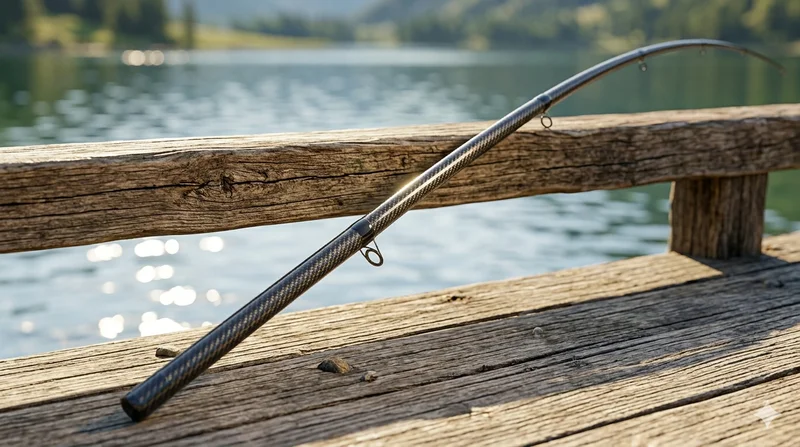
Carbon Fiber Fishing Rod Blank
High-quality carbon fiber fishing rod blank manufactured from multiple grades of Toray carbon fiber cloth. Available in a wide range of lengths, powers, and actions for freshwater and saltwater applications. Suitable for OEM rod building.

Carbon Fiber Plate — 3K Twill T700 3.0mm
Medium-thickness 3.0mm carbon fiber plate offering significantly higher load capacity while maintaining attractive 3K twill finish. Suitable for structural brackets, reinforcement plates, and load-bearing panels.

Carbon Fiber Plate — 3K Twill T700 1.5mm
Thin 1.5mm carbon fiber plate with 3K twill weave surface. Lightweight and stiff, commonly used for covers, panels, drone bodies, and applications requiring a premium aesthetic appearance.
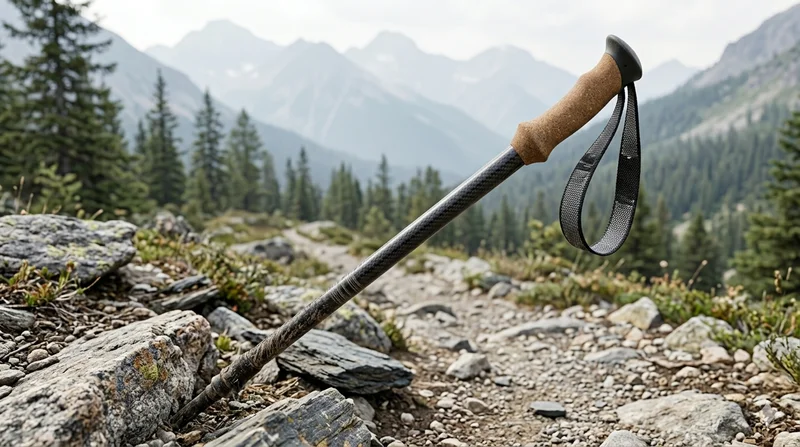
Carbon Fiber Trekking Pole
Lightweight carbon fiber trekking pole manufactured from high-grade carbon fiber tube. Weighs only 160g per pole while providing superior shock absorption and durability for hiking, trail running, and backpacking.

Square Carbon Fiber Tube — 3K Twill T700
Square cross-section carbon fiber tube manufactured with 3K twill weave for torsional strength. Preferred for structural frames, trusses, and support columns where rectangular geometry offers design flexibility.