
Finding a carbon fiber supplier Philippines operations can work with has become a practical procurement question for a growing number of manufacturers. The Philippines has no domestic production of PAN-based carbon fiber, but it has a rapidly developing base of aerospace maintenance, marine fabricat
Introduction
Finding a carbon fiber supplier Philippines operations can work with has become a practical procurement question for a growing number of manufacturers. The Philippines has no domestic production of PAN-based carbon fiber, but it has a rapidly developing base of aerospace maintenance, marine fabrication, electronics, sporting goods, and electric vehicle programs that consume composite materials in rising volumes. Buyers searching for composite materials Philippines suppliers are therefore not looking for a fiber producer; they are looking for a reliable converter, distributor, or import route that can deliver the right grade at a workable price and lead time.
This article explains how the Philippine carbon fiber supply chain is structured, compares the three sourcing routes available to local buyers, and provides a qualification framework for choosing a carbon fiber supplier Philippines programs can depend on. The picture is encouraging: the country's position in Southeast Asia, its trade agreements, and its industrial zones make it a practical hub for composite sourcing even without domestic fiber production.
Why Buyers Seek a Carbon Fiber Supplier Philippines
Demand for carbon fiber in the Philippines comes from several industries that rarely appear in global composites statistics but matter enormously at the local level:
- Aerospace maintenance and repair: The Philippines hosts major MRO facilities near Manila and Clark, including airframe and component repair shops that use carbon fiber prepreg and repair materials for composite structures.
- Marine fabrication: A long-established boatbuilding sector, particularly around Subic Bay and the southern islands, is shifting from fiberglass-only construction to hybrid carbon-glass laminates for performance hulls.
- Electronics and automation: Semiconductor assembly and industrial automation plants consume carbon fiber for lightweight machine parts, robotic arms, and ESD-safe handling equipment.
- Sporting goods: Fishing rods, bicycle frames, and racket sports equipment are manufactured locally with imported carbon fiber, often under OEM contracts for international brands.
- Electric vehicles and infrastructure: The national e-tricycle and e-jeepney programs, plus bridge and building retrofit projects, create a growing market for pultruded profiles and structural reinforcement.
Each of these industries buys a different product form, from repair prepreg for MRO shops to raw tow and woven fabric for molders, and each benefits from a local supplier who understands the grade specifications and can hold stock locally.
The Philippine Sourcing Landscape: Distributors, Converters and Import Routes
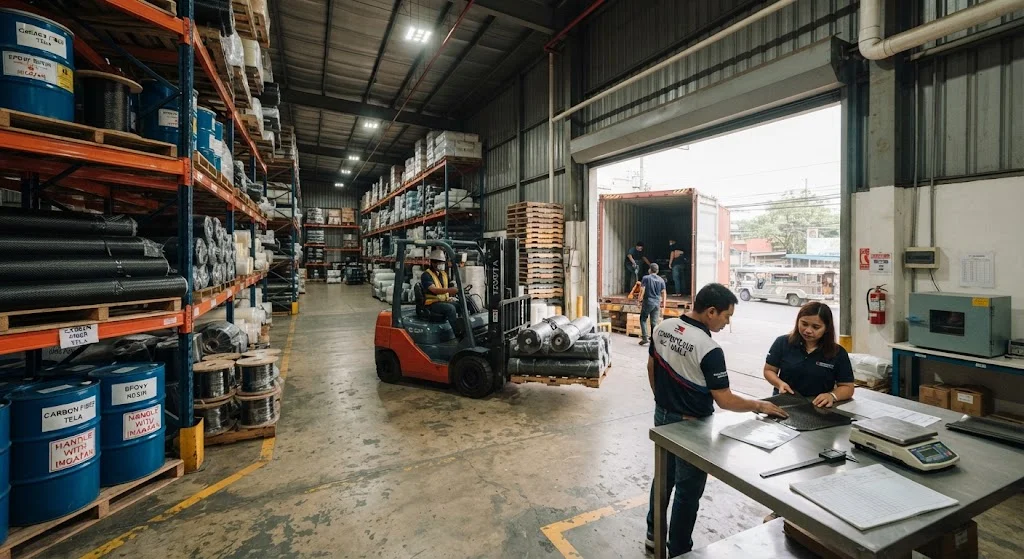
The Philippine market is served by three sourcing routes, and most experienced buyers use a combination of them. The first route is the local distributor or trader, usually based in Metro Manila or Cebu, who imports composite materials from Japan, Taiwan, China, or the United States and resells in small quantities. These distributors are strongest in fiberglass, epoxy, and consumables; carbon fiber is typically a secondary line with narrower grade selection and higher per-unit pricing, but they offer immediate availability and local payment terms. A well-stocked Manila dealer can cut fabric to size and dispatch it the same day, which matters more than brand selection for urgent repair work.
The second route is the regional hub. Singapore, Malaysia, Vietnam, and Thailand host larger composite distributors and converters that serve the whole ASEAN region. Ordering through a regional hub gives access to a wider grade range and better pricing than a local trader, at the cost of a few extra days of transit and the need to manage cross-border logistics and customs clearance. The third route is direct import from the fiber or converter manufacturer, which delivers the lowest unit price and full specification control but requires higher minimum order quantities and longer lead times.
Location within a special economic zone changes the practical calculus. Companies operating inside the Clark Freeport Zone, the Subic Bay Freeport, or a PEZA-registered industrial estate in Cavite or Laguna can often import raw materials under duty and tax incentives that their competitors outside the zones do not enjoy, which narrows the price gap between local distribution and direct import. Buyers who qualify for zone benefits should confirm the commodity classification of their carbon fiber products with the zone administrator early, because the savings accumulate on every shipment.
Comparing Sourcing Routes for Carbon Fiber in the Philippines
The table below compares the three routes across the dimensions that matter for procurement decisions:
| Dimension | Local Distributor | Regional Hub (ASEAN) | Direct Import |
|---|---|---|---|
| Grade selection | Narrow; standard tow and fabric | Wide; multiple brands and forms | Full; specified by buyer |
| Typical MOQ | 1 roll or small cut length | 5-50 rolls | Full container or annual contract |
| Unit price | Highest; resale margin | Moderate | Lowest |
| Lead time | In stock; days | 1-3 weeks | 4-10 weeks |
| Technical support | Limited; product knowledge only | Good; application guidance | Best; manufacturer engineering |
| Best for | Prototypes, repairs, small batches | Mid-volume production | High-volume or specialty programs |
For most Philippine manufacturers, the practical sequence is to build the relationship with a local distributor for small orders and urgent needs, then graduate to a regional hub as volumes stabilize, and only move to direct import when the grade is fixed and the volume justifies container-level purchasing. This staged approach controls both cash flow and supply risk.
Evaluating a Carbon Fiber Supplier Philippines Before Committing
Qualification is more important in a market with no domestic fiber production, because the supply chain is long and the buyer cannot easily visit the fiber factory. A reliable carbon fiber supplier Philippines programs can depend on should be able to provide four things: a clear statement of material origin and grade designation with the corresponding data sheet; lot traceability records for the material they sell; test documentation for any batch where the application is structural; and a written commitment on lead time and stock availability. When a Philippines CFRP supplier provides these four items in writing, sourcing risk drops to the level of any established market. For aerospace repair work, ask whether the supplier holds or can source materials with the certifications your MRO program requires, and verify that temperature-sensitive prepreg has been stored and shipped under documented cold-chain control.
Buyers should also check the practical logistics: customs clearance in the Philippines is improving but still varies by port and commodity code, so a supplier who handles importation and holds local stock saves real time. Asking a shortlist of suppliers how they handle a defective batch and whether they carry insurance on transit is a fast way to separate professionals from traders.
Price expectations should be set from the start. Small-quantity purchases through a local distributor typically cost two to four times the contract price a manufacturer would pay for container volume, and that premium buys availability, not quality. For programs that will grow, the professional move is to negotiate a volume ladder with a regional hub or direct importer while using the local distributor only for bridging orders.
Frequently Asked Questions
Is carbon fiber manufactured in the Philippines?
No. The Philippines currently has no domestic production of PAN-based carbon fiber. All carbon fiber used in the country is imported, either directly by manufacturers or through local distributors and regional hubs. Local value is added through conversion, molding, and application engineering rather than fiber production.
How do I buy carbon fiber in small quantities in the Philippines?
Start with a local distributor in Metro Manila or Cebu that carries carbon fiber fabric, tow, and epoxy. Expect higher unit pricing and a narrower grade range than regional or direct import routes. For repair and prototyping work, this is usually the fastest and most economical option because there is no minimum order and material is available immediately.
What should I verify before ordering from a Philippine supplier?
Confirm the material origin, grade designation, and data sheet; request lot traceability for structural applications; check cold-chain handling for prepreg; and get a written lead time and stock commitment. Ask how defective batches are handled and whether transit is insured, since these answers separate professional suppliers from traders.
Conclusion
The Philippines is emerging as a practical Southeast Asian hub for carbon fiber sourcing even though it produces no fiber domestically. The local route gives speed and flexibility for small orders, regional hubs in Singapore, Malaysia, Vietnam, and Thailand widen the grade range at moderate cost, and direct import delivers the best price for high-volume programs. Matching the route to the order profile, and qualifying suppliers on documentation, logistics, and cold-chain control, is the reliable path to a carbon fiber supplier Philippines programs can depend on.
YongXian supplies carbon fiber fabrics, prepreg, profiles, and finished components worldwide with full engineering support. Explore our carbon fiber product range or contact our engineering team to discuss a sourcing plan for your Philippine-based program.
Part of topic
Related Articles
- Carbon Fiber Tube Manufacturers: Procurement Guide for Engineering Buyers
- Carbon Fibre Manufacturers UK: NCC Research Hub and Supply Chain Layout
- Carbon Fiber Manufacturers USA: Aerospace-Grade Capacity and Certification Status
- US Carbon Fiber Manufacturers: Hexcel, MAGNA and Emerging Domestic Capacity
- Carbon Fiber Pultrusion Suppliers USA: Domestic Capacity and Lead Time Comparison
- Carbon Fiber Products Manufacturer Guide: Evaluating Certification, Capacity, and Delivery Capabilities
Interested in Our Products?
Contact our team for competitive pricing and technical specifications.
Get a QuoteRelated Products
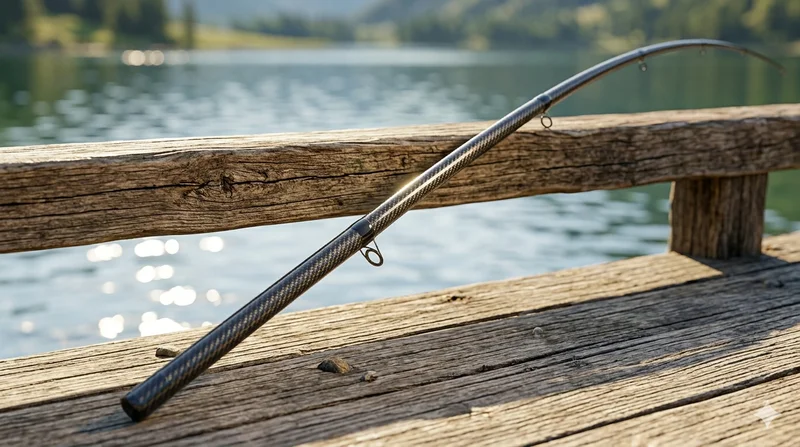
Carbon Fiber Fishing Rod Blank
High-quality carbon fiber fishing rod blank manufactured from multiple grades of Toray carbon fiber cloth. Available in a wide range of lengths, powers, and actions for freshwater and saltwater applications. Suitable for OEM rod building.

Carbon Fiber Plate — 3K Twill T700 1.5mm
Thin 1.5mm carbon fiber plate with 3K twill weave surface. Lightweight and stiff, commonly used for covers, panels, drone bodies, and applications requiring a premium aesthetic appearance.

Carbon Fiber Plate — 3K Twill T700 3.0mm
Medium-thickness 3.0mm carbon fiber plate offering significantly higher load capacity while maintaining attractive 3K twill finish. Suitable for structural brackets, reinforcement plates, and load-bearing panels.
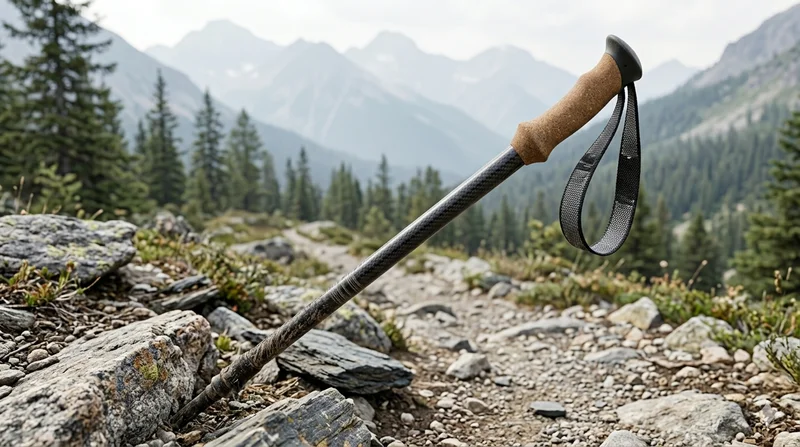
Carbon Fiber Trekking Pole
Lightweight carbon fiber trekking pole manufactured from high-grade carbon fiber tube. Weighs only 160g per pole while providing superior shock absorption and durability for hiking, trail running, and backpacking.

Square Carbon Fiber Tube — 3K Twill T700
Square cross-section carbon fiber tube manufactured with 3K twill weave for torsional strength. Preferred for structural frames, trusses, and support columns where rectangular geometry offers design flexibility.