
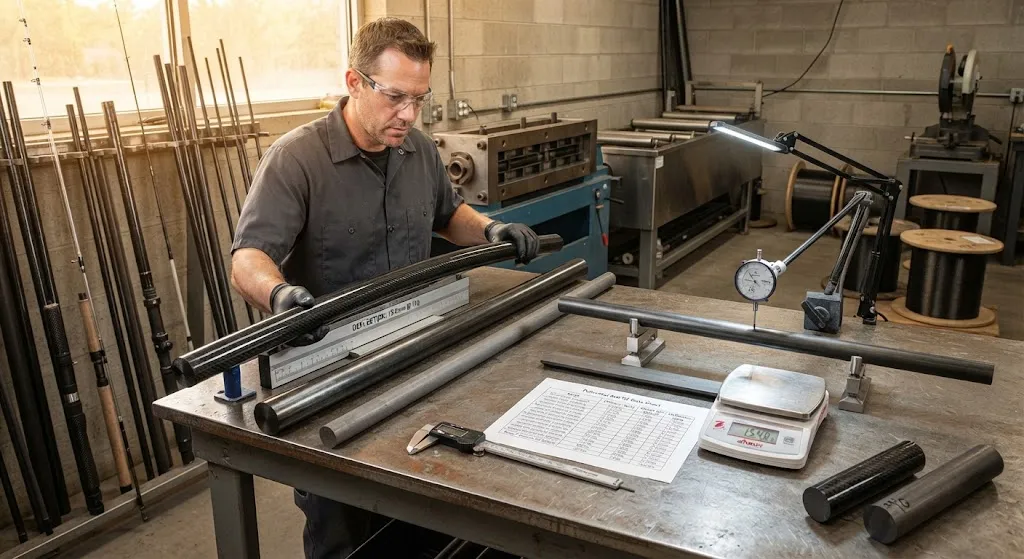
Carbon fiber rod vs graphite is one of the most misunderstood comparisons in composites, because the two words are used differently across industries. In fishing rods, golf shafts and kite spars, "graphite" is simply the American trade name for carbon fibre, and a graphite rod and a carbon fiber rod
Introduction
Carbon fiber rod vs graphite is one of the most misunderstood comparisons in composites, because the two words are used differently across industries. In fishing rods, golf shafts and kite spars, "graphite" is simply the American trade name for carbon fibre, and a graphite rod and a carbon fiber rod are the same pultruded product. In engineering, "graphite" can instead mean a higher-modulus fibre made by graphitising at over 2,000 degrees Celsius, or it can mean solid mineral graphite, an entirely different material used for electrodes and furnace parts. This guide separates those cases, compares their properties in a table, and shows where a carbon fiber solid rod, a high-modulus graphite rod and a mineral graphite rod each belong.
The short answer is that a carbon fiber rod and a "graphite" sporting rod are usually identical, a high-modulus graphite rod is a stiffer but more brittle cousin, and mineral graphite is a separate material with its own uses. The sections below explain how to tell which one a supplier means.
Carbon Fiber Rod vs Graphite: Often the Same Material
The confusion starts with the fibre itself. The strong, stiff fibre used in rods is made from a precursor, most often polyacrylonitrile, which is oxidised and then carbonised at 1,000 to 1,500 degrees Celsius. At that point it is called carbon fibre. If the fibre is heated further, to between 2,000 and 3,000 degrees Celsius, the crystallites align more closely and the material is called graphite fibre. The underlying chemistry barely changes: both are more than 90 percent carbon, and both are drawn into rods by pultrusion, where continuous fibre is pulled through a resin bath and a heated die. That is why a supplier can sell the same rod as either carbon fiber rod or graphite rod, and why the label alone tells a buyer almost nothing.
What does matter is the fibre grade. A standard-modulus carbon fibre such as a T300-class fibre has a modulus near 230 gigapascals. An intermediate-modulus fibre such as T800 sits near 294 gigapascals. A high-modulus graphite fibre such as an M40J or M55J reaches 377 to 540 gigapascals, but its tensile strength is lower and its strain to failure is smaller, so the rod is stiffer and more brittle at the same time. The graphitisation temperature and the precursor, not the marketing name, decide where a rod lands on that scale.
Carbon Fiber Rod vs Graphite Rod in Modulus, Strength and Weight
The table compares a standard pultruded carbon fiber rod, a high-modulus graphite rod and a mineral graphite rod, all at roughly the same diameter.
| Property | Standard Carbon Fiber Rod | High-Modulus Graphite Rod | Mineral Graphite Rod |
|---|---|---|---|
| Fibre modulus | 230-294 GPa | 350-600 GPa | 8-15 GPa |
| Rod modulus (bending) | 120-140 GPa | 200-300 GPa | 8-15 GPa |
| Tensile strength | 1,000-1,500 MPa | 800-1,300 MPa | 30-60 MPa |
| Density | 1.5-1.6 g/cm³ | 1.6-1.8 g/cm³ | 1.7-2.3 g/cm³ |
| Strain to failure | 1.5-1.9 percent | 0.6-0.9 percent | below 0.5 percent |
| Electrical behaviour | Insulating | Insulating | Conductive |
| Typical use | Fishing rods, arrows, handles, spars | Precision spars, golf shafts, metrology | EDM electrodes, furnace and casting parts |
The table shows why the names cannot be swapped freely. A high-modulus graphite rod is roughly twice as stiff in bending as a standard carbon fiber rod, but it carries lower tensile strength and fails at less than half the strain, so it is reserved for parts where stiffness and dimensional stability matter more than impact tolerance, such as precision spars and golf shafts. The mineral graphite rod, by contrast, is not a structural composite at all: it is weak and brittle, but it conducts electricity and survives extreme heat, which is why it is used for electrical discharge machining electrodes and high-temperature fixtures.
When Graphite Means Mineral Graphite, Not Carbon Fiber
When a machinist or an electrical engineer says "graphite rod", they usually mean the mineral product, not a composite. Mineral graphite rods are made by pressing and baking graphite powder, sometimes with a binder, and then graphitising the billet. Their tensile strength is only tens of megapascals and their modulus is single-digit gigapascals, so they carry almost no structural load. What they offer instead is electrical conductivity, thermal stability up to thousands of degrees in an inert atmosphere, and resistance to thermal shock. That combination makes them the standard electrode material for electrical discharge machining, and a common choice for furnace heating elements, crucibles and casting dies. Reading a rod specification without checking whether "graphite" means fibre or mineral is the fastest way to buy the wrong material.
Carbon Fiber Rod vs Graphite in Real Products
In finished goods the terminology becomes practical, and a few rules resolve most questions:
- Fishing rods and arrows: Here "graphite" and "carbon fiber" are the same thing, and the grade is what matters. A high-modulus graphite rod gives a crisper, lighter feel, while a standard-modulus carbon rod is tougher under a hook set or a hard release.
- Carbon fiber rod handles: Knife, tool and luggage handles usually use a standard-modulus carbon fiber solid rod or a wrapped tube, chosen for low weight, stiffness and a distinctive look rather than extreme modulus.
- Carbon fiber solid rod: A solid pultruded rod is stiffer and stronger in compression than a tube of the same diameter, and is used where space is tight and buckling must be avoided, such as pushrods and control linkages.
- Carbon fiber rod vs fiberglass: If the part must absorb impact or cost is the priority, a fibreglass rod is the better buy; carbon wins when stiffness and weight decide.
In all four cases, the useful question is not "carbon fiber rod vs graphite" as a brand choice, but which fibre grade and which construction, solid or tubular, the application needs.
Frequently Asked Questions
Is a graphite rod the same as a carbon fiber rod?
In most sporting and industrial catalogues, yes. The fibre in both is made from a polyacrylonitrile or pitch precursor and is more than 90 percent carbon, and a "graphite" fishing rod or arrow shaft is normally the same pultruded carbon fiber rod under an American trade name. The meaningful difference is the fibre grade, not the word: a standard-modulus carbon rod and a high-modulus graphite rod differ in stiffness, strength and brittleness.
Is graphite stronger than carbon fiber?
Not in strength. Graphitising a fibre to raise its modulus lowers its tensile strength and its strain to failure, so a high-modulus graphite rod is stiffer but weaker and more brittle than a standard carbon fiber rod. A typical standard carbon rod reaches 1,000 to 1,500 megapascals of tensile strength at 1.5 to 1.9 percent strain, while a high-modulus graphite rod sits lower on both. Graphite wins on stiffness, not on strength.
When should I use a mineral graphite rod instead of a carbon fiber rod?
Use mineral graphite only when you need conductivity or extreme heat resistance, not structural performance. Its tensile strength is tens of megapascals and its modulus is single-digit gigapascals, so it cannot carry a structural load, but it conducts electricity and survives high temperatures, which suits electrical discharge machining electrodes, furnace elements and casting parts. For anything that must carry bending or torsion, a pultruded carbon fiber rod is the correct choice.
Conclusion
Carbon fiber rod vs graphite turns out to be a question about wording as much as materials. In sporting goods the two names describe the same pultruded rod, and the grade is what separates a standard carbon fiber rod from a high-modulus graphite rod. In engineering, graphite can mean a stiffer but more brittle fibre, or solid mineral graphite with conductivity and heat resistance but almost no structural strength. Identifying which one a supplier means, and then matching the fibre grade and the solid or tubular form to the load, is the whole decision. Around it, carbon fiber rod vs fiberglass and the choice of a carbon fiber solid rod for compression and buckling are the neighbouring questions that complete a rod specification.
If you need carbon fiber rods and graphite-grade rods supplied with clear fibre modulus, resin, diameter and straightness data, browse our carbon fiber rod range, or contact our team for datasheets and application support.
Part of topic
Related Articles
- Carbon Fiber Tube Repair: Methods, Limits and When to Replace
- Carbon Fiber Tube Thick Walled: Design Considerations and Applications
- Carbon Fiber Tube Weight: How to Estimate Weight per Meter
- Carbon Fiber Rod vs Fiberglass: Stiffness, Fatigue and Cost
- Carbon Fiber Tube vs Steel: Strength-to-Weight Analysis
- Carbon Fiber Tube vs Aluminum: Which Material Wins for Your Application
Interested in Our Products?
Contact our team for competitive pricing and technical specifications.
Get a QuoteRelated Products

Carbon Fiber Plate — 3K Twill T700 1.5mm
Thin 1.5mm carbon fiber plate with 3K twill weave surface. Lightweight and stiff, commonly used for covers, panels, drone bodies, and applications requiring a premium aesthetic appearance.

Carbon Fiber Plate — 3K Twill T700 3.0mm
Medium-thickness 3.0mm carbon fiber plate offering significantly higher load capacity while maintaining attractive 3K twill finish. Suitable for structural brackets, reinforcement plates, and load-bearing panels.

Square Carbon Fiber Tube — 3K Twill T700
Square cross-section carbon fiber tube manufactured with 3K twill weave for torsional strength. Preferred for structural frames, trusses, and support columns where rectangular geometry offers design flexibility.
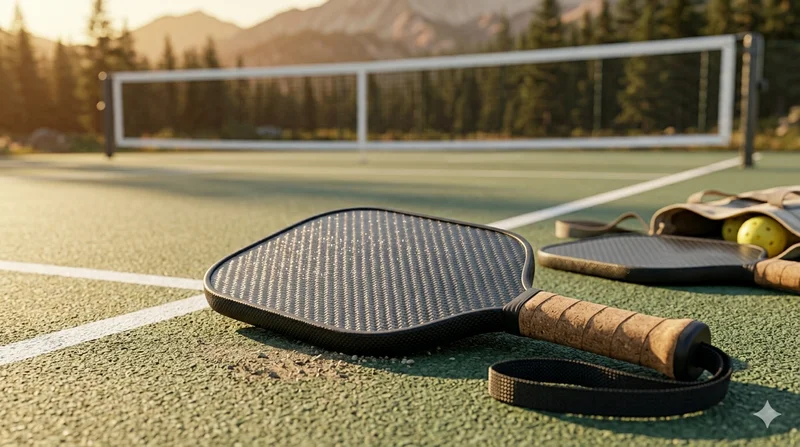
Carbon Fiber Pickleball Paddle
High-performance pickleball paddle with Toray T700 carbon fiber face and polypropylene honeycomb core. Delivers excellent power-to-weight ratio, spin generation, and vibration dampening for competitive play.
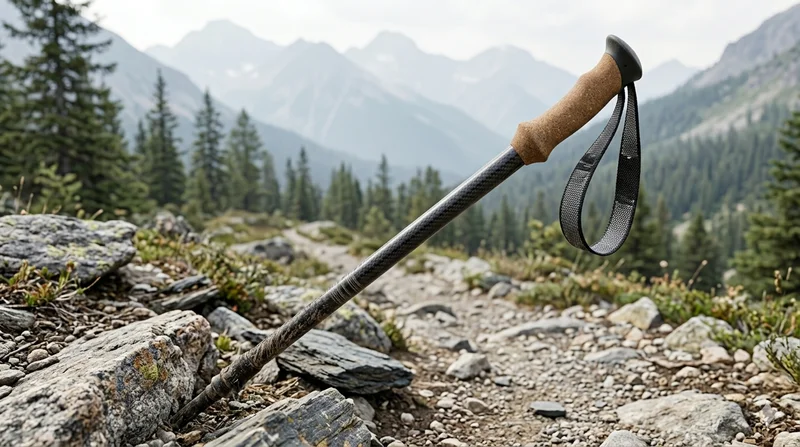
Carbon Fiber Trekking Pole
Lightweight carbon fiber trekking pole manufactured from high-grade carbon fiber tube. Weighs only 160g per pole while providing superior shock absorption and durability for hiking, trail running, and backpacking.