
Specifying a carbon fiber road glide windshield is rarely about the panel alone. On a fixed-fairing touring motorcycle the windshield sits in a trim assembly that also includes a frame, a garnish strip, grommets, and the fasteners tying the stack to the inner fairing. Buyers who quote only the panel
Introduction
Specifying a carbon fiber road glide windshield is rarely about the panel alone. On a fixed-fairing touring motorcycle the windshield sits in a trim assembly that also includes a frame, a garnish strip, grommets, and the fasteners tying the stack to the inner fairing. Buyers who quote only the panel usually find the gap during a test fit. This guide covers the frame and trim decisions, the hardware that carries the load, and the fitment data to document before a purchase order.
OEM windshields on this platform are thermoformed polycarbonate, 3.5 to 5.0 mm thick, with a hardcoat on the outer face. A composite replacement changes the load path: the panel becomes stiffer, so the frame and trim strip absorb vibration differently than with a flexible plastic part. That single fact drives most of the decisions below.
Carbon Fiber Road Glide Windshield: What Each Part Does
Separating the assembly into three functional layers helps, because sourcing conversations tend to collapse them into one line item and then go wrong at fitment. The same logic applies to any carbon fiber road glide fairing project, where a mismatched bracket is just as expensive as a mismatched panel.
- Panel: the transparent or tinted aerosurface. Controls airflow separation, buffeting, and how much wind reaches the helmet. Carbon fiber appears here only as a frame-adjacent composite or a decorative border; fully opaque carbon panels are trim, not vision.
- Frame: the structural carrier. It sets the panel's rake, holds the mounting slots, and resists the bending moment generated at highway speed. Carbon fiber frames are 40 to 60 percent lighter than the steel or die-cast aluminum brackets they replace at equal stiffness.
- Trim and garnish: the visible edge strip that closes the gap between panel and fairing. This is where most carbon fiber road glide parts buyers notice the material — a 3K twill garnish reads as a deliberate upgrade, a mismatched gloss strip as an afterthought.
Material and Construction Comparison
The table compares the panel and frame options commonly quoted for this platform. Prices are indicative FOB ranges for low-to-mid volume B2B orders.
| Option | Typical Construction | Areal Weight | Stiffness / Behaviour | Indicative Price (USD) |
|---|---|---|---|---|
| OEM-style polycarbonate | Thermoformed PC, 3.5–5.0 mm | 4.3–6.0 kg/m² | Flexes under load, damps buffeting | 90–260 |
| Acrylic aftermarket | Cast acrylic, 4.0–6.0 mm | 4.8–7.2 kg/m² | Optically clear, brittle on impact | 60–180 |
| Carbon fiber trim frame | 3K twill, VARTM, ~60% fibre volume | 1.4–2.2 kg/m² | High specific stiffness, low thermal growth | 180–450 |
| Carbon fiber garnish set | Prepreg, autoclave cured | 0.9–1.6 kg/m² | Cosmetic, dimensionally stable | 120–380 |
| Forged carbon frame | Chopped tow, compression moulded | 1.5–2.0 kg/m² | Isotropic, matte finish | 240–520 |
Two numbers matter most. First, thermal expansion: a cured carbon laminate sits near 2 to 4 × 10⁻⁶ per °C in fibre direction, while the polycarbonate panel it clamps is an order of magnitude higher. Second, stiffness. A rigid frame bolted to a flexible panel concentrates stress at the fastener holes, so slot geometry and grommet durometer deserve the same attention as the laminate.
Frame and Trim Options That Fit
Frame variants fall into three groups, set by how much original hardware the buyer retains.
- Direct-replacement frame: reuses OEM slot positions and fastener pitch. Lowest integration risk, highest tooling cost, best for distributor programmes where installation labour must stay predictable.
- Slotted adjustable frame: adds 10 to 18 mm of vertical and rake adjustment, so one SKU covers stock-height and taller panels. Requires torque discipline, since slotted joints loosen faster under vibration.
- Garnish-only trim kit: no structural role. Used when the buyer wants the carbon look without changing the load path. Cheapest route to a coherent appearance and the easiest to install without removing the outer fairing.
Trim finish is a separate specification. A 2K polyurethane clear coat at 25 to 40 µm gives a deep gloss and reasonable UV stability; matte systems hide tooling marks better but scuff sooner. For export programmes, request the UV test method and hours rather than the word "UV-resistant" — ISO 4892-2 at 1000 hours is defensible, an unqualified claim is not.
Carbon Fiber Road Glide Windshield Fitment Data to Confirm
Fitment is the most expensive failure mode, since a rejected container load is not recovered by a discount. Confirm the following on the drawing, not in a chat message.
| Parameter | Early fixed-fairing generation | Current fixed-fairing generation | Why It Matters |
|---|---|---|---|
| Fastener pitch | Approx. 230–250 mm | Approx. 250–270 mm | Slot mismatch blocks installation |
| Panel height range offered | 100–400 mm above fairing lip | 100–450 mm above fairing lip | Sets buffeting zone and sightline |
| Rake angle, installed | 22–26° from vertical | 20–24° from vertical | Changes airflow separation point |
| Hardware thread | M5 and M6, stainless | M5 and M6, stainless | Mixed sets cause galvanic and torque issues |
Where a supplier cannot state these figures, ask for a test-fit report from the same model year. A photograph on a customer's motorcycle is marketing, not evidence; a dimensioned drawing with tolerances is. Tolerances of ±1.0 mm on slot positions and ±0.5 mm on hole diameter are realistic for vacuum-infused and autoclave-cured parts.
Installation and Aftercare Notes
Install above 15 °C. Warm tight grommets slightly; forcing a dry grommet through a carbon slot chips the clear coat and starts later delamination. Tighten fasteners in a cross pattern to the OEM torque value, commonly 4 to 6 N·m on M5 and 8 to 10 N·m on M6. Never use impact drivers on composite trim.
Clean with pH-neutral soap, water, and a microfibre cloth. Solvent cleaners, ammonia glass sprays, and abrasive polishes attack the clear coat and the resin at cut edges. A wax or ceramic coating limits UV exposure and handling marks. When a frame is removed, replace the grommets rather than reusing hardened ones.
Frequently Asked Questions
Does a carbon fiber frame actually reduce windshield buffeting?
It reduces the flex that lets the panel change rake under load, making buffeting more consistent without lowering it. Buffeting is dominated by panel height, rake, and the airflow gap at the fairing lip. Treat the frame as a stability component.
Can I use the stock fasteners with a composite frame?
Usually yes, if the frame is a direct replacement with OEM pitch and the thread class matches. Use stainless hardware to avoid galvanic corrosion against carbon, and check the washer face is wide enough not to crush the laminate. Slotted frames ship with their own shoulder bolts.
Are these parts officially licensed by the motorcycle manufacturer?
Assume not unless a licence number is stated in writing. Aftermarket carbon fiber road glide parts are generally reverse-engineered from factory components. Describe them as aftermarket replacements compatible with the relevant model years, and avoid OEM part numbers in catalogue copy.
Conclusion
Treat the windshield, frame, and trim strip as three specifications rather than one part number. For a carbon fiber road glide windshield project, decide first whether you are replacing the load path or only the appearance, then lock the fastener pitch, panel height range, and installed rake on a dimensioned drawing before tooling is cut. That keeps first-article iterations to one or two instead of four. For a frame or trim quotation, contact our team with the model year, panel height, and finish target.
Related Articles
- Carbon Fiber Road Glide Parts: Aftermarket Sourcing Guide
- Carbon Fiber Road E-Bikes: Weight and Range Tradeoffs
- Carbon Fiber Rods Hobby Lobby: Retail Availability Guide
- Carbon Fiber Sheets eBay: Buying and Selling on Marketplace
- Carbon Fiber Tube 23mm: Standard Sizes and Supplier Sourcing
- Carbon Fiber Tube HSN Code in India: Importer's Classification Guide
Interested in Our Products?
Contact our team for competitive pricing and technical specifications.
Get a QuoteRelated Products

Carbon Fiber Plate — 3K Twill T700 1.5mm
Thin 1.5mm carbon fiber plate with 3K twill weave surface. Lightweight and stiff, commonly used for covers, panels, drone bodies, and applications requiring a premium aesthetic appearance.

Carbon Fiber Plate — 3K Twill T700 3.0mm
Medium-thickness 3.0mm carbon fiber plate offering significantly higher load capacity while maintaining attractive 3K twill finish. Suitable for structural brackets, reinforcement plates, and load-bearing panels.

Square Carbon Fiber Tube — 3K Twill T700
Square cross-section carbon fiber tube manufactured with 3K twill weave for torsional strength. Preferred for structural frames, trusses, and support columns where rectangular geometry offers design flexibility.
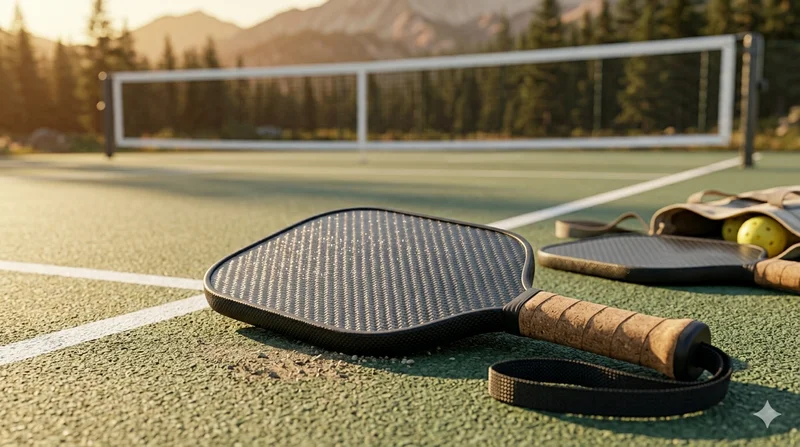
Carbon Fiber Pickleball Paddle
High-performance pickleball paddle with Toray T700 carbon fiber face and polypropylene honeycomb core. Delivers excellent power-to-weight ratio, spin generation, and vibration dampening for competitive play.

Carbon Fiber Trekking Pole
Lightweight carbon fiber trekking pole manufactured from high-grade carbon fiber tube. Weighs only 160g per pole while providing superior shock absorption and durability for hiking, trail running, and backpacking.