
Carbon fiber road e bikes sit at an awkward intersection: the frame material is chosen to remove mass, and then the motor and battery add it back. The useful question is not whether carbon beats aluminium, but where the kilograms should be spent. A 950 g carbon frame with a 3.2 kg battery behaves ve
Introduction
Carbon fiber road e bikes sit at an awkward intersection: the frame material is chosen to remove mass, and then the motor and battery add it back. The useful question is not whether carbon beats aluminium, but where the kilograms should be spent. A 950 g carbon frame with a 3.2 kg battery behaves very differently from a 1,450 g aluminium frame with a 2.4 kg pack, even when both complete bikes land on the same scale. This guide sets out the mass budget of a light-assist road platform and the sourcing decisions behind it. All figures are indicative; validate them against your own rider test data.
Carbon Fiber Road E Bikes: Why Frame Mass Matters More
On an unassisted road bike, frame mass is an acceleration and climbing cost. On an assisted one it is also an energy cost, because every kilogram carried up a gradient is paid for twice — once by the rider and once by the battery. An e-road frame is therefore not a road frame with a motor bracket bonded on: the head tube, down tube and bottom bracket junctions see higher sustained torque, and the layup gains 80–150 g of local reinforcement.
| Subsystem | Indicative mass | Note |
|---|---|---|
| Carbon e-road frame | 1,000–1,300 g | +80–150 g over non-assisted layup |
| Reinforced carbon fork | 400–520 g | Heavier crown and steerer walls |
| Mid-drive motor unit | 2.5–3.0 kg | 250 W nominal, 55–85 N·m peak |
| Internal battery, 430–500 Wh | 2.4–3.2 kg | Pack level 150–180 Wh/kg |
| Complete light-assist bike | 10.5–14.0 kg | Cockpit and tyre choice move this ±1 kg |
Carbon Fiber Road E Bikes: The Weight–Range Equation
Assist consumption is rider-dependent: a fit rider holding 25–30 km/h in eco mode draws roughly 4–6 Wh/km, while the same bike on a hilly route in high assist can draw 11–15 Wh/km. As a working rule, each extra kilogram of system mass costs about 0.2–0.4 Wh/km on rolling terrain, so frame-level savings are worth more than the raw gram count suggests.
| Battery configuration | Pack mass | Eco, 4–6 Wh/km | Mixed, 7–10 Wh/km | High assist, 11–15 Wh/km |
|---|---|---|---|---|
| 250 Wh extender only | 1.4–1.7 kg | 42–62 km | 25–36 km | 17–23 km |
| 430 Wh internal | 2.4–2.9 kg | 72–108 km | 43–61 km | 29–39 km |
| 500 Wh internal | 2.8–3.3 kg | 83–125 km | 50–71 km | 33–45 km |
| 700 Wh internal | 3.9–4.6 kg | 117–175 km | 70–100 km | 47–64 km |
For most commuter and light-touring programmes, a 430–500 Wh internal pack plus an optional 250 Wh extender covers more use cases than a single 700 Wh pack, at 0.5–1.0 kg less mass in daily use. Committing to the smaller internal cavity early keeps that modular route open.
Battery Integration Inside Carbon Frames
Down tube cavities and bladder moulding
An internal battery needs a straight, constant-section cavity through the down tube. Bladder moulding is the standard route: a pressurised bladder consolidates the plies while the cavity forms in one cure, leaving a smooth interior that protects the pack from abrasion. Wall thickness is usually 2.2–3.0 mm, thickened at the bottom bracket transitions.
Fixed versus removable packs
A fixed pack allows a lighter enclosure because the frame becomes part of the protection strategy, typically saving 150–300 g. A removable pack costs mass but supports swapping, air transport and in-field cell replacement — usually decisive for fleet programmes.
Thermal and sealing requirements
Cells should stay below roughly 45–50 °C, so the cavity needs a vent path and the charge port a sealed interface. Agree the IP target before tooling; retrofitting a seal after moulding is expensive.
Motor and Drivetrain Matching
Mid-drive units of 2.5–3.0 kg dominate the road segment because they use the bicycle's own gearing and keep mass centralised. Rear hub drives are cheaper to integrate into an existing carbon mould but add unsprung mass and load the drive-side chainstay. An e-road platform normally runs a wider cassette and a clutch-equipped derailleur, and chain wear accelerates under assist, so a wear indicator belongs in the service schedule. Note that 250 W is the nominal pedal-assist limit in the EU and 750 W in the US; one platform serves both only if the motor mount and battery interface are identical across variants.
Components That Save Real Grams
Once frame, motor and battery are fixed, the remaining mass sits in conventional carbon fiber bike parts — the easiest place to differentiate without new tooling:
- Cockpit: a one-piece carbon bar and stem saves 120–200 g over an alloy bar plus separate stem and tidies internal routing.
- Wheelset: swapping a 1,900 g alloy set for a 1,500 g carbon set pays back more in acceleration than the number implies; keep rim depth at 35–45 mm for crosswind stability.
- Seatpost and saddle: a carbon post with 25–35 mm setback saves 80–150 g and adds compliance that matters more on a heavier platform.
- Cranks and hardware: e-specific cranks keep the Q-factor correct for the motor housing, and titanium bolts are a low-risk 40–70 g saving.
Closeout Inventory and Cost Bands
Carbon fiber road bikes closeout programmes are the fastest route to a competitive price point. When a brand retires a mould or moves to a new motor interface, remaining framesets are released in lots with a lower MOQ and roughly 15–35% off current-model pricing. Confirm the frameset accepts the current battery interface, and request cure and layup records with the lot, because closeout stock may have been stored for a season.
| Configuration | Frameset, indicative FOB USD | Complete bike, indicative retail USD |
|---|---|---|
| Open-mould e-road frameset, closeout | 480–900 | — |
| Semi-custom e-frame, internal pack | 900–1,600 | 3,500–6,500 |
| Lightweight mid-drive platform | 1,400–2,400 | 6,000–12,000 |
Send the motor and battery envelope to your supplier before the frame drawing: cavity dimensions, boss locations and charge-port position constrain the layup far more than the tube profile. Tooling ownership, five-year spare-part availability and a ply book stating the fibre volume fraction target (typically 55–60%) belong in the supply agreement.
Frequently Asked Questions
How much heavier is a carbon e-road frame than a non-assisted carbon frame?
Expect 80–150 g from local reinforcement at the motor mount, bottom bracket and battery cavity, plus the enclosure. That is smaller than the 400–600 g typical of the same bike built on aluminium, which is why carbon stays attractive for light-assist platforms.
Can a range extender replace a larger internal battery?
For most commuter and light-touring profiles, yes: a 430–500 Wh internal pack with an optional 250 Wh extender covers roughly 25–125 km depending on assist level, 0.5–1.0 kg lighter than a 700 Wh pack in daily use. Riders who consistently exceed 100 km in mixed assist should still specify the larger pack.
Conclusion
Weight and range on a carbon fiber road e-bike are less opposing forces than a budget to be allocated. A well-reinforced carbon frame, a 2.5–3.0 kg mid-drive and a 430–500 Wh internal pack with an optional extender give most riders 25–125 km of assisted range at 10.5–12.5 kg complete, while still behaving like a road bike on the climbs. Spend mass where it returns function: motor-mount stiffness, battery thermal path and cockpit ergonomics. To review layup options, cavity dimensions or closeout lots against your own platform, contact our team with your motor and battery envelope.
Part of topic
Related Articles
- Carbon Fiber Road Glide Windshield: Frame and Trim Options
- Carbon Fiber Road Glide Parts: Aftermarket Sourcing Guide
- Carbon Fiber Rods Hobby Lobby: Retail Availability Guide
- Carbon Fiber Sheets eBay: Buying and Selling on Marketplace
- Carbon Fiber Tube 23mm: Standard Sizes and Supplier Sourcing
- Carbon Fiber Tube HSN Code in India: Importer's Classification Guide
Interested in Our Products?
Contact our team for competitive pricing and technical specifications.
Get a QuoteRelated Products

Carbon Fiber Plate — 3K Twill T700 1.5mm
Thin 1.5mm carbon fiber plate with 3K twill weave surface. Lightweight and stiff, commonly used for covers, panels, drone bodies, and applications requiring a premium aesthetic appearance.

Carbon Fiber Plate — 3K Twill T700 3.0mm
Medium-thickness 3.0mm carbon fiber plate offering significantly higher load capacity while maintaining attractive 3K twill finish. Suitable for structural brackets, reinforcement plates, and load-bearing panels.

Square Carbon Fiber Tube — 3K Twill T700
Square cross-section carbon fiber tube manufactured with 3K twill weave for torsional strength. Preferred for structural frames, trusses, and support columns where rectangular geometry offers design flexibility.
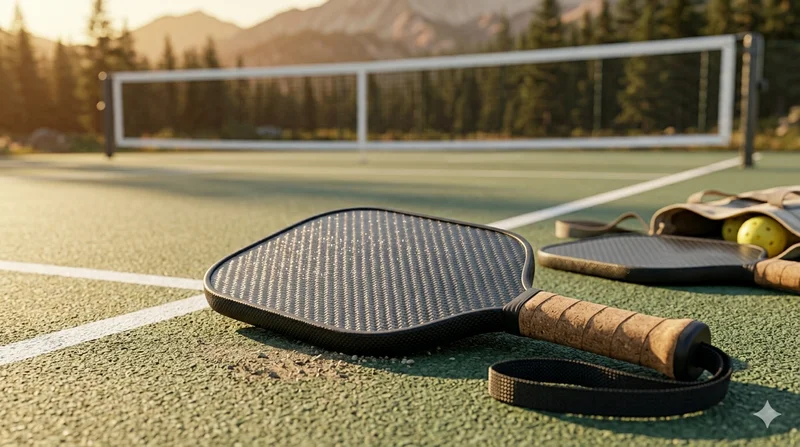
Carbon Fiber Pickleball Paddle
High-performance pickleball paddle with Toray T700 carbon fiber face and polypropylene honeycomb core. Delivers excellent power-to-weight ratio, spin generation, and vibration dampening for competitive play.
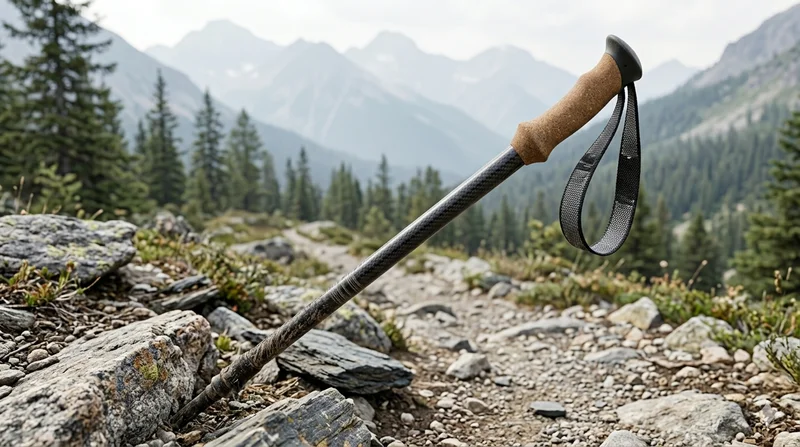
Carbon Fiber Trekking Pole
Lightweight carbon fiber trekking pole manufactured from high-grade carbon fiber tube. Weighs only 160g per pole while providing superior shock absorption and durability for hiking, trail running, and backpacking.