
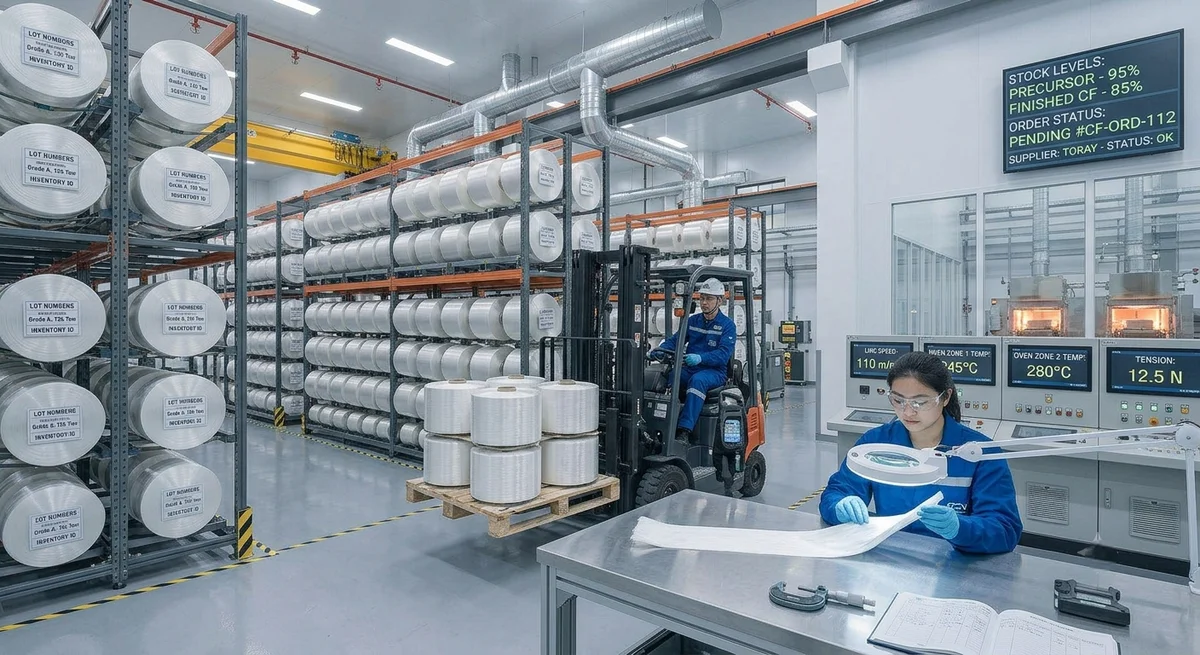
Understanding carbon fiber raw material pricing is critical for B2B buyers navigating volatile markets. This article analyzes PAN precursor cost drivers, carbon fiber pricing tiers by grade, regional supply dynamics, and the H2 2026 price outlook, with actionable procurement strategies for composite manufacturers.
Carbon fiber pricing has experienced significant volatility over the past three years, driven by fluctuations in polyacrylonitrile (PAN) precursor costs, energy prices, supply chain disruptions, and shifting demand from aerospace, wind energy, automotive, and hydrogen storage sectors. For B2B buyers in the composites industry, understanding the cost structure of carbon fiber — from PAN precursor through stabilization, carbonization, and surface treatment — is essential for negotiating contracts, managing inventory, and making informed sourcing decisions.
This article provides a comprehensive analysis of carbon fiber raw material pricing as of mid-2026, including PAN precursor market dynamics, carbon fiber pricing by grade and region, factors shaping H2 2026 prices, and strategic recommendations for procurement professionals in the carbon fiber supply chain.
PAN Precursor Cost Structure
Polyacrylonitrile (PAN) precursor accounts for approximately 45-55% of the total manufacturing cost of standard-grade carbon fiber and 35-45% for aerospace-grade fiber. The precursor cost is itself composed of several inputs:
| Cost Component | Share of PAN Cost | Price Range (2026 H1) | Volatility (3-Year) | Key Driver |
|---|---|---|---|---|
| Acrylonitrile monomer | 50-60% | $1,400-2,100/tonne | High (CV 35%) | Propylene (refinery output), ammonia cost |
| Polymerization and spinning | 20-25% | Implied in processing | Moderate | Energy, labor, equipment utilization |
| Solvents and chemicals | 5-10% | $500-1,200/tonne | Moderate | DMF, DMAc, DMSO pricing |
| Energy (electricity, steam) | 8-12% | $0.05-0.15/kWh | Moderate-High | Natural gas, coal, renewable mix |
| Labor, overhead, depreciation | 5-10% | Site-specific | Low | Location, scale, automation level |
PAN precursor prices have risen approximately 18-25% since early 2024, driven primarily by acrylonitrile (AN) cost increases. AN prices reached $1,950/tonne in Q1 2026, up from $1,550/tonne in Q1 2024, as propylene prices tightened due to reduced refinery output in China and the US Gulf Coast. Global acrylonitrile capacity stands at approximately 7.5 million tonnes/year (2026), with operating rates at 78-82%.
Carbon Fiber Pricing by Grade (2026 H1)
| Grade | Typical Tensile Modulus | Tensile Strength | Price Range (USD/kg) | Primary End Markets | Price Trend (YoY) |
|---|---|---|---|---|---|
| Large-tow standard (≥48K) | 230-250 GPa | 3.5-4.5 GPa | $18-28/kg | Wind energy, automotive, construction | +5-10% |
| Standard (12K/24K) | 230-250 GPa | 3.5-4.5 GPa | $25-45/kg | Industrial, sporting goods, marine | +3-8% |
| Intermediate modulus (IM) | 280-320 GPa | 4.5-6.0 GPa | $45-80/kg | Aerospace primary, automotive (premium), pressure vessels | +5-12% |
| High modulus (HM) | 350-450 GPa | 3.0-4.5 GPa | $80-160/kg | Space, satellite structures, precision instruments | +8-15% |
| Aerospace-grade (qual.) | 230-310 GPa | 4.5-6.5 GPa | $60-180/kg | Aircraft primary/secondary structures | Stable (+2-5%) |
Regional Price Variations
| Region | Standard Grade (12K) | Large-Tow (48K+) | IM Grade | Notes |
|---|---|---|---|---|
| China (domestic) | $18-28/kg | $14-20/kg | $35-55/kg | Rapid capacity expansion, government subsidies, import substitution |
| China (imported ex-Japan/US) | $28-40/kg | $22-32/kg (limited) | $55-80/kg | Tariffs (6-12%), logistics, brand premium |
| Japan (Toray, Toho, Mitsubishi) | $30-45/kg | $22-32/kg | $55-95/kg | Premium quality, established aerospace qualifications, tight export controls |
| USA (Hexcel, Cytec/Solvay, Zoltek) | $28-42/kg | $18-30/kg | $50-85/kg | Strong defense & aerospace demand, ITAR compliance premium |
| Europe (SGL, Teijin, DowAksa) | $28-40/kg | $18-28/kg | $50-80/kg | Wind energy-driven demand, carbon border tax (CBAM) impacts |
| Korea/Taiwan (Hyosung, Formosa) | $22-35/kg | $16-25/kg | $45-70/kg | Growing capacity, competitive pricing, emerging aerospace qualification |
Key Cost Drivers for H2 2026
Several factors will shape carbon fiber pricing in the second half of 2026:
1. PAN Precursor Supply Pressure
Global PAN precursor capacity is approximately 180,000-200,000 tonnes/year as of mid-2026, with effective utilization at 82-86%. China accounts for approximately 55% of global PAN precursor production, followed by Japan (20%), and the US/Europe combined (18%). New PAN production lines in China (Jilin Carbon Valley, Zhongfu Shenying capacity expansions) are expected to add 25,000-35,000 tonnes/year of precursor capacity by Q4 2026, which should ease supply constraints for standard-grade carbon fiber but may not affect aerospace-grade precursor availability due to certification timelines.
- Acrylonitrile supply risk: Three major AN plants globally are scheduled for maintenance turnarounds in Q3 2026 (total capacity 450,000 tonnes/year). Historical data shows AN prices typically increase 8-15% during maintenance season.
- Energy costs: Natural gas prices in Europe remain elevated (€25-35/MWh in H1 2026) versus pre-2022 levels (€15-25/MWh). Carbonization (1,000-1,800°C) and graphitization (above 2,200°C) are energy-intensive processes consuming 25-50 kWh per kg of carbon fiber produced.
- Transportation and logistics: Container shipping costs from Asia to Europe/North America have stabilized at approximately $2,500-4,000/FEU (40-ft container) in early 2026, down 40% from pandemic peaks but still elevated compared to pre-2020 levels of $1,500-2,500/FEU.
2. Demand-Side Pressure
| End Market | 2025 Global CF Demand (tonnes) | 2026E Demand (tonnes) | YoY Growth | Price Sensitivity |
|---|---|---|---|---|
| Wind energy (blade reinforcement) | 38,000 | 41,500 | +9.2% | High (large-tow, commodity grade) |
| Aerospace & defense | 28,500 | 31,000 | +8.8% | Low (qualified, high-margin) |
| Automotive (incl. EV) | 15,000 | 17,500 | +16.7% | Medium-High |
| Pressure vessels (H₂ storage) | 8,500 | 11,000 | +29.4% | Medium |
| Construction & infrastructure | 6,000 | 7,200 | +20.0% | High |
| Sporting goods & consumer | 9,500 | 10,200 | +7.4% | Medium |
| Total (estimated) | 105,500 | 118,400 | +12.2% |
3. Geopolitical and Trade Policy Factors
- US-China tariff escalation: US Section 301 tariffs on Chinese carbon fiber remain at 25%, with an additional 7.5-25% Section 232 national security tariffs on certain carbon fiber products. Retaliatory Chinese tariffs on US carbon fiber range from 10-25%. Bilateral carbon fiber trade has declined 30% since 2023.
- China export controls on PAN precursor: Effective March 2025, China implemented export licensing requirements for PAN precursor (HS code 5501.30, including 5501.30.0010 specific to carbon fiber-grade precursor). Export license approval rate: approximately 60-70% of applications. This has created supply uncertainty for non-Chinese carbon fiber producers who rely on Chinese precursor.
- EU Carbon Border Adjustment Mechanism (CBAM): CBAM transitional period began October 2023; full implementation with carbon pricing on imports scheduled for 2026-2027. Carbon fiber and precursor imports to the EU will face carbon costs estimated at €60-100/tonne CO₂, adding $0.50-1.20/kg to the cost of imported carbon fiber depending on production method and energy source.
- Export controls on carbon fiber technology: Japan's Ministry of Economy, Trade and Industry (METI) continues to enforce tight export controls on high-modulus and aerospace-grade carbon fiber technologies (Wassenaar Arrangement-listed). South Korea and China have implemented reciprocal technology export control frameworks.
H2 2026 Price Outlook
| Grade | Current (H1 2026) | H2 2026 Forecast | Change | Confidence |
|---|---|---|---|---|
| Large-tow standard (≥48K) | $18-28/kg | $19-30/kg | +5-10% | Medium-High |
| Standard (12K/24K) | $25-45/kg | $26-48/kg | +3-8% | Medium |
| Intermediate modulus | $45-80/kg | $48-85/kg | +5-10% | Medium |
| High modulus | $80-160/kg | $85-170/kg | +5-8% | Low-Medium |
| Aerospace-grade (qualified) | $60-180/kg | $62-185/kg | +2-5% | High |
Procurement Strategies for B2B Buyers
Based on the market analysis above, composite manufacturers should consider the following procurement strategies for H2 2026:
- Lock in large-tow contracts early: With wind energy and hydrogen storage demand pushing large-tow prices up 5-10%, negotiate 6-12 month fixed-price contracts before Q3 2026. Current spot-to-contract premium is approximately 8-12%. Target pricing: $19-22/kg for annual volumes >100 tonnes.
- Diversify precursor supply: Given China's export licensing uncertainty for PAN precursor, buyers relying on Chinese precursor should qualify alternative sources (Japan-based or European). Qualification timeline: 6-12 months for new precursor source. Maintain 8-12 weeks of precursor inventory as buffer.
- Consider Chinese domestic sourcing for industrial grades: Chinese standard-grade carbon fiber (12K/24K) at $18-28/kg offers 30-40% savings vs. Japanese equivalents for non-aerospace applications. Quality has improved significantly — major Chinese producers (Zhongfu Shenying, Guangwei Composites, Jilin Carbon Valley) now achieve tensile strength 3.8-4.2 GPa and modulus 230-250 GPa for standard-grade products, meeting most industrial specifications.
- Evaluate long-term agreements with escalation clauses: Multi-year agreements with price adjustment formulas tied to acrylonitrile index (e.g., monthly average of Platts/ICIS AN CFR China or CFR NWE) provide transparency. Typical escalation formulas: 60-70% of price adjustment from AN movement, 20-30% from energy, 10% from labor/inflation.
- Monitor H₂ storage demand growth: The hydrogen pressure vessel segment is the fastest-growing carbon fiber market at 29.4% YoY. This will absorb significant large-tow capacity. Evaluate supplier allocation strategies early — some carbon fiber producers are allocating 20-30% of their large-tow capacity to Type IV and Type V pressure vessel preform contracts by 2027.
FAQ
Why is carbon fiber from China significantly cheaper than from Japan or the US?
Chinese carbon fiber benefits from several structural cost advantages: lower labor costs (approximately 40-60% of Japanese/US levels), significant government subsidies for carbon fiber producers (including subsidized electricity rates as low as $0.03-0.05/kWh for strategic industries, tax holidays, and capital equipment grants estimated at 20-30% of investment cost), integrated supply chains (domestic PAN precursor production eliminating import costs), and lower environmental compliance costs. Additionally, Chinese producers are prioritizing capacity utilization and market share over short-term profitability, leading to aggressive pricing. However, B2B buyers should note quality differences: Chinese standard-grade fiber meets most industrial specifications but currently lacks the aerospace-grade certifications (Boeing BMS 8-256, Airbus AIMS 03-02-000) required for aircraft structures.How much does PAN precursor actually contribute to the final carbon fiber price?
PAN precursor represents 45-55% of the total manufacturing cost of standard-grade carbon fiber (excluding profit margin and distribution costs). Using typical economics: a carbon fiber producer purchasing PAN precursor at $8-15/kg produces standard-grade carbon fiber with a manufacturing cost of $16-28/kg. Of this, precursor accounts for $8-15/kg, stabilization + carbonization (energy) for $4-8/kg, surface treatment and sizing for $1-3/kg, and labor/overhead for $2-4/kg. At a selling price of $25-45/kg (standard grade, ex-works), the gross margin before SG&A is approximately 20-40%. For aerospace-grade fiber, precursor contributes a smaller share (35-45%) because additional qualification costs, tighter process controls, and lower production yields (60-75% vs. 85-95% for standard grade) add significant cost downstream.Should I lock in carbon fiber prices now or wait for H2 2026?
Based on the current market analysis, we recommend locking in prices for standard-grade and large-tow carbon fiber in Q2 2026 for H2 2026 delivery. The convergence of Q3 AN plant turnarounds (450,000 tonnes capacity offline), peak wind energy installation season (traditionally August-November), and continued hydrogen storage capacity expansion creates upward price pressure. Historical pricing data shows that carbon fiber spot prices typically increase 8-18% from Q2 to Q4 in years of strong demand growth. For aerospace-grade fiber, the outlook is more stable (2-5% increase) due to long-term supply agreements and production predictability. Buyers with annual volumes exceeding 50 tonnes should negotiate fixed pricing before July 2026 to avoid the anticipated Q3-Q4 price uplift.Part of topic
Related Articles
- Recycled Carbon Fiber Market Forecast 2030: Technology Maturity and Commercialization Path
- South Korea Carbon Fiber Market 2026: Hydrogen Economy and Shipbuilding Innovation
- Wind Turbine Blade Leading Edge Protection 2026: Polyurethane, Tape, and Metallic Shield Solutions
- China Carbon Fiber Overcapacity 2026: Price War Impact and Industry Consolidation
- India Carbon Fiber Market 2026: Wind Energy, Aerospace, and Defense Expansion
- PAN Precursor Market 2026: Acrylonitrile Supply and Carbon Fiber Cost Structure
Interested in Our Products?
Contact our team for competitive pricing and technical specifications.
Get a QuoteRelated Products
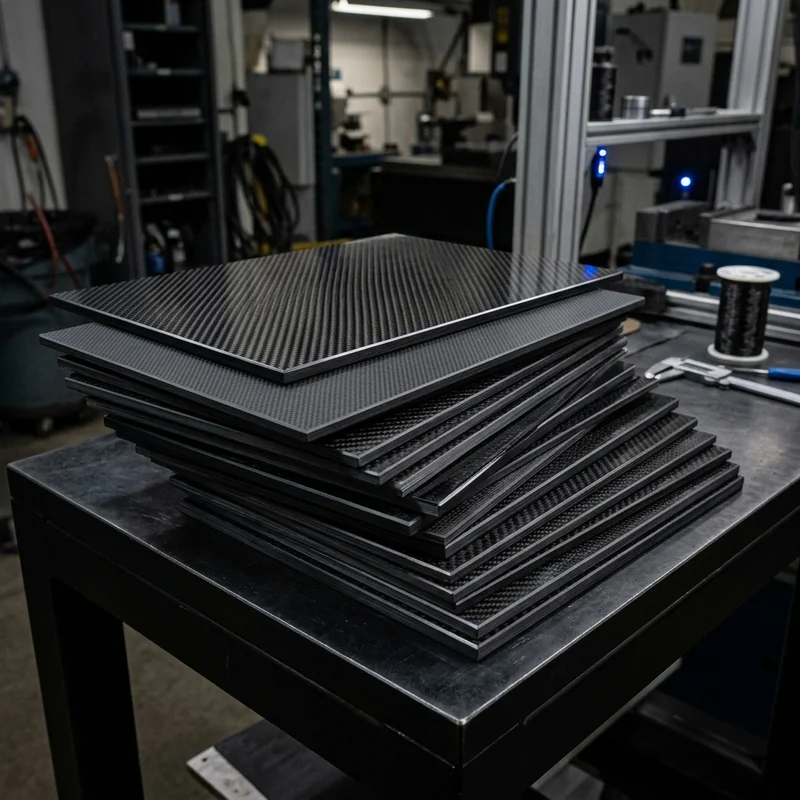
Carbon fiber standard plate-3k stripe
Lightweight, ultra-rigid standard sheets for drone fuselages, robot housings, facades and structural applications.
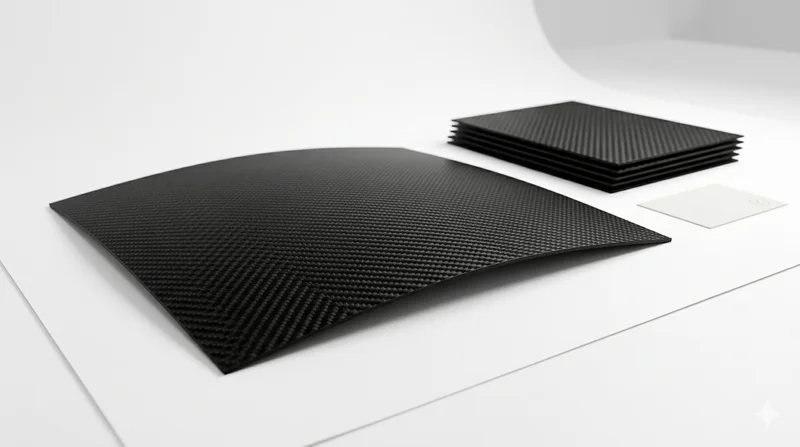
Carbon Fiber Plate — 3K Twill T700 1.5mm
Thin 1.5mm carbon fiber plate with 3K twill weave surface. Lightweight and stiff, commonly used for covers, panels, drone bodies, and applications requiring a premium aesthetic appearance.
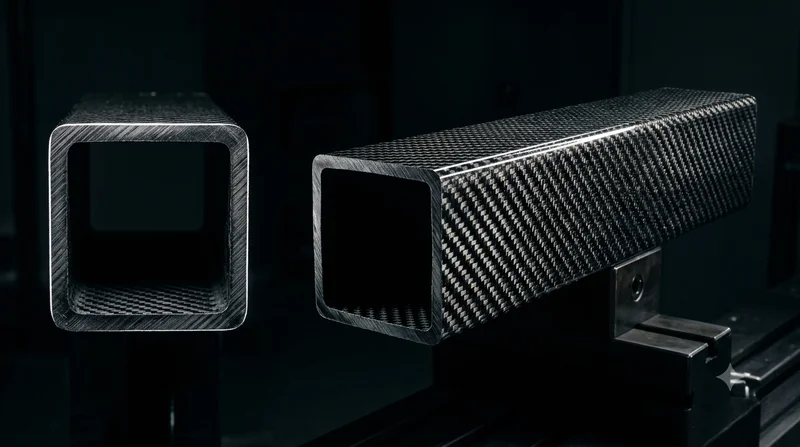
Square Carbon Fiber Tube — 3K Twill T700
Square cross-section carbon fiber tube manufactured with 3K twill weave for torsional strength. Preferred for structural frames, trusses, and support columns where rectangular geometry offers design flexibility.
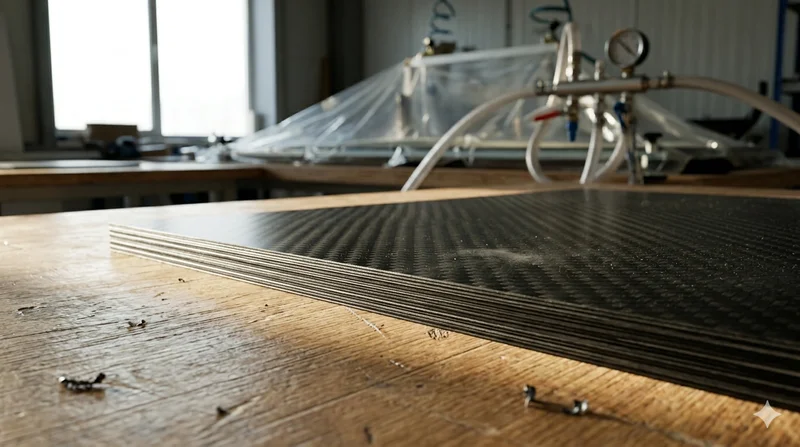
Carbon Fiber Plate — 3K Twill T700 3.0mm
Medium-thickness 3.0mm carbon fiber plate offering significantly higher load capacity while maintaining attractive 3K twill finish. Suitable for structural brackets, reinforcement plates, and load-bearing panels.
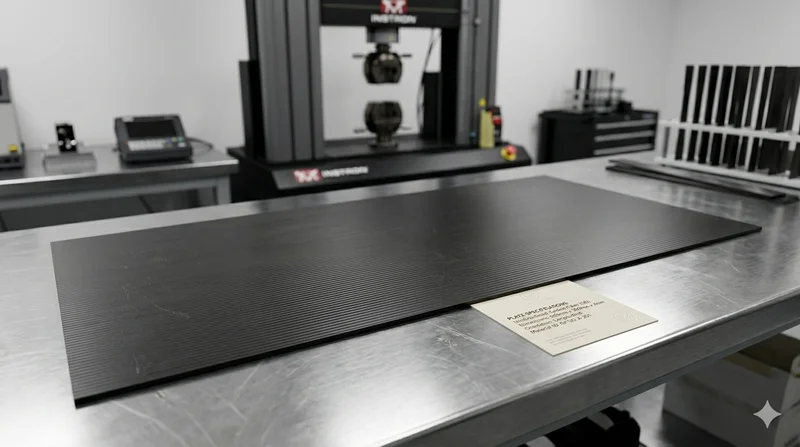
Carbon Fiber Plate — UD Unidirectional T700
Unidirectional carbon fiber plate with all fibers oriented in a single direction for maximum strength along the fiber axis. Essential for structural reinforcements, splints, and applications where load direction is predictable.