
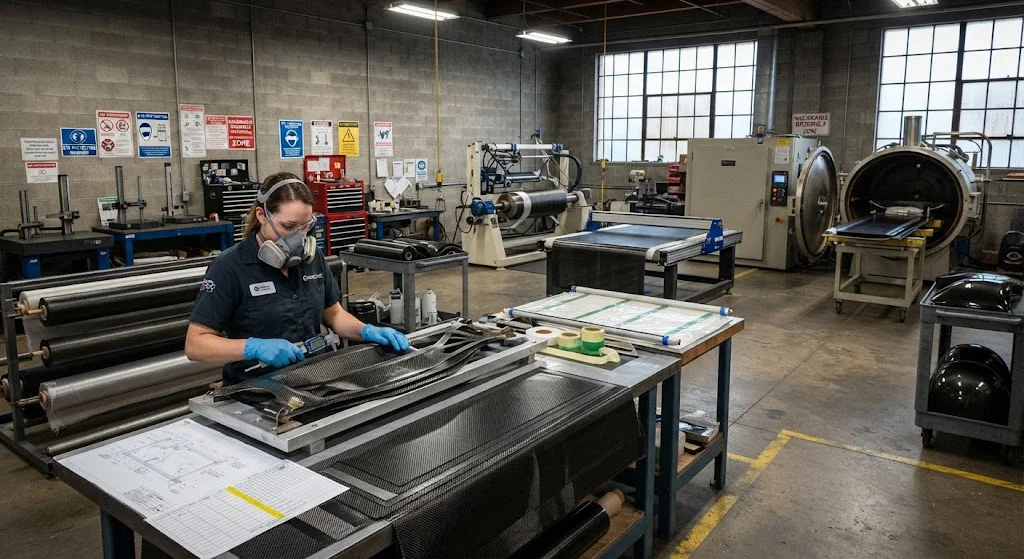
When evaluating carbon fiber products manufacturers, buyers must assess certification credentials, production capacity, and delivery reliability against their specific project requirements. The global carbon fiber market exceeded $6.2 billion in 2025, with projections reaching $11.4 billion by 2030,
Introduction
When evaluating carbon fiber products manufacturers, buyers must assess certification credentials, production capacity, and delivery reliability against their specific project requirements. The global carbon fiber market exceeded $6.2 billion in 2025, with projections reaching $11.4 billion by 2030, driven by aerospace, automotive, and wind energy expansion. Supplier quality varies significantly across the industry, and selecting an unverified manufacturer can result in delayed projects, non-compliant materials, or structural failures in service. This guide provides a systematic framework for evaluating carbon fiber products manufacturers, enabling informed procurement decisions for B2B engineering applications.
The term "carbon fiber products manufacturer" covers companies that produce composite materials, prepreg, woven fabrics, and finished composite components. Not every manufacturer serves the same industries or produces the same product categories. Some specialize in aerospace-grade materials with AS9100 certification, while others focus on industrial applications under ISO 9001 quality management. Understanding these distinctions is the first step in matching supplier capabilities to project requirements, and the checklist in this guide is designed to make that comparison repeatable and auditable.
Certification for Carbon Fiber Products Manufacturers
Certification is the primary differentiator between qualified and unqualified carbon fiber products manufacturers. Aerospace applications require AS9100, which extends ISO 9001 with aerospace-specific quality requirements covering design control, configuration management, and traceability. Manufacturers serving medical devices must comply with ISO 13485, while automotive suppliers typically need IATF 16949. Material-specific standards also matter: modulus grades such as T700, T800, T1000, and T1100 indicate performance tiers that affect both pricing and suitability for the intended load case.
Key certifications to verify include:
- AS9100: Aerospace quality management system, required for aircraft structural components
- ISO 9001: General quality management baseline for all manufacturing operations
- ISO 13485: Medical devices and implantable composite materials
- IATF 16949: Automotive industry quality standard for tier suppliers
- UL 94: Flammability rating for composite materials in consumer and transport products
- Nadcap: Special-process accreditation for NDT, heat treatment, and composites processing
Reputable carbon fiber products manufacturers provide current certificates, audit reports, and lot-level traceability documentation on request. Consistent compliance across multiple years and production volumes distinguishes established suppliers from transient operations that cannot demonstrate a quality track record. Buyers should also confirm that the certification covers the specific production site that will manufacture their parts, since certificates are site-specific and cannot be transferred between facilities.
Carbon Fiber Products Manufacturer Capacity and Capabilities
Capacity evaluation requires understanding both volumetric output and product-range flexibility. A manufacturer's stated annual capacity may reflect ideal conditions that do not match real available capacity, so buyers should request production schedules, current order backlogs, and minimum order quantities (MOQs) for each product type they intend to source.
Process capabilities vary widely among carbon fiber products manufacturers. Common processes include:
- Prepreg production: Carbon fiber impregnated with resin, stored refrigerated or at room temperature, ready for automated or manual layup
- Automated Fiber Placement (AFP): Robot-driven tape or tow placement for large aerospace structures with complex curvature
- Filament winding: Continuous fiber winding for pressure vessels, drive shafts, and cylindrical components
- Compression molding: Chopped or sheet molding compound processing for automotive and consumer parts at high volume
- Pultrusion: Continuous production of constant-cross-section profiles for structural and infrastructure applications
- Resin Transfer Molding (RTM): Closed-mold liquid molding for net-shape parts with good surface finish
Facility tours, process capability studies, and third-party audit reports provide evidence of actual manufacturing competence. Buyers should verify that the supplier can absorb required volumes while sustaining consistent quality metrics such as defect rate, scrap rate, and on-time delivery.
Quality Control at Carbon Fiber Products Manufacturing Facilities
Rigorous quality control distinguishes reputable carbon fiber products manufacturers from inferior suppliers. Standard testing protocols include tensile strength per ASTM D3039, compressive strength per ASTM D6641, and interlaminar shear strength per ASTM D2344. Additional verification may cover fiber volume fraction, void content, glass transition temperature (Tg) by DSC, and moisture content analysis for prepreg materials.
Supply-chain quality extends to raw material sourcing. Manufacturers should document fiber origin, grade verification, and storage conditions that affect material degradation over time. Lot traceability enables recall of defective batches and supports failure analysis when field issues arise. Third-party inspection services such as SGS or Bureau Veritas can independently verify the quality claims of a CFRP manufacturer, and buyers should require a test certificate for every production lot destined for critical applications.
Cost Structure and Pricing Factors
Carbon fiber product pricing reflects more than raw material cost. Resin type, fiber grade, production volume, and tooling all influence final price. T700-grade material costs substantially less than T1000 or T1100-grade fiber with higher strength and modulus, and epoxy resin systems command a premium over polyester or vinyl ester alternatives due to superior mechanical and environmental performance.
Additional cost factors include:
- Tooling costs: Mold and die development amortized across the order quantity
- Labor costs: Region-specific wage rates affecting manufacturing overhead
- Volume discounts: Tiered pricing for increasing order quantities
- Supply chain factors: Raw material availability and logistics cost
- Certification overhead: AS9100 and Nadcap maintenance costs passed to aerospace buyers
Buyers should request quotations that break down material cost, processing fees, tooling amortization, and rush-order surcharges, then compare total cost of ownership rather than unit price alone. A lower-cost composite products supplier with higher defect rates or shorter material shelf life is rarely the economical choice. Payment terms, incoterms, and warranty conditions belong in the same comparison, since extended warranty coverage or a more favorable risk allocation can justify a higher unit price.
Supplier Evaluation Checklist
Use the following checklist when comparing carbon fiber products manufacturers side by side:
| Evaluation Area | Key Questions | Red Flags |
|---|---|---|
| Certifications | AS9100 and ISO 9001 current? Industry-specific certificates? Audit reports available? | Expired certificates, unwillingness to share documentation |
| Capacity | Current backlog? MOQs per product type? Seasonal variation? | Vague answers, unrealistic output claims, no backlog transparency |
| Quality Systems | Incoming inspection? In-process testing? Final QA per lot? | No documented QA procedures, reliance on supplier assertions |
| Technical Support | Material selection help? Design optimization? Failure analysis? | No engineering staff, slow response to technical queries |
| Delivery Performance | On-time delivery rate? Lead time consistency? Rush capability? | Chronically late deliveries, inflexible schedules, no contingency plan |
| References | Contactable customers in similar industries? Case studies? | References only from unrelated industries, no case-study depth |
Frequently Asked Questions
What certifications should a carbon fiber products manufacturer have for aerospace applications?
Aerospace buyers should require AS9100 certification, the aerospace quality management standard that extends ISO 9001 with design control and traceability requirements. For defense-related work, ITAR registration and export compliance documentation may also be necessary, and European market access typically requires EASA Part 21. The manufacturer should provide current audit certificates and demonstrate compliance across all standards relevant to the component type.
How do I verify a manufacturer's production capacity?
Request recent production records, current order backlogs, and MOQ requirements for your product type. Ask for documentation showing maximum annual output, shift schedules, and available equipment capacity. Request samples from current production runs to verify quality consistency, and consider a third-party audit report for independent validation of capacity claims.
How much does carbon fiber manufacturing cost per part?
Cost depends heavily on fiber grade, process, and volume. High-volume automotive applications can reach $5-15 per pound for parts, while low-volume aerospace components can exceed $100 per pound because of tooling amortization and certification overhead. Request itemized quotations and compare total cost of ownership rather than unit price alone.
Conclusion
Selecting the right carbon fiber products manufacturer requires systematic evaluation of certification, production capacity, quality systems, technical support, and delivery performance. The cheapest option rarely represents the best value once total cost of quality, project delays, and failure risk are considered. Applying the framework in this guide helps buyers protect project timelines, ensure material compliance, and build long-term supplier relationships.
YongXian supplies aerospace-grade carbon fiber fabrics, prepreg, and reinforcement materials with full certification support. Explore our carbon fiber product range or contact our engineering team to discuss material systems for your specific application requirements.
Part of topic
Related Articles
- Carbon Fiber Tube Manufacturers: Procurement Guide for Engineering Buyers
- Carbon Fibre Manufacturers UK: NCC Research Hub and Supply Chain Layout
- Carbon Fiber Manufacturers USA: Aerospace-Grade Capacity and Certification Status
- Carbon Fiber Supplier Philippines: Southeast Asian Manufacturing Hub Emergence
- US Carbon Fiber Manufacturers: Hexcel, MAGNA and Emerging Domestic Capacity
- Carbon Fiber Pultrusion Suppliers USA: Domestic Capacity and Lead Time Comparison
Interested in Our Products?
Contact our team for competitive pricing and technical specifications.
Get a QuoteRelated Products

Carbon Fiber Fishing Rod Blank
High-quality carbon fiber fishing rod blank manufactured from multiple grades of Toray carbon fiber cloth. Available in a wide range of lengths, powers, and actions for freshwater and saltwater applications. Suitable for OEM rod building.
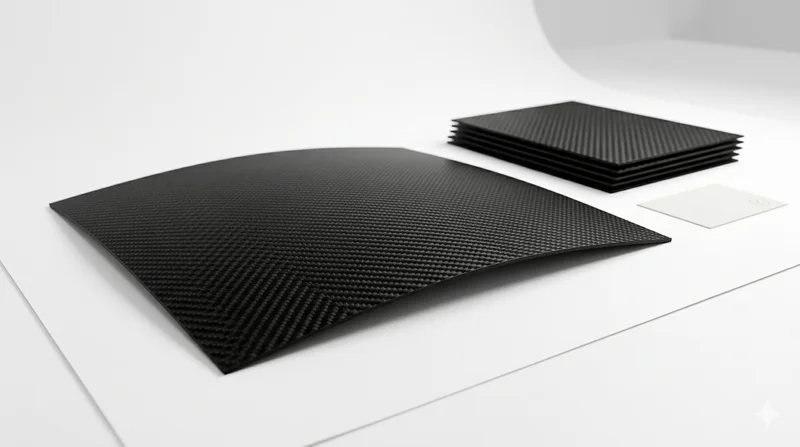
Carbon Fiber Plate — 3K Twill T700 1.5mm
Thin 1.5mm carbon fiber plate with 3K twill weave surface. Lightweight and stiff, commonly used for covers, panels, drone bodies, and applications requiring a premium aesthetic appearance.
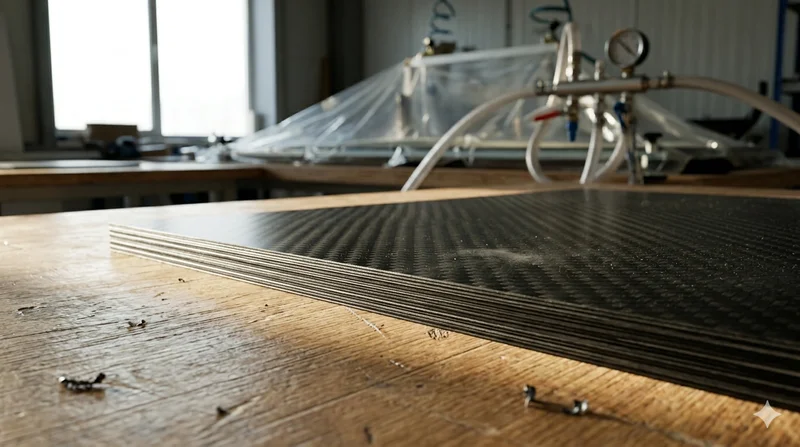
Carbon Fiber Plate — 3K Twill T700 3.0mm
Medium-thickness 3.0mm carbon fiber plate offering significantly higher load capacity while maintaining attractive 3K twill finish. Suitable for structural brackets, reinforcement plates, and load-bearing panels.

Carbon Fiber Trekking Pole
Lightweight carbon fiber trekking pole manufactured from high-grade carbon fiber tube. Weighs only 160g per pole while providing superior shock absorption and durability for hiking, trail running, and backpacking.
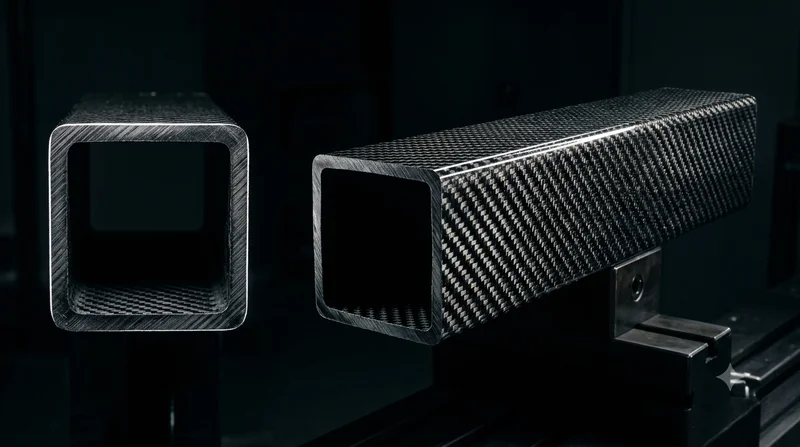
Square Carbon Fiber Tube — 3K Twill T700
Square cross-section carbon fiber tube manufactured with 3K twill weave for torsional strength. Preferred for structural frames, trusses, and support columns where rectangular geometry offers design flexibility.