
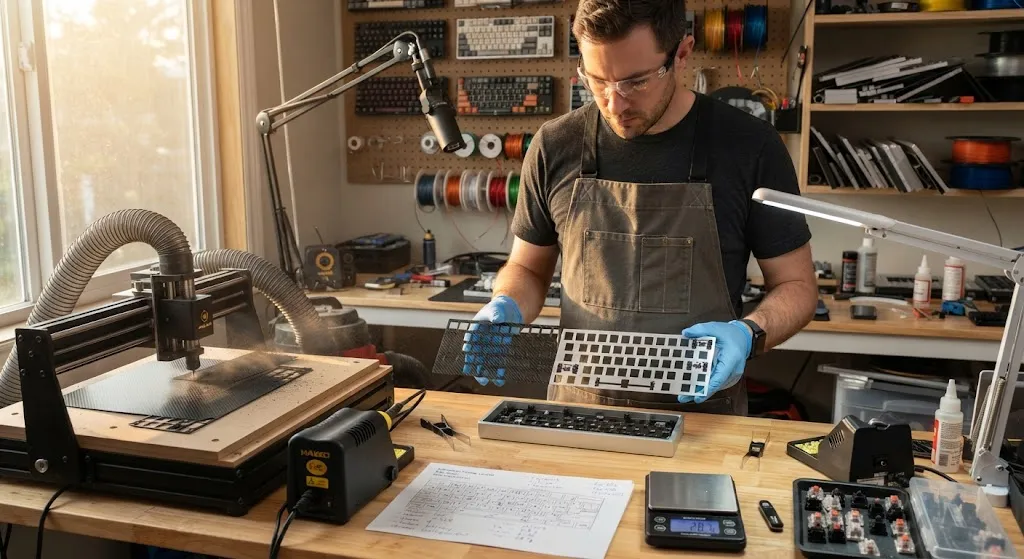
The carbon fiber plate vs aluminum keyboard debate is one a custom builder runs before choosing the switch plate for a new build. The plate is the thin sheet that sits between the switches and the PCB. It holds every switch in position, controls how much the board flexes under a keypress, and colour
Introduction
The carbon fiber plate vs aluminum keyboard debate is one a custom builder runs before choosing the switch plate for a new build. The plate is the thin sheet that sits between the switches and the PCB. It holds every switch in position, controls how much the board flexes under a keypress, and colours the sound the keyboard makes. Aluminum has been the default plate material for years, while carbon fiber has moved from drone frames and racing components into the keyboard hobby as builders chase lighter boards and a different tone.
For anyone weighing carbon fiber plate vs aluminum keyboard parts, the decision rests on three things: mass, flex and sound. This guide compares the two materials on the numbers that matter in a custom build, including density, plate weight for a 60 percent layout, stiffness, sound character, cutting and cost, so a builder can choose the plate that matches the feel they want.
Carbon Fiber Plate vs Aluminum Keyboard: Why the Plate Matters
A keyboard plate is not cosmetic. It determines where switches sit, how firmly they are supported, and how the assembled board behaves. A stiff plate produces a hard, immediate bottom-out, while a more flexible plate lets the switches and PCB move slightly, giving a softer, more cushioned stroke. Because the plate is pressed against the switches and the case, its density and stiffness also change the pitch and volume of every keystroke.
Aluminum is an isotropic metal: it behaves the same in every direction, with a flexural modulus of about 69 gigapascals and a density of 2.70 grams per cubic centimetre. A typical 1.5 millimetre aluminum plate is rigid and transmits vibration efficiently, which is why it produces the bright, high-pitched "clack" many builders associate with metal plates. Carbon fiber is a laminate of carbon fibres in an epoxy matrix. Its density is about 1.55 to 1.60 grams per cubic centimetre, and its stiffness depends on how the fibres are laid up, with a quasi-isotropic panel reaching 50 to 70 gigapascals. The lower density and the fibre-resin structure are the source of almost every difference a builder notices.
Carbon Fiber Plate vs Aluminum Keyboard: Weight and Flex
Weight and flex separate the two materials most clearly. At equal thickness, a carbon fiber plate is about 40 percent lighter than an aluminum plate of the same footprint, and that saving is felt directly when the completed board is lifted. The table below compares the two for a 60 percent layout plate at 1.5 millimetres thick.
| Property | Carbon Fiber Plate | Aluminum Plate |
|---|---|---|
| Density | 1.55-1.60 g/cm³ | 2.70 g/cm³ |
| Plate mass, 60 percent, 1.5 mm | about 65 g | about 110 g |
| Flexural modulus | 50-70 GPa quasi-isotropic | 69 GPa |
| Flex behaviour | moderate, slightly damped | stiff, hard bottom-out |
| Sound character | medium pitch, poppy, damped | bright, high pitch, metallic |
| Thermal expansion | 0-3 ppm per °C | 23 ppm per °C |
| Typical thickness | 1.5 mm, 2.0 mm stiff | 1.5 mm |
| Relative plate cost | higher | baseline |
Two rows decide most builds. The plate mass shows the direct weight saving a lighter board delivers, and the flex behaviour shows the feel. An aluminum plate at 1.5 millimetres barely moves, so a keystroke bottoms out firmly. A carbon fiber plate at the same thickness is lighter and a little more compliant, so the stroke feels softer and the board has a touch more give under the fingers. Some builders go to 2 millimetres of carbon fiber when they want carbon's weight with aluminum-like stiffness.
Sound and Feel: Where the Two Plates Diverge
Sound is the reason many builders try carbon fiber in the first place. Aluminum's density and stiffness transmit vibration with little damping, producing a sharp, metallic tone that rises with case size. Carbon fiber, being a fibre-resin laminate, damps part of that vibration before it reaches the case, so the strike note is lower and slightly rounded. In practice, builders describe an aluminum plate as "clacky" and a carbon fiber plate as "poppy" or "thocky", though the case, foam, keycaps and switches all shift the result.
The feel follows the sound. Because carbon fiber is lighter and marginally more flexible at a given thickness, the typing experience is often described as softer and more even across the board. Aluminum gives a crisp, consistent, hard stop. Neither is better; the choice depends on whether a builder wants a firm, high-pitched board or a lighter, lower-pitched one.
Machining and Carbon Fiber Plate Cutting
Manufacturing separates the two materials as much as density does. Carbon fiber plate cutting is a specialist operation:
- Tooling: Aluminum is cut, drilled and countersunk with ordinary carbide tooling. Carbon fiber needs diamond or sharp carbide cutters, because the fibre is abrasive and wears ordinary edges quickly.
- Dust control: Carbon fiber cutting produces fine, conductive dust that must be extracted. Aluminum chips are harmless by comparison.
- Cut methods: Carbon fiber plates are usually cut on a CNC router, by waterjet or by abrasive saw. A waterjet leaves a clean edge with no delamination, which is why it is common for keyboard plates.
- Edge finishing: Cut carbon fiber edges should be sealed or lightly sanded to stop fraying and to keep the laminate from wicking moisture at the cut face.
For a builder buying a finished plate, this mostly affects price and lead time rather than the day-to-day work. For a maker cutting plates in house, the extra tooling and extraction are real costs that belong in the comparison.
Carbon Fiber Sheet vs Aluminum in Thin Applications
The same logic extends to thinner stock. A carbon fiber sheet vs aluminum comparison in flat, thin sections uses the same density gap, and only the thickness changes. A 1 millimetre carbon fiber sheet weighs about 1.55 kilograms per square metre against about 2.70 kilograms for the same sheet in aluminum, so any thin panel, whether a keyboard plate, a drone arm or a cosmetic fascia, saves weight at equal thickness with carbon fiber. Where a part is loaded in one direction, a carbon fiber sheet with more axial fibres can also be stiffer per kilogram, though it will be weaker across the other directions. That directionality is what makes carbon fiber efficient in a plate and also what makes the layup schedule important to specify.
Cost, Sourcing and Custom Builds
Aluminum remains the cheaper and easier option. A cut aluminum plate for a 60 percent board is widely available and forgiving to machine, which keeps prototyping and small runs affordable. A carbon fiber plate costs more because the raw laminate is more expensive and cutting needs specialist tooling, but the premium is modest relative to the total cost of a custom build. For a builder choosing between the two, the practical sequence is straightforward: decide the feel first, then the weight, then the price. If the target is a firm, bright board, aluminum is the sensible default. If the target is a lighter board with a softer, lower-pitched character, a carbon fiber plate is worth the step up.
Frequently Asked Questions
How much lighter is a carbon fiber keyboard plate than an aluminum one?
At equal thickness a carbon fiber plate is about 40 percent lighter, because its density is 1.55 to 1.60 grams per cubic centimetre against 2.70 for aluminum. For a 60 percent layout at 1.5 millimetres, that is roughly 65 grams of carbon fiber against 110 grams of aluminum. The saving is felt immediately when the finished board is picked up.
Does a carbon fiber plate make a keyboard sound different from aluminum?
Yes. Aluminum is dense and stiff, so it transmits vibration with little damping and produces a bright, high-pitched, metallic tone. Carbon fiber is a fibre-resin laminate that damps part of that vibration, giving a lower, slightly rounded, "poppy" sound. The case, foam, switches and keycaps still shape the final result, but the plate sets the starting pitch.
Can I cut a carbon fiber keyboard plate myself?
You can, but it is not as simple as cutting aluminum. Carbon fiber needs diamond or sharp carbide tooling, dust extraction for the conductive fibre dust, and careful feeds to avoid delamination. Waterjet and CNC routing are the common methods, and cut edges should be sealed or lightly sanded. If you only need one plate, buying a pre-cut carbon fiber plate is usually cheaper than the tooling.
Conclusion
Carbon fiber plate vs aluminum is a choice between a light, damped plate and a heavy, bright one. Carbon fiber saves about 40 percent of the plate weight and gives a softer, lower-pitched typing experience, while aluminum offers stiffness, a firm bottom-out and a lower price. Builders who want a firm, sharp board should stay with aluminum; those who want a lighter board with a different tone will find carbon fiber worth the extra cost. The deciding factors are feel, weight and budget, and all three are easy to weigh before a single part is ordered.
If you need carbon fiber plates or sheets cut to a keyboard layout with clean edges and consistent thickness, browse our carbon fiber plate and sheet range, or contact our team for plate dimensions, thickness options and custom cutting support.
Part of topic
Related Articles
- Carbon Fiber Tubes and Rods: Sizing and Selection for Projects
- Carbon Fiber Tube Chassis: Space Frames for Vehicles and Drones
- Carbon Fiber Tube Connect: Complete Assembly Guide
- Carbon Fiber Tube Connection: Sleeves, Inserts and Adhesive Joints
- Carbon Fiber Tube T-Joint: Bonding and Mechanical Assembly Options
- Carbon Fiber Tube Clamps: Joint Design and Hardware Selection
Interested in Our Products?
Contact our team for competitive pricing and technical specifications.
Get a QuoteRelated Products

Carbon Fiber Plate — 3K Twill T700 1.5mm
Thin 1.5mm carbon fiber plate with 3K twill weave surface. Lightweight and stiff, commonly used for covers, panels, drone bodies, and applications requiring a premium aesthetic appearance.

Carbon Fiber Plate — 3K Twill T700 3.0mm
Medium-thickness 3.0mm carbon fiber plate offering significantly higher load capacity while maintaining attractive 3K twill finish. Suitable for structural brackets, reinforcement plates, and load-bearing panels.

Square Carbon Fiber Tube — 3K Twill T700
Square cross-section carbon fiber tube manufactured with 3K twill weave for torsional strength. Preferred for structural frames, trusses, and support columns where rectangular geometry offers design flexibility.
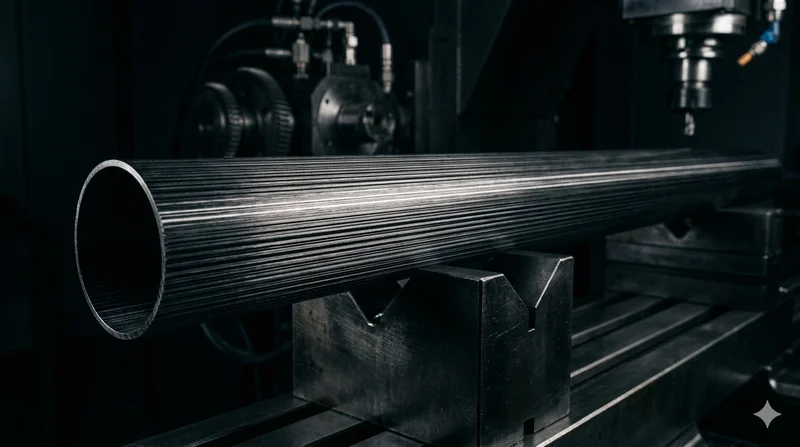
Round Carbon Fiber Tube — UD Unidirectional T700
Unidirectional (UD) round tube with all fibers aligned axially for maximum longitudinal stiffness. Ideal for applications requiring high bending rigidity with minimal weight, such as shafts, struts, and structural reinforcements.
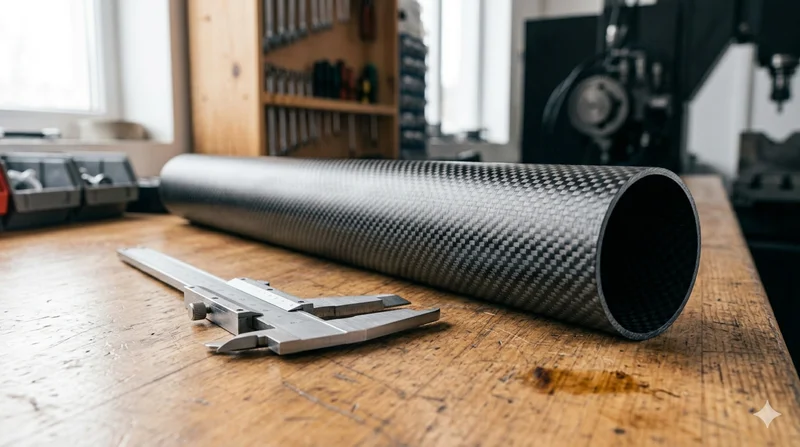
Round Carbon Fiber Tube — 3K Plain Weave T700
Standard round carbon fiber tube manufactured from Toray T700 grade fiber with 3K plain weave. Offers balanced strength and stiffness for general industrial applications including robotics, automation, sports equipment, and aerospace structures.