
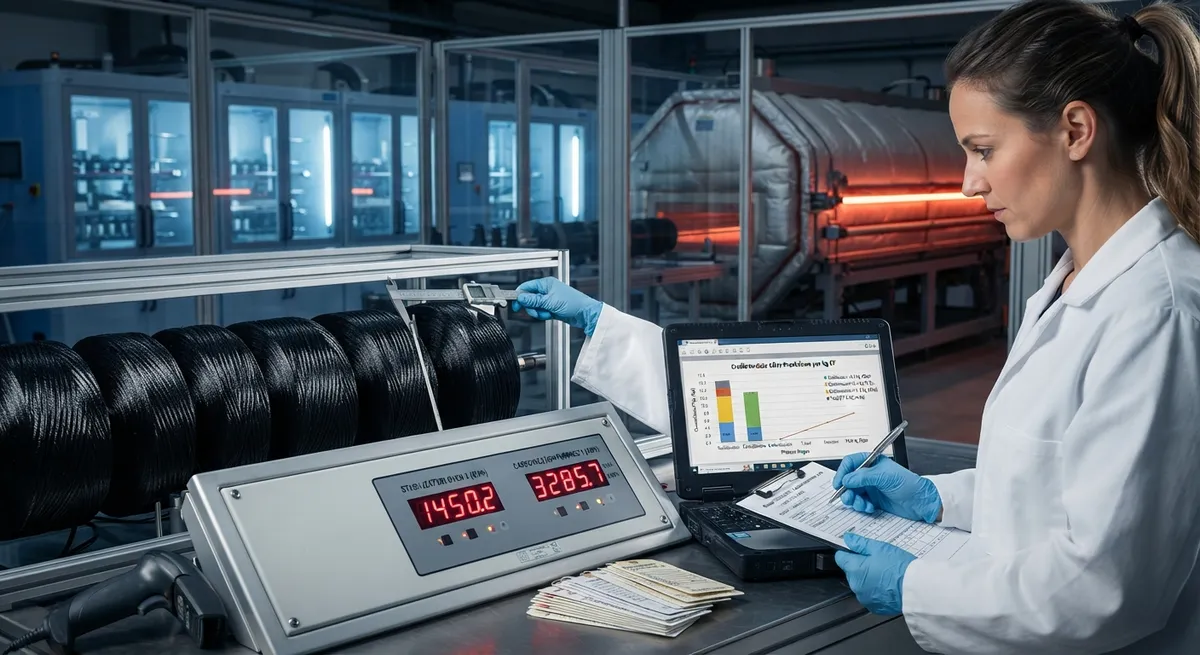
Carbon fiber carries two narratives at once. As a material, it is celebrated for the weight savings that reduce fuel burn and power demand in aircraft, vehicles, and energy equipment during the use phase. Yet in production, carbon fiber is energy-intensive: the PAN conversion and carbon
Introduction
Carbon fiber carries two narratives at once. As a material, it is celebrated for the weight savings that reduce fuel burn and power demand in aircraft, vehicles, and energy equipment during the use phase. Yet in production, carbon fiber is energy-intensive: the PAN conversion and carbonization stages require very high process temperatures that drive a measurable manufacturing footprint. For European B2B buyers, that production-phase footprint is no longer optional reading. Life-cycle assessment (LCA) data, Product Carbon Footprint (PCF) labeling, and Scope 3 supply-chain reporting are increasingly written into request-for-proposal scoring and purchase contracts.
This article explains how a carbon fiber footprint is calculated, where emissions actually concentrate across the manufacturing chain, what a PCF label requires of a supplier, and how a procurement team should treat footprint data when comparing suppliers and building a Scope 3 disclosure. Readers will come away with the vocabulary needed to read a carbon fiber LCA and audit a supplier's footprint claim with confidence.
How the Carbon Fiber Footprint Is Built
Most carbon fiber starts as polyacrylonitrile (PAN), itself a polymer produced from a petrochemical feedstock chain. Transforming PAN into a fiber with carbon content above 90% requires a sequence of high-temperature process steps. Each step contributes differently to the final cradle-to-gate footprint:
- Precursor production (polymerization and spinning): Energy for polymerization and wet-spun or dry-jet precursor tow, including solvent recovery and the heating steps needed to orient the polymer chains.
- Stabilization (oxidation): PAN fiber passes through ovens at 200-300 °C to convert the linear polymer into a thermally stable laddered structure. This stage consumes substantial electrical energy for heaters and recirculating air.
- Carbonization: The stabilized fiber is heated to 1,000-1,500 °C under an inert atmosphere to drive out non-carbon atoms and leave a turbostratic carbon structure. This is the single largest energy consumer, requiring high-temperature furnaces and inert-gas generation.
- Surface treatment, sizing, and spooling: Electrochemical surface treatment, application of a light sizing, and final winding contribute a smaller share of total process energy.
The table below shows the commonly published split of process energy across a PAN-based carbon fiber production route. Exact numbers vary with fiber type and electricity source, but the ordering is consistent.
| Production Stage | Typical Process | Share of Process Energy | Key Emission Driver |
|---|---|---|---|
| Precursor (PAN) production | Polymerization + spinning | 20-30% | Feedstock plus solvent recovery heat |
| Stabilization / oxidation | 200-300 °C ovens | 15-25% | Electrical heating and air flow |
| Carbonization | 1,000-1,500 °C inert furnace | 40-50% | High-temperature furnaces plus inert gas |
| Surface treatment / sizing | Oxide surface + coating | 5-10% | Process electricity and chemicals |
Because carbonization dominates, the grid electricity and furnace efficiency weigh most heavily on the footprint. A producer on a renewable or low-carbon grid systematically reports a lower cradle-to-gate footprint than an identical technology running on a grid average, which is why the "carbon footprint of carbon fiber" is best understood as a range tied to where and how the material is made, not as one fixed number.
What Published Footprint Data Actually Say
Published cradle-to-gate footprints for virgin carbon fiber fall in a wide band. Early academic values and older industry databases sometimes pointed to figures in the range of 1.5-2.5 kg CO2e per kilogram. More recent European datasets built on primary production data commonly report figures comfortably in the range of 15-25 kg CO2e per kilogram for modern virgin fiber, before any use-phase credit. The gap is not a contradiction; it reflects differences in system boundaries, grid assumptions, allocation rules, and whether recycled content is included.
That spread is exactly why the headline number alone is not enough. A defensible footprint statement must be accompanied by the LCA boundary (cradle-to-gate, cradle-to-grave), the functional unit, the emission-factor and grid assumptions, and the share of primary versus secondary data. Procurement teams should treat an unbounded number with the same caution they apply to a strength value without a standard and test method.
Product Carbon Footprint (PCF) Labeling
A Product Carbon Footprint (PCF) is narrower than a full LCA, though it reuses the same underlying accounting. A PCF reports greenhouse gas emissions expressed in CO2-equivalent (CO2e) for a defined functional unit over relevant lifecycle stages — for carbon fiber, typically one kilogram of fiber, prepreg, or component at the factory gate. Several requirements attach to a defensible PCF:
- Clear boundary: A carbon fiber PCF usually covers cradle-to-gate (raw material through the factory gate). Industry and government standards define the scope so numbers between suppliers can be compared.
- Primary data for the manufacturing backbone: Buyers increasingly demand primary production data for the process-energy stages rather than generic industry averages, because the carbonization stage is where energy intensity lives.
- Explicit grid and allocation methodology: The electricity mix assigned to the high-temperature stages is a key lever, so it must be disclosed transparently along with any power-purchase agreements used.
- Verifiable basis: For European procurement, a PCF that follows an established, recognized standard carries more weight than an internally calculated figure with no documented approach.
Scope 3 Supply-Chain Reporting and Carbon Fiber
Corporate carbon accounting under the European Sustainability Reporting Standards (ESRS) and CSRD requires companies to report Scope 1, 2, and 3 emissions. Scope 3 is where a buyer's carbon fiber footprint first appears, in the purchased goods and services category. The quality of that reporting is only as strong as the supplier data feeding it.
| Reporting Category | What It Captures | Where Carbon Fiber Appears |
|---|---|---|
| Scope 1 (direct) | Own boilers and vehicles | None for a typical buyer |
| Scope 2 (purchased energy) | Electricity, heat, cooling | Covered in the buyer's own plant |
| Scope 3 Category 1 (purchased goods) | Upstream embodied emissions | Embodied footprint of all purchased carbon fiber |
| Scope 3 Category 4 (upstream logistics) | Freight and distribution | Transport footprint of CFRP shipments |
The practical consequence for a buyer is straightforward: a supplier that cannot deliver a usable, primary-data footprint forces the buyer to fall back on inflated default values or painful disclosure gaps. This turns carbon awareness into a genuine procurement advantage. It is not only about a lower number — it is about data quality, boundary choice, and evidence that the interpretation of the number can be audited.
Frequently Asked Questions
What is the carbon footprint of one kilogram of carbon fiber?
Under a modern cradle-to-gate boundary, virgin PAN-based carbon fiber typically sits in the range of roughly 15-25 kg CO2e per kilogram, highly dependent on grid, furnace efficiency, and allocation. Older figures under 2-3 kg reflect a very different boundary and grid baseline. Always ask which functional unit, boundary, and grid were used before comparing any two numbers.
Does recycled carbon fiber always have a lower carbon footprint than virgin?
Often, but not automatically. Recycled carbon fiber avoids the energy-intensive carbonization step, so a genuine, high-mechanical-quality recycling route is usually materially lower in embodied footprint. The result depends on recovered fiber quality, filament loss, and the energy of the recovery process. A responsible supplier publishes the recovery route methodology and the measured value — not just the label "recycled."
What footprint documents do I need from my carbon fiber supplier?
At minimum: the PCF with a stated boundary (typically cradle-to-gate), the functional unit (one kilogram of fiber or prepreg), the primary-versus-secondary split of data, the grid and electricity mix, and the standard or methodology the figure follows. For your own Scope 3 report, also keep the upstream input emission data and the ability to show traceability through the same value chain.
Conclusion
Carbon footprint and life-cycle assessment have moved from a niche environmental topic to a procurement requirement in carbon fiber. The production footprint is real and is dominated by the carbonization stage, but it is well understood and traceable to specific processes and energy decisions. PCF labeling makes that number comparable and increasingly contractual, and Scope 3 reporting ties the cost of carbon data disclosure directly to supplier data quality. Suppliers that deliver primary, verifiable footprint data with a clear boundary will win over suppliers offering a legacy figure without evidence.
When you compare material suppliers, treat the footprint data as a hard criterion alongside mechanical and price performance. Review our carbon fiber product range with the footprint and traceability documentation you need, or contact our engineering team to collect the PCF and LCA dossier appropriate for your Scope 3 submission.
Part of topic
Related Articles
- Carbon Fibre Sheet Supplier UK: Sourcing Options and Specification Checklist
- Carbon Fiber Sheets Near Me Suppliers: Local Stock vs Factory Direct
- Filament Wound Epoxy Tubes: Industry Standards and Compliance Requirements
- Carbon Fiber Dealers Near Me: What a Good Dealer Actually Adds
- Carbon Fiber Supplies Near Me: Local Sourcing Without Compromising Spec
- Carbon Fiber for Sale: Online Platforms and Direct Sales Channel Comparison
Interested in Our Products?
Contact our team for competitive pricing and technical specifications.
Get a QuoteRelated Products
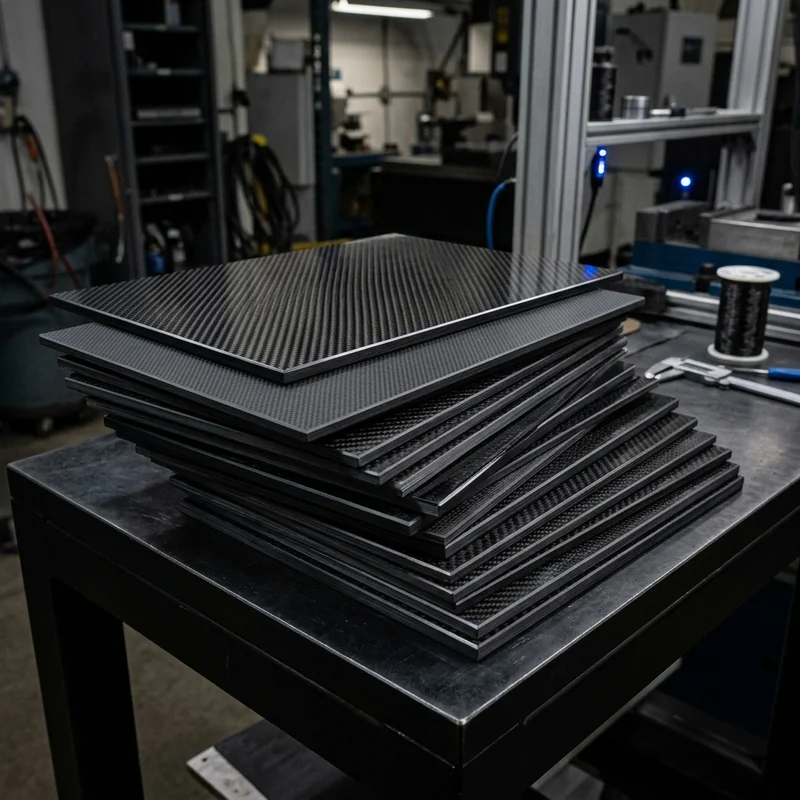
Carbon fiber standard plate-3k stripe
Lightweight, ultra-rigid standard sheets for drone fuselages, robot housings, facades and structural applications.

Carbon Fiber Plate — 3K Twill T700 3.0mm
Medium-thickness 3.0mm carbon fiber plate offering significantly higher load capacity while maintaining attractive 3K twill finish. Suitable for structural brackets, reinforcement plates, and load-bearing panels.

Carbon Fiber Plate — 3K Twill T700 1.5mm
Thin 1.5mm carbon fiber plate with 3K twill weave surface. Lightweight and stiff, commonly used for covers, panels, drone bodies, and applications requiring a premium aesthetic appearance.
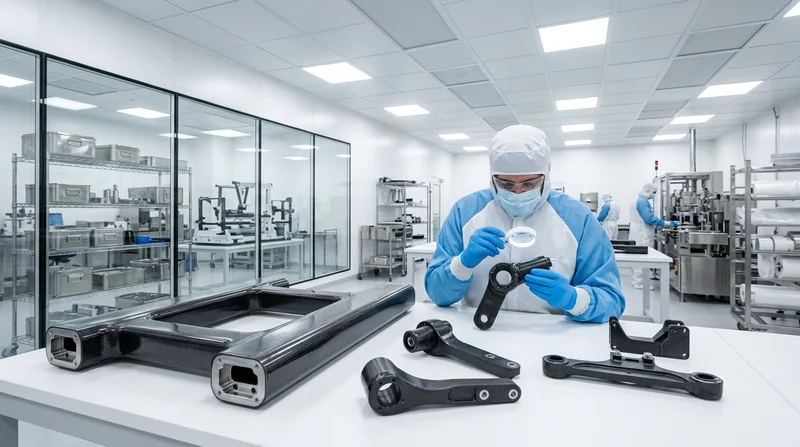
Custom Carbon Fiber Medical Device Components
Medical-grade carbon fiber components manufactured for imaging equipment, surgical instruments, and patient support systems. Carbon fiber's radiolucency (X-ray transparency) and high strength-to-weight ratio make it ideal for CT scanner beds, wheelchair frames, surgical robot arms, and MRI-compatible accessories. Biocompatible resin systems available.

Square Carbon Fiber Tube — 3K Twill T700
Square cross-section carbon fiber tube manufactured with 3K twill weave for torsional strength. Preferred for structural frames, trusses, and support columns where rectangular geometry offers design flexibility.