
Brazil's carbon fiber market is emerging as a strategic aerospace hub driven by Embraer's expanding aircraft portfolio. This article examines market structure, Embraer's supply chain requirements, and opportunities for international B2B suppliers.
Brazil's position in the global carbon fiber market has evolved significantly over the past decade. While the country has long been recognized as a major producer of commodities — iron ore, soybeans, and crude oil — its advanced manufacturing sector, particularly aerospace, has quietly built one of the most sophisticated composites supply chains in the Southern Hemisphere. At the center of this ecosystem is Embraer, the world's third-largest aircraft manufacturer by delivery volume, which consumed an estimated 1,200–1,500 metric tonnes of carbon fiber in 2025 across its commercial, executive, and defense aviation programs.
The Brazilian carbon fiber market reached an estimated value of USD 285 million in 2025, with a compound annual growth rate (CAGR) of 11.3% projected through 2031. This growth is fueled by Embraer's next-generation aircraft programs, the expansion of Brazil's defense aerospace sector under the FX-2 program, and increasing adoption of carbon fiber in wind energy and automotive components across the broader Latin American market. For international B2B suppliers of carbon fiber raw materials, prepregs, and processing equipment, Brazil represents a high-growth, relatively under-penetrated market that warrants strategic attention.
Embraer's Carbon Fiber Consumption Profile
Embraer's carbon fiber usage spans three main business units: commercial aviation (E-Jets E2 family), executive aviation (Phenom 300, Praetor 500/600), and defense (KC-390 Millennium military transport, A-29 Super Tucano). The E-Jets E2 family alone — comprising the E175-E2, E190-E2, and E195-E2 — contains approximately 3,800 kg of carbon fiber composites per airframe, representing roughly 18% of structural weight, a figure that is expected to increase to 25–30% in the next-generation turboprop and narrowbody programs currently in early development.
| Program | Carbon Fiber per Airframe (kg) | Composites % of Structural Weight | 2025 Delivery Volume | Total CF Consumption 2025 (tonnes) | Key Composite Components |
|---|---|---|---|---|---|
| E190-E2 | 3,800 | 18% | 38 | 144 | Wing ribs, empennage, control surfaces, nacelles, floor structure |
| E195-E2 | 4,200 | 18% | 52 | 218 | Same as E190-E2 + stretched fuselage panels |
| Phenom 300E | 520 | 22% | 98 | 51 | Horizontal stabilizer, rudder, elevators, fairings, interior trim |
| Praetor 500/600 | 1,850 | 28% | 72 | 133 | Wing structure, fuselage barrel sections, vertical stabilizer |
| KC-390 Millennium | 12,500 | 32% | 8 | 100 | Wing box, fuselage panels, cargo ramp, empennage, landing gear doors |
| A-29 Super Tucano | 180 | 8% | 24 | 4 | Control surfaces, wing tips, fairings |
| Total | 292 | 650 | — |
Note: Table reflects Embraer's direct airframe consumption. Total indirect consumption (suppliers, MRO, and aftermarket spares) adds an estimated 550–850 tonnes, bringing Embraer ecosystem total to approximately 1,200–1,500 tonnes in 2025.
Brazil's Aerospace Composites Supply Chain
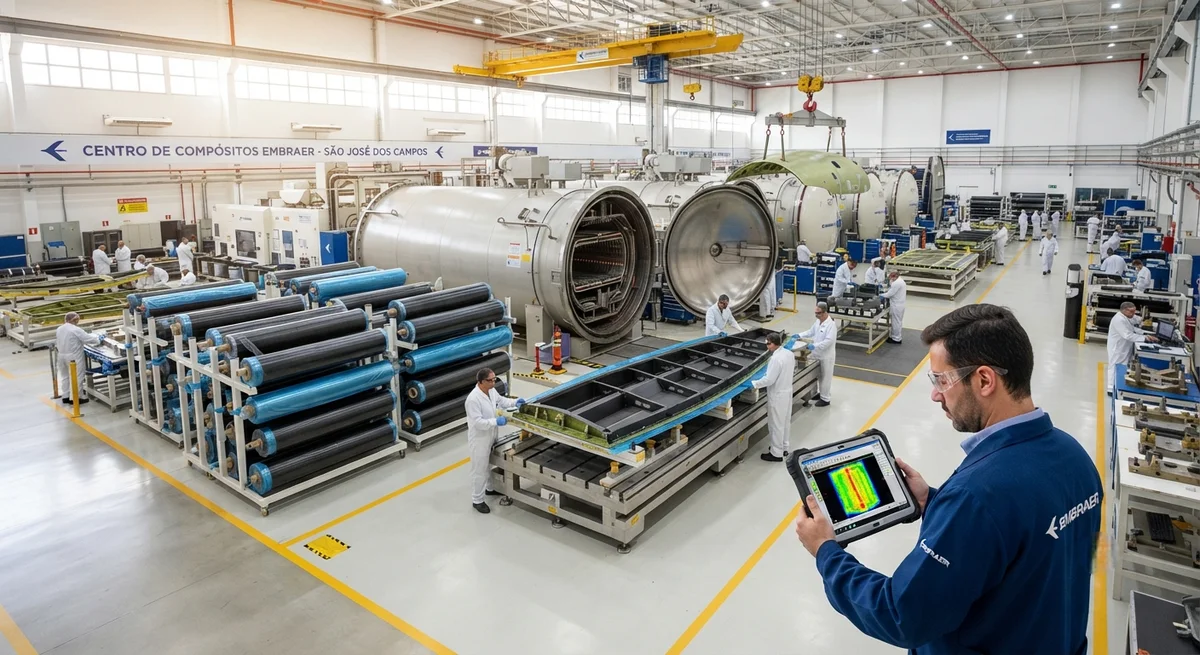
The Brazilian aerospace composites supply chain is concentrated in the state of São Paulo, particularly around São José dos Campos — a city of 730,000 located 90 km northeast of São Paulo that serves as Brazil's aerospace capital. Embraer's main manufacturing complex in São José dos Campos spans 115,000 m² and includes dedicated composites fabrication facilities, autoclave processing lines, and a composites research and development center. The broader São José dos Campos aerospace cluster hosts over 50 supplier companies, including specialized composites manufacturers, tooling shops, and testing laboratories.
Raw Material Supply Landscape
Unlike China, Japan, the United States, or Western Europe, Brazil does not have domestic carbon fiber precursor (PAN) or carbon fiber conversion capacity at commercial scale. All carbon fiber raw materials consumed in Brazil are imported, primarily from:
- Toray Industries (Japan/USA): Dominant supplier to Embraer's commercial aviation programs, supplying T700S standard modulus and T800S intermediate modulus fibers, largely sourced from Toray's US production facility in Decatur, Alabama (annual capacity: 11,000 tonnes).
- Hexcel Corporation (USA/France): Primary supplier of aerospace-grade prepreg systems — HexPly® M21E and 8552 — used in Embraer's executive jet and KC-390 programs. Hexcel operates a dedicated logistics hub in Campinas, São Paulo, for just-in-time prepreg delivery.
- Solvay (Belgium/USA): Supplies CYCOM® epoxy prepreg systems for Embraer's interior and secondary structures, with regional warehousing in São Paulo.
- Mitsubishi Chemical Group (Japan): Supplier of PAN-based carbon fiber for non-aerospace industrial applications in Brazil's growing wind energy and automotive aftermarket sectors.
The complete reliance on imported carbon fiber creates a structural vulnerability in Brazil's aerospace supply chain. Lead times for imported prepregs range from 6–12 weeks for standard grades to 16–20 weeks for specialized aerospace-grade materials with full qualification documentation. This has prompted Embraer and the Brazilian government to explore domestic carbon fiber production capacity, with feasibility studies conducted by the Brazilian Aeronautics Institute of Technology (ITA) and the Ministry of Development, Industry, Trade and Services.
Manufacturing Capabilities and Autoclave Infrastructure
Brazil's autoclave and composites processing infrastructure, while scaled compared to European or North American hubs, represents the largest installed base in Latin America. Key facilities include Embraer Composites Center (6 autoclaves, largest 5m diameter x 12m), Akaer Engenharia (2 autoclaves), Desaer Composites (3 autoclaves), LATAM Composites, 3M Brazil Technology Center, and ITA Composite Materials Lab. Combined estimated autoclave capacity is approximately 85,000 m³/year, with Embraer's facilities accounting for roughly 65% of total national capacity. Utilization rates have increased from approximately 55% in 2020 to over 78% in 2025.
B2B Market Opportunities for International Suppliers
Several distinct opportunity areas exist for international B2B suppliers serving Brazil's carbon fiber ecosystem:
- Aerospace-grade prepreg supply: The highest-value opportunity. Embraer and its Tier-1 suppliers require NADCAP-accredited prepreg systems with full pedigree documentation. The qualification process takes 12–18 months but yields multi-year supply agreements typically valued at USD 5–15 million annually per supplier.
- Tooling and mold manufacturing: Invar steel, aluminum, and composite tooling for Embraer's expanding production lines. Brazilian tooling shops have limited capacity for large-scale Invar tooling (above 4m length), creating an import opportunity for specialized European and Asian tooling manufacturers.
- NDE and quality inspection equipment: Ultrasonic C-scan, thermography, shearography, and computed tomography systems for composites quality control. Brazil's installed base of advanced NDE equipment for composites is significantly below European and North American levels.
- Automated fiber placement (AFP) systems: Embraer's next-generation aircraft programs will require AFP capability for large fuselage and wing structures. The current installed base of AFP systems in Brazil is limited to 3–4 units.
- Recycling and circular economy services: Brazil generated an estimated 500–700 tonnes of composite production scrap in 2025, with less than 5% being recycled, creating demand for pyrolysis recycling services.
Frequently Asked Questions
Q: What are the primary certification requirements for carbon fiber prepregs supplied to Embraer?
A: Embraer requires all aerospace-grade prepreg suppliers to maintain NADCAP accreditation for non-metallic materials manufacturing, AS9100D quality management certification, and full material qualification per Embraer's MME (Material and Manufacturing Engineering) standard. The qualification process involves 12–18 months of testing including mechanical property characterization at −54°C, room temperature, and 82°C (wet), fire-smoke-toxicity testing per FAR 25.853, and batch-to-batch consistency demonstration over a minimum of five production batches. Suppliers must also maintain a dedicated technical support presence in Brazil or have an authorized local distributor with engineering capability.
Q: How does Brazil's carbon fiber consumption compare to other Latin American markets?
A: Brazil dominates Latin America's carbon fiber market with approximately 72% of regional consumption by volume. Mexico accounts for roughly 15% (driven by automotive and aerospace maquiladora operations), Argentina 5%, Chile 3%, and other markets collectively 5%. Brazil's CAGR of 11.3% significantly outpaces the global average of 7.8%, driven by aerospace expansion and emerging adoption in wind energy infrastructure.
Q: Is there any domestic carbon fiber production in Brazil or planned capacity?
A: As of 2026, there is no commercial-scale PAN precursor or carbon fiber conversion capacity in Brazil. A feasibility study commissioned by the Brazilian Ministry of Industry in 2024 evaluated the economic case for a 3,000–5,000 tonne/year PAN-based carbon fiber plant in the state of Bahia. Capital expenditure would be approximately USD 350–500 million with a payback period of 10–12 years. An industrial-grade recycled carbon fiber plant — capacity 500 tonnes/year — is under development by EcoFibra Materials in São Paulo state, targeting 2027 production startup.
Q: What are the logistics challenges for shipping carbon fiber prepregs to Brazil?
A: Aerospace-grade prepregs require cold-chain logistics with continuous temperature control at −18°C during transit. The typical shipping route from North American or European production facilities to São José dos Campos takes 14–21 days. Common challenges include container temperature excursions during customs holds (reported in 8–12% of shipments), documentation errors in the Siscomex (Brazilian foreign trade system) causing 3–5 day clearance delays, and limited availability of temperature-controlled warehousing near the aerospace cluster.
Q: What is the outlook for Embraer's next-generation aircraft and its impact on carbon fiber demand?
A: Embraer is actively developing two next-generation programs that will significantly increase carbon fiber consumption. The first is a new turboprop aircraft (codename "TP-100") targeting 70–90 seats with a composites share of 30–35% of structural weight. The second is a narrowbody-family study (130–180 seats) that could incorporate composite fuselage sections with a composites share of 35–40%. If both programs proceed, Embraer's total carbon fiber consumption could increase to 3,000–4,500 tonnes/year by 2035.
Conclusion
Brazil's carbon fiber market, anchored by Embraer's expanding aerospace programs and supported by government industrial policy, represents one of the most attractive growth opportunities for international B2B suppliers in the composites industry. The country's complete reliance on imported carbon fiber raw materials creates a clear and persistent demand for aerospace-grade prepregs, tooling, manufacturing equipment, and quality control solutions. With Embraer's next-generation aircraft programs requiring significantly higher carbon fiber content per airframe, and potential domestic production capacity still years away, the window for international suppliers to establish a strong position in the Brazilian market is open now.
Part of topic
Related Articles
- Recycled Carbon Fiber Market Forecast 2030: Technology Maturity and Commercialization Path
- South Korea Carbon Fiber Market 2026: Hydrogen Economy and Shipbuilding Innovation
- Wind Turbine Blade Leading Edge Protection 2026: Polyurethane, Tape, and Metallic Shield Solutions
- China Carbon Fiber Overcapacity 2026: Price War Impact and Industry Consolidation
- India Carbon Fiber Market 2026: Wind Energy, Aerospace, and Defense Expansion
- PAN Precursor Market 2026: Acrylonitrile Supply and Carbon Fiber Cost Structure
Interested in Our Products?
Contact our team for competitive pricing and technical specifications.
Get a QuoteRelated Products
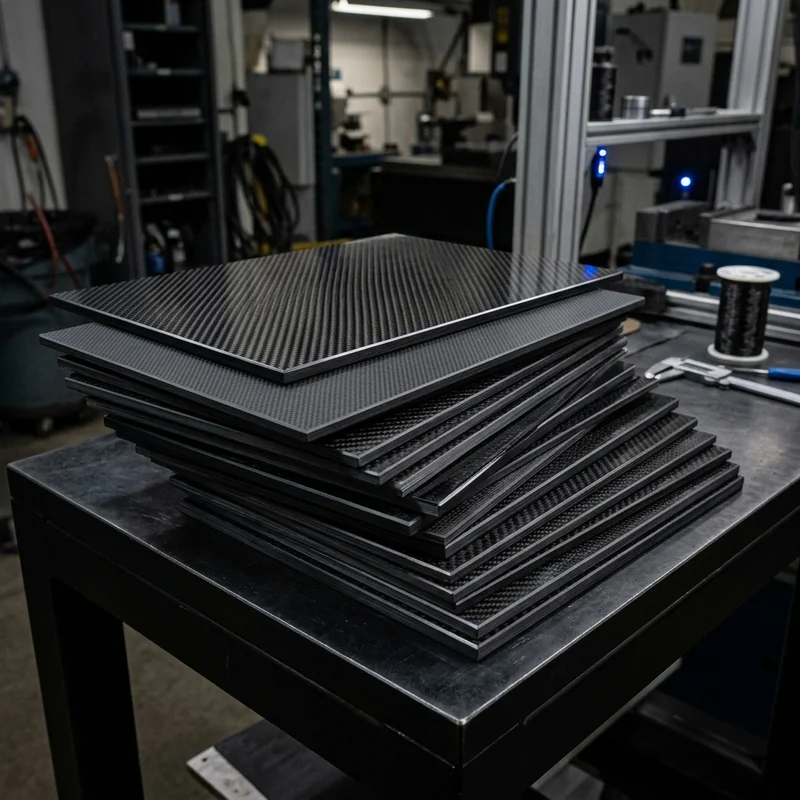
Carbon fiber standard plate-3k stripe
Lightweight, ultra-rigid standard sheets for drone fuselages, robot housings, facades and structural applications.

Carbon Fiber Plate — 3K Twill T700 1.5mm
Thin 1.5mm carbon fiber plate with 3K twill weave surface. Lightweight and stiff, commonly used for covers, panels, drone bodies, and applications requiring a premium aesthetic appearance.

Square Carbon Fiber Tube — 3K Twill T700
Square cross-section carbon fiber tube manufactured with 3K twill weave for torsional strength. Preferred for structural frames, trusses, and support columns where rectangular geometry offers design flexibility.

Carbon Fiber Plate — 3K Twill T700 3.0mm
Medium-thickness 3.0mm carbon fiber plate offering significantly higher load capacity while maintaining attractive 3K twill finish. Suitable for structural brackets, reinforcement plates, and load-bearing panels.
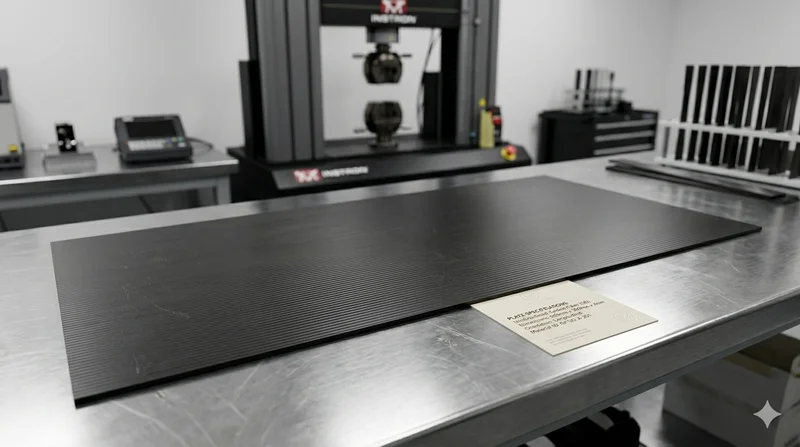
Carbon Fiber Plate — UD Unidirectional T700
Unidirectional carbon fiber plate with all fibers oriented in a single direction for maximum strength along the fiber axis. Essential for structural reinforcements, splints, and applications where load direction is predictable.