
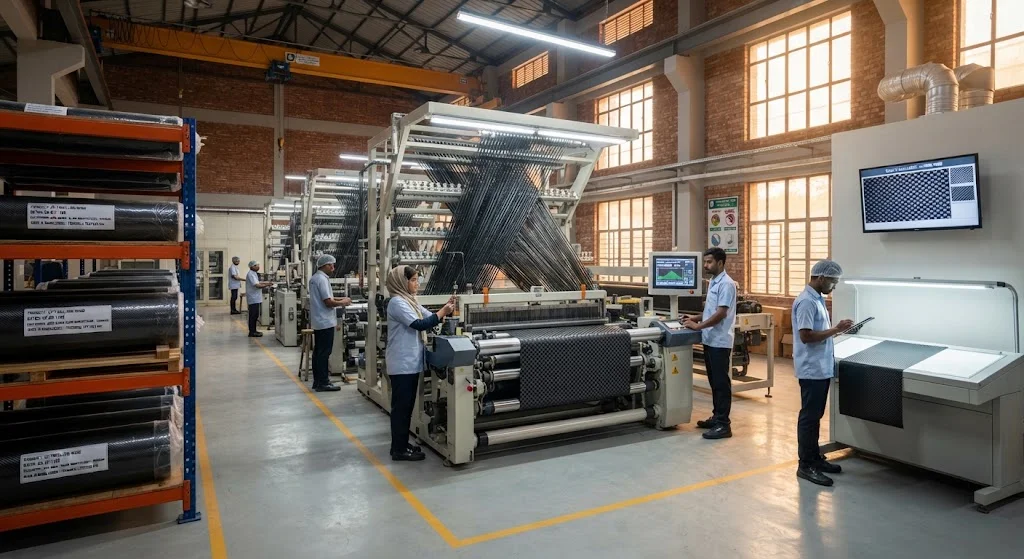
Bangladesh is developing carbon fiber textile manufacturing capabilities to serve the growing wind energy sector. This article examines the country's textile industry transformation, technical fiber production, and market positioning.
Introduction
Bangladesh's textile industry, historically focused on cotton and synthetic apparel fabrics, is undergoing a significant transformation as the country diversifies into technical textiles and advanced materials. Carbon fiber textiles for wind energy applications represent a high-value segment that leverages Bangladesh's existing textile manufacturing infrastructure and skilled workforce while moving up the value chain.
The global wind energy industry's growing demand for carbon fiber fabrics — non-c woven, woven, and braided — creates opportunities for Bangladesh to establish itself as a competitive supplier in this specialized market. The country's advantages in textile manufacturing cost, labor availability, and improving infrastructure position it well for this transition.
Manufacturing Capabilities
Bangladesh's carbon fiber textile sector is developing several key capabilities:
Fabric weaving: Advanced textile mills are installing carbon fiber weaving capacity, producing 2D and 3D woven fabrics with controlled fiber orientations and areal weights. These fabrics serve as the primary reinforcement material for composite blade structures.
Non-woven production: Needlepunch and stitch-bonded non-woven carbon fiber mats offer lower-cost alternatives to woven fabrics for applications requiring random fiber orientation, such as infusion molding processes.
Braiding: Circular and flat braiding machines produce near-net-shape carbon fiber preforms for tubular and profiled structural components, reducing material waste and manufacturing steps.
Quality Systems
Bangladesh's carbon fiber textile manufacturers are implementing quality systems required by the wind energy industry:
Fiber handling: Carbon fiber requires careful handling to prevent fiber damage and contamination. Bangladesh manufacturers are developing specialized handling procedures and clean room environments for technical fiber processing.
Quality control: Statistical process control, incoming material inspection, and outgoing quality verification ensure that carbon fiber textiles meet the specifications required by composite blade manufacturers.
Certification: ISO 9001 and AS9100 quality management system certifications are being pursued to meet the requirements of international wind energy customers.
Market Positioning
Bangladesh is positioning its carbon fiber textile industry in several market segments:
Cost leadership: Lower labor costs and improving manufacturing efficiency enable Bangladesh to offer competitive pricing for carbon fiber textiles, particularly for standard-grade products with established specifications.
Volume capability: The country's experience in high-volume textile production translates well to the growing demand for carbon fiber fabrics in the wind energy sector.
Geographic proximity: Proximity to major Asian wind energy markets — India, China, Southeast Asia — reduces logistics costs and lead times compared to suppliers in Europe or North America.
Challenges
Bangladesh's carbon fiber textile industry faces several challenges:
Technology access: Advanced carbon fiber textile production technologies are concentrated in Japan, the US, and Europe. Technology transfer and equipment supply are essential for moving up the value chain.
PAN precursor supply: Bangladesh currently imports most PAN precursor fiber, limiting supply chain control. Domestic precursor production would improve cost competitiveness and supply security.
Quality consistency: Maintaining consistent quality at high production volumes requires sophisticated process control and quality management systems that are still being developed.
Conclusion
Bangladesh's transformation of its textile industry to include carbon fiber production for wind energy applications represents a significant economic development opportunity. By leveraging existing manufacturing capabilities, skilled workforce, and cost advantages, Bangladesh can establish itself as a competitive supplier of carbon fiber textiles for the global wind energy market.
Part of topic
Related Articles
- Recycled Carbon Fiber Market Forecast 2030: Technology Maturity and Commercialization Path
- South Korea Carbon Fiber Market 2026: Hydrogen Economy and Shipbuilding Innovation
- Wind Turbine Blade Leading Edge Protection 2026: Polyurethane, Tape, and Metallic Shield Solutions
- China Carbon Fiber Overcapacity 2026: Price War Impact and Industry Consolidation
- India Carbon Fiber Market 2026: Wind Energy, Aerospace, and Defense Expansion
- PAN Precursor Market 2026: Acrylonitrile Supply and Carbon Fiber Cost Structure
Interested in Our Products?
Contact our team for competitive pricing and technical specifications.
Get a QuoteRelated Products
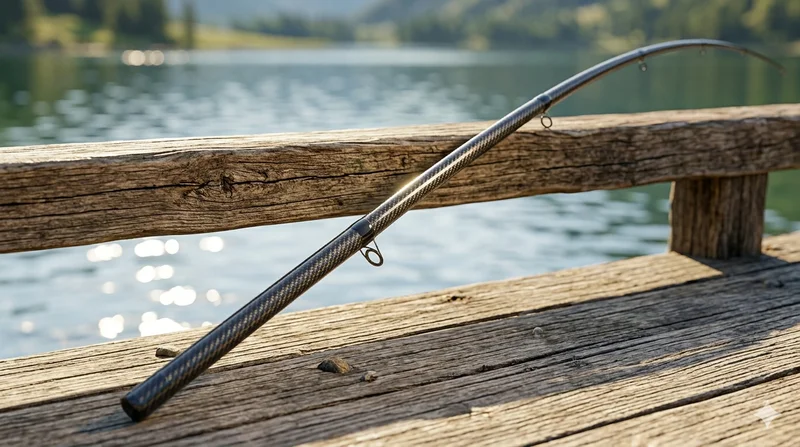
Carbon Fiber Fishing Rod Blank
High-quality carbon fiber fishing rod blank manufactured from multiple grades of Toray carbon fiber cloth. Available in a wide range of lengths, powers, and actions for freshwater and saltwater applications. Suitable for OEM rod building.

Carbon Fiber Plate — 3K Twill T700 3.0mm
Medium-thickness 3.0mm carbon fiber plate offering significantly higher load capacity while maintaining attractive 3K twill finish. Suitable for structural brackets, reinforcement plates, and load-bearing panels.

Carbon Fiber Plate — 3K Twill T700 1.5mm
Thin 1.5mm carbon fiber plate with 3K twill weave surface. Lightweight and stiff, commonly used for covers, panels, drone bodies, and applications requiring a premium aesthetic appearance.

Square Carbon Fiber Tube — 3K Twill T700
Square cross-section carbon fiber tube manufactured with 3K twill weave for torsional strength. Preferred for structural frames, trusses, and support columns where rectangular geometry offers design flexibility.
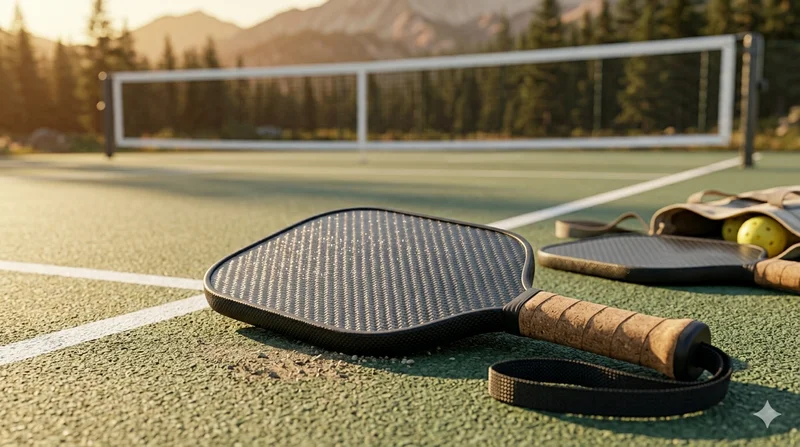
Carbon Fiber Pickleball Paddle
High-performance pickleball paddle with Toray T700 carbon fiber face and polypropylene honeycomb core. Delivers excellent power-to-weight ratio, spin generation, and vibration dampening for competitive play.