

Carbon fiber pricing in 2026 has stabilized after the 2023–2025 supply chain volatility. This guide provides current price benchmarks by grade, volume discount tiers, long-term contract structures, and negotiation strategies for B2B buyers sourcing 5–500+ tonnes annually.
Carbon Fiber Pricing Landscape in 2026
After the turbulent 2023–2025 period — marked by the lingering effects of Chinese export controls on precursor PAN (polyacrylonitrile), energy price spikes in Europe, and rapid capacity expansion in both China and the West — carbon fiber pricing in 2026 has entered a period of relative stability. Standard modulus (SM) 24K tow has settled at $18–24/kg for spot purchases, while intermediate modulus (IM) grades command $45–85/kg and high modulus (HM) grades range from $120–280/kg depending on tow size and surface treatment requirements.
However, list prices are rarely the final transaction price for B2B buyers. Volume commitments, contract duration, payment terms, and technical service packages all influence the effective per-kg cost. This article provides the data and frameworks you need to negotiate effectively.
2026 Price Benchmarks by Fiber Grade and Volume
| Fiber Grade | Tow Size | Tensile Modulus (GPa) | Spot Price ($/kg) — 1–5 tonnes | Annual Contract ($/kg) — 20–50 tonnes | Volume Discount ($/kg) — 100+ tonnes | Key Suppliers |
|---|---|---|---|---|---|---|
| Standard Modulus (T300-class) | 12K / 24K | 230 | $20–26 | $17–22 | $15–18 | Toray, Hexcel, Teijin, Zhongfu Shenying |
| Standard Modulus (T700-class) | 12K / 24K | 240 | $24–30 | $21–25 | $18–21 | Toray, Zoltek, SGL, Jilin Carbon |
| Intermediate Modulus (T800-class) | 12K / 24K | 294 | $50–70 | $42–58 | $36–48 | Toray, Hexcel, Zhongfu, Weihai Guangwei |
| Intermediate Modulus (IM7-class) | 6K / 12K | 276 | $52–72 | $44–60 | $38–50 | Hexcel, Solvay (Cytec) |
| High Modulus (M40J / M46J) | 6K / 12K | 390–436 | $100–140 | $85–115 | $75–95 | Toray, Mitsubishi Chemical |
| Ultra-High Modulus (M55J / K13D) | 6K | 540–935 | $180–280 | $150–240 | $130–200 | Toray, Mitsubishi Chemical (specialty) |
| Recycled Carbon Fiber | Chopped / Milled | N/A (varies) | $8–14 | $6–10 | $5–8 | ELG Carbon Fibre, Vartega, Gen 2 Carbon |
Note: Prices are FOB shipping port (Shanghai, Hamburg, or Savannah depending on origin), January–June 2026 average. Add $1.50–3.00/kg for prepregging, $0.50–1.00/kg for sizing customization, and $0.30–0.80/kg for specialty spool packaging.
Volume Discount Tiers in 2026
Most carbon fiber producers operate a three-tier or four-tier volume discount structure. Understanding the thresholds is critical to timing your order consolidation:
- Tier 1 (1–10 tonnes): Spot pricing — typically list price minus 0–5%. No long-term commitment required. Lead time 4–8 weeks.
- Tier 2 (10–50 tonnes/year): Annual contract — 10–18% discount from spot. Requires 12-month volume commitment with quarterly releases. Includes basic technical support (MSDS, processing guides). Lead time 6–10 weeks with reserved production slot.
- Tier 3 (50–200 tonnes/year): Strategic partnership — 18–28% discount from spot. 24-month minimum contract. Includes dedicated application engineer, custom sizing development, and priority allocation during supply constraints. Lead time 4–6 weeks.
- Tier 4 (200+ tonnes/year): Enterprise partnership — 28–38% discount from spot. 36-month minimum with annual price renegotiation capped at ±5%. Includes joint R&D programs, exclusive regional distribution, and co-investment in capacity expansion. Lead time 2–4 weeks for standard grades.
Important shift in 2026: Chinese producers (Zhongfu Shenying, Weihai Guangwei, Jilin Carbon) now compete aggressively on SM-grade pricing. Their Tier 3 pricing ($14–16/kg for T300-class, $33–40/kg for T800-class) is 15–25% below Western counterparts. However, buyers must factor in: (1) Payment terms — typically 100% L/C at sight vs 60–90 day net terms from Western mills, (2) Minimum order quantities — Chinese mills often require 20–50 tonne MOQ for contract pricing, and (3) Lead time — 8–14 weeks sea freight vs 4–6 weeks domestic for European buyers.
Long-Term Contract Structures
B2B carbon fiber contracts have evolved significantly since 2023. The standard 2026 contract templates include:
| Contract Element | Spot Purchase | Annual Contract (Tier 2) | Strategic Partnership (Tier 3) | Enterprise Partnership (Tier 4) |
|---|---|---|---|---|
| Duration | Single order | 12 months | 24 months | 36 months |
| Price basis | Fixed at order | Fixed + quarterly acrylonitrile index adjustment (±8% cap) | Cost-plus formula: precursor cost + energy + margin | Cost-plus with annual productivity sharing |
| Volume commitment | None | 80–100% of forecast, take-or-pay on 80% | 90–100%, take-or-pay on 85% | 95–100%, take-or-pay on 90% |
| Force majeure clause | Standard | Mutual with 60-day cure | Limited — supplier must allocate 70% of contracted volume even under FM | Minimal — buffer stock maintained by supplier (4 weeks at buyer's cost) |
| Technical support | None | Phone/email, 1 site visit/year | Dedicated application engineer, 4 site visits/year | On-site R&D representative, joint lab access |
| Termination penalty | N/A | 20% of remaining contract value | 25% of remaining contract value | 30% of remaining contract value |
Negotiation Strategies for B2B Buyers
1. Aggregate Across Business Units: If your company sources multiple fiber grades (e.g., T700 for automotive, T800 for aerospace), consolidate all volume under one negotiation. Suppliers value the total account relationship — bundling can unlock a tier higher discount than the sum of individual grade volumes would suggest. Example: 30 tonnes T700 + 20 tonnes T800 = 50 tonnes total, qualifying for Tier 3 pricing on both grades rather than Tier 2.
2. Lock in Floor Pricing with Acrylonitrile Index Caps: Carbon fiber prices correlate strongly with acrylic fiber precursor (PAN) costs, which in turn track acrylonitrile (ACN) prices. In 2026 contracts, negotiate a price adjustment formula: Price = Base + (ACN Index − Base ACN) × α, where α is the pass-through coefficient (typically 0.4–0.6). Cap annual adjustment at 5–8% to protect against raw material spikes. Floor adjustment at −3% to benefit from market softening.
3. Leverage Chinese Supply as a Negotiation Tool: Even if you prefer to buy from Toray or Hexcel for technical reasons, having a qualified Chinese alternative (Zhongfu Shenying is the most common reference) gives you negotiating leverage. Western suppliers have been offering 5–8% additional discounts since 2025 to defend market share from Chinese competition. Document the Chinese competitor's price quote (even if notional) in your RFP process.
4. Negotiate Prepregging as a Bundled Service: The carbon fiber itself is only part of the supply chain cost. Prepregging adds $1.50–3.00/kg. If your volumes justify it (20+ tonnes/year), negotiate for the fiber supplier to manage prepregging through their partner network, ideally at cost-plus 5–8% rather than the standard 15–20% markup. This can save $0.30–0.60/kg on the total prepregged material cost.
2026 Market Trends Affecting Pricing
- Chinese capacity expansion continues: China added 18,000 tonnes of annual SM carbon fiber capacity in 2025 (total now ~85,000 tonnes), driving SM prices down 12–18% year-over-year. Expect further 8–12% declines in 2027 as new lines reach nameplate capacity.
- Energy costs in Europe: European producers (SGL, Teijin's Tenax plants) face electricity costs 2–3× higher than in 2020, adding $2–4/kg to their cost structure. This structural cost disadvantage benefits Asian and US suppliers in price-sensitive segments.
- Recycled carbon fiber gains traction: ELG Carbon Fibre and Vartega now offer certified recycled carbon fiber (rCF) at $8–14/kg for non-structural applications. For compression-molded automotive underbody shields and consumer electronics housings, rCF can replace virgin SM fiber at 40–60% cost reduction.
- Take-or-pay pressure eases: In 2023–2024, suppliers demanded 90–95% take-or-pay clauses. In 2026, competition has relaxed this to 80–85% for standard grades, improving buyer flexibility.
FAQ
Q: What is the minimum annual volume needed to get a direct contract with Toray or Hexcel?
A: Toray's minimum for a direct sales contract is typically 10 tonnes/year for standard modulus grades and 5 tonnes/year for intermediate modulus grades. Below these thresholds, you should source through authorized distributors (e.g., Composite One, Northern Fibers, Cotesa) who add 8–15% margin. For Hexcel, the minimum is similar but they are more flexible on IM7-grade minimums (3 tonnes/year). Note that direct contracts require technical qualification of your process by the supplier's application engineering team — budget $5,000–15,000 for the qualification visit and testing.
Q: How do payment terms differ between Western and Chinese carbon fiber suppliers?
A: Western mills (Toray US/Europe, Hexcel, Teijin) typically offer net 60–90 day payment terms for approved B2B buyers after credit review. Chinese suppliers generally require 100% irrevocable letter of credit (L/C) at sight for first-year contracts, transitioning to L/C 30–60 days after 12 months of on-time payments. Some larger Chinese mills (Zhongfu Shenying, Weihai Guangwei) began offering net 30–60 day terms in 2025 for Tier 3+ buyers. The L/C banking cost adds 0.5–1.5% to transaction cost — factor this into your price comparison.
Q: Is there a price premium for aerospace-qualified fibers vs industrial-grade?
A: Yes, the premium varies by grade and certification history. Aerospace-qualified T700 (with documented lot traceability, enhanced ultrasonic testing, and certified mechanical properties per AMS 3892 or similar) commands a 25–45% premium over industrial-grade T700. The premium is highest for fibers requiring new qualification (50–80%) vs fibers already qualified on platforms like Boeing 787 or Airbus A350 (15–25%). For the premium to be justified, your end-use must specify aerospace-grade certification — many industrial users over-specify and pay unnecessarily.
Q: How should I structure a multi-year contract with price escalation protection?
A: The industry-standard structure in 2026 is a cost-plus formula with three components: (1) Base price reflecting current raw material + energy + labor costs, (2) Quarterly adjustment based on the published acrylonitrile (ACN) contract price index from ICIS or Platts, with a pass-through coefficient of 0.40–0.55 (the balance being the supplier's conversion cost which your volume commitment stabilizes), and (3) Annual cap on total adjustment of ±5–8%. Include a benchmarking clause: if your effective price exceeds the average of three comparable supplier quotes by more than 10%, you have the right to open a competitive re-bid. This structure gives the supplier predictable revenue and gives you cost transparency.
Part of topic
Related Articles
- Recycled Carbon Fiber Market Forecast 2030: Technology Maturity and Commercialization Path
- South Korea Carbon Fiber Market 2026: Hydrogen Economy and Shipbuilding Innovation
- Wind Turbine Blade Leading Edge Protection 2026: Polyurethane, Tape, and Metallic Shield Solutions
- China Carbon Fiber Overcapacity 2026: Price War Impact and Industry Consolidation
- India Carbon Fiber Market 2026: Wind Energy, Aerospace, and Defense Expansion
- PAN Precursor Market 2026: Acrylonitrile Supply and Carbon Fiber Cost Structure
Interested in Our Products?
Contact our team for competitive pricing and technical specifications.
Get a QuoteRelated Products
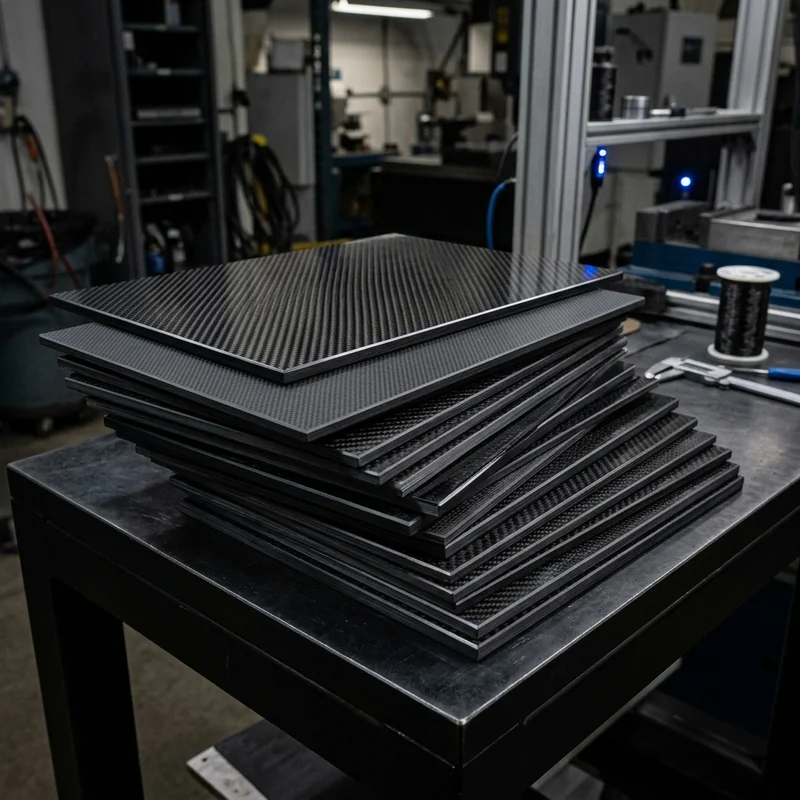
Carbon fiber standard plate-3k stripe
Lightweight, ultra-rigid standard sheets for drone fuselages, robot housings, facades and structural applications.

Carbon Fiber Plate — 3K Twill T700 1.5mm
Thin 1.5mm carbon fiber plate with 3K twill weave surface. Lightweight and stiff, commonly used for covers, panels, drone bodies, and applications requiring a premium aesthetic appearance.

Square Carbon Fiber Tube — 3K Twill T700
Square cross-section carbon fiber tube manufactured with 3K twill weave for torsional strength. Preferred for structural frames, trusses, and support columns where rectangular geometry offers design flexibility.

Carbon Fiber Plate — 3K Twill T700 3.0mm
Medium-thickness 3.0mm carbon fiber plate offering significantly higher load capacity while maintaining attractive 3K twill finish. Suitable for structural brackets, reinforcement plates, and load-bearing panels.
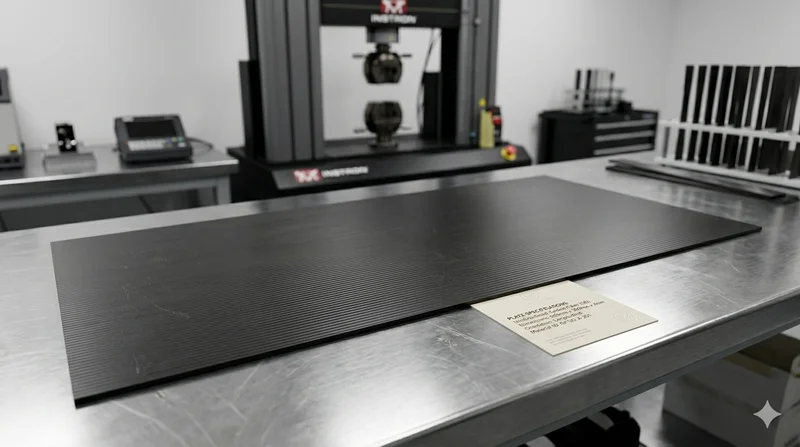
Carbon Fiber Plate — UD Unidirectional T700
Unidirectional carbon fiber plate with all fibers oriented in a single direction for maximum strength along the fiber axis. Essential for structural reinforcements, splints, and applications where load direction is predictable.