
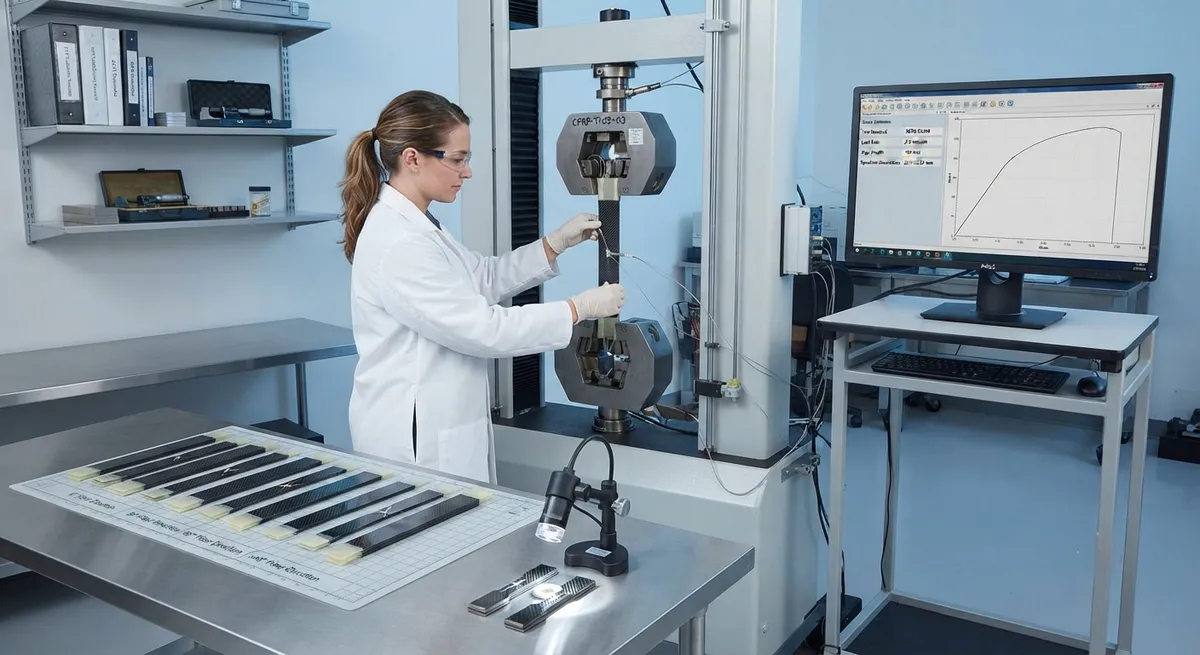
ASTM D30 standards for carbon fiber composites define how the industry measures tensile, compressive, shear, flexural, and delamination properties, and how those measurements are reported in datasheets and qualification reports. When a supplier claims a tensile strength of 2,500 MPa, th
Introduction
ASTM D30 standards for carbon fiber composites define how the industry measures tensile, compressive, shear, flexural, and delamination properties, and how those measurements are reported in datasheets and qualification reports. When a supplier claims a tensile strength of 2,500 MPa, the number is only meaningful if it was generated in accordance with a recognized standard — most commonly ASTM D3039 for tension and D3410 or D6641 for compression.
This guide is a practical reference for engineers and buyers: which D30 standard to use for which property, how specimen preparation and conditioning affect results, and what a complete test report must contain. It focuses on the standards most frequently cited for unidirectional and woven carbon fiber laminates.
The Core D30 Test Standards
The table below summarizes the most commonly cited D30 standards for carbon fiber laminate testing:
| Standard | Property Measured | Typical Specimen |
|---|---|---|
| ASTM D3039/D3039M | Tensile strength, modulus, Poisson's ratio | Flat coupon, end-tabbed, 0° or 90° |
| ASTM D3410/D3410M | Compressive strength (Celanese/IITRI fixtures) | End-loaded or shear-loaded coupon |
| ASTM D6641/D6641M | Combined loading compression (CLC) | Short untabbed coupon |
| ASTM D3518/D3518M | In-plane shear response (±45° tension) | ±45° balanced laminate coupon |
| ASTM D7078/D7078M | V-notch shear strength and modulus | V-notched coupon |
| ASTM D5528/D5528M | Mode I interlaminar fracture toughness | Double cantilever beam |
| ASTM D2344/D2344M | Short-beam strength (interlaminar shear) | Short beam, 3-point bending |
| ASTM D7264/D7264M | Flexural properties (3- and 4-point) | Flat bar, span-to-thickness 16:1 or 32:1 |
| ASTM D3171 | Constituent content (fiber volume fraction) | Small digested coupon, burn-off or acid |
Each standard specifies the geometry, loading rate, data reduction, and report format. Using the wrong standard or a non-conforming specimen invalidates the result even if the measured value looks plausible.
Specimen Preparation: Where Most Errors Begin
Test results are only as good as the specimens. The most common preparation errors in composite testing laboratories include:
- Incorrect cutting direction: For 0° tensile coupons, the fiber direction must be aligned to the coupon axis within the tolerance stated in the standard — usually ±1° — or strength is underestimated by waviness and off-axis loading.
- Damaged edges: Cutting with dull diamond blades or excessive feed rates produces edge delamination and fiber pullout that initiates premature failure.
- Poor end tabbing: Tabs must be bonded with controlled adhesive thickness and tapered ends; a tab failure mode (AAT, LAB) indicates a preparation problem, not a material property.
- Missing conditioning: Laminate moisture content affects matrix-dominated properties; conditioning per ASTM D5229 to equilibrium moisture is required before environmental testing.
- Incorrect dimensions: Thickness and width must be measured at three locations and averaged; a 1% measurement error propagates directly into reported stress.
Test Execution and Data Reduction
During the test itself, the loading rate, extensometry, and failure mode classification must follow the standard. Key execution points:
- Loading rates are specified per standard (for example, D3039 typically uses 2 mm/min in the gage section); deviating changes measured modulus.
- Strain must be measured in the gage section with an extensometer or strain gauge, never from crosshead displacement for modulus.
- Failure modes must be recorded using the standard's codes (for example, XGM, DGM, LGM for tension) — the mode code tells the reader whether the result is valid.
- Discarded specimens must be reported, not silently removed; the standard defines statistical outlier criteria that justify removal.
Data Reporting: What a Complete Report Contains
A datasheet or qualification report is only as useful as its metadata. A complete report should contain:
| Report Element | Requirement |
|---|---|
| Test standard and revision | Exact designation and year, e.g. D3039/D3039M-17 |
| Material identity | Fiber type, resin system, batch/lot numbers, layup |
| Specimen description | Dimensions, tabbing, conditioning history |
| Sample size and statistics | Number of specimens, mean, coefficient of variation |
| Individual results | Each specimen value, not only the average |
| Failure modes | Mode codes per the standard for every specimen |
| Test conditions | Temperature, humidity, loading rate, environmental history |
| Basis values (when applicable) | A-basis or B-basis allowables per CMH-17 methodology |
For qualification data, A-basis and B-basis values are the industry standard: an A-basis value means 99% of the population is expected to exceed it with 95% confidence, while a B-basis value uses the 90% population threshold. These are computed from pooled data across batches using the methods in CMH-17.
Common Mistakes That Invalidate Results
- Reporting mean values without failure modes or specimen-level data.
- Using D638 (plastics tension) instead of D3039 for carbon fiber laminates — D638 applies to unreinforced and lightly reinforced plastics.
- Testing environmental conditions without conditioning to moisture equilibrium.
- Omitting the coefficient of variation, which hides batch scatter.
- Comparing datasheets that were generated with different standards or revisions.
Frequently Asked Questions
What is the difference between ASTM D3039 and ASTM D638?
D3039 is the D30 committee standard for tensile testing of polymer matrix composite materials reinforced by high-modulus fibers, and is the correct choice for carbon fiber laminates. D638, from the D20 plastics committee, covers unreinforced and lightly reinforced plastics. Using D638 for a carbon fiber laminate is technically possible but gives results that do not match the design data conventions used in composite structures, and most buyers and certification authorities will not accept it. Always confirm the exact standard and revision cited on a datasheet before comparing values.
How many specimens are required for a valid test?
The standards define minimum sample sizes: D3039, for example, typically requires at least five valid specimens per test condition, with five additional specimens if tab failures occur or more statistical confidence is needed. For basis values (A-basis, B-basis) used in structural design, the CMH-17 methodology requires data from multiple batches — commonly five or more batches with multiple specimens each — so a single-lot datasheet is not sufficient for design allowables. Acceptance testing against an established material system can use smaller batches agreed with the customer.
How should I compare datasheets from different suppliers?
First verify that the same standards and revisions were used, then compare the same properties at the same conditions. Check that fiber volume fraction is reported, because strength and modulus scale with fiber content — two panels of nominally the same laminate can differ by 10-20% purely from fiber volume fraction differences. Then examine the coefficient of variation and the sample size: low scatter over many specimens is more meaningful than a single impressive average. Finally, look for environmental data (hot/wet and cold conditions) if the material will serve in aerospace applications, since room-temperature dry data is rarely the limiting case.
Conclusion
ASTM D30 standards give buyers and engineers a common language for carbon fiber composite properties, but only when the standards are applied rigorously: correct specimen preparation, controlled conditioning, disciplined data reduction, and complete reporting. A tensile number without a standard citation, failure modes, and specimen-level data is a claim, not a property. When evaluating suppliers, ask for reports that contain the full metadata — standard and revision, fiber volume fraction, statistics, and basis values — and compare like for like.
Whether you are generating acceptance data or selecting materials for a new design, browse our tested carbon fiber product range and contact our engineering team for testing and data support.
Related Articles
- Carbon Fibre Sheet Supplier UK: Sourcing Options and Specification Checklist
- Carbon Fiber Sheets Near Me Suppliers: Local Stock vs Factory Direct
- Filament Wound Epoxy Tubes: Industry Standards and Compliance Requirements
- Carbon Fiber Dealers Near Me: What a Good Dealer Actually Adds
- Carbon Fiber Supplies Near Me: Local Sourcing Without Compromising Spec
- Carbon Fiber for Sale: Online Platforms and Direct Sales Channel Comparison
Interested in Our Products?
Contact our team for competitive pricing and technical specifications.
Get a QuoteRelated Products
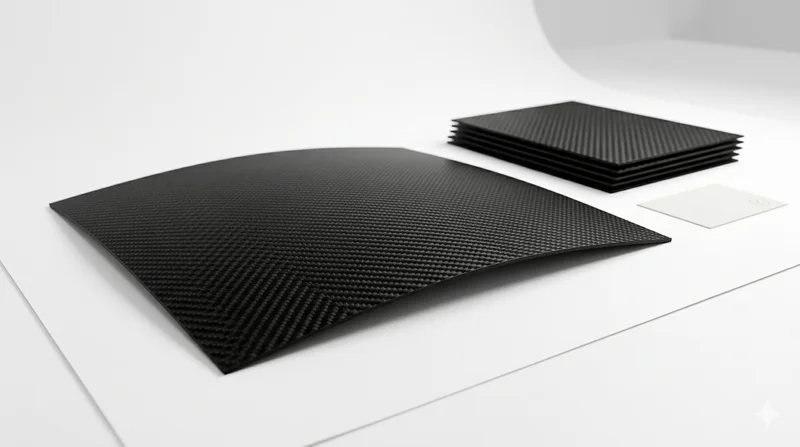
Carbon Fiber Plate — 3K Twill T700 1.5mm
Thin 1.5mm carbon fiber plate with 3K twill weave surface. Lightweight and stiff, commonly used for covers, panels, drone bodies, and applications requiring a premium aesthetic appearance.
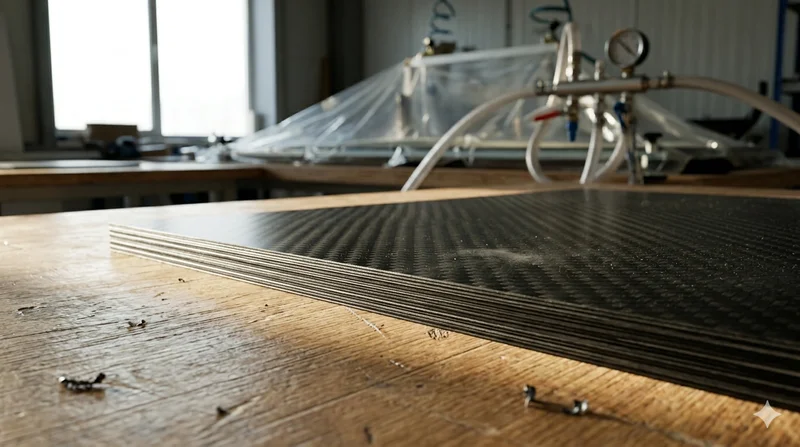
Carbon Fiber Plate — 3K Twill T700 3.0mm
Medium-thickness 3.0mm carbon fiber plate offering significantly higher load capacity while maintaining attractive 3K twill finish. Suitable for structural brackets, reinforcement plates, and load-bearing panels.
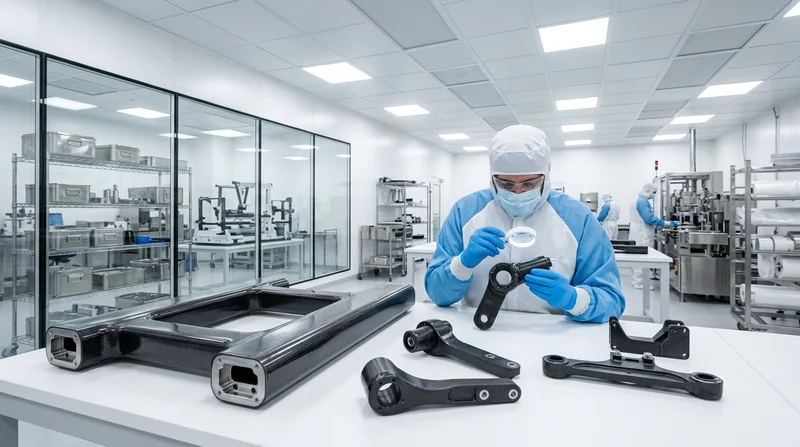
Custom Carbon Fiber Medical Device Components
Medical-grade carbon fiber components manufactured for imaging equipment, surgical instruments, and patient support systems. Carbon fiber's radiolucency (X-ray transparency) and high strength-to-weight ratio make it ideal for CT scanner beds, wheelchair frames, surgical robot arms, and MRI-compatible accessories. Biocompatible resin systems available.
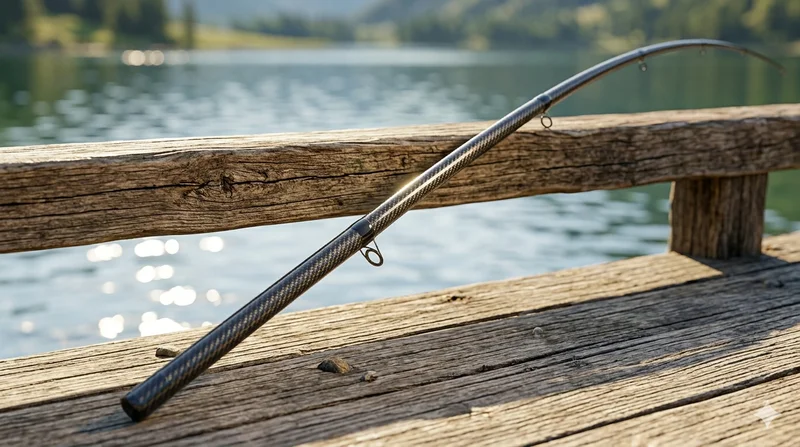
Carbon Fiber Fishing Rod Blank
High-quality carbon fiber fishing rod blank manufactured from multiple grades of Toray carbon fiber cloth. Available in a wide range of lengths, powers, and actions for freshwater and saltwater applications. Suitable for OEM rod building.
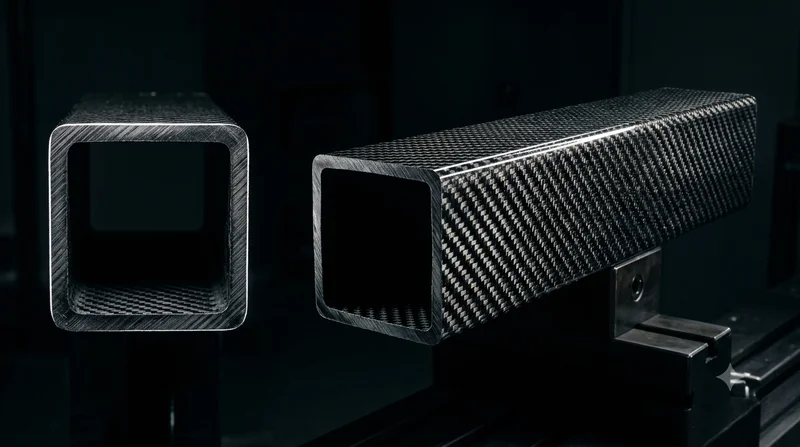
Square Carbon Fiber Tube — 3K Twill T700
Square cross-section carbon fiber tube manufactured with 3K twill weave for torsional strength. Preferred for structural frames, trusses, and support columns where rectangular geometry offers design flexibility.