
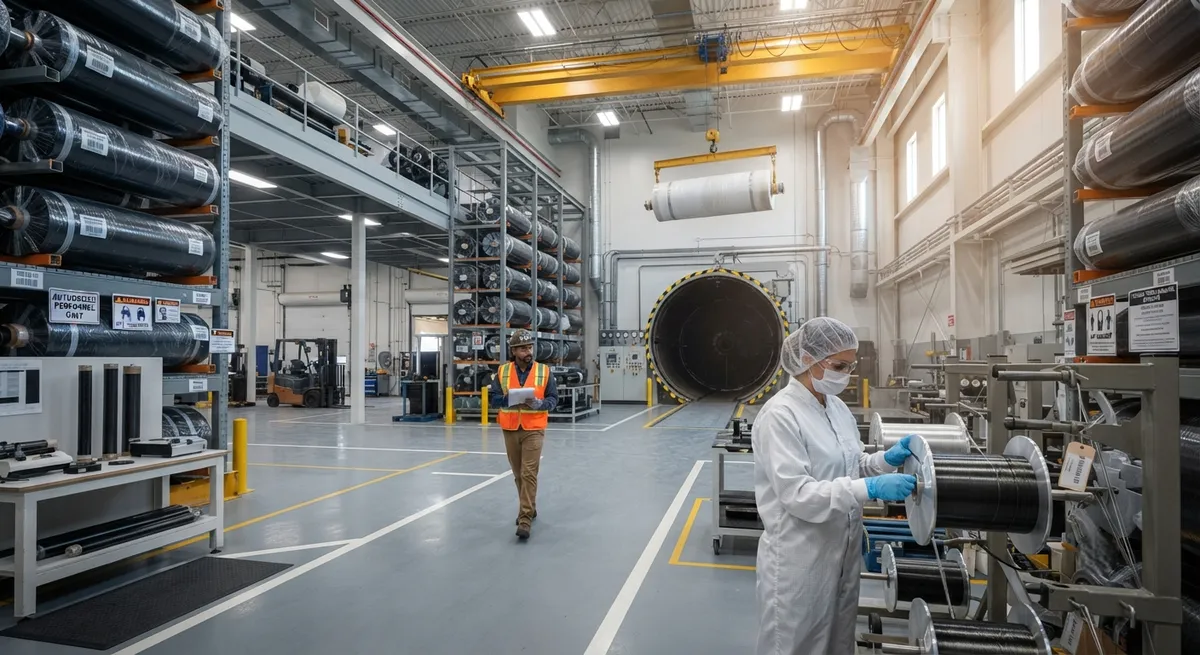
The United States carbon fiber market in 2026 is the largest and most strategically contested in the world. North America consumed roughly 28,000 tonnes of carbon fiber in 2025, and the United States accounts for the overwhelming majority of that volume, driven by the highest-value appl
Introduction
The United States carbon fiber market in 2026 is the largest and most strategically contested in the world. North America consumed roughly 28,000 tonnes of carbon fiber in 2025, and the United States accounts for the overwhelming majority of that volume, driven by the highest-value applications in aerospace, defense, and energy. For B2B buyers, 2026 is a year of tight supply, lengthening lead times, and a once-in-a-generation policy shift toward domestic production.
Three forces define the market. First, commercial aerospace is finally ramping production rates after a half-decade of pandemic disruption. Second, defense procurement is surging as next-generation fighters, bombers, and unmanned systems move from development into production. Third, the Inflation Reduction Act and the broader onshoring agenda are reshaping where carbon fiber is produced. This article examines each force, maps the supply landscape, and translates the market dynamics into practical sourcing guidance.
The Aerospace Rate Ramp: Demand Returns With a Vengeance
Commercial aerospace is the anchor demand driver for the US carbon fiber market. The Boeing 787 Dreamliner — the most carbon-intensive airframe in production at roughly 50% composites by weight — is at the center of the recovery. Boeing has been progressively raising 787 production toward its 10-per-month target, while the 777X, with its carbon fiber wing and fuselage, is entering service and pulling substantial towpreg and prepreg demand. Airbus, supplying its own North American ecosystem, continues to accelerate the A350 program, whose wings and fuselage sections are carbon fiber-intensive.
The scale is significant. A single 787 uses roughly 23 tonnes of carbon fiber; the 777X uses approximately 30 tonnes per aircraft. At a combined North American widebody build rate of around 18-20 aircraft per month across Boeing and Airbus final assembly, the widebody programs alone consume 4,500-6,500 tonnes of aerospace-grade carbon fiber annually. Narrowbody growth adds another layer: the 737 MAX recovery and its aftermarket spares demand continue to absorb industrial-grade fiber at lower margins but meaningful volumes.
- 787 program: Production ramping toward 10/month; towpreg and prepreg demand recovering to pre-2020 levels.
- 777X program: Entry into service driving the largest single-airframe carbon fiber demand in the market.
- A350 program: Airbus's US supply chain expanding to support rate increases toward 12/month.
- Aftermarket: Structural repair and spares demand growing as the global fleet of composite airframes ages.
Defense Procurement: The New Demand Surge
Defense is the second pillar of US carbon fiber demand, and 2026 marks an inflection. The B-21 Raider stealth bomber entered low-rate initial production, the F-35 fleet continues to expand toward 100 aircraft per year, and the Next Generation Air Dominance (NGAD) program is moving toward engineering and manufacturing development. Each of these platforms is carbon fiber-intensive: the F-35 uses composites for approximately 35% of its structural weight, while the B-21's stealth airframe is an order of magnitude more composite-intensive per unit.
Beyond fixed-wing aircraft, the Pentagon's demand for unmanned aerial systems, hypersonic vehicles, and missile structures is expanding the industrial-grade segment. Hypersonic glide bodies and scramjet structures require high-temperature-capable carbon fiber composites, while drone programs consume large volumes of mid-grade fiber. Combined, the Department of Defense's carbon fiber demand is projected to grow from roughly 3,500 tonnes in 2025 to over 5,000 tonnes by 2028, with defense primes prioritizing domestic supply chains under the Pentagon's strategic materials program.
Onshoring Policy: Hexcel Decatur and the Domestic Production Push
The policy environment is the third defining force. The 2024 decision by Hexcel to restart its Decatur, Alabama carbon fiber plant — with production expected to begin in 2027 and aerospace qualification targeted for 2028 — was the single most significant onshoring announcement in the US market. The facility, once the world's largest single carbon fiber line, is being brought back online with a combination of Pentagon investment and commercial demand, and its restart will add an estimated 2,000 tonnes of annual aerospace-grade capacity.
| Segment | 2026 Demand (tonnes) | 2030 Projection (tonnes) | CAGR | Key Drivers |
|---|---|---|---|---|
| Aerospace (widebody + narrowbody) | 12,500-14,000 | 16,000-18,000 | 6-8% | 787/777X/A350 rate ramp |
| Defense & space | 3,800-4,200 | 5,200-5,800 | 8-10% | B-21, NGAD, hypersonics, UAS |
| Wind energy | 3,000-3,500 | 4,500-5,500 | 9-11% | Offshore wind blade scale-up |
| Industrial & automotive | 6,500-7,500 | 8,500-10,000 | 6-7% | Pressure vessels, automotive, sporting goods |
The onshoring agenda extends beyond Hexcel. Toray Composites (America) operates its Alabama facility supplying Boeing programs, Syensqo (formerly Solvay) maintains aerospace materials production in the Northwest, and the Department of Defense's Industrial Base Analysis and Sustainment program is co-investing in precursor (PAN) production — the upstream bottleneck that has historically constrained US capacity. The strategic goal is to reduce dependence on Asian fiber for defense and aerospace applications, a priority reinforced by export control tensions discussed in our companion market analyses.
Supply Chain Landscape and Sourcing Implications
The US supply chain remains concentrated among four major producers — Toray, Hexcel, Syensqo, and Mitsubishi Chemical — with smaller specialty producers serving niche segments. Domestic precursor capacity remains the structural constraint: while fiber conversion capacity is being expanded, PAN precursor supply is still heavily reliant on imports. This creates a two-speed market:
- Aerospace-grade fiber: Qualification cycles of 3-5 years lock buyers into incumbent suppliers; new entrants face high certification barriers.
- Industrial-grade fiber: More price-competitive and supply-diversified, with meaningful capacity available from international producers at 20-35% lower cost.
For B2B buyers in 2026, the practical implications are clear. Aerospace and defense buyers must secure long-term agreements and co-invest in qualification to protect supply. Industrial buyers — in wind, pressure vessels, and composites manufacturing — have more flexibility but face rising prices as aerospace demand pulls fiber away. The strategic recommendation is to lock in volume agreements early, diversify across suppliers, and evaluate offshore industrial-grade options where quality requirements permit.
Frequently Asked Questions
How will the Hexcel Decatur restart affect carbon fiber pricing in the US?
The Decatur restart adds roughly 2,000 tonnes of annual aerospace-grade capacity once qualified, expected around 2028. In the near term, the effect on pricing is limited because the fiber must undergo aerospace qualification before it can serve that market. However, the announcement signals that Pentagon-backed domestic capacity expansion is real, which has a moderating effect on long-term price expectations. For industrial-grade buyers, the bigger near-term driver is commercial aerospace demand pulling supply away from lower-margin segments — expect industrial fiber prices to remain firm through 2027 as the rate ramps absorb capacity.
Which US carbon fiber applications will grow fastest through 2030?
Defense and space will grow fastest on a percentage basis at 8-10% annually, driven by B-21 production, NGAD development, hypersonic systems, and the expanding unmanned fleet. Wind energy is close behind at 9-11% as US offshore wind projects — including Atlantic Coast developments — progress through 2027-2028 construction windows. Aerospace remains the largest absolute demand base, growing 6-8% on widebody rate ramps. Buyers positioning for the next decade should watch defense and offshore wind as the highest-growth procurement channels.
Is domestic US carbon fiber production sufficient for defense needs?
Not yet. The Pentagon's strategic materials program has identified carbon fiber and its PAN precursor as critical vulnerabilities. Current domestic conversion capacity covers a meaningful share of defense demand, but precursor supply remains import-dependent, and the B-21, NGAD, and hypersonic programs collectively outstrip secure domestic supply. This is precisely why the Defense Department is co-investing in the Decatur restart and precursor capacity. Until those facilities qualify, defense primes rely on a mix of Toray, Hexcel, and Syensqo supply, with strategic stockpiling of aerospace-grade fiber.
Conclusion
The United States carbon fiber market in 2026 rewards buyers who understand the structural forces at work. Aerospace rate ramps are absorbing capacity and driving qualification-backed demand. Defense procurement is creating a fast-growing, security-driven segment. And onshoring policy — led by the Hexcel Decatur restart — is reshaping the supply landscape with multi-year timelines. For B2B buyers, the winning strategy is early volume commitment, supplier diversification, and a clear-eyed view of where domestic versus international sourcing fits your quality and cost requirements.
Whether you are securing aerospace-grade material or sourcing industrial-grade fiber for wind, pressure vessels, or general composites manufacturing, the fundamentals of supply security and quality assurance matter more than ever. Explore our carbon fiber product range spanning tow, fabric, and pre-impregnated materials, or contact our sourcing team for guidance on qualifying suppliers and structuring supply agreements in the 2026 market.
Part of topic
Related Articles
- Carbon Fibre Sheet Supplier UK: Sourcing Options and Specification Checklist
- Carbon Fiber Sheets Near Me Suppliers: Local Stock vs Factory Direct
- Filament Wound Epoxy Tubes: Industry Standards and Compliance Requirements
- Carbon Fiber Dealers Near Me: What a Good Dealer Actually Adds
- Carbon Fiber Supplies Near Me: Local Sourcing Without Compromising Spec
- Carbon Fiber for Sale: Online Platforms and Direct Sales Channel Comparison
Interested in Our Products?
Contact our team for competitive pricing and technical specifications.
Get a QuoteRelated Products
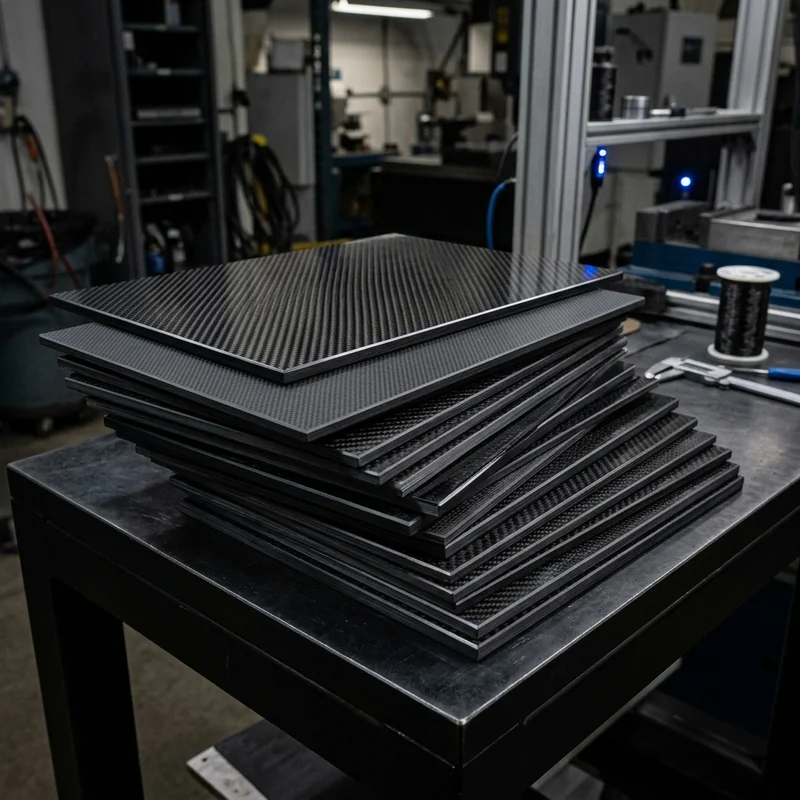
Carbon fiber standard plate-3k stripe
Lightweight, ultra-rigid standard sheets for drone fuselages, robot housings, facades and structural applications.

Carbon Fiber Plate — 3K Twill T700 3.0mm
Medium-thickness 3.0mm carbon fiber plate offering significantly higher load capacity while maintaining attractive 3K twill finish. Suitable for structural brackets, reinforcement plates, and load-bearing panels.

Carbon Fiber Plate — 3K Twill T700 1.5mm
Thin 1.5mm carbon fiber plate with 3K twill weave surface. Lightweight and stiff, commonly used for covers, panels, drone bodies, and applications requiring a premium aesthetic appearance.

Custom Carbon Fiber Medical Device Components
Medical-grade carbon fiber components manufactured for imaging equipment, surgical instruments, and patient support systems. Carbon fiber's radiolucency (X-ray transparency) and high strength-to-weight ratio make it ideal for CT scanner beds, wheelchair frames, surgical robot arms, and MRI-compatible accessories. Biocompatible resin systems available.

Square Carbon Fiber Tube — 3K Twill T700
Square cross-section carbon fiber tube manufactured with 3K twill weave for torsional strength. Preferred for structural frames, trusses, and support columns where rectangular geometry offers design flexibility.