

Carbon fiber is one of the most strategically traded materials in advanced manufacturing, and its trade has been pulled directly into the US-China tariff and trade-remedy cycle. In 2026 the picture has tightened further: reported anti-dumping and countervailing duty cases on Chinese adv
Introduction
Carbon fiber is one of the most strategically traded materials in advanced manufacturing, and its trade has been pulled directly into the US-China tariff and trade-remedy cycle. In 2026 the picture has tightened further: reported anti-dumping and countervailing duty cases on Chinese advanced materials have expanded in scope, tariff lines have shifted, and Chinese carbon fiber exporters — blocked or priced out of parts of the US market — have increasingly redirected volumes to markets such as Mexico, where finished goods can still enter the US through other trade arrangements. For American importers, the result is a more expensive, more uncertain procurement environment in which the cheapest quoted material is no longer necessarily the cheapest delivered material.
This article reviews the reported 2026 tariff and trade-remedy picture for carbon fiber, the cost mechanics that affect importers, and the sourcing and hedging strategies that buyers are actually using to manage the new reality.
What the Reported 2026 Trade Actions Mean
Reported trade actions in 2026 cover both tariff escalation and trade-remedy cases. On the tariff side, US duties on certain Chinese advanced materials have continued to rise, with reported rates varying by product classification and end use. On the trade-remedy side, anti-dumping and countervailing duty petitions on Chinese carbon fiber and related advanced materials have proceeded through the investigative process, with reported preliminary margins in the range typically associated with similar cases. The precise outcome for a given shipment depends on the harmonized tariff classification, the origin of the raw material, and the exporter involved — which is why customs classification has become a strategic function rather than an administrative one.
The table below summarizes the reported 2026 cost picture for US importers by sourcing channel:
| Sourcing Channel | Reported Tariff / Duty Position | Typical Cost Impact vs. 2024 |
|---|---|---|
| Direct Chinese imports (subject lines) | Escalated tariff + trade-remedy duties | Significant increase, varies by HTS line |
| Chinese material via third countries | Origin rules and circumvention scrutiny | Higher freight and compliance cost |
| US domestic producers | No tariff, premium pricing | Moderate increase, long lead times |
| Other origins (Japan, Korea, Europe, Taiwan) | Lower or no trade-remedy exposure | Stable to moderate increase |
The direction is consistent across the reported data: material of Chinese origin that once competed on price now carries a substantial cost and compliance burden in the US market, while alternative origins have become relatively more attractive even where their base price is higher.
How Chinese Carbon Fiber Exports Are Being Redirected
One of the clearest reported developments of 2026 is the redirection of Chinese carbon fiber export volumes. With parts of the US market closed or heavily taxed, Chinese exporters have increased shipments to markets with lower trade barriers — Mexico being the most frequently cited destination. The logic is straightforward: Mexico's proximity to the US, its existing trade arrangements for manufactured goods, and its growing composites and automotive manufacturing base make it a natural point of entry for Chinese material, whether for local fabrication or for incorporation into finished products that later move north.
For US importers this creates both a threat and an opportunity. The threat is customs exposure: material that transits through a third country but remains of Chinese origin can attract trade-remedy duties, retroactive assessments, and even circumvention investigations. The opportunity is that the same pressure is pushing alternative production capacity and material availability into the market. Buyers who document origin carefully, work with customs brokers who specialize in advanced materials, and structure their supply chains to avoid circumvention findings are better positioned than those who chase the lowest invoice price.
The Cost Impact on Importers
The reported cost impact on US importers is not a single number but a set of compounding effects:
- Direct duty increases: Higher tariff and trade-remedy rates raise the landed cost of Chinese-origin material on subject lines.
- Compliance and legal costs: Origin documentation, customs broker fees, and legal review for trade-remedy exposure add cost per shipment.
- Freight and logistics disruption: Rerouted supply chains via Mexico and other transshipment points extend lead times and add handling costs.
- Inventory and hedging pressure: Uncertainty about future duty rates pushes importers to hold larger safety stock or enter longer-term contracts.
- Pass-through to end customers: Manufacturers are increasingly adding tariff-related price adjustment clauses to contracts to share the risk.
For a typical importer buying Chinese-origin carbon fiber fabric or tow, reported total landed-cost increases in 2026 range in the tens of percent compared with pre-escalation levels, though the exact figure depends heavily on product classification and the exporter's own pricing strategy.
Alternative Sourcing and Hedging Strategies
Importers are responding to the 2026 landscape with a portfolio of strategies rather than a single solution:
- Origin diversification: Qualifying suppliers in Japan, South Korea, Taiwan, Europe, and other origins to reduce concentration on any single country.
- US domestic supply: Building relationships with domestic producers for critical grades, accepting higher base prices in exchange for certainty and shorter lead times.
- Multi-region contracting: Structuring contracts across two or three origins with flexible volume split, so shifts in duty rates can be absorbed by rebalancing.
- Customs engineering: Reviewing HTS classifications, end-use certifications, and origin rules with specialists to legally minimize duty exposure.
- Contractual hedging: Negotiating tariff-adjustment clauses, rolling price reviews, and currency terms that share the risk between buyer and supplier.
The common thread is optionality. Importers who keep multiple qualified sources, documented supply chains, and contract structures that can flex with trade policy are materially less exposed than those tied to a single low-cost origin.
Frequently Asked Questions
Are all Chinese carbon fiber products subject to the 2026 duties?
No. Duty treatment depends on the specific harmonized tariff classification, the product form (fiber, fabric, tow, prepreg, or finished part), and the exporter involved. Some lines carry escalated tariffs plus trade-remedy duties, while others are not on the subject list. Every shipment requires its own classification review; a generic answer will not hold across product types.
Does routing Chinese carbon fiber through Mexico avoid the duties?
Not automatically. Trade-remedy and origin rules look at the country of origin of the goods, not merely the shipping route. Chinese-origin material that is merely transshipped through Mexico can still face duties, retroactive assessments, or circumvention scrutiny when it enters the US. Only genuine substantial transformation or qualifying local production changes origin, and that requires documented processing, not simple logistics.
What is the cheapest safe way to buy carbon fiber in 2026?
There is no single cheapest safe route. The reported evidence points to diversified multi-origin sourcing with documented origin and clean customs classification as the most cost-effective approach over time. Buyers who chase the lowest invoice price without managing duty exposure, circumvention risk, and compliance costs typically pay more in the end through assessments, delays, and legal fees.
How long will the trade-remedy measures last?
Trade-remedy orders are typically reviewed periodically and can remain in force for years, with margins and scope subject to review. Tariff levels can also shift with the broader trade relationship. The practical answer is that importers should treat elevated costs and compliance requirements as the baseline for the medium term, and structure contracts and supply chains to remain flexible if the picture changes.
How should an importer structure contracts to manage tariff risk?
Importers are increasingly using tariff-adjustment clauses that shift duty increases between buyer and supplier, rolling price review periods tied to published duty rates, minimum and maximum volume commitments across multiple origins, and currency terms that reduce exposure to exchange-rate swings. The key is building flexibility into the contract rather than trying to predict the final duty rate.
Conclusion
The 2026 US-China trade environment has made carbon fiber procurement more expensive, more complex, and more strategic. Reported tariff escalation and trade-remedy cases have raised the landed cost of Chinese-origin material, while Chinese export volumes are being redirected to markets such as Mexico, creating new customs exposure for importers who do not manage origin carefully. The reliable response is not to find the single cheapest source but to build a diversified, documented, and contractually flexible supply chain — with alternative origins, clean classification, and hedging mechanisms in place.
As you review your own sourcing, consistent, traceable material with clean documentation matters as much as price. Explore our carbon fiber fabrics and prepreg materials with consistent batch documentation, or contact our engineering team to discuss specification and sourcing options for your supply chain.
Part of topic
Related Articles
- Carbon Fibre Sheet Supplier UK: Sourcing Options and Specification Checklist
- Carbon Fiber Sheets Near Me Suppliers: Local Stock vs Factory Direct
- Filament Wound Epoxy Tubes: Industry Standards and Compliance Requirements
- Carbon Fiber Dealers Near Me: What a Good Dealer Actually Adds
- Carbon Fiber Supplies Near Me: Local Sourcing Without Compromising Spec
- Carbon Fiber for Sale: Online Platforms and Direct Sales Channel Comparison
Interested in Our Products?
Contact our team for competitive pricing and technical specifications.
Get a QuoteRelated Products
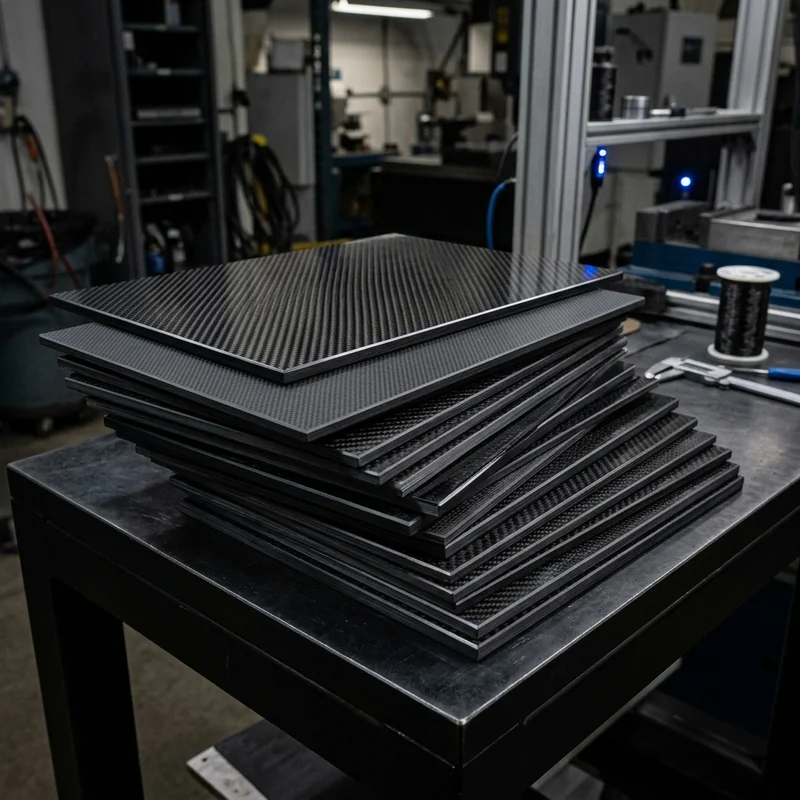
Carbon fiber standard plate-3k stripe
Lightweight, ultra-rigid standard sheets for drone fuselages, robot housings, facades and structural applications.

Carbon Fiber Plate — 3K Twill T700 3.0mm
Medium-thickness 3.0mm carbon fiber plate offering significantly higher load capacity while maintaining attractive 3K twill finish. Suitable for structural brackets, reinforcement plates, and load-bearing panels.

Carbon Fiber Plate — 3K Twill T700 1.5mm
Thin 1.5mm carbon fiber plate with 3K twill weave surface. Lightweight and stiff, commonly used for covers, panels, drone bodies, and applications requiring a premium aesthetic appearance.

Custom Carbon Fiber Medical Device Components
Medical-grade carbon fiber components manufactured for imaging equipment, surgical instruments, and patient support systems. Carbon fiber's radiolucency (X-ray transparency) and high strength-to-weight ratio make it ideal for CT scanner beds, wheelchair frames, surgical robot arms, and MRI-compatible accessories. Biocompatible resin systems available.

Square Carbon Fiber Tube — 3K Twill T700
Square cross-section carbon fiber tube manufactured with 3K twill weave for torsional strength. Preferred for structural frames, trusses, and support columns where rectangular geometry offers design flexibility.