
The United Arab Emirates rarely appears in the same sentence as carbon fiber — but the 2026 market tells a different story. The UAE's National Hydrogen Strategy targets a 15% share of the global hydrogen market by 2031, its aviation sector has grown into a global maintenance, repair, an
Introduction
The United Arab Emirates rarely appears in the same sentence as carbon fiber — but the 2026 market tells a different story. The UAE's National Hydrogen Strategy targets a 15% share of the global hydrogen market by 2031, its aviation sector has grown into a global maintenance, repair, and overhaul (MRO) hub, and its construction pipeline remains one of the largest in the world. Each of these sectors consumes carbon fiber in a different form: high-pressure hydrogen storage tanks, lightweight aircraft components and repair materials, and structural reinforcement for buildings and infrastructure. Together they make the UAE one of the most interesting emerging carbon fiber markets in the Middle East.
For suppliers and procurement teams, the UAE is not a single market but three demand streams with different volumes, specifications, and qualification paths. This article breaks down each stream with project-level data, compares them against the wider GCC picture, and explains where the real opportunity sits in 2026.
Hydrogen Strategy: The Fastest-Growing Demand Stream
The UAE's National Hydrogen Strategy 2050 sets clear near-term targets: production of 1.4 million tonnes of hydrogen per year by 2031, rising to 15 million tonnes by 2050, with a 25% share of global low-carbon hydrogen exports. The emirates are backing this with concrete assets — ADNOC's decarbonization program, the Al Dhafra solar complex expansion, and the Khalifa Economic Zones hydrogen hub — and with hydrogen fueling and offtake agreements for the transport and industrial sectors.
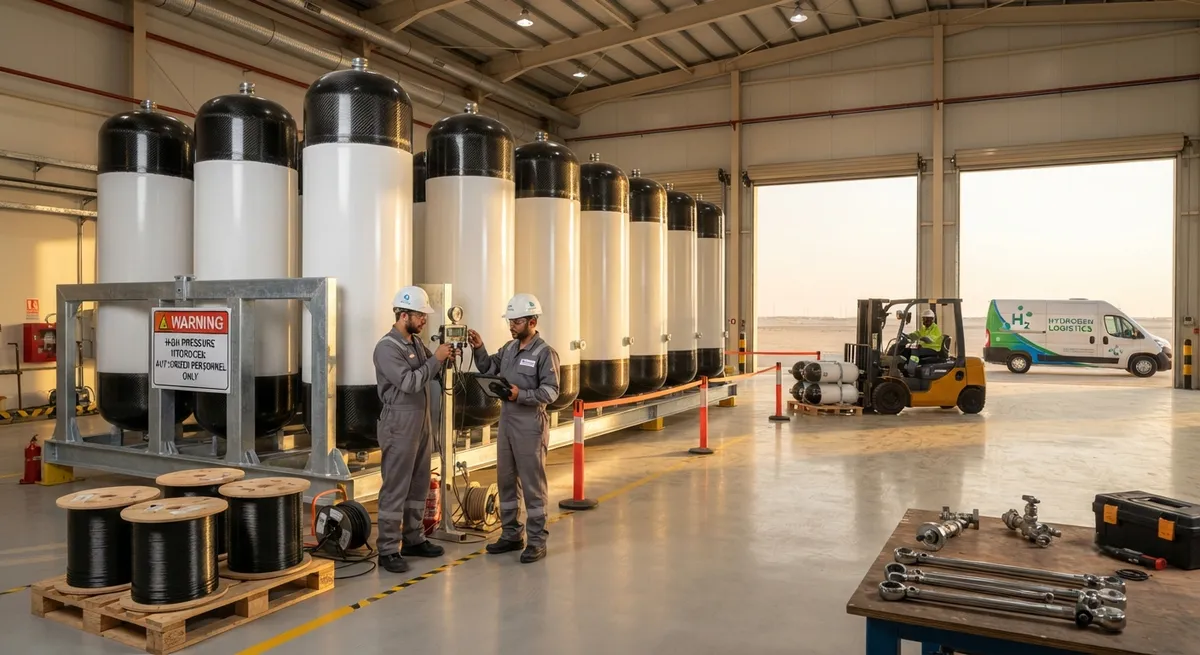
For carbon fiber, the translation is direct: every kilogram of hydrogen stored under pressure needs roughly 0.5-1 kg of carbon fiber in a Type IV composite pressure vessel. A 40-foot hydrogen transport trailer carries 20-24 Type IV tanks of around 880-1,100 L each, consuming roughly 500-800 kg of carbon fiber per trailer. With the UAE targeting 200-300 hydrogen refueling stations and a fleet of hydrogen buses and trucks under pilot by the early 2030s, the storage and transport equipment alone creates a compounding demand base for T700-class tow.
| Market Stream | 2026 Demand Drivers | Key Carbon Fiber Form | Primary Tow Grade |
|---|---|---|---|
| Hydrogen storage & transport | 1.4 Mt/yr H2 by 2031, 200-300 refueling stations planned | Type IV pressure vessels, liner overwrap | T700 12K/24K, high tensile |
| Aviation MRO & manufacturing | Global MRO hub, widebody fleet growth | Structural repair patches, interior panels, brackets | T300-T800 prepreg grades |
| Sustainable construction | Record building pipeline, green building codes | CFRP strengthening, rebar alternative, grid shells | T300-T700, pultruded profiles |
| Oil & gas / industrial | Well intervention, corrosion-resistant piping | CFRP tubulars, downhole components | T700-T800 |
The hydrogen stream is where demand is growing fastest in percentage terms, but it is also the most qualification-heavy: pressure vessel overwrap must meet UN/ISO transport certifications, and qualification cycles run 18-36 months. Suppliers entering early with validated T700 material stand to lock in long purchase agreements before competitors qualify.
Aviation MRO: A Steady, High-Value Stream
The UAE has built one of the world's largest aviation maintenance clusters. Dubai's aerospace hub hosts major MRO facilities operated by Emirates and its partners, Abu Dhabi's Etihad Airways Engineering serves a global widebody customer base, and Strata Manufacturing produces composite aerostructures for Airbus and Boeing from Al Ain. The widebody fleets that dominate UAE airlines are precisely the aircraft type with the highest carbon fiber content — around 50% by structural weight on the A350 and 787 families.
MRO demand for carbon fiber is different from manufacturing demand. It is split between:
- Bonded structural repairs — prepreg patches and repair kits qualified against OEM repair manuals, with tight traceability and shelf-life requirements.
- Replacement interior and secondary structures — floor panels, fairings, galleys, and brackets that cycle through overhaul at defined intervals.
- Tooling and ground support — composite tooling for the MRO shop floor, increasingly made from low-temperature prepreg and out-of-autoclave systems.
This stream favors suppliers who can deliver small-lot, high-mix materials with fast lead times and full documentation — a different operating model than the high-volume tow business that feeds hydrogen tanks.
Construction and Infrastructure: The Volume Surprise
Construction is the least discussed but steadily growing carbon fiber stream in the UAE. The country's building pipeline — from Dubai's urban master plans to the NEOM-adjacent trade corridors — runs to hundreds of billions of dollars, and updated green building regulations increasingly reward materials that reduce embodied carbon and extend structural life. Carbon fiber enters this stream in three forms:
- Structural strengthening — externally bonded CFRP plates and wraps for concrete columns, beams, and slabs, a mature retrofit market in the Gulf's aging coastal structures.
- CFRP reinforcement bars — corrosion-free rebar for marine and high-humidity environments, directly relevant to waterfront developments and desalination-adjacent infrastructure.
- Pultruded profiles and grid shells — long-span roof structures, facades, and pedestrian bridges where the material's stiffness-to-weight ratio and form freedom win over steel.
Construction demand is volume-driven and price-sensitive, which means it absorbs lower-grade tow and favors regional distributors who can supply pultruded and woven forms without aerospace-grade traceability overhead.
How the UAE Compares Within the GCC
The UAE's position is distinct within the Gulf Cooperation Council. Saudi Arabia leads the region in absolute hydrogen investment, anchored by NEOM's green hydrogen megaproject, and has the largest construction pipeline. Qatar's carbon fiber demand is concentrated in LNG infrastructure and gas export assets. The UAE, by contrast, offers the most balanced profile: a mature aviation MRO ecosystem, an aggressive and credible hydrogen program, and construction activity that combines scale with early green-building adoption. For a supplier that must choose one GCC entry point, the UAE provides the broadest demand base and the shortest path to qualification across multiple sectors at once.
Frequently Asked Questions
What drives carbon fiber demand in the UAE in 2026?
Three streams dominate. The national hydrogen program creates demand for Type IV pressure vessels used in storage and transport, consuming roughly 0.5-1 kg of T700-class carbon fiber per stored kilogram of hydrogen. Aviation MRO — the Emirates and Etihad maintenance clusters plus Strata's aerostructure plant — consumes prepreg and repair materials for the region's high-carbon-fiber widebody fleets. Construction, the least visible stream, uses CFRP strengthening, rebar, and pultruded profiles in a building pipeline worth hundreds of billions of dollars.
Which carbon fiber grade does the UAE hydrogen program need?
Hydrogen pressure vessel overwrap is dominated by T700-class high-tensile tow in 12K and 24K formats, wound into Type IV vessels. Tensile strength in the 4,900 MPa class, tight modulus consistency, and resin compatibility for the liner system are the defining requirements. Because storage certification follows UN/ISO standards, material qualification is the long pole — suppliers with pre-qualified T700 programs have a decisive timing advantage.
Is UAE carbon fiber demand large enough to justify local sourcing?
Local sourcing is justified more by lead time and logistics than by raw volume. The UAE market today is best served by a regional stocking model — distributing globally produced tow, prepreg, and profiles with short in-region lead times and full documentation. As the hydrogen storage fleet scales and construction programs mature, the case for in-country conversion (slitting, prepreg production, pultrusion) strengthens, but 2026 remains a distribution-first market.
How does UAE demand compare with Saudi Arabia's hydrogen program?
Saudi Arabia anchors the region's green hydrogen megaprojects, led by NEOM's massive export-oriented facility, and will exceed the UAE in absolute hydrogen-related carbon fiber volume. The UAE differs in breadth: its aviation MRO ecosystem and construction pipeline create demand across aerospace, infrastructure, and energy segments simultaneously, while Saudi demand is more concentrated in energy and construction. For suppliers, the UAE offers faster multi-sector qualification; Saudi Arabia offers larger single-stream volume.
Conclusion
The UAE's carbon fiber market in 2026 is defined by diversification. The hydrogen strategy converts national energy policy into a compounding base of Type IV vessel demand; the aviation MRO cluster provides a steady, high-value stream of prepreg and repair materials; and a massive, increasingly green construction pipeline absorbs volume through strengthening, rebar, and pultruded profiles. Each stream requires a different material form, grade, and qualification path — which is precisely why the UAE rewards suppliers who understand all three.
For teams evaluating the Gulf region, the UAE is the most balanced entry point in the GCC. Review our carbon fiber tow and reinforcement range for pressure vessel, MRO, and construction applications, or talk to our team about grades, documentation, and regional supply programs.
Part of topic
Related Articles
- Carbon Fibre Sheet Supplier UK: Sourcing Options and Specification Checklist
- Carbon Fiber Sheets Near Me Suppliers: Local Stock vs Factory Direct
- Filament Wound Epoxy Tubes: Industry Standards and Compliance Requirements
- Carbon Fiber Dealers Near Me: What a Good Dealer Actually Adds
- Carbon Fiber Supplies Near Me: Local Sourcing Without Compromising Spec
- Carbon Fiber for Sale: Online Platforms and Direct Sales Channel Comparison
Interested in Our Products?
Contact our team for competitive pricing and technical specifications.
Get a QuoteRelated Products
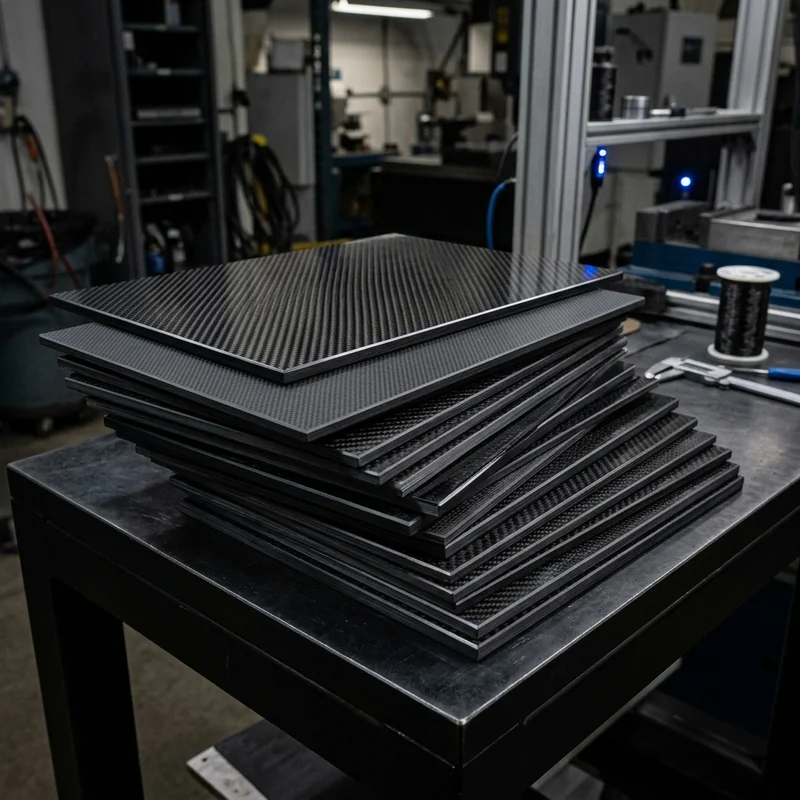
Carbon fiber standard plate-3k stripe
Lightweight, ultra-rigid standard sheets for drone fuselages, robot housings, facades and structural applications.
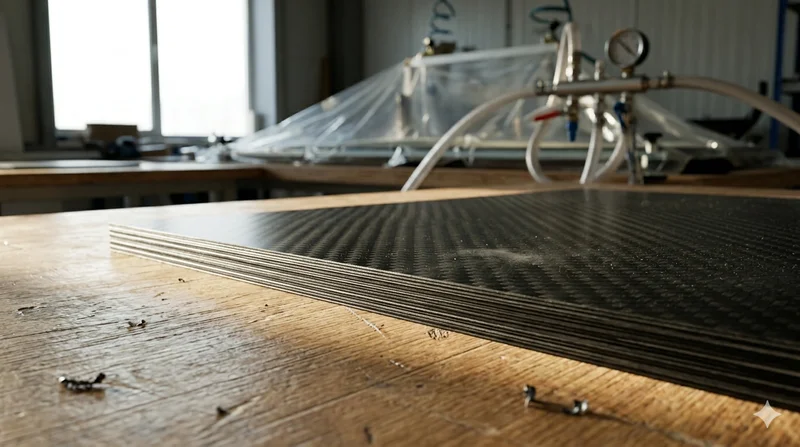
Carbon Fiber Plate — 3K Twill T700 3.0mm
Medium-thickness 3.0mm carbon fiber plate offering significantly higher load capacity while maintaining attractive 3K twill finish. Suitable for structural brackets, reinforcement plates, and load-bearing panels.

Carbon Fiber Plate — 3K Twill T700 1.5mm
Thin 1.5mm carbon fiber plate with 3K twill weave surface. Lightweight and stiff, commonly used for covers, panels, drone bodies, and applications requiring a premium aesthetic appearance.
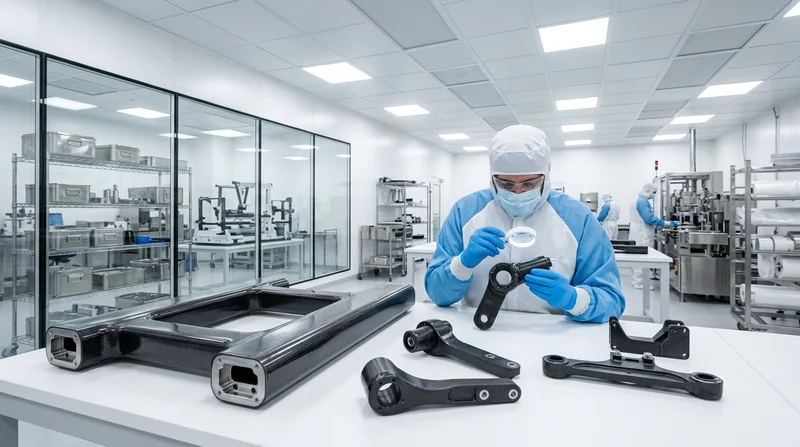
Custom Carbon Fiber Medical Device Components
Medical-grade carbon fiber components manufactured for imaging equipment, surgical instruments, and patient support systems. Carbon fiber's radiolucency (X-ray transparency) and high strength-to-weight ratio make it ideal for CT scanner beds, wheelchair frames, surgical robot arms, and MRI-compatible accessories. Biocompatible resin systems available.
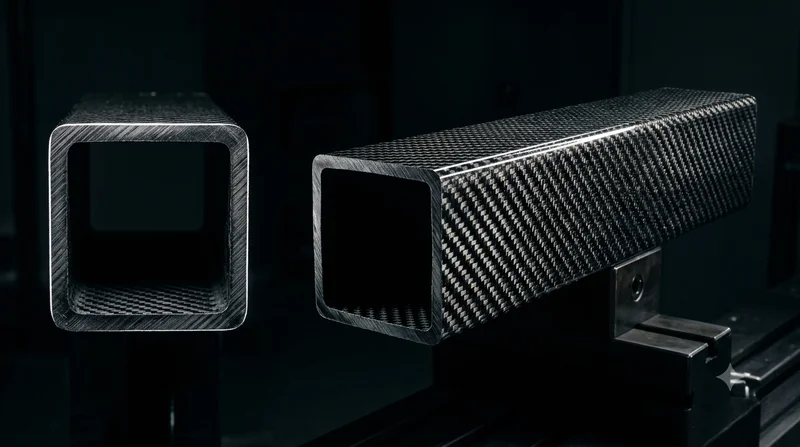
Square Carbon Fiber Tube — 3K Twill T700
Square cross-section carbon fiber tube manufactured with 3K twill weave for torsional strength. Preferred for structural frames, trusses, and support columns where rectangular geometry offers design flexibility.