
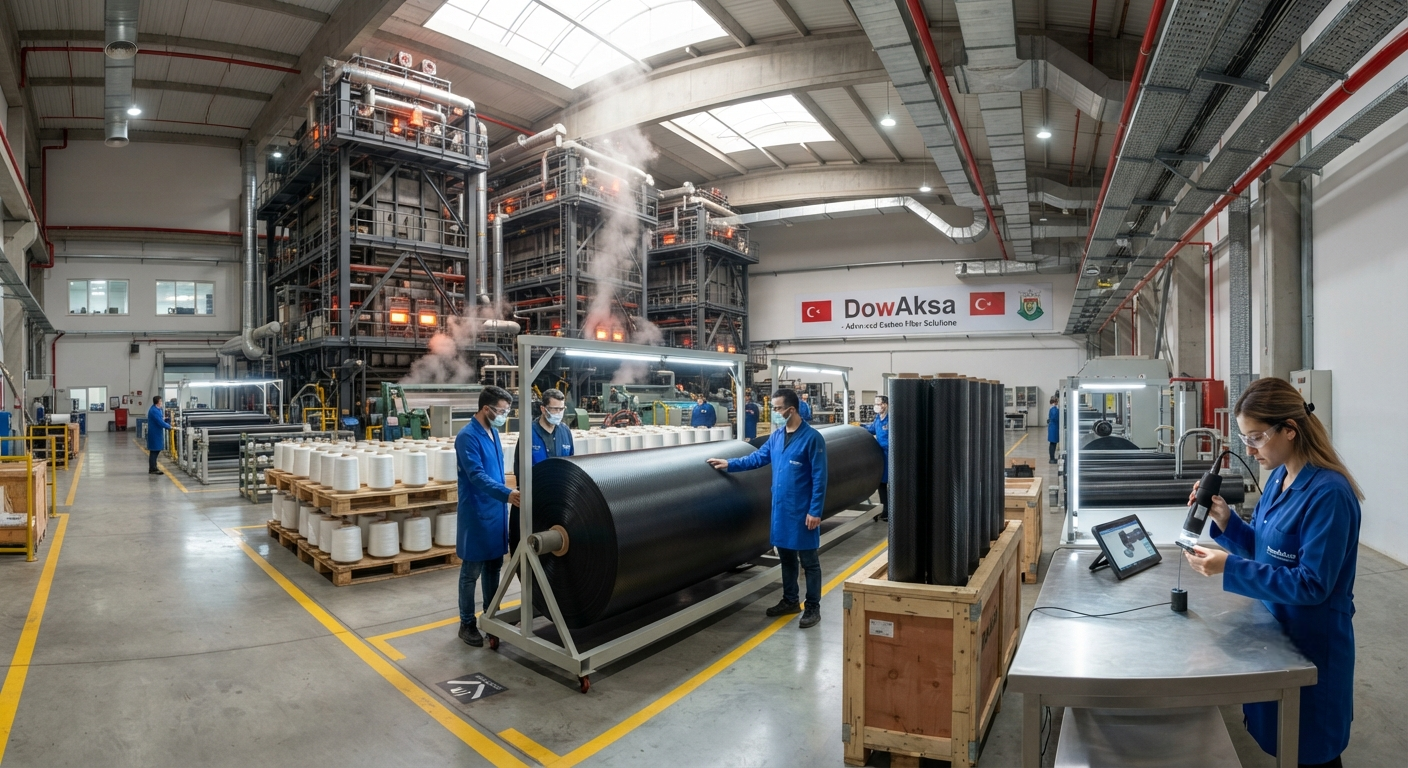
Comprehensive analysis of Türkiye's growing carbon fiber market driven by KAAN fighter program, Bayraktar UAV exports, textile manufacturing heritage, and energy pipeline reinforcement applications.
Türkiye's Carbon Fiber Market Overview
Türkiye has emerged as a pivotal player in the global carbon fiber supply chain, driven by ambitious defense aviation programs, a deep-rooted textile manufacturing heritage, and expanding energy infrastructure projects. As of 2026, the country's carbon fiber demand is projected to exceed 8,500 metric tons annually, with domestic production capacity reaching approximately 3,200 metric tons through investments by Kordsa, DowAksa, and SPN Group joint ventures.
The Turkish government's "National Technology Move" initiative has allocated significant R&D funding for advanced composite materials, positioning carbon fiber as a strategic material for aerospace, defense, automotive, and renewable energy sectors. The Defense Industry Agency (SSB) has mandated that 65% of composite components for domestic platforms must be sourced from local suppliers by 2027, accelerating capacity expansion across the value chain.
KAAN Fighter Program and Defense Aviation
Türkiye's indigenous 5th-generation fighter aircraft, KAAN (formerly TF-X), represents the single largest driver of carbon fiber demand in the country. Each KAAN airframe incorporates approximately 60–65% composite materials by weight, utilizing over 2,500 kg of carbon fiber prepreg per aircraft. With a projected fleet of 250 units over the next 20 years, the program alone will consume more than 6,000 metric tons of carbon fiber.
| Platform | Composite Weight % | Carbon Fiber Type | Annual Demand (tons) | Key Supplier |
|---|---|---|---|---|
| KAAN (TF-X) Fighter | 62% | IM7 / T800 intermediate-modulus | 300 | Kordsa / DowAksa |
| Bayraktar TB3 / Akıncı UAV | 45% | T700 standard-modulus | 120 | SPN Group / Hexcel |
| HÜRJET Advanced Trainer | 35% | IMS60 intermediate-modulus | 50 | DowAksa |
| Gökbey Utility Helicopter | 40% | AS4 / T700 | 35 | Kordsa |
The Baykar Bayraktar Akıncı and TB3 unmanned aerial vehicles have set global export records, with confirmed orders from 32 countries. Each Akıncı UAV uses approximately 450 kg of carbon fiber-reinforced polymer in its wing spars, fuselage frames, and landing gear doors. The export success has created a parallel demand for repair-grade carbon fiber materials and field-service composite repair kits.
Textile Industry Carbon Fiber Heritage
Türkiye's textile industry — the world's fifth-largest — provides a unique competitive advantage in carbon fiber manufacturing. The country's experience with synthetic fiber spinning, weaving, and heat treatment has enabled rapid technology transfer to carbon fiber precursor and fabric production. Major textile groups including Zorlu, Sanko, and Kipaş have invested in PAN precursor lines and carbonization furnaces.
- PAN Precursor Production: Current capacity of 8,000 tons/year from Kordsa and DowAksa facilities, targeting 15,000 tons by 2028
- Carbon Fiber Fabric Weaving: 12 dedicated weaving lines producing plain, twill, and unidirectional fabrics up to 160 cm width
- Non-crimp Fabric (NCF) Lines: 6 multiaxial NCF lines serving wind energy and marine applications
- Prepreg Coating: 4 hot-melt prepreg lines with annual capacity of 3 million m²
- Recycled Carbon Fiber: Pyrolysis-based recycling plant commissioned in 2025 with 500-ton annual capacity
Energy Infrastructure and Pipeline Projects
Türkiye's strategic position as an energy corridor between Europe, Central Asia, and the Middle East has driven demand for carbon fiber in pipeline reinforcement applications. The TANAP (Trans-Anatolian Natural Gas Pipeline) and TurkStream projects have demonstrated the value of carbon fiber composite repairs for high-pressure gas transmission lines.
According to the Turkish Energy Market Regulatory Authority (EPDK), more than 6,500 km of natural gas distribution lines require rehabilitation or replacement by 2030. Carbon fiber-reinforced composite wrap systems — compliant with ASME PCC-2 and ISO 24817 — have been approved for Class 3 and Class 4 pipeline repairs, creating a steady demand of approximately 200 tons/year of carbon fiber fabric for pipeline reinforcement.
Defense Export Market Growth
Türkiye's defense exports reached $6.5 billion in 2025, with composite-intensive platforms representing 38% of the total. The SSB has identified 15 priority export markets for defense platforms, each requiring localized maintenance, repair, and overhaul (MRO) capabilities that include composite repair facilities. These MRO centers are expected to consume an additional 150–200 tons of carbon fiber annually by 2028.
What carbon fiber grades are produced domestically in Türkiye?
Turkish manufacturers currently produce T700-grade (standard modulus, 230 GPa) and IM7-grade (intermediate modulus, 300 GPa) carbon fiber, with pilot lines for high-modulus (395 GPa) grades under development at the Kordsa R&D center in Kocaeli. DowAksa's Yalova facility produces LHT (large-tow, 48K–60K) fibers primarily for wind energy and industrial applications.
How does Türkiye's carbon fiber pricing compare to global markets?
Domestic carbon fiber pricing in Türkiye is approximately 8–12% below global spot prices due to lower energy costs (natural gas at $8.5/MMBtu vs. European $12/MMBtu), government R&D subsidies covering 30% of production costs, and duty-free raw material imports for defense contractors. T700-grade is currently quoted at $18–21/kg FOB Turkish ports, depending on tow size and volume.
What quality certifications do Turkish carbon fiber producers hold?
Turkish carbon fiber manufacturers hold AS9100D (aerospace), ISO 9001:2015, and ISO 14001 certifications. DowAksa maintains NADCAP NMMT accreditation for its prepreg and materials testing laboratories. Kordsa's aviation-grade prepreg lines are qualified to Airbus AIPS 03-01-001 and Boeing BMS 8-256 specifications.
Part of topic
Related Articles
- Recycled Carbon Fiber Market Forecast 2030: Technology Maturity and Commercialization Path
- South Korea Carbon Fiber Market 2026: Hydrogen Economy and Shipbuilding Innovation
- Wind Turbine Blade Leading Edge Protection 2026: Polyurethane, Tape, and Metallic Shield Solutions
- China Carbon Fiber Overcapacity 2026: Price War Impact and Industry Consolidation
- India Carbon Fiber Market 2026: Wind Energy, Aerospace, and Defense Expansion
- PAN Precursor Market 2026: Acrylonitrile Supply and Carbon Fiber Cost Structure
Interested in Our Products?
Contact our team for competitive pricing and technical specifications.
Get a QuoteRelated Products
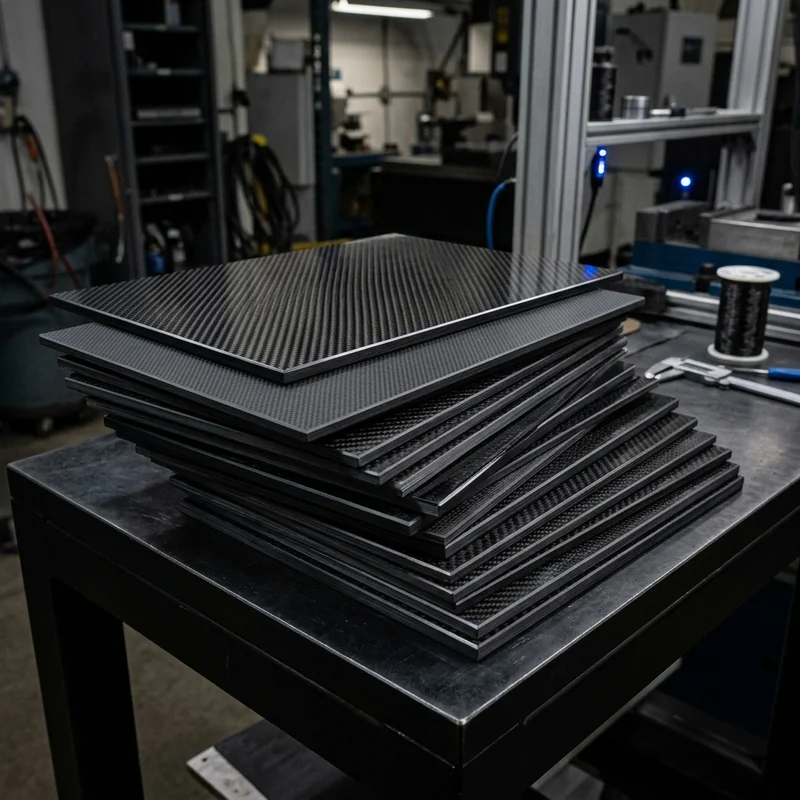
Carbon fiber standard plate-3k stripe
Lightweight, ultra-rigid standard sheets for drone fuselages, robot housings, facades and structural applications.

Carbon Fiber Plate — 3K Twill T700 3.0mm
Medium-thickness 3.0mm carbon fiber plate offering significantly higher load capacity while maintaining attractive 3K twill finish. Suitable for structural brackets, reinforcement plates, and load-bearing panels.

Carbon Fiber Plate — 3K Twill T700 1.5mm
Thin 1.5mm carbon fiber plate with 3K twill weave surface. Lightweight and stiff, commonly used for covers, panels, drone bodies, and applications requiring a premium aesthetic appearance.
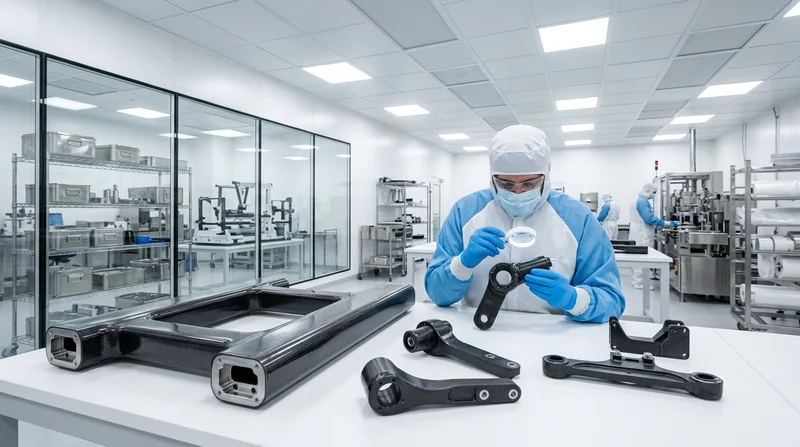
Custom Carbon Fiber Medical Device Components
Medical-grade carbon fiber components manufactured for imaging equipment, surgical instruments, and patient support systems. Carbon fiber's radiolucency (X-ray transparency) and high strength-to-weight ratio make it ideal for CT scanner beds, wheelchair frames, surgical robot arms, and MRI-compatible accessories. Biocompatible resin systems available.

Square Carbon Fiber Tube — 3K Twill T700
Square cross-section carbon fiber tube manufactured with 3K twill weave for torsional strength. Preferred for structural frames, trusses, and support columns where rectangular geometry offers design flexibility.