
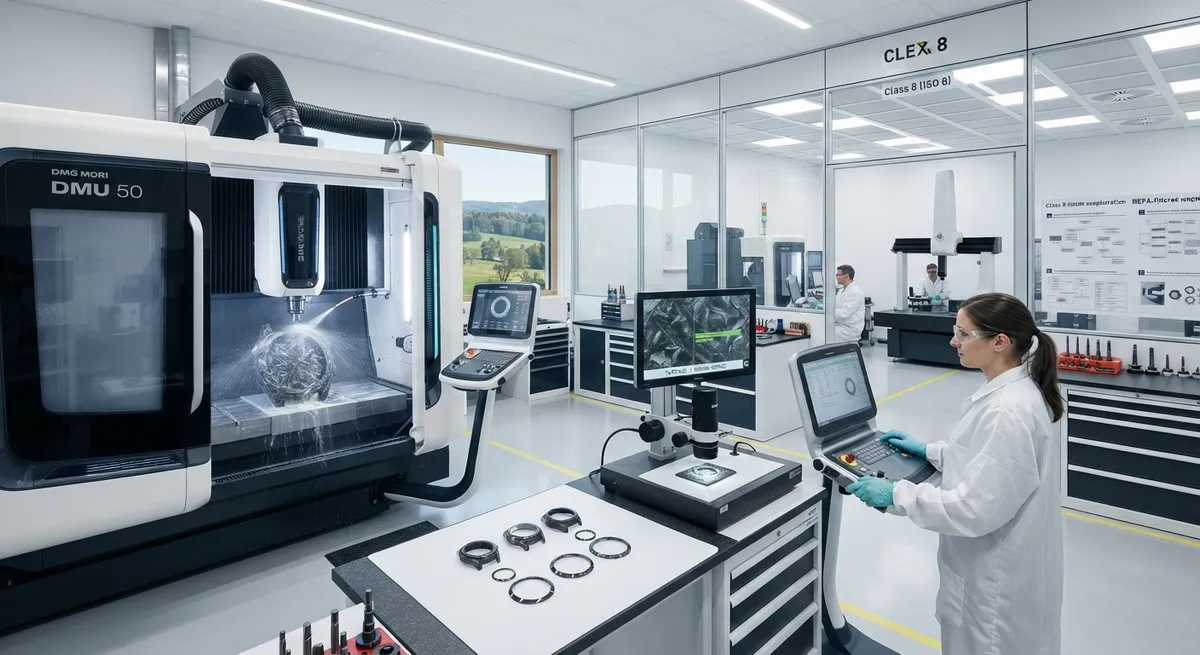
Analysis of the Swiss carbon fiber market in 2026: precision machinery applications, medical device CFRP adoption, luxury watchmaking demand for forged carbon cases, import data trends, and supplier landscape for B2B buyers.
The Swiss Carbon Fiber Landscape in 2026
Switzerland occupies a unique position in the global carbon fiber market. While it is not a major upstream producer of virgin PAN-based carbon fiber (global leaders by capacity are Toray/Japan, Teijin/Germany-Japan, Hexcel/USA, and Zhongfu Shenying/China), Switzerland has developed a highly specialized downstream CFRP processing ecosystem built on three pillars: precision machinery components, medical and pharmaceutical equipment, and luxury watchmaking. In 2025, Swiss imports of carbon fiber and carbon fiber articles (HS 6815.11 and 3921.90) totaled approximately CHF 148 million, representing a 12% year-over-year increase from 2024, driven primarily by demand from the Jura Arc watchmaking region and the Basel-Mittelland medtech corridor.
Market projections for 2026 estimate Swiss CFRP consumption at 420-480 metric tons, with an estimated market value of CHF 165-185 million including value-added processing. This makes Switzerland one of the highest-value-per-kilogram carbon fiber markets globally, driven by the precision and miniaturization requirements unique to Swiss industry.
Precision Manufacturing: Micron-Level CFRP Machining
Swiss precision manufacturing — a sector that includes automatic lathes, milling machines, grinding systems, and EDM equipment manufacturers — increasingly specifies CFRP for machine tool structural components. The driving factor is thermal stability: the coefficient of thermal expansion (CTE) of unidirectional CFRP in the fiber direction is -0.5 to -1.0 ppm/°C (negative, meaning slight contraction on heating versus expansion in steel at +11-13 ppm/°C or aluminum at +23-24 ppm/°C). For high-precision machining centers operating in temperature-controlled environments (±0.5°C), the dimensional stability advantage is substantial.
| Application | Material Replaced | Weight Reduction | CTE (ppm/°C) | Machining Tolerance |
|---|---|---|---|---|
| Spindle ram housings | Steel (30-80 kg) | 60-70% | -0.8 (CFRP) vs +12 (steel) | ±15 μm |
| CNC bridge beams | Cast iron (200-600 kg) | 55-65% | -0.5 (CFRP) vs +11 (cast iron) | ±20 μm |
| Grinding machine columns | Granite (500-1,200 kg) | 70-80% | -0.6 (CFRP) vs +6.5 (granite) | ±25 μm |
| EDM electrode holders | Titanium (2-8 kg) | 40-50% | -0.4 (CFRP) vs +9 (Ti) | ±10 μm |
| Measuring machine frames | Ceramic (80-300 kg) | 65-75% | -0.5 (CFRP) vs +4.5 (ceramic) | ±5 μm |
Swiss machine tool builders including GF Machining Solutions, Tornos, and Starrag have all introduced CFRP structural elements in their latest product lines. The principal challenge is joining CFRP to metallic machine tool components without introducing thermal drift. Bonded hybrid joints using aerospace-grade epoxy adhesives (Delo DUOLOX or 3M Scotch-Weld) with a bond-line thickness of 0.1-0.3 mm have proven effective, maintaining joint integrity through 10+ year service lifetimes in temperature-cycled environments.
Medical Device CFRP Adoption
Switzerland's medical device and pharmaceutical manufacturing sector — concentrated in Basel, the Lake Geneva region, and the Zurich Innovation Park — is the fastest-growing downstream consumer of carbon fiber composites in the country, with an estimated CAGR of 18% from 2022 to 2026. Key applications include:
- Carbon fiber radiolucent surgical tables and imaging supports: CFRP's transparency to X-rays, CT, and MRI allows full-body imaging without repositioning patients. A CFRP table top for a Siemens Healthineers CT scanner weighs 18 kg versus 45 kg for a carbon-fiber-reinforced alternative (and 78 kg for a standard polyethylene table). The Swiss medtech cluster includes firms like Swisstom AG and Qlaris AG developing patient positioning systems exclusively in carbon fiber.
- Pharmaceutical cleanroom automation components: Robotic arms and grippers for sterile filling lines benefit from CFRP's chemical resistance, weight reduction for high-speed pick-and-place operations, and non-magnetic properties. A typical Stäubli TP80 or ABB IRB 360 FlexPicker robot retrofitted with CFRP grippers and forearm links achieves cycle time reductions of 12-18%.
- Carbon fiber prostheses and orthoses: Swiss orthopedics companies produce above-knee prosthetic sockets, ankle-foot orthoses, and spinal braces from woven carbon fiber prepreg. The Swiss Paraplegic Centre in Nottwil alone processes approximately 1,200 custom CFRP orthotic devices annually.
- Dental implant components: Biocompatible CFRP formulations for implant abutments and temporary crowns are under development at three Swiss universities, with clinical trials expected by late 2026. The target is a 40-50% weight reduction compared to titanium abutments with equivalent fatigue strength.
Luxury Watchmaking: Forged Carbon and Composite Cases
The Swiss luxury watch industry—the country's third-largest export sector after chemicals and machinery—has embraced carbon fiber at an accelerating pace. In 2025, watches with carbon fiber cases, bezels, or dials accounted for approximately 12% of Swiss watch exports by value (CHF 3.1 billion out of CHF 25.8 billion total), up from 7% in 2022. The dominant material is forged carbon — a composite of randomly oriented short carbon fibers (2-10 mm length) embedded in a thermoset resin matrix, typically a high-performance polyamide or PEEK variant.
Major brands and their specific carbon fiber applications include:
- Audemars Piguet: Forged carbon cases for Royal Oak Offshore models, produced in partnership with watch-case specialist Les Artisans du Bois. Typical case weight: 14.8 g versus 42 g for steel equivalents.
- Hublot: The largest user of carbon in watchmaking — Magic Gold composite (18K gold + ceramic + carbon fiber), Texalium (aluminum-coated carbon), and King Gold with carbon fiber inserts. Hublot Big Bang models represent an estimated 35% of all forged carbon watches sold globally.
- Richard Mille: Carbon nanofiber-reinforced composite cases with integrated movement plates (the NTPT Carbon case, used in the RM 11-03, is machined from a single block of 600+ layers of unidirectional carbon fiber). Case prices range from CHF 70,000 to over CHF 1.5 million.
- IWC Schaffhausen: Ceramic-matrix composite and carbon fiber for Pilot's Watch Chronograph models, using a proprietary woven carbon process integrated with ceramic bezel technology.
Forged carbon case production in Switzerland consumed an estimated 35-42 metric tons of carbon fiber in 2025, projected to reach 48-55 metric tons in 2026. The material typically arrives as pre-impregnated chopped carbon fiber molding compound (bulk molding compound) sourced primarily from Japanese and German suppliers, with Swiss finishing and machining adding 300-600% value per kilogram.
Swiss Carbon Fiber Import and Distribution Dynamics
Switzerland's position outside the EU creates specific import and logistics dynamics:
| Parameter | 2024 Data | 2025 Estimate | 2026 Projection |
|---|---|---|---|
| Total carbon fiber imports (CHF) | CHF 132 M | CHF 148 M | CHF 165-175 M |
| Primary source countries | Japan (38%), Germany (28%), Italy (14%) | Japan (35%), Germany (26%), Italy (15%) | Japan (33%), Germany (25%), Italy (14%) |
| US-listed materials from China | 8% | 12% | 14-16% (growing) |
| Average import CIF price/kg | CHF 87/kg | CHF 91/kg | CHF 93-96/kg |
| Swiss value-add multiplier | 3.5-4.2x | 3.8-4.5x | 4.0-4.8x |
The distribution ecosystem is dominated by specialized composite distributors: Biesterfeld AG (headquartered in Pratteln, handling aerospace-grade prepregs from Hexcel and Toray), W. Biesterfeld Composite GmbH (technical support and warehousing), and FEYCO AG (Zurich-region, specializing in distribution of vacuum bagging consumables and infusion resins). For customized prepreg systems meeting Swiss medical and luxury standards, lead times from order to delivery at the customer's door in the Jura Arc are typically 6-10 weeks for non-stock materials and 2-3 weeks for standard product lines.
Regulatory Environment and Quality Standards
Swiss CFRP processors operate under the Swiss Ordinance on Chemicals (ChemV) and, for medical devices, the Swiss Medical Devices Ordinance (MedDO) — which is aligned with EU MDR for most requirements. Watchmaking CFRP components must meet the Swiss Ordinance on Precious Metal Articles (PGV) when carbon fiber cases are combined with gold, platinum, or palladium elements. For the aerospace-precision sector, SN EN 9100 (equivalent to AS9100D) certification is increasingly expected by Swiss machine tool OEMs.
FAQ
What is the minimum order quantity (MOQ) for custom carbon fiber prepregs delivered to Switzerland?
Standard aerospace-grade prepregs from Toray and Hexcel have MOQs of 50-100 kg per formulation for standard-modulus materials (230-290 GPa). Intermediate-modulus and high-modulus prepregs (395-640 GPa) typically require 25 kg MOQ. For custom formulations targeting medical or watchmaking applications, development programs start at 10-20 kg for prototype validation, scaling to 100+ kg for production qualification. Lead times for non-stock materials add 4-6 weeks to the standard delivery schedule.
How does Swiss customs classification work for carbon fiber composite imports?
Carbon fiber materials enter Switzerland under HS code 6815.11 (non-electrical articles of carbon fiber) for finished or semi-finished composite articles, or under 3921.90 (other plates, sheets, film of plastics) for prepregs and film-based materials. For forged carbon molding compounds, the applicable classification is 3824.99 (chemical products and preparations). Import duties range from 0% (preferential origin EU/Japan under free trade agreements) to 2.5% (MFN rate) for non-preferential origin materials. VAT at 8.1% applies on the CIF value plus duty amount.
What certification is required for CFRP components used in Swiss medical devices?
CFRP materials for permanent implant applications must demonstrate biocompatibility per ISO 10993 (cytotoxicity, sensitization, irritation, systemic toxicity). For non-implantable medical devices (surgical tables, imaging accessories), material conformity to ISO 13485 manufacturing quality systems is required, along with documented evidence of chemical resistance to common hospital disinfectants including chlorine-based solutions, glutaraldehyde, and isopropyl alcohol. Swissmedic notification is required for Class IIb and Class III devices incorporating CFRP structural elements.
Part of topic
Related Articles
- Recycled Carbon Fiber Market Forecast 2030: Technology Maturity and Commercialization Path
- South Korea Carbon Fiber Market 2026: Hydrogen Economy and Shipbuilding Innovation
- Wind Turbine Blade Leading Edge Protection 2026: Polyurethane, Tape, and Metallic Shield Solutions
- China Carbon Fiber Overcapacity 2026: Price War Impact and Industry Consolidation
- India Carbon Fiber Market 2026: Wind Energy, Aerospace, and Defense Expansion
- PAN Precursor Market 2026: Acrylonitrile Supply and Carbon Fiber Cost Structure
Interested in Our Products?
Contact our team for competitive pricing and technical specifications.
Get a QuoteRelated Products
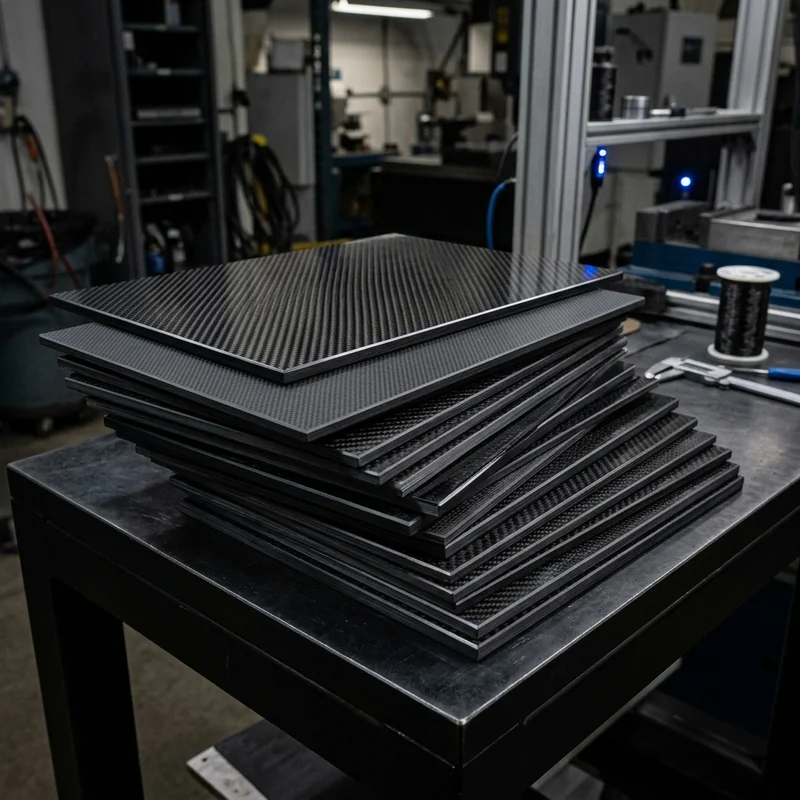
Carbon fiber standard plate-3k stripe
Lightweight, ultra-rigid standard sheets for drone fuselages, robot housings, facades and structural applications.

Carbon Fiber Plate — 3K Twill T700 3.0mm
Medium-thickness 3.0mm carbon fiber plate offering significantly higher load capacity while maintaining attractive 3K twill finish. Suitable for structural brackets, reinforcement plates, and load-bearing panels.

Carbon Fiber Plate — 3K Twill T700 1.5mm
Thin 1.5mm carbon fiber plate with 3K twill weave surface. Lightweight and stiff, commonly used for covers, panels, drone bodies, and applications requiring a premium aesthetic appearance.
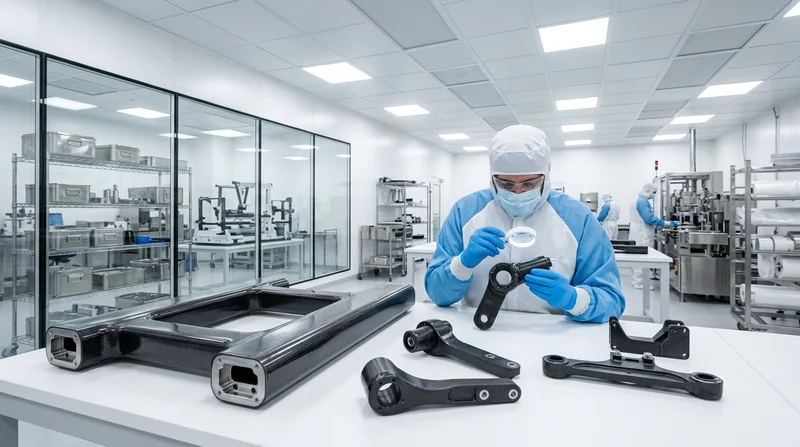
Custom Carbon Fiber Medical Device Components
Medical-grade carbon fiber components manufactured for imaging equipment, surgical instruments, and patient support systems. Carbon fiber's radiolucency (X-ray transparency) and high strength-to-weight ratio make it ideal for CT scanner beds, wheelchair frames, surgical robot arms, and MRI-compatible accessories. Biocompatible resin systems available.

Square Carbon Fiber Tube — 3K Twill T700
Square cross-section carbon fiber tube manufactured with 3K twill weave for torsional strength. Preferred for structural frames, trusses, and support columns where rectangular geometry offers design flexibility.