
Switzerland Carbon Fiber Precision Manufacturing: Serving Watchmaking, Medtech, and High-End Automation Summary Switzerland has emerged as a world leader in precision carbon fiber components, serving industries with micron-level tolerance...
Switzerland Carbon Fiber Precision Manufacturing: Serving Watchmaking, Medtech, and High-End Automation
Summary
Switzerland has emerged as a world leader in precision carbon fiber components, serving industries with micron-level tolerance requirements. This article examines the country's unique ecosystem of CFRP (Carbon Fiber Reinforced Polymer) manufacturing, from automated tape laying at EPFL spin-offs to precision machining in the Swiss Jura Arc, with a focus on watchmaking, medical device manufacturing, and high-end automation.
Introduction
The global carbon fiber market was valued at approximately USD 6.8 billion in 2025 and is projected to reach USD 14.3 billion by 2030, with a CAGR of 16.1% (Grand View Research, 2025). While much of the volume growth is driven by aerospace and wind energy, a distinct premium segment has emerged in Switzerland, where carbon fiber components must meet tolerances of ±10 microns — a standard closer to precision engineering than conventional composites manufacturing.
Switzerland's unique industrial DNA — watchmaking, medical device fabrication, and precision automation — has created a specialised carbon fiber ecosystem that differs fundamentally from the high-volume, aerospace-driven supply chains of North America, Europe and Asia.
The Swiss Precision Advantage
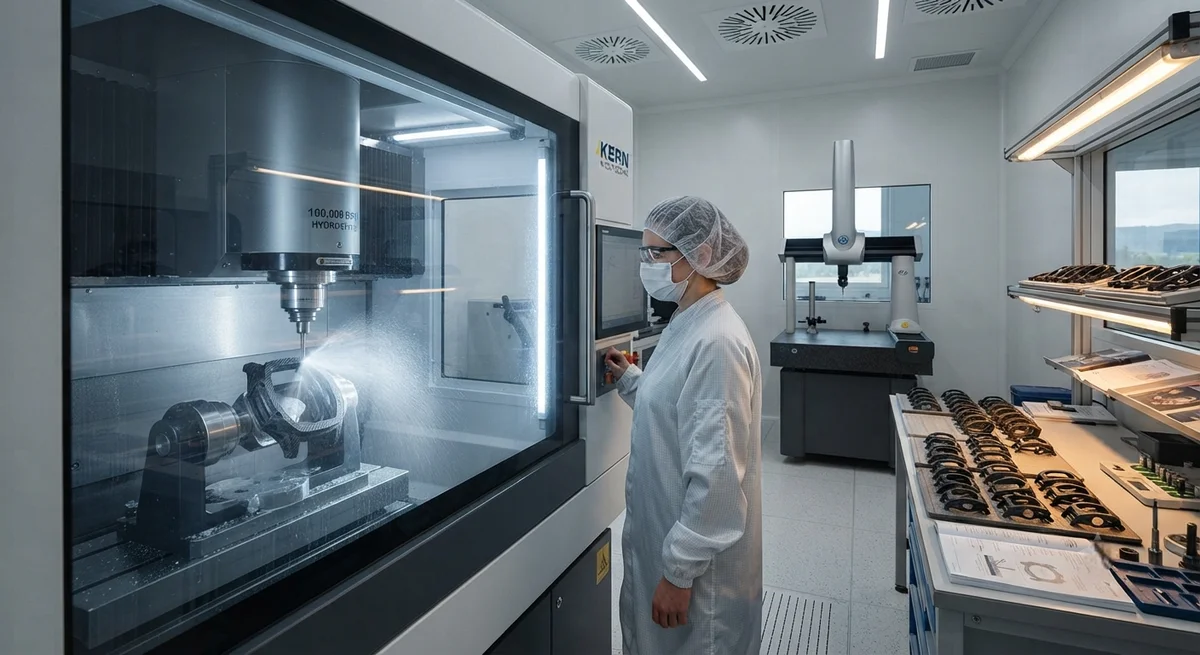
Micro-Precision Machining of CFRP
Standard CFRP machining typically achieves tolerances of ±50–100 microns. Swiss manufacturers, leveraging decades of watchmaking expertise, routinely deliver ±10–20 microns. This precision is enabled by:
| Parameter | Standard CFRP Machining | Swiss Precision CFRP | Advantage Factor |
| Dimensional tolerance | ±50–100 µm | ±10–20 µm | 3–5× tighter |
| Surface roughness (Ra) | 1.6–3.2 µm | 0.4–0.8 µm | 2–4× smoother |
| Delamination factor | 1.15–1.30 | 1.02–1.08 | 6–14× less damage |
| Burr height at edges | 50–200 µm | 5–25 µm | 8–10× smaller |
| Tool life (diamond-coated) | 15–25 m cut length | 40–60 m cut length | 2–3× longer |
| Cycle time per part | Baseline | +15–25% | (trade-off for precision) |
| Reject rate | 3–8% | 0.5–1.5% | 3–5× lower |
Automated Fiber Placement for Small Complex Geometries
Conventional AFP (Automated Fiber Placement) systems are designed for large aerospace structures — wing skins, fuselage sections, and empennage components. Swiss manufacturers have developed miniaturised AFP heads capable of laying 3.175 mm (⅛-inch) tow on radii as tight as 5 mm, enabling the production of complex near-net-shape components that require minimal post-machining.
Key technical specifications of a typical Swiss mini-AFP system.
- Tow width: 3.175 mm (vs. standard 6.35 mm or 12.7 mm)
- Minimum steering radius: 5 mm (vs. 50–100 mm standard)
- Layup rate: 200–300 g/hour (vs. 2,000–5,000 g/hour for aerospace AFP)
- Heated compaction roller: up to 120°C with ±1°C precision
- In-situ consolidation using NIR laser heating with closed-loop temperature control
This miniaturisation is critical for producing watch cases, surgical instrument handles, and micro-robot structural frames.
Applications in Watchmaking
Carbon Fiber Watch Cases and Dials
Swiss luxury watch manufacturers have adopted carbon fiber for both aesthetic and functional reasons. Beyond the distinctive weave pattern prized in haute horlogerie, carbon fiber offers:
Manufacturers such as Richard Mille, Hublot, and Audemars Piguet have pioneered forged carbon and unidirectional prepreg case construction. The production process involves:
1. Precision layup of thin-ply prepreg (30–60 g/m² areal weight) into case-shaped moulds
2. Autoclave curing at 120°C and 7 bar pressure, with ramping rates below 2°C/min to prevent thermal shock
3. EDM (electrical discharge machining) of lugs and crown recesses to ±10 µm
4. Final hand-finishing including transparent ceramic coating for scratch resistance
Medical Technology Applications
Carbon Fiber in Surgical Instruments and Implants
The medtech sector represents a growing segment of Swiss carbon fiber consumption, driven by the country's strength in orthopaedic and minimally invasive surgical device manufacturing.
Table 2: CFRP vs. Traditional Materials in Medtech Applications| Property | CFRP (T300-grade) | Titanium (Ti-6Al-4V) | Stainless Steel (316L) |
| Density (g/cm³) | 1.55 | 4.43 | 8.00 |
| Tensile modulus (GPa) | 138 (unidirectional) | 110 | 193 |
| Radiographic compatibility | Transparent (no scatter) | Opaque | Opaque |
| MRI compatibility | Fully compatible | Compatible | Incompatible |
| Fatigue strength at 10⁷ cycles (MPa) | 350–450 | 240–310 | 180–260 |
| Thermal conductivity (W/m·K) | 5–7 (in-plane) | 16–22 | 14–16 |
Radiographic transparency is particularly valuable: CFRP instrument handles and positioning frames do not obstruct X-ray or CT imaging, allowing surgeons to visualise the operative field without removing instruments. Swiss medtech manufacturers are producing carbon fiber components for:
High-End Automation and Robotics
Carbon Fiber in Precision Motion Systems
For high-speed pick-and-place systems, wafer handling robots, and precision metrology stages, carbon fiber's stiffness-to-weight ratio delivers measurable throughput improvements.
A Swiss automation OEM reported the following performance data when replacing aluminium gantry beams with CFRP equivalents:
- Beam weight reduced by 55% (from 12.4 kg to 5.6 kg for a 1.2 m beam)
- Acceleration increased from 15 m/s² to 28 m/s² — an 87% improvement
- Settling time after rapid move reduced by 40% (from 85 ms to 51 ms)
- Positional repeatability improved from ±8 µm to ±3 µm over the full travel range
- Motor power requirements reduced by 32%, enabling smaller servo drives
Supply Chain and Material Sourcing
Swiss carbon fiber processors typically source prepreg materials from established European suppliers (SGL Carbon, Teijin Carbon Europe, Toray Carbon Fibers Europe) and perform value-added conversion in-house. The country hosts approximately 15 dedicated CFRP precision manufacturing facilities, concentrated in:
FAQ
Q: Can Swiss precision CFRP manufacturing match the cost of standard carbon fiber production?
No. Swiss precision CFRP commands a premium of 40–80% over standard manufacturing due to tighter tolerances, specialised tooling, and lower throughput. However, for applications where micron-level precision is critical (watch movements, surgical robotics), the reject rate improvement and performance benefits justify the cost premium.
Q: What certification standards apply to Swiss CFRP medtech components?
Swiss CFRP medical device components must comply with ISO 13485:2016 (medical device quality management), EU MDR 2017/745, and Swiss MedDO (SR 812.213). Material process validation follows ASTM D3039 for tensile properties and ISO 14130 for interlaminar shear strength. Biocompatibility per ISO 10993-5 (cytotoxicity) and ISO 10993-10 (sensitisation) is required for patient-contacting components.
Q: What is the typical lead time for custom Swiss CFRP precision parts?
Typical lead time for precision CFRP components from Swiss manufacturers is 8–14 weeks, compared to 4–8 weeks for standard CFRP parts. The extended timeline accounts for mould fabrication (±5 µm mould surface tolerance), process qualification, first-article inspection with CMM (coordinate measuring machine) verification, and NDT (non-destructive testing) including ultrasonic C-scan for each batch.
YongXian CarbonFiber supplies high-precision CFRP prepreg materials and custom-manufactured components for demanding applications across watchmaking, medical, and automation sectors. Contact our engineering team to discuss your precision requirements.
Related Articles
- Recycled Carbon Fiber Market Forecast 2030: Technology Maturity and Commercialization Path
- South Korea Carbon Fiber Market 2026: Hydrogen Economy and Shipbuilding Innovation
- Wind Turbine Blade Leading Edge Protection 2026: Polyurethane, Tape, and Metallic Shield Solutions
- China Carbon Fiber Overcapacity 2026: Price War Impact and Industry Consolidation
- India Carbon Fiber Market 2026: Wind Energy, Aerospace, and Defense Expansion
- PAN Precursor Market 2026: Acrylonitrile Supply and Carbon Fiber Cost Structure
Interested in Our Products?
Contact our team for competitive pricing and technical specifications.
Get a QuoteRelated Products
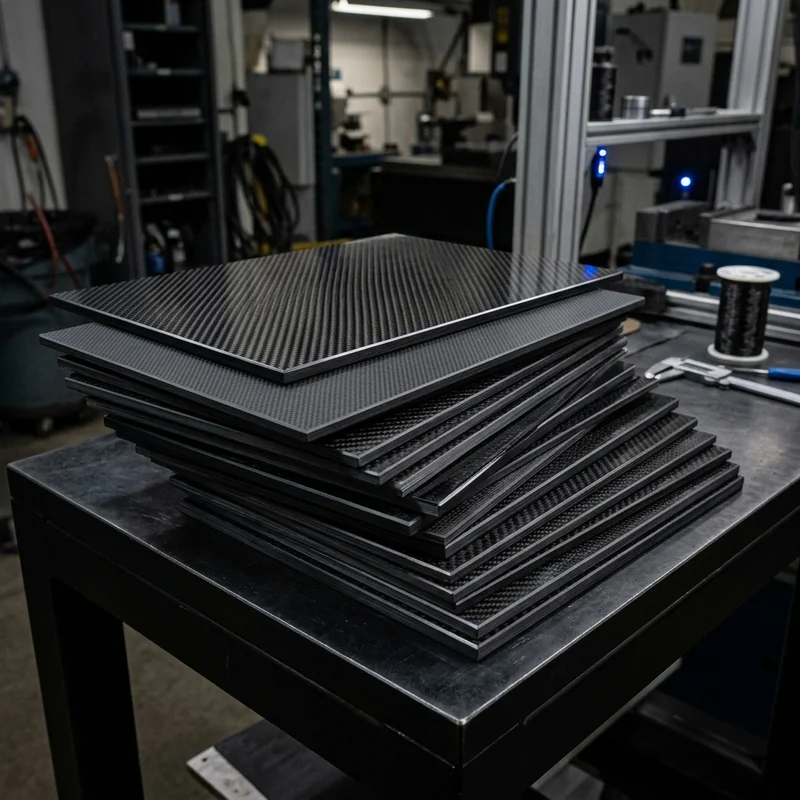
Carbon fiber standard plate-3k stripe
Lightweight, ultra-rigid standard sheets for drone fuselages, robot housings, facades and structural applications.

Carbon Fiber Plate — 3K Twill T700 1.5mm
Thin 1.5mm carbon fiber plate with 3K twill weave surface. Lightweight and stiff, commonly used for covers, panels, drone bodies, and applications requiring a premium aesthetic appearance.

Square Carbon Fiber Tube — 3K Twill T700
Square cross-section carbon fiber tube manufactured with 3K twill weave for torsional strength. Preferred for structural frames, trusses, and support columns where rectangular geometry offers design flexibility.

Carbon Fiber Plate — 3K Twill T700 3.0mm
Medium-thickness 3.0mm carbon fiber plate offering significantly higher load capacity while maintaining attractive 3K twill finish. Suitable for structural brackets, reinforcement plates, and load-bearing panels.
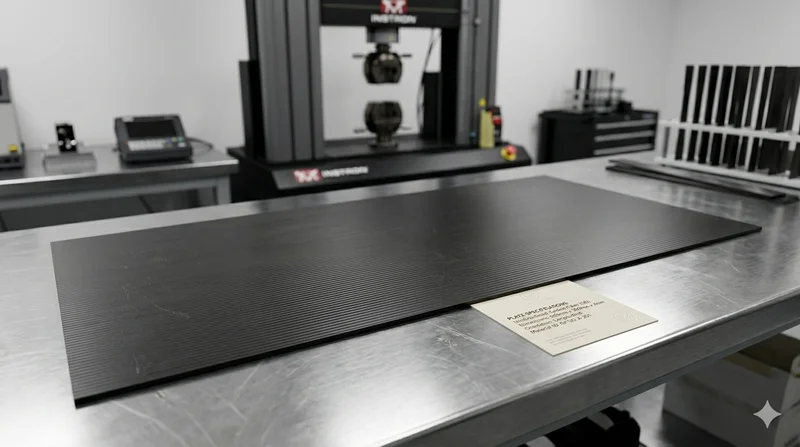
Carbon Fiber Plate — UD Unidirectional T700
Unidirectional carbon fiber plate with all fibers oriented in a single direction for maximum strength along the fiber axis. Essential for structural reinforcements, splints, and applications where load direction is predictable.