
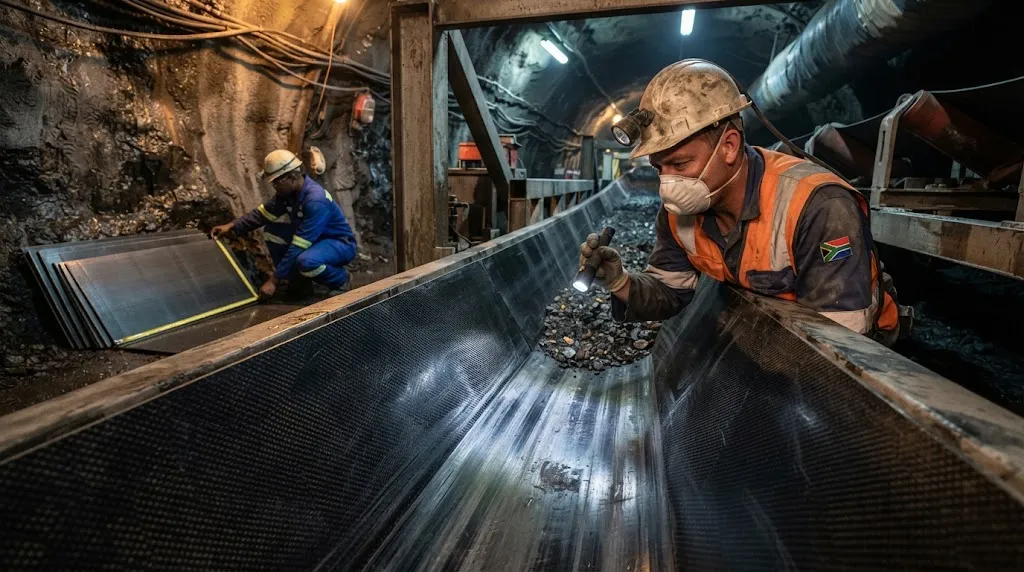
South Africa is not a large carbon fiber market by global standards, but it is a structurally interesting one. The country's economy runs on minerals — platinum, gold, chrome and manganese are mined deep and processed hard — and every ton of ore movement creates wear that composites han
Introduction
South Africa is not a large carbon fiber market by global standards, but it is a structurally interesting one. The country's economy runs on minerals — platinum, gold, chrome and manganese are mined deep and processed hard — and every ton of ore movement creates wear that composites handle better than steel in a growing set of applications. Separately, South Africa's electricity system is being rebuilt after years of constrained supply, and transmission utilities have turned to composite insulators and crossarms that survive coastal salt, industrial pollution and intense UV better than porcelain and wood.
The third pillar is smaller but strategically resonant: a domestic aerospace composites capability built around Aerosud Aviation and the Denel group, tracing back to defense programs and, more recently, commercial aircraft component manufacturing. For international carbon fiber suppliers, South Africa presents a niche, specification-driven opportunity rather than a volume market — one that rewards technical service and corrosion- and wear-focused application engineering.
Mining: Wear and Corrosion as the Demand Driver
South African mining operations process ores with high silica and abrasive content. Conveyor transfer chutes, hopper liners, truck body linings and slurry pipeline components wear out steel rapidly, and replacement downtime is expensive at deep-level operations that run around the clock. Carbon fiber composites enter this segment in two forms:
- Wear liners: carbon fiber-reinforced polymer (CFRP) and hybrid glass-carbon liners reduce abrasion loss and, because they weigh a fraction of steel liners, cut the structural load on chutes and hoppers by up to 60-70%.
- Corrosion-resistant components: in platinum and gold processing, carbon fiber reinforced vessels, agitator blades and pump components outlast metal in acidic slurry, chlorine-rich and high-temperature environments.
- Lightweight mobile equipment: composite cab roofs, canopies and body components on haul trucks reduce center-of-gravity height and component weight.
- Mine ventilation and ducting: fire-retardant composite ducting resists corrosion from sulfuric fumes without the weight of rubber-lined steel.
The economics are simple: a steel wear liner replaced every six to nine months versus a composite liner lasting two to three times longer, with less downtime and easier handling at a fifth of the weight.
The quantified case for composites in mining starts with downtime accounting. A hopper liner failure at a deep-level platinum mine can stop a shaft for eight hours while a crew of six replaces steel; at a bulk-processing operation that move costs upward of $20,000 per hour in lost throughput, and replacement liners recur every six to nine months. A composite liner at roughly one-fifth the weight is typically changed in under three hours, survives two to three wear seasons, and eliminates most of the corrosion-driven repairs that steel demands in acidic environments. When a mine operation multiplies those savings across dozens of chutes, hoppers and pump circuits, the carbide-for-composite decision stops being an engineering preference and becomes a quarterly budget line.
Grid Expansion and the Composite Insulator Opportunity
South Africa's transmission and distribution network is being extended and refurbished, and composite insulators and crossarms are moving from trial to mainstream specification. Composite insulators offer three advantages that matter in the local environment:
- Salt and pollution resistance: coastal provinces and industrial regions cause salt fog and cement-dust contamination that degrade porcelain; polymer housings shed contamination and resist tracking.
- UV and thermal survival: the Highveld's intense solar radiation and wide temperature swings are hard on older polymer designs, but modern silicone-rubber-based insulators pass accelerated UV aging tests.
- Lightweight logistics: a composite crossarm weighs roughly 80% less than a steel crossarm, reducing tower loads and enabling stringing on existing towers without reinforcement.
For carbon fiber specifically, the fastest-growing sub-application is composite crossarms and transmission poles where high strength-to-weight ratio allows longer spans and fewer structures per kilometer of line. A national grid program that specifies composite crossarms on new 400 kV and 765 kV corridors can consume several hundred tons of pultruded carbon-glass hybrid profile annually. Because transmission utilities are conservative buyers, the qualification path for composite crossarms — full-scale mechanical tests, accelerated aging and field trials on two or three 400 kV towers — typically runs three to five years from first specification to fleet rollout.
Aerospace Heritage: Aerosud and the Defense Connection
The aerospace thread runs through South Africa's history of sanctions-era self-sufficiency. Aerosud Aviation built a composite fabrication capability serving commercial aircraft programs, producing secondary structures and interior components in carbon fiber for export to European and North American airframers. Denel's heritage groups brought thermoset and thermoplastic composite manufacturing, autoclave capacity and NDT capability from the defense sector. Today the domestic aerospace composite industry is modest in output but carries a full skill stack — design, tooling, autoclave processing, non-destructive inspection and certification documentation — that any Airbus or Boeing feeder network would recognize.
| Sector | Primary application | Typical fiber form | Demand character |
|---|---|---|---|
| Mining | Wear liners, pump and vessel components | CFRP laminates, hybrid glass-carbon | Replacement-driven, steady |
| Grid | Insulators, crossarms, poles | Pultruded profiles, glass-carbon hybrid | Program-driven, growing |
| Aerospace | Aircraft secondaries, defense structures | Qualified prepreg, woven fabrics | Small volume, high spec |
| Automotive and industrial | Composite leaf springs, trays, tooling | Commercial tow, sheet molding | Niche, cost-sensitive |
Supply Chain Realities for Imported Carbon Fiber
South Africa has no domestic carbon fiber precursor or tow production, so every kilogram is imported. Durable goods manufacturers in the mining and grid segments buy industrial-grade tow and fabric from Asia and Europe, while aerospace programs import qualified aerospace-grade prepreg under controlled cold-chain logistics. The practical consequences for procurement teams:
- Lead times: aerospace-grade prepreg shipping to South Africa typically requires 8-12 weeks with cold-chain handling, so qualification programs must front-load inventory.
- Duties and logistics: import duties, VAT and inland freight from Durban or Cape Town ports add 10-20% to landed cost, favoring suppliers with regional distribution.
- Technical support: mining and grid applications fail on detail — resin selection for abrasion, UV stabilizer packages, fire-retardant grades — so suppliers offering application engineering win specification.
Suppliers that maintain local stock, offer hybrid glass-carbon pultrusion grades and provide corrosion- and wear-test data are best positioned in this market.
Frequently Asked Questions
What drives carbon fiber demand in South Africa's mining sector?
Abrasion and corrosion. South African ores are abrasive, so chute liners, hoppers, truck body linings and slurry handling components wear out steel rapidly. Carbon fiber composite liners last two to three times longer in many applications, weigh a fraction of steel, and cut structural loads on processing equipment, which is the primary adoption driver.
Why are composite insulators and crossarms being adopted in South Africa's grid?
They resist salt-fog and industrial-contamination tracking better than porcelain, survive high UV and wide temperature swings when built on modern silicone skeletons, and weigh roughly 80% less than steel crossarms. Lighter structures allow longer spans and fewer towers per kilometer of new 400 kV and 765 kV transmission line.
Does South Africa have a domestic aerospace composites industry?
Yes, a modest but technically complete one. Aerosud Aviation manufactures carbon fiber secondary structures and interior components for commercial aircraft programs, and Denel's heritage groups contribute thermoset and thermoplastic composite manufacturing with autoclave and NDT capability. The industry imports aerospace-grade prepreg because no domestic fiber production exists.
What should buyers consider when importing carbon fiber into South Africa?
Lead time, landed cost and technical support. Aerospace prepreg needs cold-chain logistics and 8-12 week lead times; duties, VAT and inland freight add 10-20% to cost. For mining and grid applications, suppliers with local stock, hybrid glass-carbon grades and abrasion- and UV-test data are far easier to specify and qualify.
Conclusion
South Africa's carbon fiber opportunity sits in three lanes: wear- and corrosion-resistant components for one of the world's hardest mineral processing environments, composite insulators and crossarms for a grid being rebuilt at scale, and a small aerospace composites industry that carries a complete engineering skill stack. None of these is a volume market, but all three reward specification quality, application engineering and regional supply support. Suppliers that bring abrasion, UV and corrosion data, hold local inventory, and understand the country's import logistics will find a durable niche.
YongXian supplies industrial and aerospace-grade carbon fiber fabrics, hybrid glass-carbon reinforcement and pultrusion-friendly uni-directional materials. Explore our carbon fiber product range or contact our engineering team to discuss applications in mining wear, grid infrastructure or aerospace fabrication.
Part of topic
Related Articles
- Recycled Carbon Fiber Market Forecast 2030: Technology Maturity and Commercialization Path
- South Korea Carbon Fiber Market 2026: Hydrogen Economy and Shipbuilding Innovation
- Wind Turbine Blade Leading Edge Protection 2026: Polyurethane, Tape, and Metallic Shield Solutions
- China Carbon Fiber Overcapacity 2026: Price War Impact and Industry Consolidation
- India Carbon Fiber Market 2026: Wind Energy, Aerospace, and Defense Expansion
- PAN Precursor Market 2026: Acrylonitrile Supply and Carbon Fiber Cost Structure
Interested in Our Products?
Contact our team for competitive pricing and technical specifications.
Get a QuoteRelated Products
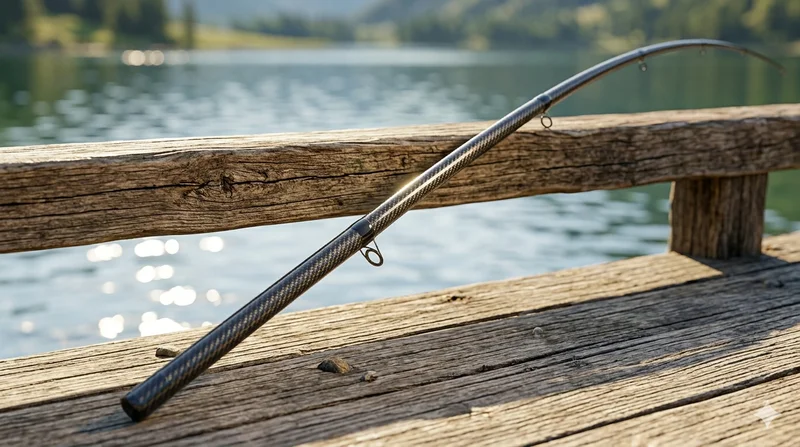
Carbon Fiber Fishing Rod Blank
High-quality carbon fiber fishing rod blank manufactured from multiple grades of Toray carbon fiber cloth. Available in a wide range of lengths, powers, and actions for freshwater and saltwater applications. Suitable for OEM rod building.
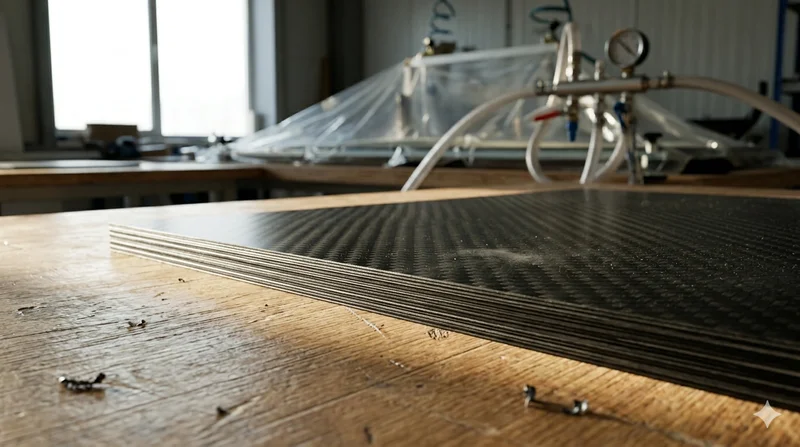
Carbon Fiber Plate — 3K Twill T700 3.0mm
Medium-thickness 3.0mm carbon fiber plate offering significantly higher load capacity while maintaining attractive 3K twill finish. Suitable for structural brackets, reinforcement plates, and load-bearing panels.

Carbon Fiber Plate — 3K Twill T700 1.5mm
Thin 1.5mm carbon fiber plate with 3K twill weave surface. Lightweight and stiff, commonly used for covers, panels, drone bodies, and applications requiring a premium aesthetic appearance.
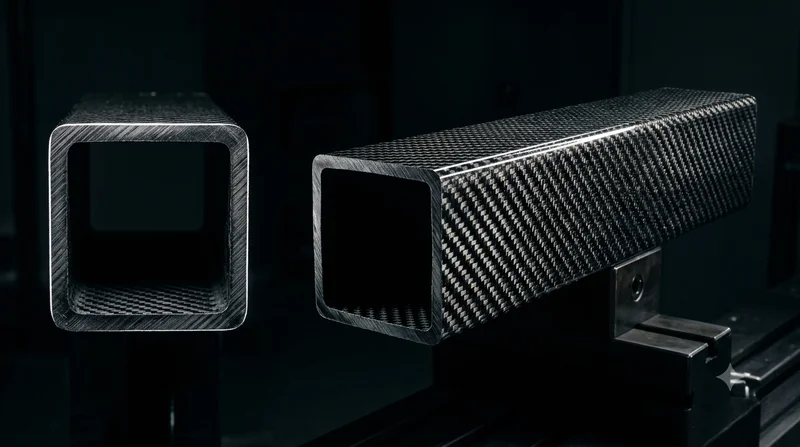
Square Carbon Fiber Tube — 3K Twill T700
Square cross-section carbon fiber tube manufactured with 3K twill weave for torsional strength. Preferred for structural frames, trusses, and support columns where rectangular geometry offers design flexibility.
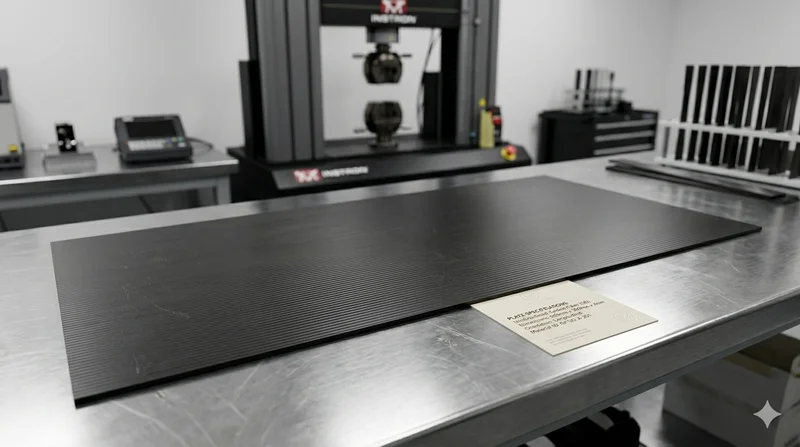
Carbon Fiber Plate — UD Unidirectional T700
Unidirectional carbon fiber plate with all fibers oriented in a single direction for maximum strength along the fiber axis. Essential for structural reinforcements, splints, and applications where load direction is predictable.