
Saudi Arabia enters 2026 as the world's largest desalination market and one of the most construction-intensive economies. State-owned SWCC runs over 30 seawater plants with combined capacity near 7 million m³/day, while Vision 2030 has unlocked a construction pipeline worth over USD 1.5
Introduction
Saudi Arabia enters 2026 as the world's largest desalination market and one of the most construction-intensive economies. State-owned SWCC runs over 30 seawater plants with combined capacity near 7 million m³/day, while Vision 2030 has unlocked a construction pipeline worth over USD 1.5 trillion. For carbon fiber exporters, the Kingdom offers an unusual mix: seawater corrosion that punishes steel and rewards FRP, a building boom that needs corrosion-proof reinforcement, and a state-backed push to localize manufacturing. This report maps the Saudi Arabia carbon fiber market in 2026 by segment and outlines entry routes into the Gulf B2B market.
Desalination: A Corrosion Laboratory That Favors FRP and CFRP
Saudi Arabia produces more desalinated water than any other country, and SWCC is the largest operator on Earth. Its plants range from Ras Al-Khair on the Arabian Gulf, the world's largest hybrid facility at 1.025 million m³/day, to newer reverse-osmosis (RO) plants such as Jubail 3A, Rabigh 3, and Yanbu 4, rated at 450,000 to 600,000 m³/day each.
| SWCC Plant | Location | Capacity (million m³/day) | Process |
|---|---|---|---|
| Ras Al-Khair | Arabian Gulf | 1.025 | RO + thermal |
| Jubail 3A | Eastern Province | 0.60 | Reverse osmosis |
| Rabigh 3 | Red Sea coast | 0.60 | Reverse osmosis |
| Yanbu 4 | Red Sea coast | 0.45 | Reverse osmosis |
| Shuaibah 3 | Red Sea coast | 0.25 | Reverse osmosis |
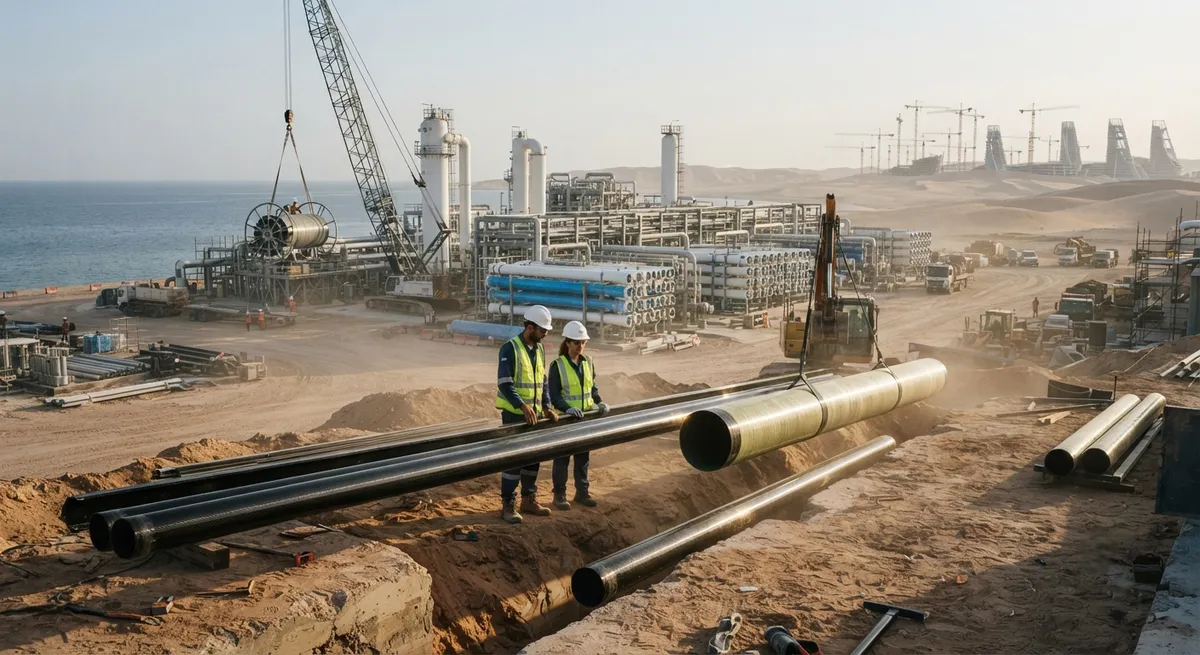
Conditions inside a desalination plant are hostile to metals. Seawater intake, RO membranes, brine discharge, and chemical dosing lines expose steel to chloride attack, crevice corrosion, and pitting. FRP piping carries seawater and brine without steel's corrosion allowance; FRP-wound membrane pressure vessels hold RO elements at up to 70 bar; and carbon fiber appears in pump casings, shafts, and hybrid pipe.
- Large-diameter FRP piping: intake and outfall lines of 400 to 2,000 mm, lighter and cheaper than lined steel.
- FRP membrane pressure vessels: filament-wound units rated to 70 bar in every modern SWCC plant.
- CFRP high-pressure parts: pump shafts, casings, and hybrid pipe spools where stiffness and weight matter.
Vision 2030 Giga-Projects: Construction Demand for Corrosion-Proof Reinforcement
Giga-projects account for roughly 60% of Saudi Arabia's project pipeline by value. NEOM, the USD 500 billion smart region on the Red Sea, includes The Line, a 170 km linear city for 9 million residents. Red Sea Global is building 50 resorts, Qiddiya an entertainment megaproject, and Diriyah Gate restoring At-Turaif in a USD 63.2 billion project. Vision 2030 construction spending should top USD 180 billion in 2026.
Coastal construction is where CFRP rebar and structural profiles shine. Steel rebar corrodes within a few years near the Gulf, where chloride-laden humidity, sabkha soils, and aggressive groundwater attack structures from the inside. Carbon fiber rebar does not corrode, matches steel's tensile strength at a fraction of the weight, and is non-magnetic. The same logic applies to bridge decks, marine structures, and retaining walls. Composites also appear in facades, curtain-wall brackets, and structural profiles.
Demand Segments at a Glance
| Segment | Est. 2026 demand (tonnes) | CAGR 2026-2030 | Primary composite form |
|---|---|---|---|
| Desalination and water | 650-750 | 12% | FRP pipe, pressure vessels |
| Construction and infrastructure | 1,000-1,200 | 14% | CFRP rebar, profiles, facades |
| Oil and gas | 850-950 | 6% | CFRP pipe, drilling components |
| Energy, solar and wind | 750-850 | 10% | Blade spars, PV support structures |
| Aerospace and defense | 400-500 | 9% | Aircraft and UAV structures |
| Total | ~3,900 | ~11% | Reaching 6,000+ tonnes by 2030 |
Localization: PIF-Backed Manufacturing and Saudi-Made Composites
Vision 2030 treats composites as a strategic industry. The Public Investment Fund backs Saudi ownership across advanced materials, and programs such as Shareek and the In-Kingdom Total Value Add (IKTVA) framework push Aramco to spend locally. That creates a dual opportunity for exporters: supplying raw carbon fiber to Saudi and GCC converters, or forming joint ventures to manufacture composites inside the Kingdom, where local content rules increasingly apply. The Kingdom still lacks domestic PAN precursor and carbon fiber production, so converters rely on imports.
Non-Oil Diversification: Aerospace, Mobility, Defense, and Energy
Beyond water and construction, diversification is building new carbon fiber end-markets. Saudi Arabia aims to generate 50% of its electricity from renewables by 2030, driving demand for composite blade materials and PV structures. The NEOM green hydrogen project, around 4 GW of electrolysis, will use composite-wrapped storage. Ceer, the PIF-backed EV brand, is localizing auto production, and GAMI-led defense localization is building drone, naval, and aviation programs. These sectors consume carbon fiber today and far more by 2030.
Import Dynamics and Opportunities for Carbon Fiber Suppliers
Saudi Arabia imports the overwhelming majority of its carbon fiber. Desalination carbon fiber and construction CFRP top the demand list, making the Kingdom one of the fastest-growing carbon fiber markets in the Middle East. There is no meaningful domestic production of PAN precursor or virgin fiber, so local fabricators buy imported tow, fabric, and prepreg from Japan, South Korea, the United States, and increasingly China. For exporters, the entry route is specific:
- Qualify early: Aramco registration, SWCC technical approval, and SASO certification are table stakes for water tenders.
- Target converters: a handful of Saudi and GCC fabricators supply giga-project contractors; build those relationships first.
- Price on whole-life cost: FRP and CFRP win on corrosion and low maintenance, not upfront price against steel or glass.
- Use the ports: Jeddah and Yanbu serve the Red Sea and NEOM; Dammam and Jubail serve the Eastern Province and Aramco.
Challenges on the Ground
The opportunity is real, and so are the obstacles. Desert heat and UV radiation degrade unprotected resin systems, so UV-stable gel coats and thermal-cycling design are essential. Humidity, dust, and temperature swings complicate logistics. Local certification adds time, and glass fiber, basalt, and coated steel compete hard on price, so carbon fiber must win on corrosion resistance, strength-to-weight, and whole-life economics.
Frequently Asked Questions
How large is Saudi Arabia's desalination capacity in 2026?
Saudi Arabia is the world's largest desalination market. SWCC operates over 30 plants with combined capacity near 7 million m³/day, including Ras Al-Khair at 1.025 million m³/day and RO plants such as Jubail 3A and Rabigh 3 at about 600,000 m³/day each.
Where is carbon fiber used in Saudi desalination and construction?
In desalination, FRP dominates as seawater and brine piping, membrane pressure vessels, and structural elements, while carbon fiber appears in high-pressure pumps. In construction, CFRP rebar and profiles reinforce concrete in chloride-rich coastal environments where steel corrodes, and composite facades appear across giga-projects.
What does a foreign carbon fiber supplier need to enter the Saudi market?
Suppliers typically need SASO conformity certification, Aramco or SWCC supplier registration for water tenders, and a local partner familiar with Saudi procurement. Exporters who serve Saudi converters with consistent quality, competitive pricing, and documented test data are best positioned in 2026.
Conclusion
Saudi Arabia is no longer a peripheral market for carbon fiber; it is a structural growth story built on the world's largest desalination fleet and a trillion-dollar construction pipeline. Desalination consumes FRP and CFRP that steel cannot match, giga-projects need corrosion-proof reinforcement, and Vision 2030 adds aerospace, energy, and mobility demand on top. For suppliers ready to qualify, partner locally, and price on whole-life value, 2026 is the moment to enter. Explore our carbon fiber materials to see how our range fits Gulf water and construction applications, and contact our export team to discuss volumes, specifications, and delivery to Jeddah, Dammam, or NEOM.
Part of topic
Related Articles
- Recycled Carbon Fiber Market Forecast 2030: Technology Maturity and Commercialization Path
- South Korea Carbon Fiber Market 2026: Hydrogen Economy and Shipbuilding Innovation
- Wind Turbine Blade Leading Edge Protection 2026: Polyurethane, Tape, and Metallic Shield Solutions
- China Carbon Fiber Overcapacity 2026: Price War Impact and Industry Consolidation
- India Carbon Fiber Market 2026: Wind Energy, Aerospace, and Defense Expansion
- PAN Precursor Market 2026: Acrylonitrile Supply and Carbon Fiber Cost Structure
Interested in Our Products?
Contact our team for competitive pricing and technical specifications.
Get a QuoteRelated Products
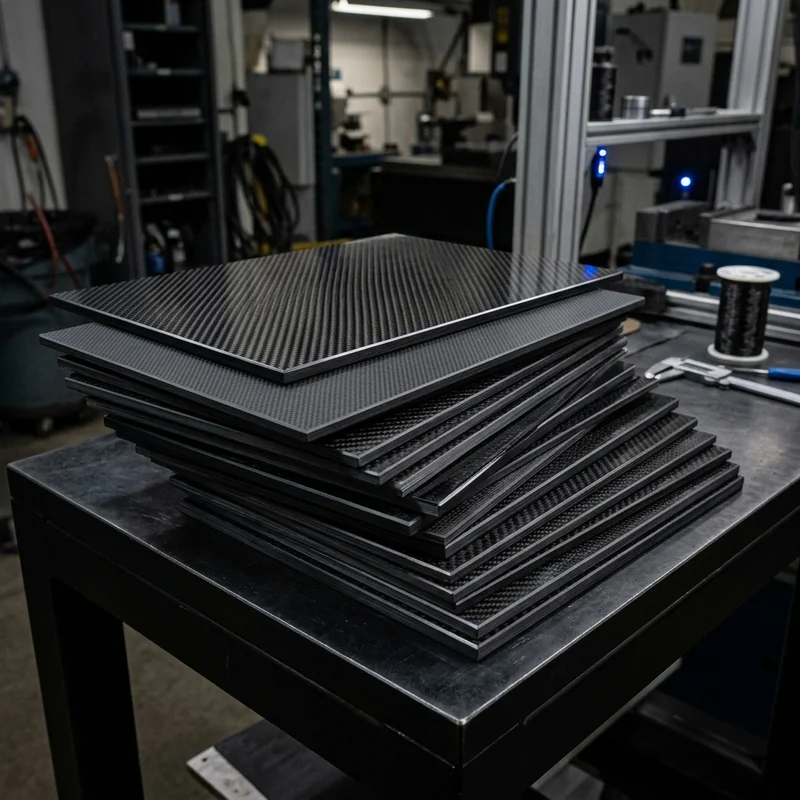
Carbon fiber standard plate-3k stripe
Lightweight, ultra-rigid standard sheets for drone fuselages, robot housings, facades and structural applications.

Carbon Fiber Plate — 3K Twill T700 3.0mm
Medium-thickness 3.0mm carbon fiber plate offering significantly higher load capacity while maintaining attractive 3K twill finish. Suitable for structural brackets, reinforcement plates, and load-bearing panels.

Carbon Fiber Plate — 3K Twill T700 1.5mm
Thin 1.5mm carbon fiber plate with 3K twill weave surface. Lightweight and stiff, commonly used for covers, panels, drone bodies, and applications requiring a premium aesthetic appearance.
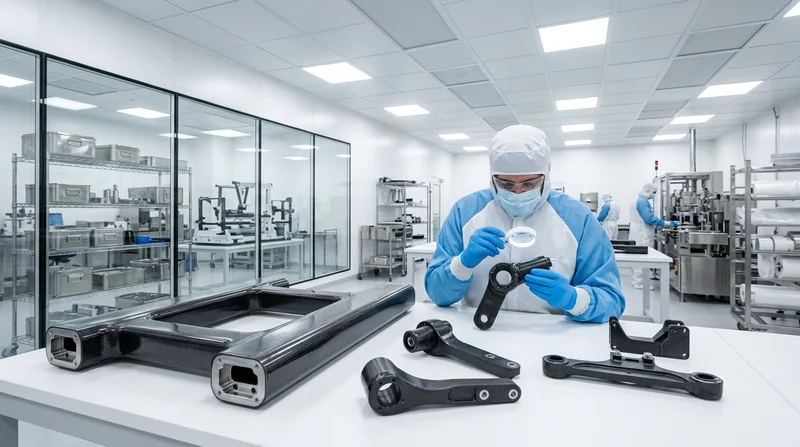
Custom Carbon Fiber Medical Device Components
Medical-grade carbon fiber components manufactured for imaging equipment, surgical instruments, and patient support systems. Carbon fiber's radiolucency (X-ray transparency) and high strength-to-weight ratio make it ideal for CT scanner beds, wheelchair frames, surgical robot arms, and MRI-compatible accessories. Biocompatible resin systems available.

Square Carbon Fiber Tube — 3K Twill T700
Square cross-section carbon fiber tube manufactured with 3K twill weave for torsional strength. Preferred for structural frames, trusses, and support columns where rectangular geometry offers design flexibility.