
A market analysis of Russia's carbon fiber landscape in 2026 — covering import substitution policies, defense procurement programs, aerospace manufacturing expansion, and opportunities for international B2B suppliers.
Introduction
Russia represents one of the most dynamic — and complex — carbon fiber markets globally. Despite international sanctions and export controls imposed since 2022, Russia's demand for carbon fiber composites continues to grow, driven by three primary forces: state-directed import substitution programs, ambitious defense and aerospace manufacturing targets, and the development of domestic carbon fiber precursor production capacity. In 2026, Russia's carbon fiber consumption is estimated at approximately 3,800–4,200 metric tons annually, representing roughly 3.5% of global demand.
| Market Segment | 2026 Est. Demand (tons) | CAGR (2023–2026) | Domestic Supply % |
|---|---|---|---|
| Aerospace & Defense | 1,800–2,100 | 14% | 35% |
| Wind Energy | 500–600 | 18% | 20% |
| Automotive & Transport | 400–500 | 15% | 40% |
| Construction & Infrastructure | 300–400 | 12% | 55% |
| Oil & Gas | 350–400 | 10% | 30% |
| Sports & Consumer | 250–300 | 8% | 45% |
| Total | 3,800–4,200 | 13% | 36% |
Import Substitution and Domestic Production
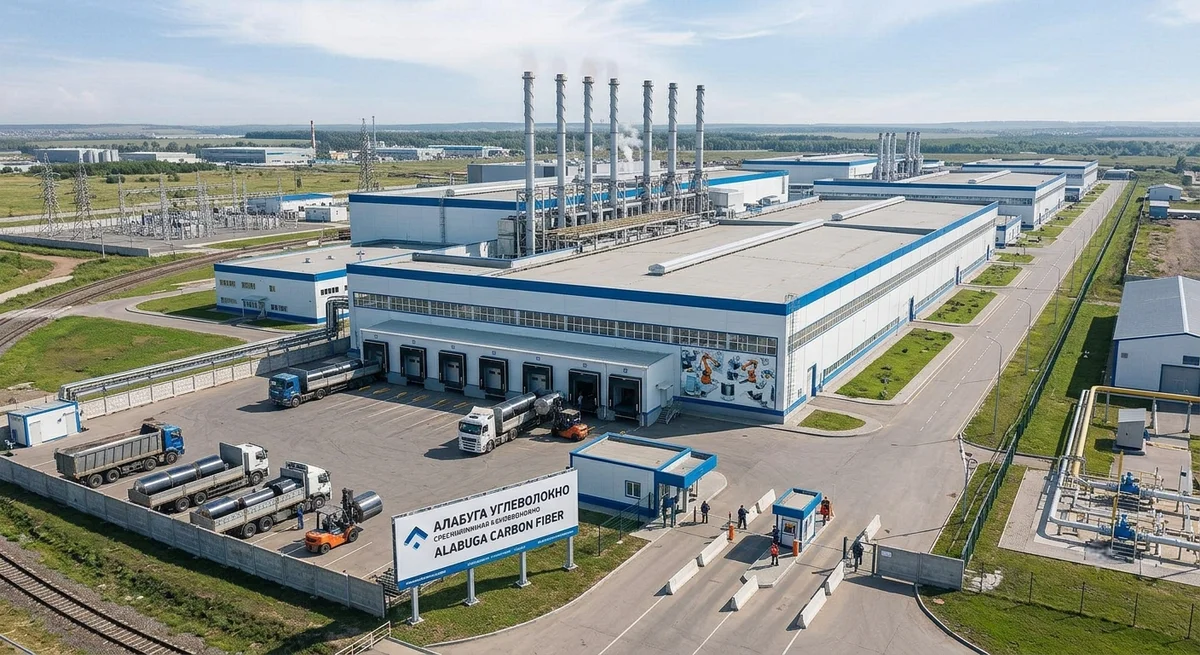
- ALABUGA Fiber Plant: Russia's largest facility in Tatarstan with announced capacity of 5,000 tons/year. Operating at approximately 55–65% of nameplate capacity, constrained by precursor quality.
- State Corporations: Rosatom and Rostec control majority of composite assets through Composite Holding Company. Key subsidiaries include Prepreg-SKM and AeroComposite.
- Precursor Challenges: Domestic PAN production only 8,000–10,000 tons/year — insufficient. Joint ventures with Chinese producers established; annual imports of 4,000–5,000 tons PAN precursor.
Defense and Aerospace Programs
- MC-21 (МС-21-310): Composite wings via AFP technology — 3.5 tons prepreg per wing set. Production target 12–18 aircraft/year.
- SSJ-100 (Superjet) New: ~10% composite content including CFRP tail section, winglets, interior components.
- Military Aviation: Su-57 (25–30% composite), Mi-28 and Ka-52 helicopter rotor blades.
Frequently Asked Questions
What are the main quality issues with domestically produced Russian carbon fiber?
Tensile strength variation of ±12–15% (vs ±5% for imported fiber), higher defect density (1.5–2.5 voids/cm² vs 0.3–0.8), and inconsistent fiber diameter (7.2–8.5 µm range). Russian T700-equivalent achieves only 65–78% of specified strength on first-pass production.
How do Russian carbon fiber prices compare?
Domestic T700-equivalent: $28–$38/kg. Chinese imports at 20–35% premium. High-modulus M40/M55J: $120–$200/kg through alternative channels.
Best opportunities for international suppliers?
PAN precursor (4,000–5,000 ton/year import requirement), high-modulus fibers, production equipment, epoxy resin systems, large-tow (50K–60K) fiber for wind energy.
Part of topic
Related Articles
- Recycled Carbon Fiber Market Forecast 2030: Technology Maturity and Commercialization Path
- South Korea Carbon Fiber Market 2026: Hydrogen Economy and Shipbuilding Innovation
- Wind Turbine Blade Leading Edge Protection 2026: Polyurethane, Tape, and Metallic Shield Solutions
- China Carbon Fiber Overcapacity 2026: Price War Impact and Industry Consolidation
- India Carbon Fiber Market 2026: Wind Energy, Aerospace, and Defense Expansion
- PAN Precursor Market 2026: Acrylonitrile Supply and Carbon Fiber Cost Structure
Interested in Our Products?
Contact our team for competitive pricing and technical specifications.
Get a QuoteRelated Products
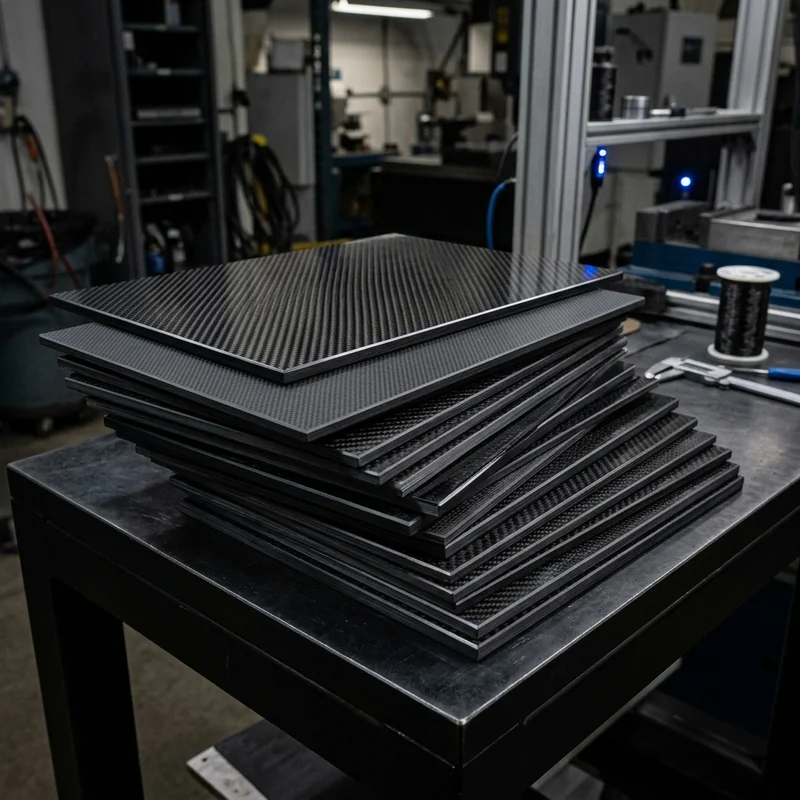
Carbon fiber standard plate-3k stripe
Lightweight, ultra-rigid standard sheets for drone fuselages, robot housings, facades and structural applications.

Carbon Fiber Plate — 3K Twill T700 1.5mm
Thin 1.5mm carbon fiber plate with 3K twill weave surface. Lightweight and stiff, commonly used for covers, panels, drone bodies, and applications requiring a premium aesthetic appearance.

Square Carbon Fiber Tube — 3K Twill T700
Square cross-section carbon fiber tube manufactured with 3K twill weave for torsional strength. Preferred for structural frames, trusses, and support columns where rectangular geometry offers design flexibility.

Carbon Fiber Plate — 3K Twill T700 3.0mm
Medium-thickness 3.0mm carbon fiber plate offering significantly higher load capacity while maintaining attractive 3K twill finish. Suitable for structural brackets, reinforcement plates, and load-bearing panels.
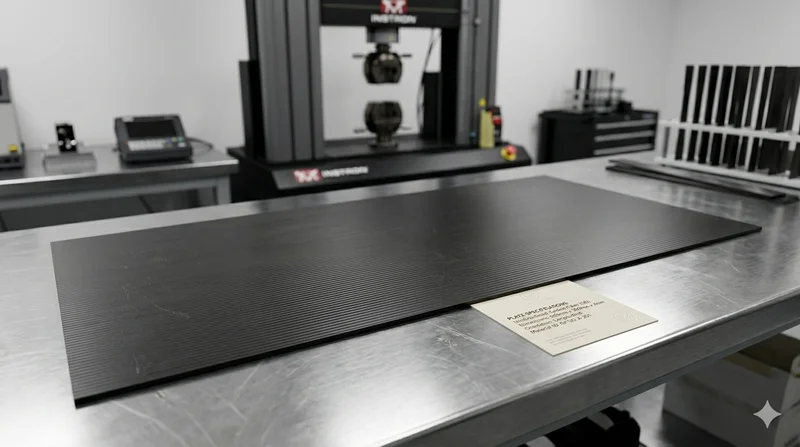
Carbon Fiber Plate — UD Unidirectional T700
Unidirectional carbon fiber plate with all fibers oriented in a single direction for maximum strength along the fiber axis. Essential for structural reinforcements, splints, and applications where load direction is predictable.