
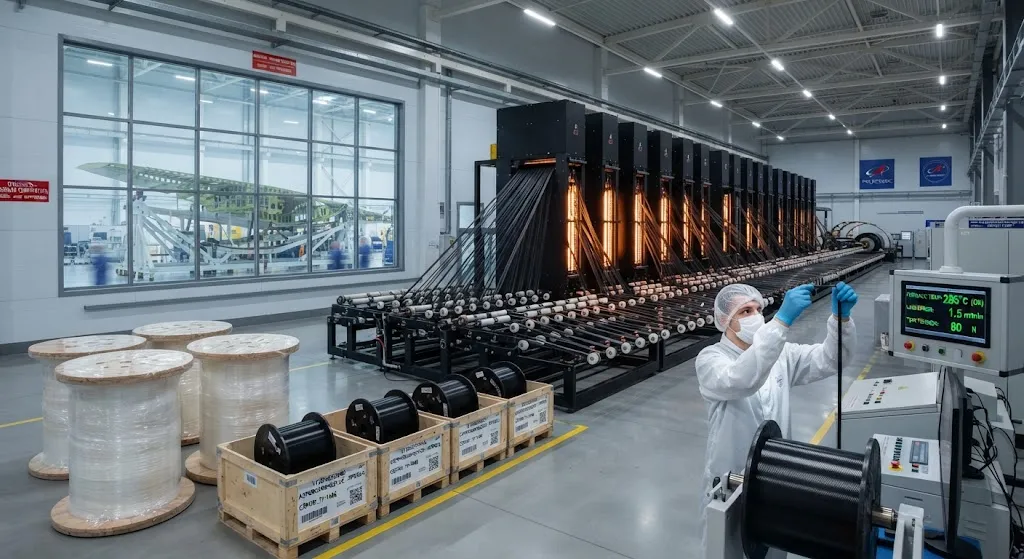
When the MC-21 narrowbody airliner was designed, its wing was planned around imported carbon fiber and prepreg, sourced largely from Western suppliers. After 2022, those suppliers exited the Russian market, and the composite wing suddenly had no guaranteed material feed. The response be
Introduction
When the MC-21 narrowbody airliner was designed, its wing was planned around imported carbon fiber and prepreg, sourced largely from Western suppliers. After 2022, those suppliers exited the Russian market, and the composite wing suddenly had no guaranteed material feed. The response became a national program: build a domestic carbon fiber supply chain from PAN precursor to finished prepreg, backed by state funding, and qualify it for serial aviation production. Russia is not starting from zero — domestic fiber capacity has existed for years — but the jump from general-industrial fiber to aerospace-grade precursor and prepreg is a large technical and certification step that is still in progress.
This article examines the demand side of Russia's import substitution effort, the capacity landscape across precursor, fiber and prepreg stages, and the structural gaps that remain between self-sufficiency targets and serial aerospace reality.
Demand Drivers: MC-21 and the Composite Wing
The MC-21's wing is the strategic anchor of the program. Designed with composite wing-box skins and integral stringers, the MC-21 wing delivers an aerodynamic and weight advantage over its narrowbody rivals, but it also locks in a large and continuous demand for high-quality carbon fiber. Later builds of the aircraft need roughly 2-3 tons of carbon fiber per airframe when scrap is included, and with the production ramp targeting several dozen aircraft per year, the wing program alone needs several hundred tons of aerospace-grade fiber annually in the medium term. Add rotorcraft, military aircraft, the SSJ-NEW regional jet program and industrial applications, and the total domestic demand outlook exceeds what Russian fiber plants have historically supplied for aviation-grade material.
Sanctions did more than cut supply: they changed the quality target. Western aerospace fibers were qualified to a documented traceability and certification standard that Russian suppliers now must replicate. That means not just producing fiber with the right modulus and strength, but controlling filament count, sizing chemistry, tow tension and lot-to-lot consistency to standards that global aviation regulators accept, all while the supply of imported machinery and consumables such as spinneret packs and high-temperature furnaces has itself been restricted.
Capacity Landscape: From Precursor to Prepreg
The domestic industry is organized around a small number of state-linked players, each covering a different stage of the chain. The table below summarizes the main capacities and their status:
| Company | Stage | Status and focus |
|---|---|---|
| Argon composite plant | PAN precursor + fiber | Long-running producer; precursor investment and capacity expansion |
| Alabuga fiber plant | PAN precursor + fiber | State-backed scale-up; industrial and aerospace-grade roadmap |
| Rosatom (Umatex group) | Fiber + prepreg | Largest integrated player; prepreg for MC-21 wing qualification |
| Various regional projects | Sizing, prepreg, recycling | Filling downstream gaps for aerospace and wind demand |
Each stage has its own economics. PAN precursor is the most capital-intensive step and the classic bottleneck: precursor production requires imported equipment, strict process control, and a patient money profile because capacity must be built years before fiber output is qualified. Fiber production follows a more proven industrial template, while prepreg is a specialized finishing step where coating line consistency and clean-room control decide whether the product is certifiable.
State Support and Program Structure
Import substitution in carbon fiber is organized as a state-coordinated effort rather than a purely commercial one. The government has funded precursor plants, consolidated fiber assets under state-linked holding structures, and set procurement rules that direct aerospace and wind-energy programs toward domestic material. Financial support typically combines direct capital grants, subsidized loans and guaranteed offtake agreements that let a precursor plant secure financing against future fiber sales. State customers, in turn, accept the political priority of domestic supply even where imported material was previously cheaper or better documented.
The program structure has a clear sequencing logic. First, precursor capacity is funded and brought online, because every downstream stage depends on it. Second, fiber plants qualify their product against the aerospace specification, initially for secondary structures where certification risk is lower. Third, prepreg qualification moves into wing skins and other primary structure, the last and most demanding step. This staged approach staggers capital spending and gives each qualification program a realistic timeline, but it also means the strategic bottleneck — aerospace-grade precursor — is the slowest stage to close.
Gaps and Open Questions
The remaining gaps are structural rather than financial. Aerospace-grade precursor is the hardest link: Russian precursor output has historically served industrial fiber, and converting it to the tight filament-count and defect tolerances of aviation tow requires process and equipment work that takes years. Certification is the second bottleneck — every supplier change on an aircraft program must be approved by the certification authority, and building the test database for a new fiber on a flying program is a multi-year effort, even before serial production begins. The third gap is the ecosystem around the fiber: sizing systems optimized for imported prepreg machines, qualified release films, and tooling consumables all had to be re-sourced domestically or from non-Western suppliers.
- Precursor bottleneck: Domestic precursor capacity for aerospace-grade tow remains the pacing item for the whole chain.
- Certification lead time: New-materials qualification on an in-service aircraft program is measured in years, not quarters.
- Consumables and equipment: Spinnerets, furnaces, prepreg-line components and release materials are still exposed to import restrictions.
- Commercial discipline: Subsidized offtake can mask cost competitiveness unless export or market pricing benchmarks are maintained.
For global buyers the implications cut both ways: Russia's exit from imported fiber demand has removed a volume customer from the world market, while its subsidized domestic build-up is unlikely to change the global price floor in the near term because the highest-value grades take the longest to qualify.
Frequently Asked Questions
Can Russia be fully self-sufficient in aerospace-grade carbon fiber?
Physically yes, but only after a long qualification cycle. The precursor plants and fiber lines exist or are under construction, and state funding removes the capital constraint. The binding constraints are technical and procedural: producing aerospace-grade tow with tight filament count, defect and lot-to-lot control, then qualifying that tow against global aviation standards on an active program such as the MC-21. Precursor is the pacing stage — it must be qualified years before wing skins can be certified — so full self-sufficiency is realistically a multiple-year outcome rather than an immediate one, with secondary structures typically qualified before primary wing structure.
Why does the MC-21 need so much carbon fiber?
The MC-21 wing is designed as a composite wing box with integrally stiffened skins, which is the lightest and most aerodynamically efficient configuration in its class but also the most material-intensive. Each airframe consumes roughly 2-3 tons of carbon fiber when process scrap is included, and composite wing production requires fiber with consistent modulus and strength across lots so that the certification test database stays valid. Multiplied by the production ramp and by the other aircraft and helicopter programs also converting to composites, the MC-21 program alone constitutes the single largest demand anchor for Russia's domestic fiber build-out.
How does Russia's strategy compare with China's carbon fiber build-up?
The two programs share the same trigger — sanctions and strategic dependence on imports — but differ in scale and integration. China has a much larger and more diversified fiber industry with multiple independent producers, big domestic wind and aerospace demand, and a longer runway of export-led capacity; Russia is consolidating under a smaller number of state-linked players with a single dominant aerospace anchor (MC-21) and a heavier reliance on state offtake. China's experience also shows that scaling precursor quality is the universal bottleneck: even large, well-funded programs take years to move from industrial-grade to aerospace-grade tow. Russia's path mirrors that pattern but on a smaller absolute scale.
Conclusion
Russia's carbon fiber import substitution is a state-coordinated program with a clear anchor: the MC-21's composite wing. Precursor plants, fiber lines and prepreg capability are being funded and expanded, with Rosatom-affiliated capacity leading the aerospace-grade qualification work. The pacing items are not capital but qualification — turning industrial precursor into certification-ready aviation tow, and building the test evidence that regulators accept — which means full aerospace self-sufficiency is a multi-year goal, reached through staged qualification of secondary structures before primary wing skins.
For buyers and observers tracking the global carbon fiber market, the program removes a Western supplier's former volume customer while adding a subsidized domestic supply whose highest-value grades will be slow to reach the open market. Learn more about our carbon fiber products and global sourcing, or contact our team for supply and specification questions.
Part of topic
Related Articles
- Recycled Carbon Fiber Market Forecast 2030: Technology Maturity and Commercialization Path
- South Korea Carbon Fiber Market 2026: Hydrogen Economy and Shipbuilding Innovation
- Wind Turbine Blade Leading Edge Protection 2026: Polyurethane, Tape, and Metallic Shield Solutions
- China Carbon Fiber Overcapacity 2026: Price War Impact and Industry Consolidation
- India Carbon Fiber Market 2026: Wind Energy, Aerospace, and Defense Expansion
- PAN Precursor Market 2026: Acrylonitrile Supply and Carbon Fiber Cost Structure
Interested in Our Products?
Contact our team for competitive pricing and technical specifications.
Get a QuoteRelated Products
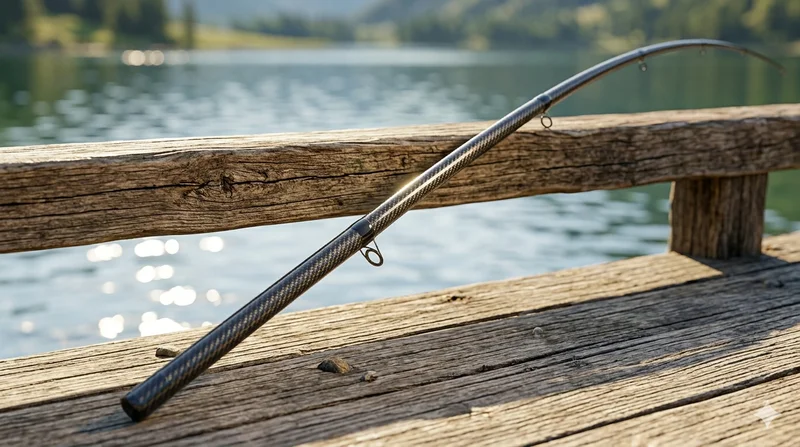
Carbon Fiber Fishing Rod Blank
High-quality carbon fiber fishing rod blank manufactured from multiple grades of Toray carbon fiber cloth. Available in a wide range of lengths, powers, and actions for freshwater and saltwater applications. Suitable for OEM rod building.

Carbon Fiber Plate — 3K Twill T700 3.0mm
Medium-thickness 3.0mm carbon fiber plate offering significantly higher load capacity while maintaining attractive 3K twill finish. Suitable for structural brackets, reinforcement plates, and load-bearing panels.

Carbon Fiber Plate — 3K Twill T700 1.5mm
Thin 1.5mm carbon fiber plate with 3K twill weave surface. Lightweight and stiff, commonly used for covers, panels, drone bodies, and applications requiring a premium aesthetic appearance.

Square Carbon Fiber Tube — 3K Twill T700
Square cross-section carbon fiber tube manufactured with 3K twill weave for torsional strength. Preferred for structural frames, trusses, and support columns where rectangular geometry offers design flexibility.
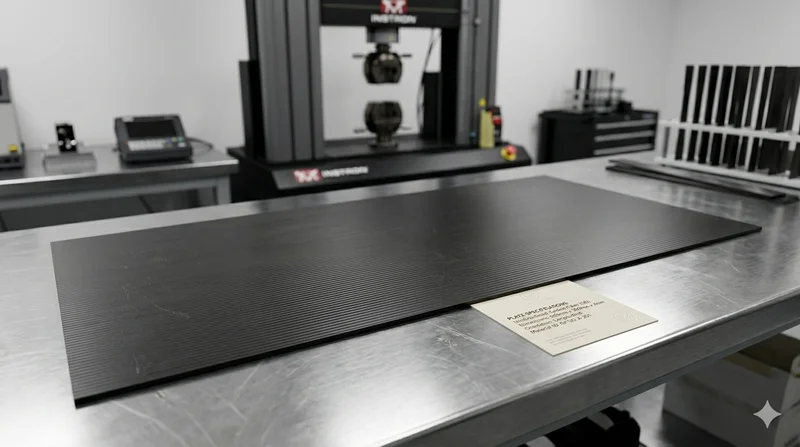
Carbon Fiber Plate — UD Unidirectional T700
Unidirectional carbon fiber plate with all fibers oriented in a single direction for maximum strength along the fiber axis. Essential for structural reinforcements, splints, and applications where load direction is predictable.