
Pultruded carbon fibre rods are the most predictable composite product on the market, and that predictability is precisely why they are specified for everything from kite spars and drone arms to structural bracing and model engineering. A pultruded carbon fibre rod is drawn continuously through a he
Introduction
Pultruded carbon fibre rods are the most predictable composite product on the market, and that predictability is precisely why they are specified for everything from kite spars and drone arms to structural bracing and model engineering. A pultruded carbon fibre rod is drawn continuously through a heated die, so every meter of a production run has the same cross-section, the same fibre alignment, and the same mechanical properties — a consistency that machined or moulded parts rarely match. The trade-off is that all the performance is locked into the cross-section, so the specification you write at the start determines what the rod can do.
This article explains how to read and write a specification for pultruded CFRP rods: what cross-sectional properties matter, how fibre volume fraction and grade translate into mechanical data, and which standard sizes are available from UK and international suppliers. Whether you are an engineer designing a load-bearing strut or a buyer comparing pultruded composite rod quotes, the terms in this guide are the ones that separate a useful datasheet from a marketing sheet.
Cross-Sectional Properties of a Pultruded CFRP Rod
Unlike a machined part, a pultruded carbon fibre rod is defined by its cross-section. Three properties dominate: the cross-sectional geometry, the fibre volume fraction, and the straightness and surface condition produced by the die.
| Property | Typical Value | Why It Matters |
|---|---|---|
| Diameter tolerance (round rod) | ±0.05 mm up to 10 mm, ±0.1 mm above | Determines fit in bearings, clamps and fittings |
| Fibre volume fraction | 55-70% | Sets stiffness, strength and density of the rod |
| Straightness | 0.5-1.0 mm per metre | Affects alignment in guides and structural accuracy |
| Surface finish | Gloss or matte, 0.5-1.5 µm Ra | Influences friction, aesthetics and bond preparation |
| Density | 1.55-1.65 g/cm³ | Drives weight calculations for lightweight design |
Cross-sectional geometry matters because pultrusion is a constant-section process. Round rods are the most common, but square, rectangular, and hexagonal sections are all produced for specific applications — square rods for stiffening frames, hexagonal rods for arrow shafts and premium kite spars where torsional stability and a precise fit in ferrules matter. When you specify a pultruded CFRP rod, the two numbers that anchor everything are the nominal dimension and the diameter or side tolerance, because every subsequent part — bearing, clamp, ferrule, or coupler — is machined to that figure.
Mechanical Properties of Pultruded Carbon Fibre Rods by Fibre Grade
The mechanical data on a pultruded carbon fibre rod datasheet is dominated by the fibre grade and the fibre volume fraction. Longitudinal properties follow the rule of mixtures: stiffness and strength scale with the volume fraction of fibres aligned along the axis, which in pultrusion approaches the maximum achievable alignment. The table below shows typical ranges for the two most specified grades.
| Property | T300 Rod | T700 Rod |
|---|---|---|
| Tensile strength (longitudinal) | 1,200-1,800 MPa | 1,800-2,600 MPa |
| Tensile modulus | 120-140 GPa | 130-150 GPa |
| Flexural strength | 900-1,400 MPa | 1,200-1,700 MPa |
| Compressive strength | 700-1,000 MPa | 900-1,300 MPa |
| Typical fibre volume fraction | 60-65% | 60-68% |
Transverse and shear properties are lower, as with all unidirectional composites, so a pultruded rod is best used in pure axial tension, compression, or bending — not where it must carry transverse loads at a joint without a fitting to spread them. High-modulus rods (HM grades) trade some strength for higher stiffness at roughly twice the price, and are specified for metrology frames and lightweight aerospace struts where deflection, not failure, is the design driver.
Specifying pultruded carbon fibre rods also means reading the datasheet like an engineer. Two numbers deserve particular scrutiny: the tensile modulus, which tells you how the rod deflects under load, and the fibre volume fraction, which tells you how much of that performance is real fibre rather than resin. A supplier that lists a tensile strength without a modulus or Vf is giving you a headline, not a specification. Reputable UK and international suppliers test per batch and state the test standard alongside the value — typically ISO 527 for tensile properties and ASTM D3171 for fibre volume fraction — so the data stays comparable across suppliers and across design iterations.
Standard Sizes and Specification Checklist
Pultruded carbon fibre rods are sold in a well-established set of standard sizes, so most projects never need custom tooling. Round rods run from 0.5 mm (precision kite spars) to 30 mm and beyond (structural bracing), with 2 mm, 3 mm, 4 mm, 6 mm, 8 mm, 10 mm and 12 mm as the most common stock diameters. Square rods typically range from 3 mm to 20 mm per side. Standard stock lengths are 1 m, 2 m and 3 m, with cut-to-length service down to 10 mm.
- Specify the grade and fibre volume fraction: write "T700, 60% minimum Vf" rather than just "carbon fibre rod" — the grade is the single largest driver of mechanical performance.
- State the tolerance class: standard (±0.1 mm) for cost-sensitive parts, precision (±0.05 mm) for bearing and ferrule fits.
- Choose the surface finish: gloss for visible aesthetics and low friction, matte where adhesive bonding follows.
- Define straightness: 1 mm/m is the default; request 0.5 mm/m for long unsupported spans like arrow shafts.
- Confirm the resin system: epoxy is the norm; vinyl ester offers lower cost with slightly reduced properties; polyester is rare for carbon.
- Ask for test data: a reputable pultruded carbon fibre rod supplier provides tensile, flexural and compressive data per batch, not just nominal values.
When comparing quotes for pultruded carbon fibre rods from different suppliers, the same nominal diameter can hide very different products. A 6 mm rod with 55% fibre volume fraction and a 6 mm rod with 65% can differ by 15-20% in stiffness and a similar margin in price. The specification — not the diameter alone — is what makes quotes comparable.
Frequently Asked Questions
What sizes do pultruded carbon fibre rods come in?
Round pultruded carbon fibre rods are commonly stocked from 0.5 mm to 30 mm diameter, with 2 mm, 3 mm, 4 mm, 6 mm, 8 mm, 10 mm and 12 mm as the most reordered sizes. Square rods typically range from 3 mm to 20 mm per side, and hexagonal sections are produced for arrow shafts and kite spars. Standard lengths are 1 m, 2 m and 3 m, and most suppliers cut to length from 10 mm upward. Outside the standard range, custom dies are needed, which is rarely economical for small volumes.
How strong is a pultruded carbon fibre rod?
A typical T700 pultruded rod at 60-65% fibre volume fraction reaches 1,800-2,600 MPa in longitudinal tensile strength, with a tensile modulus of 130-150 GPa. In practice this means a 6 mm rod can carry several kilonewtons in pure axial tension before failure. T300 rods are roughly 30-40% lower in strength. Because the fibres run unidirectionally, the rod is much weaker in the transverse direction and at joints, so fittings that spread the load are essential for structural use.
What is the difference between pultruded and filament-wound carbon fibre rods?
Pultruded rods are drawn continuously through a die with fibres running almost perfectly along the axis, which gives the highest possible longitudinal stiffness and strength at the lowest cost — but only axial properties, since there are no fibres oriented around the circumference. Filament-wound rods (rare as solid rods) or tubes wrap fibres at controlled angles, adding hoop and torsional strength at higher cost and lower axial efficiency. For rods used in pure axial loading — struts, spars, push rods — pultrusion is the right and economical choice; for torque or pressure applications, wound structures win.
Conclusion
Specifying pultruded carbon fibre rods correctly is a matter of anchoring the datasheet to the cross-section: state the grade and minimum fibre volume fraction, choose a tolerance class and surface finish to match the mating parts, define straightness for the span, and verify with batch test data. The mechanical story is written by the fibre grade and volume fraction; the geometric story is written by the tolerance and straightness. Get both on paper, and a pultruded CFRP rod becomes one of the most reliable structural components you can buy.
We manufacture pultruded carbon fibre rods from 0.5 mm to 30 mm in T300 and T700 grades, with precision tolerance, batch test data, and cut-to-length service from our stock. Browse our carbon fibre rod products or send your specification to our engineering team for a quotation.
Part of topic
Related Articles
- Carbon Fiber Tube Fittings and Connectors: Joining Solutions for Structural Assemblies
- Carbon Fiber Plate Insert: Threaded Insert Design for Composite Structures
- Filament Wound Epoxy Tubing: Selection Guide for Industrial and Aerospace Applications
- Filament Wound Epoxy Tubes Advantages: Over Metal and Pultruded Alternatives
- Carbon Fiber Tube Strength: Analysis Methods and Design Allowables
- Filament Wound Epoxy Tubes: Mechanical Properties and Material Data Sheets
Interested in Our Products?
Contact our team for competitive pricing and technical specifications.
Get a QuoteRelated Products
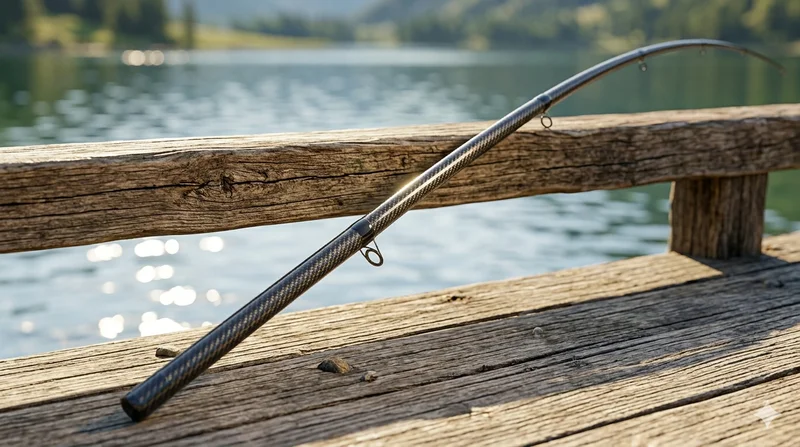
Carbon Fiber Fishing Rod Blank
High-quality carbon fiber fishing rod blank manufactured from multiple grades of Toray carbon fiber cloth. Available in a wide range of lengths, powers, and actions for freshwater and saltwater applications. Suitable for OEM rod building.

Carbon Fiber Plate — 3K Twill T700 3.0mm
Medium-thickness 3.0mm carbon fiber plate offering significantly higher load capacity while maintaining attractive 3K twill finish. Suitable for structural brackets, reinforcement plates, and load-bearing panels.

Carbon Fiber Plate — 3K Twill T700 1.5mm
Thin 1.5mm carbon fiber plate with 3K twill weave surface. Lightweight and stiff, commonly used for covers, panels, drone bodies, and applications requiring a premium aesthetic appearance.
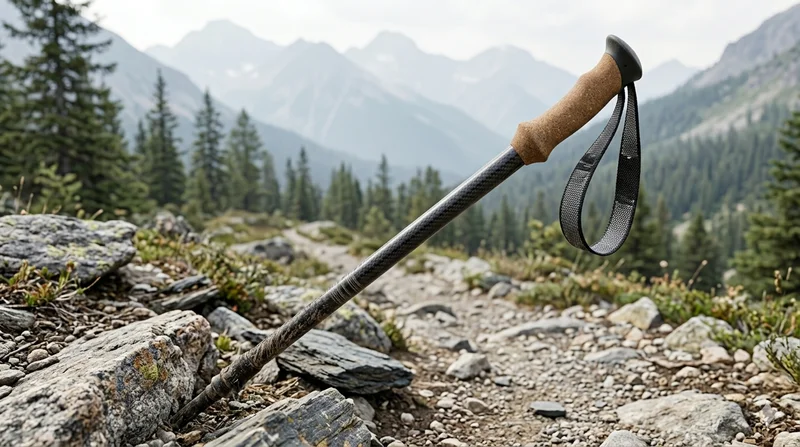
Carbon Fiber Trekking Pole
Lightweight carbon fiber trekking pole manufactured from high-grade carbon fiber tube. Weighs only 160g per pole while providing superior shock absorption and durability for hiking, trail running, and backpacking.

Square Carbon Fiber Tube — 3K Twill T700
Square cross-section carbon fiber tube manufactured with 3K twill weave for torsional strength. Preferred for structural frames, trusses, and support columns where rectangular geometry offers design flexibility.