When engineers and buyers specify a carbon fiber oval tube cut to size , they are usually solving a space, ergonomics, or aerodynamic constraint that round tubing cannot meet. Oval profiles fit neatly into streamlined frames, hand grips, robotic arms, camera rigs, and lightweight structural links wh
Introduction
When engineers and buyers specify a carbon fiber oval tube cut to size, they are usually solving a space, ergonomics, or aerodynamic constraint that round tubing cannot meet. Oval profiles fit neatly into streamlined frames, hand grips, robotic arms, camera rigs, and lightweight structural links where a flat contact face and low frontal area matter. Getting the right part is less about choosing from a catalog and more about defining geometry, fiber architecture, and finishing requirements so the factory can deliver tubes that assemble without rework. This guide explains how to buy carbon fiber oval tube with the right specifications, realistic MOQ, and predictable lead time.
Key Specifications for Carbon Fiber Oval Tube Cut To Size
Accurate drawings prevent costly sampling loops. A capable supplier will ask for the major axis, minor axis, wall thickness, length, and corner radius, along with how the tube will be loaded and finished. Because oval sections behave differently in bending across each axis, the layup should match the real load case rather than a generic default.
| Specification | Typical range | Why it matters |
|---|---|---|
| Major axis (outer) | 15 mm to 120 mm | Controls profile height and stiffness in the strong direction |
| Minor axis (outer) | 8 mm to 60 mm | Affects frontal area, grip comfort, and fit in tight spaces |
| Wall thickness | 0.8 mm to 4.0 mm | Balances weight, crush resistance, and local bearing strength |
| Cut length | 50 mm to 2000 mm | Determines yield, straightness control, and packing method |
| Fiber type | T300, T700, high-modulus | Sets stiffness, impact behavior, and cost level |
| Layup schedule | 0/90, quasi-isotropic, UD bias | Tunes bending, torsion, and ovalization resistance |
| Surface finish | Matte, glossy, sanded, clear coat | Supports bonding, painting, or cosmetic requirements |
For assemblies that clamp onto the flats of the oval, state the bearing load and any insert or drilling plans. That information helps the factory reinforce the wall locally or recommend a thicker section where fasteners pass through.
Manufacturing Methods and Tolerances
Most custom oval tubes are made by roll-wrapping prepreg carbon fiber around a shaped mandrel, followed by curing and precision cutting. Pultrusion can be efficient for standard profiles and long runs, but roll-wrapping usually offers more flexibility for custom dimensions and tailored fiber orientation. When you request carbon fiber oval tube cut to size, confirm the process because it affects both cosmetic quality and dimensional consistency.
- Roll-wrapped prepreg: Best for custom sizes, mixed layups, and moderate volumes; supports smooth surfaces and controlled fiber placement around the curve.
- Pultruded profiles: Suitable for repeat standard sections where straightness and unit cost dominate over complex layups.
- CNC cut-to-length service: Square, burr-free ends reduce assembly time and improve bond-line consistency for bonded joints.
- Secondary machining: Slots, holes, and chamfers can be added before shipment to lower handling risk at your site.
Typical industrial tolerances are ±0.10 to ±0.25 mm on outer axes, ±0.10 mm on wall thickness, straightness around 0.5 mm per meter, and ±0.5 mm on cut length. Tighter tolerances are achievable, but they may require dedicated tooling, extra inspection, and higher scrap allowances. Specify only what the design truly needs so you do not pay for unnecessary precision.
MOQ, Lead Time, and Cost Drivers
Minimum order quantity and lead time depend on whether a matching mandrel already exists. If the factory can use a stock or near-stock oval mandrel, you can often buy carbon fiber oval tube in smaller pilot quantities. Fully custom profiles usually require tooling preparation and a curing schedule that sets a higher MOQ.
| Order scenario | Typical MOQ | Typical lead time | What to expect |
|---|---|---|---|
| Existing mandrel, cut to size | 10 to 30 pcs | 7 to 12 days | Fastest route for samples, spares, and trials |
| Custom size, standard process | 50 to 100 pcs | 15 to 25 days | Includes first-article checks and packing setup |
| New mandrel or special layup | 100+ pcs | 25 to 40 days | Tooling and process validation spread over volume |
Pricing is driven by fiber grade, number of plies, cosmetic class, cut accuracy, and any machining. When comparing suppliers, ask for price breaks at two or three quantities. A slightly higher pilot-lot price can be worthwhile if the supplier delivers consistent dimensions and documented inspection data.
How to Request an Accurate Quote
A clear RFQ shortens the path from inquiry to shipment. To get a reliable quote for carbon fiber oval tube cut to size, share complete technical and commercial details in one message rather than spreading them across several emails.
- 2D drawing or sketch with major axis, minor axis, wall thickness, and finished length
- Material preference (T300, T700, or high-modulus) and intended layup direction
- Tolerance targets, straightness requirement, and inspection report needs
- Surface finish, UV clear coat, sanding, or bonding preparation requirements
- Quantity breaks, annual demand forecast, and target delivery date
- Application notes such as clamping, drilling, torsion load, or impact exposure
- Packaging, labeling, and destination port for export planning
If you are sourcing from a carbon fiber oval tube cut to size factory in China, also confirm communication on drawings, sample approval steps, and how nonconforming parts are handled. These points often matter as much as the unit price.
Frequently Asked Questions
Can I order very short pieces when I need carbon fiber oval tube cut to size?
Yes. Most factories can supply short cut lengths, but very small pieces increase handling time and material yield loss. For tiny parts, ask whether the supplier recommends cutting from longer cured tubes or producing a batch optimized for your finished length to control cost.
Which is more important for an oval tube: stiffness or weight?
It depends on the load direction. Oval tubes are often stiffer along the major axis and more compact along the minor axis. Share how the tube is supported and loaded so the supplier can propose a layup that balances stiffness, weight, and resistance to ovalization without overspecifying material.
What should I check before placing a bulk order?
Review a first-article sample for flat-to-flat fit, cut squareness, surface finish, and straightness. Confirm that inspection records match your drawing and that packaging protects edges during transit. A short pilot run is the safest way to validate a new carbon fiber oval tube cut to size supplier before scaling volume.
Conclusion
Sourcing carbon fiber oval tube cut to size is straightforward when the specification is complete: define the profile, wall, layup intent, tolerances, and finishing needs, then align MOQ and lead time with your project schedule. Clear RFQ data helps you compare quotes fairly and reduces the risk of fit-up problems at assembly.
To discuss custom oval profiles, precision cutting, and export-ready packaging, explore YongXian carbon fiber tube products or contact our team for a quote with your drawing and quantity requirements.
Part of topic
Related Articles
- Carbon Fiber Telescopic Tube Cut To Size: Specs, MOQ and Lead Time
- Carbon Fiber Hexagon Tube Cut To Size: Specs, MOQ and Lead Time
- Carbon Fiber Tapered Tube Cut To Size: Specs, MOQ and Lead Time
- Carbon Fiber Square Tube Cut To Size: Specs, MOQ and Lead Time
- Carbon Fiber Rod Cut To Size: Specs, MOQ and Lead Time
- Carbon Fiber Plate Cut To Size: Specs, MOQ and Lead Time
Interested in Our Products?
Contact our team for competitive pricing and technical specifications.
Get a QuoteRelated Products
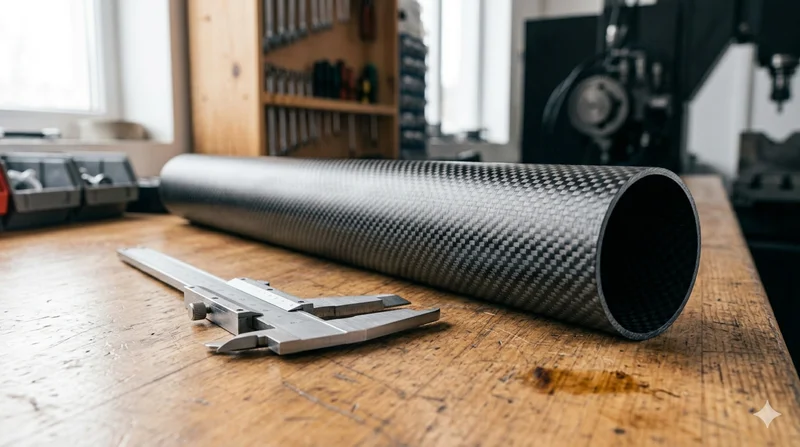
Round Carbon Fiber Tube — 3K Plain Weave T700
Standard round carbon fiber tube manufactured from Toray T700 grade fiber with 3K plain weave. Offers balanced strength and stiffness for general industrial applications including robotics, automation, sports equipment, and aerospace structures.
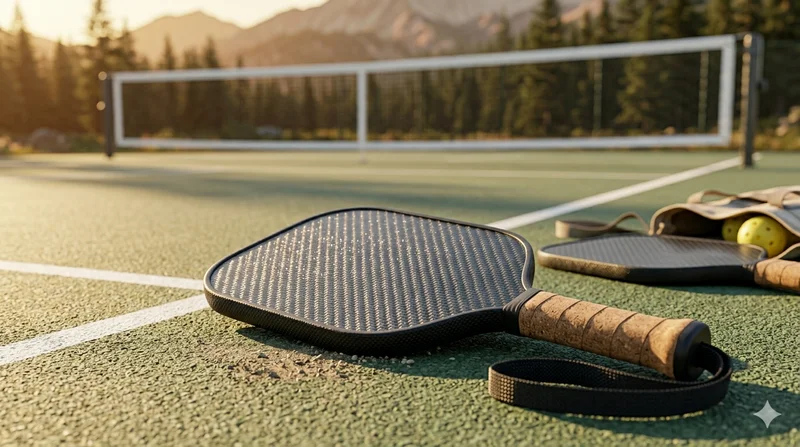
Carbon Fiber Pickleball Paddle
High-performance pickleball paddle with Toray T700 carbon fiber face and polypropylene honeycomb core. Delivers excellent power-to-weight ratio, spin generation, and vibration dampening for competitive play.
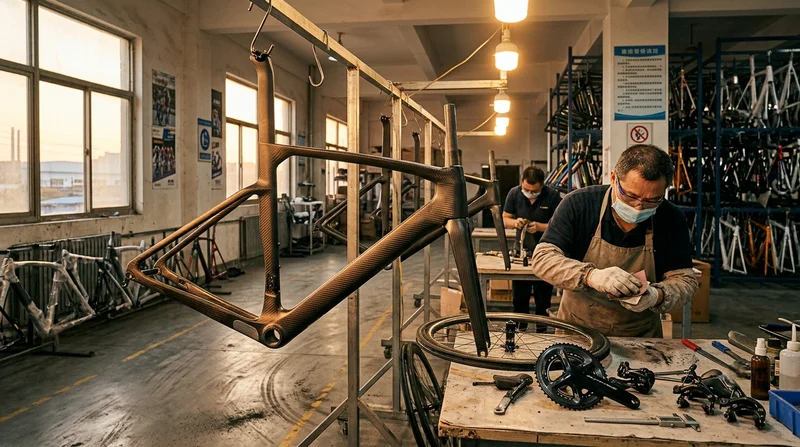
Custom Carbon Fiber Bicycle Frame
Full-custom carbon fiber bicycle frame manufactured to your geometry specifications. We produce road, gravel, mountain, and track frames using high-modulus carbon fiber layups optimized for each riding discipline. Monocoque construction with internal cable routing, available with disc or rim brake mounts.
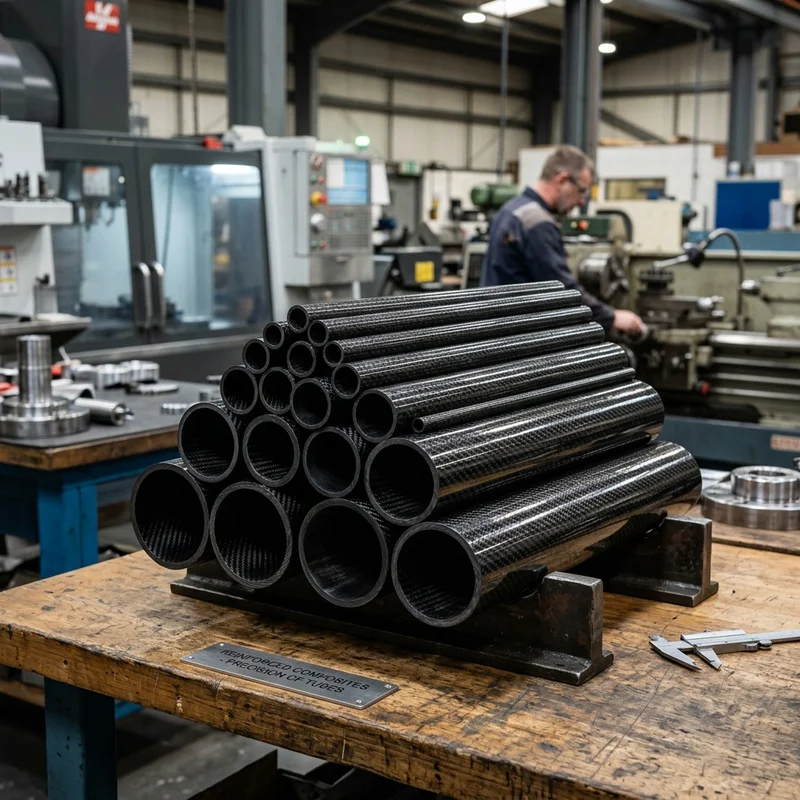
Round Carbon Fiber Tube — 3K Twill
Lightweight and ultra-stiff round tubes ideal for drone frames, robotics, and structural applications.
Round Carbon Fiber Tube — UD Unidirectional T700
Unidirectional (UD) round tube with all fibers aligned axially for maximum longitudinal stiffness. Ideal for applications requiring high bending rigidity with minimal weight, such as shafts, struts, and structural reinforcements.