A carbon fiber hexagon tube cut to size order sits at the intersection of a fixed cross-section, a cut list and a fit you cannot adjust in the field. Hex tubes are chosen because six flat faces key into brackets and clamp without rotating — but across-flats tolerance, wall thickness and corner radiu
Introduction
A carbon fiber hexagon tube cut to size order sits at the intersection of a fixed cross-section, a cut list and a fit you cannot adjust in the field. Hex tubes are chosen because six flat faces key into brackets and clamp without rotating — but across-flats tolerance, wall thickness and corner radius decide whether that anti-rotation feature actually works. Buyers who specify only the across-flats dimension end up with tubes that spin in the clamp, split at the corners, or arrive at lengths that force rework on the assembly line.
This guide covers across-flats sizing, wall and corner geometry, cut tolerance and end finish, the commercial terms — MOQ, price drivers and lead time — and the questions to ask when you buy carbon fiber hexagon tube for drone frames, camera rigs, structural inserts and robotic end effectors.
Carbon Fiber Hexagon Tube Cut To Size: What Changes With Every Cut
A hexagon is defined by across-flats width, wall thickness and corner radius, and cutting to size intersects all three. A saw cut through the section changes little in the flats but burrs the corners; an out-of-square end face breaks the seating against a matching hex bore. The supplier is selling the cured profile accuracy, the cut tolerance, and the end finish your bracket actually registers against.
| Across flats | Wall | Corner radius | Typical process | Best fit |
|---|---|---|---|---|
| 6-10 mm | 0.8-1.2 mm | 0.5-1.0 mm | Pultruded, cut from bar | Drone arms, camera cages |
| 12-20 mm | 1.2-2.0 mm | 1.0-1.5 mm | Pultruded or rolled | Structural inserts, spars |
| 25-40 mm | 1.5-3.0 mm | 1.5-2.5 mm | Roll-wrapped on hex mandrel | Robotic grippers, masts |
| 50-80 mm | 2.0-4.0 mm | 2.0-3.0 mm | Bonded or filament-wound | Large fixtures, pole sections |
Numbers are typical catalog ranges, not a substitute for the signed drawing. A carbon fiber hexagon tube cut to size supplier who cannot state across-flats within plus or minus 0.1 mm and corner radius on the print is quoting a shape, not a keyed component.
Across-Flats Tolerance, Wall and Corner Radius
Design the fit before you design the cut. The anti-rotation feature lives in the flats and corners together: a tube that meets across-flats but has an oversized corner radius will rock inside a hex socket, and a sharp corner with no radius concentrates stress where fasteners clamp. Wall thickness sets the thread or insert strategy — thin walls take heat-set inserts, thicker walls take direct tapping.
- Across-flats first: match the bracket bore with a deliberate clearance — 0.1 to 0.2 mm total is typical for keyed fits, more if the joint must slide during assembly.
- Wall for your insert: 1.0 mm wall suits M3 heat-set inserts; step to 2.0 mm before tapping M5 or carrying bolt loads through the tube.
- Corner radius: hold the radius the drawing calls out — a tighter radius than the tooling leaves stress risers, a looser one kills the keying action.
- Length tolerance: plus or minus 0.5 mm for cut-to-size stock, plus or minus 0.2 mm where the tube indexes against a shoulder.
- Straightness and twist: 0.5 mm per meter and under 1 degree of twist per meter, or brackets mount out of plane.
Ask your carbon fiber hexagon tube cut to size supplier for a first-article report with across-flats at both ends, corner radius and twist per meter — one sheet, and every offer becomes comparable.
Buy Carbon Fiber Hexagon Tube: MOQ, Price Drivers and Lead Time
When you buy carbon fiber hexagon tube, cut-to-size pricing follows across-flats size, wall, corner tooling and how the ends are finished. Pultruded bar is cheap and fast; a roll-wrapped hex on a custom mandrel costs more and holds tighter corners. The commercial frame usually looks like this:
| Order type | MOQ | Lead time | What changes the price |
|---|---|---|---|
| Stock pultruded hex, cut | 50-100 pcs | 7-14 days | Length bin, end finish, packaging |
| Custom wall or corner | 200-500 pcs | 3-5 weeks | Mandrel change, first-article inspection |
| Kit cut to bill of material | 30-80 kits | 2-3 weeks | Nesting, programming, labeling |
| Sample lot | 5-15 pcs | 1-2 weeks | Engineering time, no tooling amortized |
Payment for first orders is typically 30 percent deposit against 70 percent before shipment, or an irrevocable letter of credit above roughly 30,000 USD. Hex tubes nest by rotating every other piece 180 degrees, so carton design cuts freight more than a two percent material discount does — specify nested packing in the quote request.
Carbon Fiber Hexagon Tube Cut To Size China: Factory vs Trading Company
A carbon fiber hexagon tube cut to size China directory mixes two sellers. The factory owns the pultrusion dies or hex mandrels, the cutting cell and the inspection bench, and can hold corner radius across a production run. The trading company aggregates catalogs from several workshops, which works for spot orders but leaves nobody accountable when across-flats drifts half a millimeter from the print.
Three questions separate them on a first call: who ground the dies or cut the mandrels, can you audit the last five first-article reports, and who owns the cutting cell? Factories answer with tooling numbers and process sheets; traders answer with photographs. Both can ship on time — only one can re-pull a bad run without finding a new workshop.
Frequently Asked Questions
What MOQ applies to custom hex cut to size?
Stock pultruded hex ships from 50 to 100 pieces cut to length. A custom wall, corner radius or across-flats size typically starts at 200 to 500 pieces because the die or mandrel, pull speed and cut program must be re-validated. Kit orders cut to a bill of material start around 30 to 80 kits once nesting data exists. Sample lots of 5 to 15 pieces are available for qualification before you commit.
How are across-flats and corner radius verified?
Measure across-flats at both ends with a calibrated micrometer and check corner radius against a radius gauge or optical comparator. Across-flats should hold plus or minus 0.1 mm on keyed parts, and corner radius should match the print within 0.2 mm. Request the first-article report with these numbers, plus twist per meter, before the production run starts rather than after the containers sail.
Can a supplier match an existing hex profile from a sample?
Yes, if you send measured samples or controlled drawings: across-flats, wall, corner radius, fiber schedule and target lengths. Reverse engineering from three sample tubes takes one to two weeks and produces a dimensional report you approve before the die or mandrel is made. Confirm who owns that report — it prevents a second factory from quietly shifting tolerances later.
Conclusion
The right carbon fiber hexagon tube cut to size supplier sells a signed drawing and a first-article report, not a per-piece price: across-flats, corner radius, wall and twist are the four numbers that decide whether your bracket keys in and holds. Fix those first, then compare quotes.
YongXian supplies carbon fiber hexagon tubes cut to size with lot traceability and export documentation. Browse our carbon fiber tube range or send your hex schedule and annual volume for a quotation.
Part of topic
Related Articles
- Carbon Fiber Telescopic Tube Cut To Size: Specs, MOQ and Lead Time
- Carbon Fiber Tapered Tube Cut To Size: Specs, MOQ and Lead Time
- Carbon Fiber Oval Tube Cut To Size: Specs, MOQ and Lead Time
- Carbon Fiber Square Tube Cut To Size: Specs, MOQ and Lead Time
- Carbon Fiber Rod Cut To Size: Specs, MOQ and Lead Time
- Carbon Fiber Plate Cut To Size: Specs, MOQ and Lead Time
Interested in Our Products?
Contact our team for competitive pricing and technical specifications.
Get a QuoteRelated Products
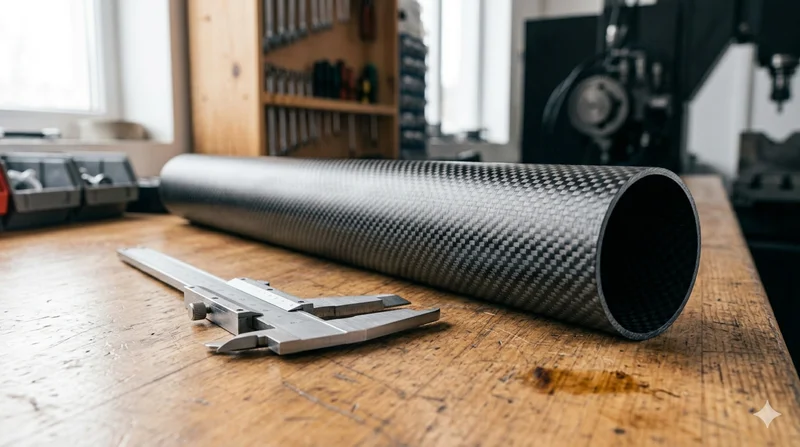
Round Carbon Fiber Tube — 3K Plain Weave T700
Standard round carbon fiber tube manufactured from Toray T700 grade fiber with 3K plain weave. Offers balanced strength and stiffness for general industrial applications including robotics, automation, sports equipment, and aerospace structures.
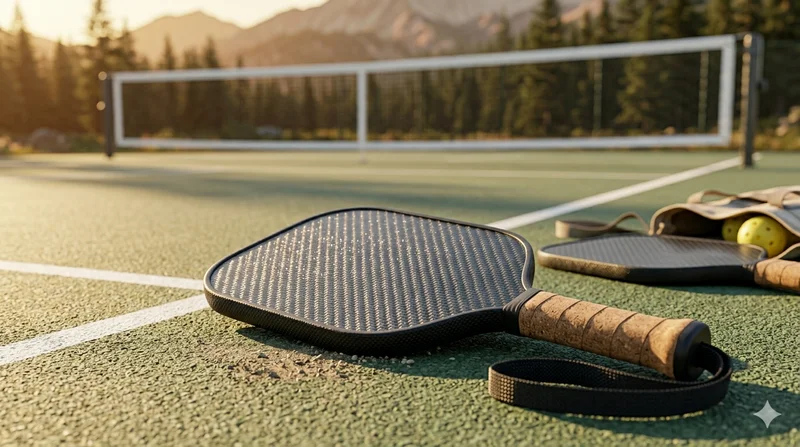
Carbon Fiber Pickleball Paddle
High-performance pickleball paddle with Toray T700 carbon fiber face and polypropylene honeycomb core. Delivers excellent power-to-weight ratio, spin generation, and vibration dampening for competitive play.
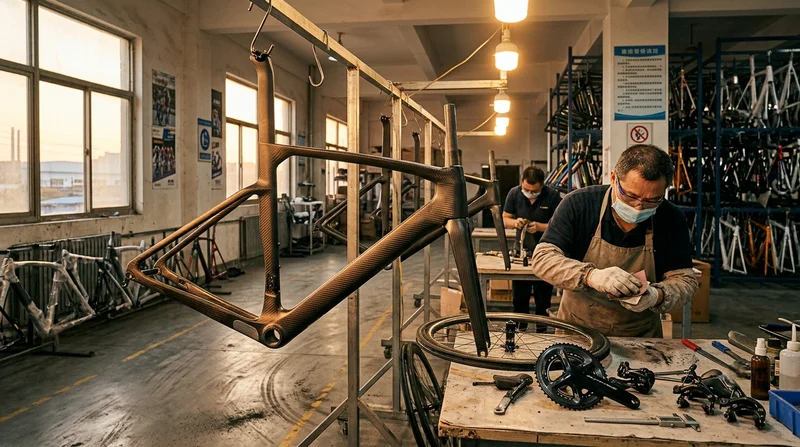
Custom Carbon Fiber Bicycle Frame
Full-custom carbon fiber bicycle frame manufactured to your geometry specifications. We produce road, gravel, mountain, and track frames using high-modulus carbon fiber layups optimized for each riding discipline. Monocoque construction with internal cable routing, available with disc or rim brake mounts.
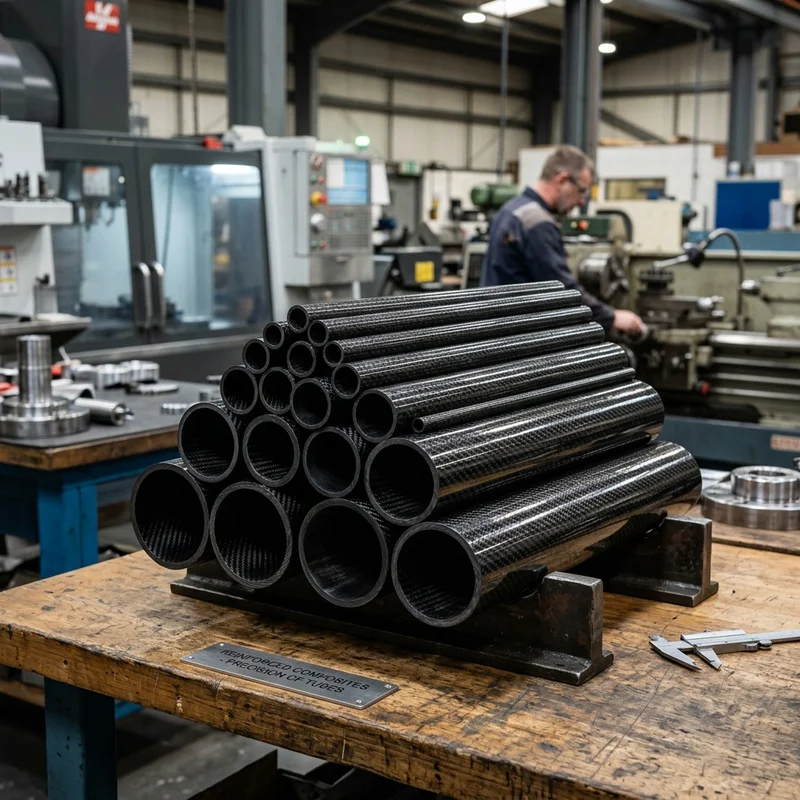
Round Carbon Fiber Tube — 3K Twill
Lightweight and ultra-stiff round tubes ideal for drone frames, robotics, and structural applications.
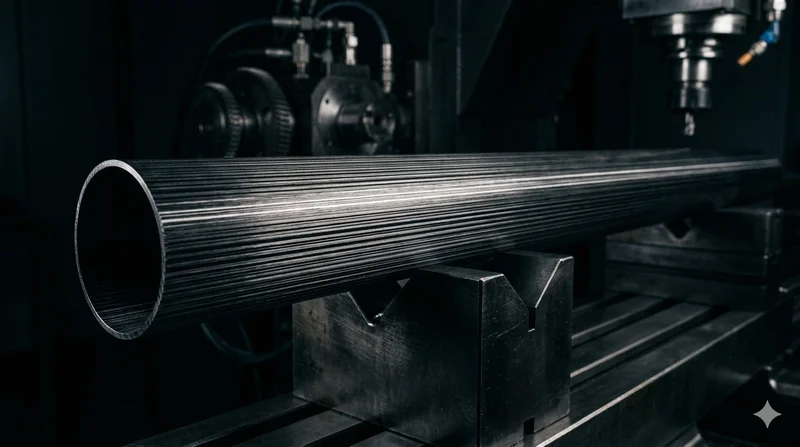
Round Carbon Fiber Tube — UD Unidirectional T700
Unidirectional (UD) round tube with all fibers aligned axially for maximum longitudinal stiffness. Ideal for applications requiring high bending rigidity with minimal weight, such as shafts, struts, and structural reinforcements.