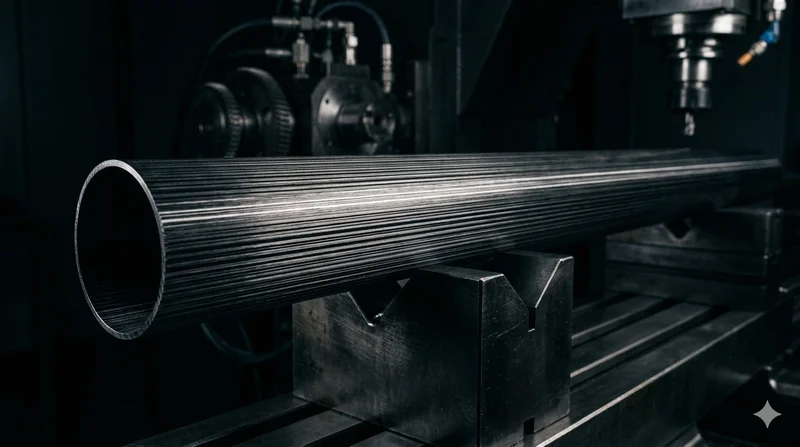
A carbon fiber telescopic tube cut to size order is a stack of fits rather than a single diameter: every section must slide into the next with the right clearance, stop at the right overlap and lock without crushing the wall. Cut length decides how much travel you keep, where the sections index, and
Introduction
A carbon fiber telescopic tube cut to size order is a stack of fits rather than a single diameter: every section must slide into the next with the right clearance, stop at the right overlap and lock without crushing the wall. Cut length decides how much travel you keep, where the sections index, and whether your clamp lands on sound wall instead of a kerf. Buyers who quote only the largest and smallest diameters find the mismatch at assembly, when the third section binds or the lock button punches through a thin wall.
This guide covers section fit and overlap, cut tolerance and wall schedule, the commercial terms — MOQ, price drivers and lead time — and the questions to ask when you buy carbon fiber telescopic tube for masts, tripods, survey poles and antenna supports.
Carbon Fiber Telescopic Tube Cut To Size: What the Order Controls
A telescopic assembly multiplies specifications with every section: outer diameter and wall of each tube, the inner diameter of the sleeve that receives it, the overlap that carries the bending load, and the cut length that sets total retracted and extended height. Cutting to size intersects that stack — an off-square end face ruins the seat, and a cut through a section wall leaves a burr that scores the next tube every time it slides.
| Section stack | OD range | Wall | Overlap | Typical use |
|---|---|---|---|---|
| 2-section | 25 / 22 mm | 1.0-1.4 mm | 120-150 mm | Camera monopods, light tripods |
| 3-section | 32 / 28 / 25 mm | 1.2-1.6 mm | 100-140 mm | Survey poles, antenna masts |
| 4-section | 40 / 35 / 30 / 25 mm | 1.4-1.8 mm | 90-120 mm | Telescopic flagpoles, light towers |
| Heavy stack | 60 / 52 / 45 mm | 2.0-3.0 mm | 150-200 mm | Industrial poles, robotic booms |
Numbers are typical catalog ranges, not a substitute for the signed drawing. A carbon fiber telescopic tube cut to size supplier who cannot state wall and inner diameter for every section within plus or minus 0.05 mm is quoting a set of tubes, not a sliding system.
Section Fit, Overlap and Wall Schedule
Design the sliding fit before you design the cut. Clearance that is too tight galls under dust and temperature; clearance that is too loose wobbles and prints mark in video. The overlap carries the bending moment, so a stack that retracts beautifully but overlaps only 60 mm will flex where a mast should stand still. Fiber orientation follows the same logic: 0/90 degree plies resist bending, while a helical outer ply resists the point crush that a friction lever applies.
- Diameters as a matched set: specify OD and ID per section with the mating pair — a 0.15 mm oversize on the male end means epoxy dust and stuck tubes in the field.
- Overlap per joint: hold at least 2.5 times the outer diameter of the inner section, and state it on the drawing rather than leaving it to the assembler.
- Wall for the lock: push-button and friction-lock styles need local wall support; call out the land where the button seats so the factory does not thin it during sanding.
- Sanded outer surface: request a consistent fine-grit finish on sliding zones — glossy gel coat looks premium but grabs under humidity.
- Straightness: hold 0.5 mm per meter over each section or the stack binds halfway up.
Ask your supplier for the drag force at a stated overlap and load, not a generic smooth-running claim — one number, one test setup, and you can compare offers side by side.
Buy Carbon Fiber Telescopic Tube: Cut Tolerance, MOQ and Lead Time
When you buy carbon fiber telescopic tube, cut-to-size pricing follows the section count, wall schedule, cut tolerance and how the ends are finished. A saw-cut raw end is cheap; a squared, chamfered and deburred end that seats properly costs more and saves an assembly step on your line. The commercial frame usually looks like this:
| Order type | MOQ | Lead time | What changes the price |
|---|---|---|---|
| Stock section sets | 20-50 sets | 7-14 days | End finish, packaging, length bin |
| Custom OD or wall | 100-300 sets | 3-5 weeks | Mandrel change, first-article inspection |
| Cut-to-size with squared ends | 50-150 sets | 2-4 weeks | Cut program, chamfer, sanding |
| Sample lot | 3-5 sets | 1-2 weeks | Engineering time, no tooling amortized |
Payment for first orders is typically 30 percent deposit against 70 percent before shipment, or an irrevocable letter of credit above roughly 30,000 USD. Telescopic sets ship nested — small sections packed inside the largest — so packing design cuts freight more than a two percent material discount does.
Carbon Fiber Telescopic Tube Cut To Size China: Factory vs Trading Company
A carbon fiber telescopic tube cut to size China directory mixes two sellers. The factory owns the mandrels, the curing ovens and the cutting cell, and can hold ID-to-OD fit across a production run. The trading company aggregates catalogs from several workshops, which works for spot orders but leaves nobody accountable when section three arrives 0.3 mm oversize and the stack will not close.
Three questions separate them on a first call: who holds the mating mandrels, can you audit the last five first-article reports, and who owns the cutting cell? Factories answer with tooling numbers and process sheets; traders answer with photographs. Both can ship on time — only one can re-cut a bad batch without finding a new workshop.
Frequently Asked Questions
What MOQ applies to a custom telescopic set cut to size?
Stock section sets ship from 20 to 50 sets. A custom outer diameter, wall schedule or section count typically starts at 100 to 300 sets because the mandrels, cure cycle and cut program must be re-validated. Cut-to-size runs with squared ends start around 50 to 150 sets once the cutting data exists. Sample lots of 3 to 5 sets are available for qualification before you commit.
How are cut length and sliding fit verified?
Measure length over three points along the axis, check end squareness against a machined flat, and gauge each ID with a plug gauge at two depths. Plus or minus 0.2 mm on length and within 0.5 degrees of square are typical for sleeve-fit parts. Request the first-article report with these numbers before the production run starts rather than after the containers sail.
Can a supplier match an existing telescopic profile from a sample?
Yes, if you send measured samples or controlled drawings: every section OD and ID, wall, overlap, fiber schedule and target lengths. Reverse engineering from a full set takes one to two weeks and produces a dimensional report you approve before the mandrels are cut. Confirm who owns that report — it prevents a second factory from quietly shifting tolerances later.
Conclusion
The right carbon fiber telescopic tube cut to size supplier sells a signed fit chart and a first-article report, not a per-set price: section IDs, overlap, cut tolerance and lock lands are the four numbers that decide whether your stack slides and holds. Fix those first, then compare quotes.
YongXian supplies carbon fiber telescopic tubes cut to size with lot traceability and export documentation. Browse our carbon fiber tube range or send your section stack and annual volume for a quotation.
Part of topic
Related Articles
- Carbon Fiber Hexagon Tube Cut To Size: Specs, MOQ and Lead Time
- Carbon Fiber Tapered Tube Cut To Size: Specs, MOQ and Lead Time
- Carbon Fiber Oval Tube Cut To Size: Specs, MOQ and Lead Time
- Carbon Fiber Square Tube Cut To Size: Specs, MOQ and Lead Time
- Carbon Fiber Rod Cut To Size: Specs, MOQ and Lead Time
- Carbon Fiber Plate Cut To Size: Specs, MOQ and Lead Time
Interested in Our Products?
Contact our team for competitive pricing and technical specifications.
Get a QuoteRelated Products
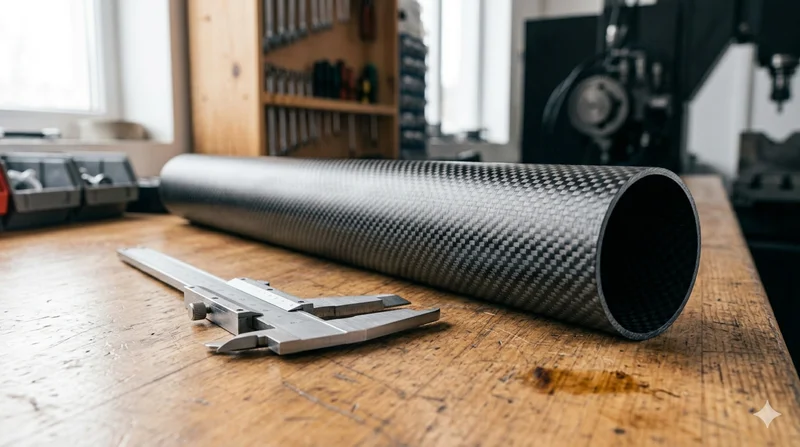
Round Carbon Fiber Tube — 3K Plain Weave T700
Standard round carbon fiber tube manufactured from Toray T700 grade fiber with 3K plain weave. Offers balanced strength and stiffness for general industrial applications including robotics, automation, sports equipment, and aerospace structures.
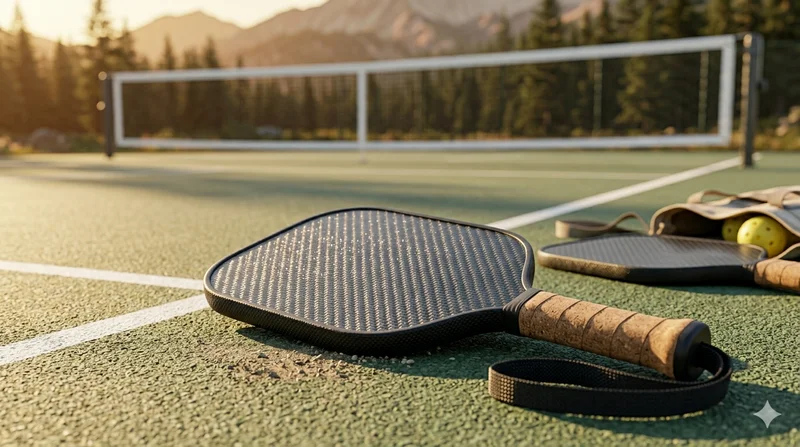
Carbon Fiber Pickleball Paddle
High-performance pickleball paddle with Toray T700 carbon fiber face and polypropylene honeycomb core. Delivers excellent power-to-weight ratio, spin generation, and vibration dampening for competitive play.
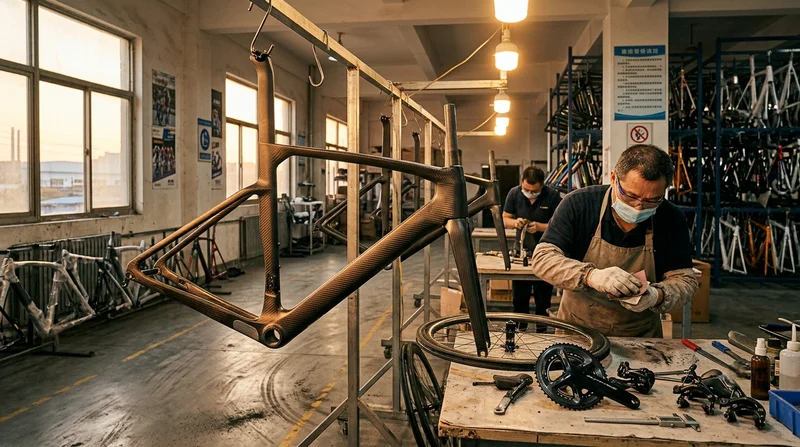
Custom Carbon Fiber Bicycle Frame
Full-custom carbon fiber bicycle frame manufactured to your geometry specifications. We produce road, gravel, mountain, and track frames using high-modulus carbon fiber layups optimized for each riding discipline. Monocoque construction with internal cable routing, available with disc or rim brake mounts.
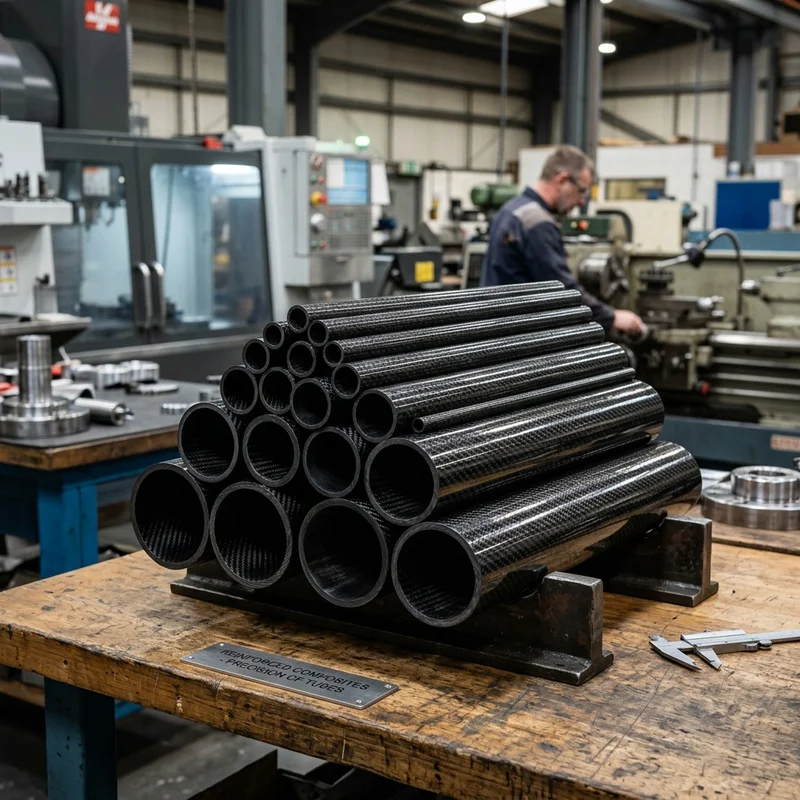
Round Carbon Fiber Tube — 3K Twill
Lightweight and ultra-stiff round tubes ideal for drone frames, robotics, and structural applications.
Round Carbon Fiber Tube — UD Unidirectional T700
Unidirectional (UD) round tube with all fibers aligned axially for maximum longitudinal stiffness. Ideal for applications requiring high bending rigidity with minimal weight, such as shafts, struts, and structural reinforcements.