
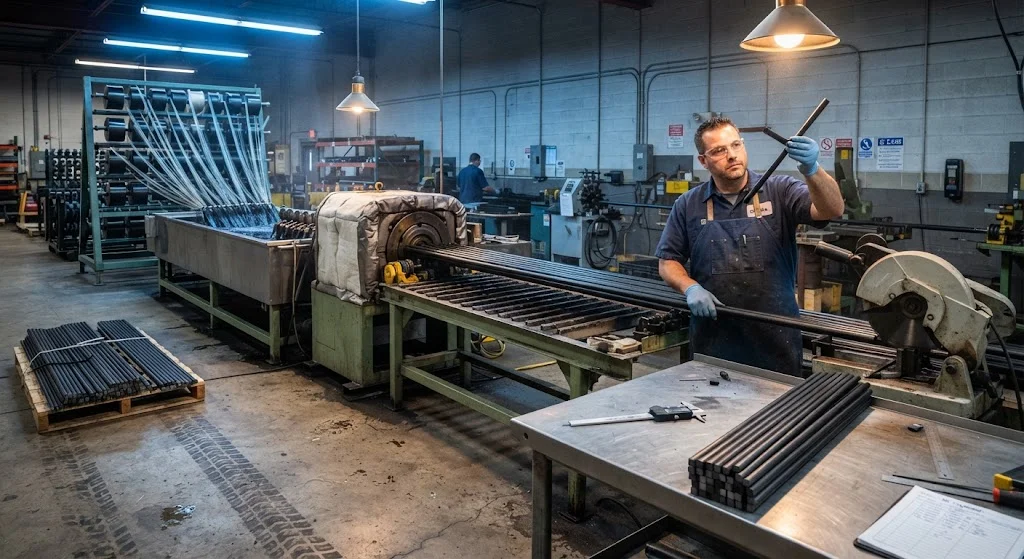
Pultruded carbon fiber rods are among the most cost-effective structural forms of continuous carbon fiber composite available today. Produced by pulling resin-impregnated carbon fiber rovings through a heated die, these rods combine the high specific strength and stiffness of carbon fiber with the p
Introduction
Pultruded carbon fiber rods are among the most cost-effective structural forms of continuous carbon fiber composite available today. Produced by pulling resin-impregnated carbon fiber rovings through a heated die, these rods combine the high specific strength and stiffness of carbon fiber with the productivity of a continuous process. For engineers selecting round-section reinforcement, pultruded carbon fiber rods offer a straight, dimensionally stable product that can be cut to length, machined, and bonded with minimal waste. This article examines the manufacturing process, the mechanical properties that define performance, and the industrial applications where pultruded carbon fiber rods deliver measurable weight and durability benefits.
The appeal of pultruded composite rod technology lies in its economics. Unlike prepreg-autoclave processing, pultrusion is a fully continuous line that converts raw roving into finished rod at speeds of 0.5-2.0 meters per minute, with fiber volume fractions consistently above 60%. The result is a uniform, void-controlled cross-section that competes directly with steel, stainless steel, and aluminum rod in stiffness-critical and corrosion-critical applications. The sections below quantify these properties, explain how the process controls them, and identify the applications where the substitution makes engineering sense.
How Pultruded Carbon Fiber Rods Are Manufactured
Pultrusion transforms carbon fiber roving into solid rod through a sequence of controlled steps. Roving packages are first pulled through a tension-controlled creel, then through a resin bath where the fibers are fully wetted with epoxy, vinyl ester, or polyester resin. The impregnated fiber bundle then passes through preform guides that shape it into a circular cross-section, and into a heated steel die where the resin cures. Finally, a reciprocating or caterpillar puller draws the cured rod from the die, and a traveling cut-off saw segments it to length.
- Fiber grade selection: Standard modulus fibers (230-240 GPa) suit most structural rods; intermediate and high modulus fibers (290-440 GPa) are specified where stiffness dominates, trading some tensile strength for a higher modulus-to-weight ratio.
- Resin system: Epoxy provides the best mechanical and fatigue performance; vinyl ester improves corrosion resistance in chemical and marine environments; polyester minimizes cost in non-structural applications.
- Fiber volume fraction: Production rods typically run 60-68% fiber by volume. Above 70%, fiber damage during die entry and incomplete wet-out reduce quality; below 55%, stiffness and strength drop noticeably.
- Surface finish: Surface veils or mat can be co-pultruded to improve abrasion resistance and cosmetic quality, or the rod can be finished with a polyester veil for paint adhesion.
Because the die geometry fixes the cross-section, pultruded rod achieves excellent dimensional repeatability. Typical production tolerances hold diameter within 0.05-0.10 mm on rods up to 20 mm, and straightness within 0.5-1.0 mm per meter, which simplifies downstream machining and assembly.
Mechanical Properties of Pultruded Carbon Fiber Rods
Pultruded carbon fiber rods exhibit strongly anisotropic properties: maximum strength and stiffness along the axis, with lower transverse and shear values governed by the resin matrix. The table below compares typical axial properties of a standard-modulus epoxy-based pultruded CFRP rod with round bar equivalents in 6061-T6 aluminum and 304 stainless steel.
| Property | Pultruded CFRP Rod | 6061-T6 Aluminum | 304 Stainless Steel |
|---|---|---|---|
| Axial tensile strength (MPa) | 1,500-2,300 | 290 | 515 |
| Axial tensile modulus (GPa) | 120-160 | 69 | 193 |
| Density (g/cm³) | 1.55-1.65 | 2.70 | 7.90 |
| Specific tensile strength (kN·m/kg) | 970-1,400 | 107 | 65 |
| Axial coefficient of thermal expansion (10⁻⁶/K) | -0.5 to +0.5 | 23.6 | 17.3 |
| Fatigue endurance (10⁶ cycles, R=0.1) | 60-70% of UTS | ~35% of UTS | ~40% of UTS |
| Electrical conductivity | Low | High | High |
Three practical consequences follow from these data. First, the specific tensile strength of a pultruded CFRP rod is roughly 10-20 times that of stainless steel, so weight-critical structures gain the most from substitution. Second, the near-zero axial thermal expansion makes carbon fiber round bar dimensionally stable across temperature swings, a decisive advantage in precision mechanisms and metrology fixtures. Third, fatigue endurance above 60% of ultimate strength allows aggressive design allowables in cyclically loaded components where metals must be derated.
CFRP Rod Pultruded: Design and Machining Considerations
Specifying a pultruded CFRP rod requires understanding how it differs from metal bar in design and fabrication. Unlike steel, the rod is anisotropic and notch-sensitive; holes and cut edges reduce load capacity more severely than in ductile metals. Designers should orient loads along the axis and avoid transverse bearing loads at joints wherever possible.
Machining pultruded carbon fiber round bar is straightforward with the right tooling: carbide or PCD tooling, high spindle speeds, and dust extraction are mandatory because carbon dust is conductive and abrasive. Threads are generally not cut directly into the rod; instead, bonded or crimped metal end fittings transfer load. Bonded joints with structural adhesives routinely achieve 80-95% of the rod's tensile capacity when the bond length is 20-30 times the rod diameter, and this is the standard method for connecting rods to metal clevises, ball joints, and swaged ends.
Industrial Applications of Pultruded Composite Rod
Pultruded composite rod in carbon fiber is specified across a wide range of industries where weight, stiffness, corrosion resistance, or fatigue life outweighs the higher material cost relative to steel. The most common applications include:
- Robotics and automation: Parallel-link arms, drive shafts, and structural links in industrial robots and gantries, where the low mass reduces servo torque demand and enables faster cycle times.
- Aerospace and UAV structures: Spars, pushrods, and landing-gear struts for fixed-wing and rotary UAVs, where gram-level weight savings directly extend flight endurance.
- Medical devices: Orthopedic braces, surgical instrument shafts, and imaging table components that require radiolucency, MRI compatibility, and repeated sterilization without corrosion.
- Marine and offshore: Mast stays, boom stiffeners, and corrosion-resistant tie rods in seawater environments where stainless steel suffers pitting and crevice corrosion.
- Precision instruments: Metrology frames, antenna masts, and telescope components that exploit the near-zero thermal expansion to hold geometry over temperature.
- Sporting goods: Sail battens, arrow shafts, and kite frames that need high specific stiffness and fatigue resistance at minimal weight.
The selection logic is consistent across these sectors: pultruded carbon fiber rods win where the application is stiffness-critical, weight-sensitive, fatigue-loaded, or corrosion-exposed. Where cost per kilogram is the only criterion, steel remains cheaper; where impact toughness dominates, metals or glass fiber systems are preferable.
Frequently Asked Questions
What sizes and lengths are available for pultruded carbon fiber rods?
Pultruded carbon fiber rods are commonly produced in diameters from 1 mm to 25 mm, with 3-12 mm the most frequently specified range for structural applications. Larger diameters up to 50 mm are possible with specialized dies but are less common because solid-section cure times lengthen. Standard production lengths are 1-6 meters, and rods can be supplied cut to length with square or angle-cut ends. Tolerances typically hold diameter within 0.05-0.10 mm, which allows direct use in precision-bored fittings.
How does a pultruded CFRP rod compare with a filament wound tube in stiffness?
For the same fiber grade and fiber volume fraction, a pultruded solid rod achieves higher axial stiffness efficiency than a filament wound tube of the same outer diameter, because every fiber contributes to axial stiffness rather than being wound at an off-axis angle. However, tubes offer a much higher bending stiffness-to-weight ratio, since material is placed at the outer radius. As a rule of thumb, use rod where the load is axial, and tube where the load is bending or buckling-driven; hybrid designs with a wound tube over a pultruded core combine both advantages.
Can pultruded carbon fiber rods be used outdoors or in corrosive environments?
Yes, with the correct resin selection. Carbon fiber itself is chemically inert and does not corrode, but the matrix must protect the fibers from moisture ingress and environmental degradation. Epoxy systems provide good general performance with service temperatures up to 120-150°C; vinyl ester resin is preferred for chemical and saltwater exposure because of its superior resistance to hydrolysis and acid attack. For continuous outdoor use, a UV-resistant surface veil or gel coat is recommended, and bonded joints should be protected with sealing adhesive to prevent moisture wicking along the fiber-matrix interface.
Conclusion
Pultruded carbon fiber rods deliver a combination of properties that no metal round bar can match: axial tensile strength of 1,500-2,300 MPa, specific strength 10-20 times that of stainless steel, near-zero thermal expansion, and fatigue endurance above 60% of ultimate strength. The pultrusion process makes these properties economical by converting continuous roving into finished rod in a single automated line, with tight diameter tolerances and predictable material cost. For stiffness-critical, weight-sensitive, and corrosion-exposed applications, they are a direct and practical substitute for steel, stainless, and aluminum bar.
For engineers selecting rod material, the key decisions are fiber grade, resin system, diameter, and joint design. Explore our pultruded carbon fiber rod and tube range to review available diameters, grades, and length options, or contact our engineering team to discuss custom fiber grades, resin systems, and prototype quantities for your application.
Part of topic
Related Articles
- Fiberglass Filament Wound Tubes: Cost-Effective Alternative to Carbon Fiber
- Filament Wound Epoxy Tube Design: Wall Thickness, Fiber Angle and Load Optimization
- Filament Wound Epoxy Tubes: Testing Standards and Quality Assurance
- Filament Wound Epoxy Tubes Manufacturing: Process and Quality Control
- Filament Wound Fiberglass Tube: Process Parameters and Performance vs Carbon Fiber
- Filament Wound Epoxy Tubes Cost: Materials, Process and Volume Pricing
Interested in Our Products?
Contact our team for competitive pricing and technical specifications.
Get a QuoteRelated Products
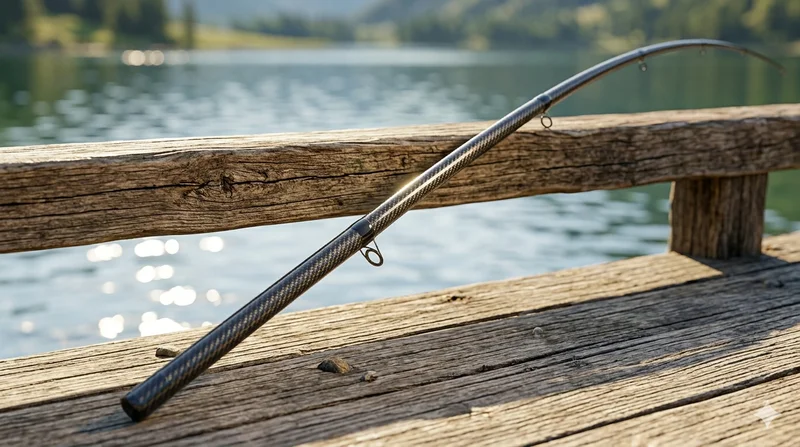
Carbon Fiber Fishing Rod Blank
High-quality carbon fiber fishing rod blank manufactured from multiple grades of Toray carbon fiber cloth. Available in a wide range of lengths, powers, and actions for freshwater and saltwater applications. Suitable for OEM rod building.

Carbon Fiber Plate — 3K Twill T700 3.0mm
Medium-thickness 3.0mm carbon fiber plate offering significantly higher load capacity while maintaining attractive 3K twill finish. Suitable for structural brackets, reinforcement plates, and load-bearing panels.

Carbon Fiber Plate — 3K Twill T700 1.5mm
Thin 1.5mm carbon fiber plate with 3K twill weave surface. Lightweight and stiff, commonly used for covers, panels, drone bodies, and applications requiring a premium aesthetic appearance.
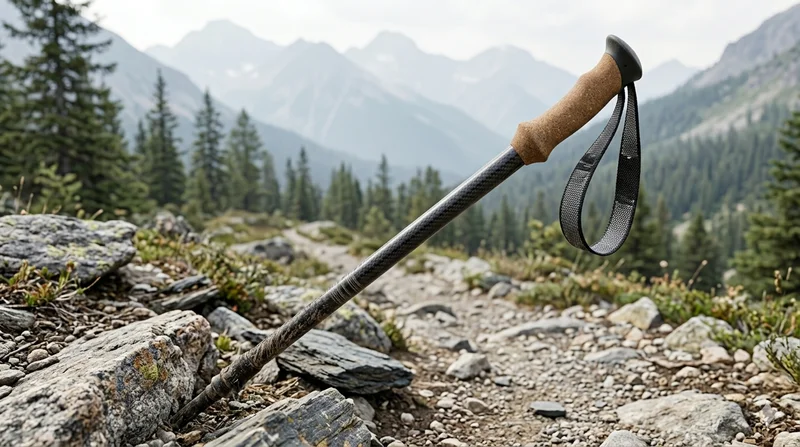
Carbon Fiber Trekking Pole
Lightweight carbon fiber trekking pole manufactured from high-grade carbon fiber tube. Weighs only 160g per pole while providing superior shock absorption and durability for hiking, trail running, and backpacking.

Square Carbon Fiber Tube — 3K Twill T700
Square cross-section carbon fiber tube manufactured with 3K twill weave for torsional strength. Preferred for structural frames, trusses, and support columns where rectangular geometry offers design flexibility.