
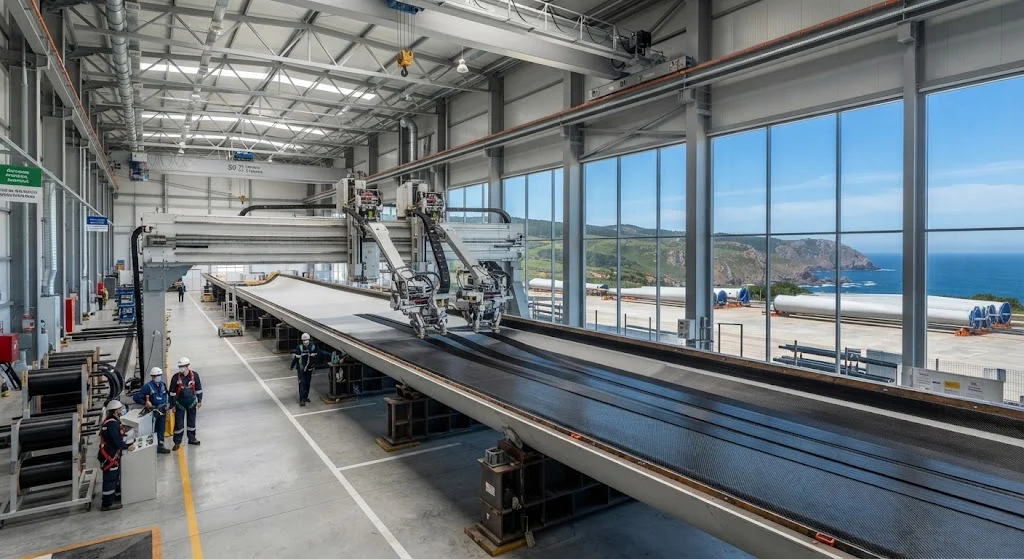
Portugal has emerged as a competitive carbon fiber manufacturing location in Europe, with growing capabilities in wind energy components and aerospace structures. This article examines Portugal's carbon fiber industry, key players, and strategic advantages.
Introduction
Portugal has developed a significant carbon fiber manufacturing sector over the past two decades, driven by strategic investment in wind energy component production, aerospace supply chain participation, and government support for advanced manufacturing. The country's Atlantic coast location, skilled workforce, and competitive costs within the European Union have attracted major international composite manufacturers.
Portugal's carbon fiber industry is concentrated in the northern industrial regions around Porto and Guimarães, with additional facilities in the Lisbon metropolitan area. The sector benefits from Portugal's strong engineering tradition, proximity to major European wind energy and aerospace markets, and favorable business environment for manufacturing investment.
Wind Energy Manufacturing
Wind energy component manufacturing has been the primary driver of Portugal's carbon fiber industry growth:
Blade production: Portugal hosts several major wind turbine blade manufacturing facilities, producing blades up to 80+ meters in length. These blades increasingly use carbon fiber spar caps and structural reinforcements to reduce weight while maintaining stiffness and fatigue resistance.
Spar cap production: Pultrusion and filament winding facilities produce carbon fiber spar caps for wind turbine blades. Carbon fiber spar caps enable longer, lighter blades that capture more energy while reducing loads on the turbine drivetrain and tower structure.
Component manufacturing: Beyond blades, Portuguese facilities produce carbon fiber nacelle components, tower reinforcements, and root section assemblies. The concentration of wind energy manufacturing has created a complete supply chain for composite wind turbine components.
Aerospace Applications
Portugal's aerospace carbon fiber sector has grown through supply chain participation with major European aircraft manufacturers:
Primary structures: Portuguese manufacturers produce carbon fiber fuselage sections, wing components, and control surfaces for commercial and military aircraft. These components require aerospace-grade materials, process control, and quality certification.
Interior structures: Carbon fiber cabin interior components — overhead bins, side panels, floor panels — are produced for both commercial and business aviation. Weight reduction in cabin structures directly improves fuel efficiency.
UAV and drone components: Portugal has developed expertise in small unmanned aerial vehicle (UAV) carbon fiber structures, serving both military and commercial drone manufacturers.
Key Industry Players
Portugal's carbon fiber industry includes both international and domestic companies:
International manufacturers: Major global composite companies have established Portuguese operations, attracted by the country's manufacturing capabilities, cost structure, and access to European markets. These operations typically focus on wind energy and aerospace component production.
Domestic companies: Portuguese-owned composite manufacturers have developed specialized capabilities in niche applications — sporting goods, automotive components, marine structures — leveraging local expertise and customer relationships.
Research institutions: Portuguese universities and research centers — particularly the University of Porto and Instituto Superior Técnico in Lisbon — provide research support, workforce development, and technology transfer for the carbon fiber sector.
Strategic Advantages
Several factors contribute to Portugal's competitiveness in carbon fiber manufacturing:
EU membership: Portugal's European Union membership provides duty-free access to the EU single market, which is the world's largest market for wind energy and aerospace products. EU-origin products also qualify for government procurement preferences.
Cost structure: While Portuguese labor costs have risen, they remain below European averages and significantly below those of Germany, France, or the United Kingdom. Combined with competitive energy costs and real estate, this creates favorable manufacturing economics.
Infrastructure: Portugal has invested heavily in transportation infrastructure — highways, ports, and airports — facilitating efficient logistics for both raw material supply and finished product distribution.
Workforce: Portugal's engineering workforce includes specialized expertise in composite materials, process engineering, and quality management developed through decades of aerospace and wind energy manufacturing.
Market Outlook
Portugal's carbon fiber industry is positioned for continued growth:
Offshore wind expansion: The development of offshore wind energy in the Atlantic creates demand for larger, more durable blades that increasingly require carbon fiber reinforcement.
Aerospace recovery: The post-pandemic recovery in commercial aviation is driving increased aircraft production, creating demand for Portuguese aerospace composite manufacturers.
Electric vehicle lightweighting: European electric vehicle manufacturers are seeking lightweight carbon fiber components for battery enclosures, body structures, and interior applications.
Sustainability focus: Portugal's commitment to renewable energy and sustainable manufacturing positions it well for the growing demand for environmentally responsible composite production.
Conclusion
Portugal has established itself as an important European carbon fiber manufacturing hub, with particular strength in wind energy components and growing capabilities in aerospace structures. The combination of EU market access, competitive costs, skilled workforce, and strategic infrastructure positions Portugal for continued growth in the global carbon fiber industry. As wind energy expands offshore and aerospace production recovers, Portugal's carbon fiber sector is well-placed to capture new opportunities.
Part of topic
Related Articles
- Recycled Carbon Fiber Market Forecast 2030: Technology Maturity and Commercialization Path
- South Korea Carbon Fiber Market 2026: Hydrogen Economy and Shipbuilding Innovation
- Wind Turbine Blade Leading Edge Protection 2026: Polyurethane, Tape, and Metallic Shield Solutions
- China Carbon Fiber Overcapacity 2026: Price War Impact and Industry Consolidation
- India Carbon Fiber Market 2026: Wind Energy, Aerospace, and Defense Expansion
- PAN Precursor Market 2026: Acrylonitrile Supply and Carbon Fiber Cost Structure
Interested in Our Products?
Contact our team for competitive pricing and technical specifications.
Get a QuoteRelated Products

Carbon Fiber Fishing Rod Blank
High-quality carbon fiber fishing rod blank manufactured from multiple grades of Toray carbon fiber cloth. Available in a wide range of lengths, powers, and actions for freshwater and saltwater applications. Suitable for OEM rod building.

Carbon Fiber Plate — 3K Twill T700 3.0mm
Medium-thickness 3.0mm carbon fiber plate offering significantly higher load capacity while maintaining attractive 3K twill finish. Suitable for structural brackets, reinforcement plates, and load-bearing panels.

Carbon Fiber Plate — 3K Twill T700 1.5mm
Thin 1.5mm carbon fiber plate with 3K twill weave surface. Lightweight and stiff, commonly used for covers, panels, drone bodies, and applications requiring a premium aesthetic appearance.

Square Carbon Fiber Tube — 3K Twill T700
Square cross-section carbon fiber tube manufactured with 3K twill weave for torsional strength. Preferred for structural frames, trusses, and support columns where rectangular geometry offers design flexibility.
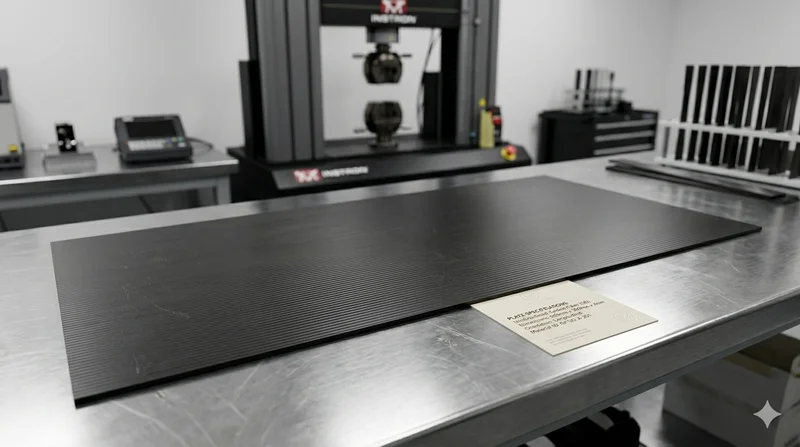
Carbon Fiber Plate — UD Unidirectional T700
Unidirectional carbon fiber plate with all fibers oriented in a single direction for maximum strength along the fiber axis. Essential for structural reinforcements, splints, and applications where load direction is predictable.