
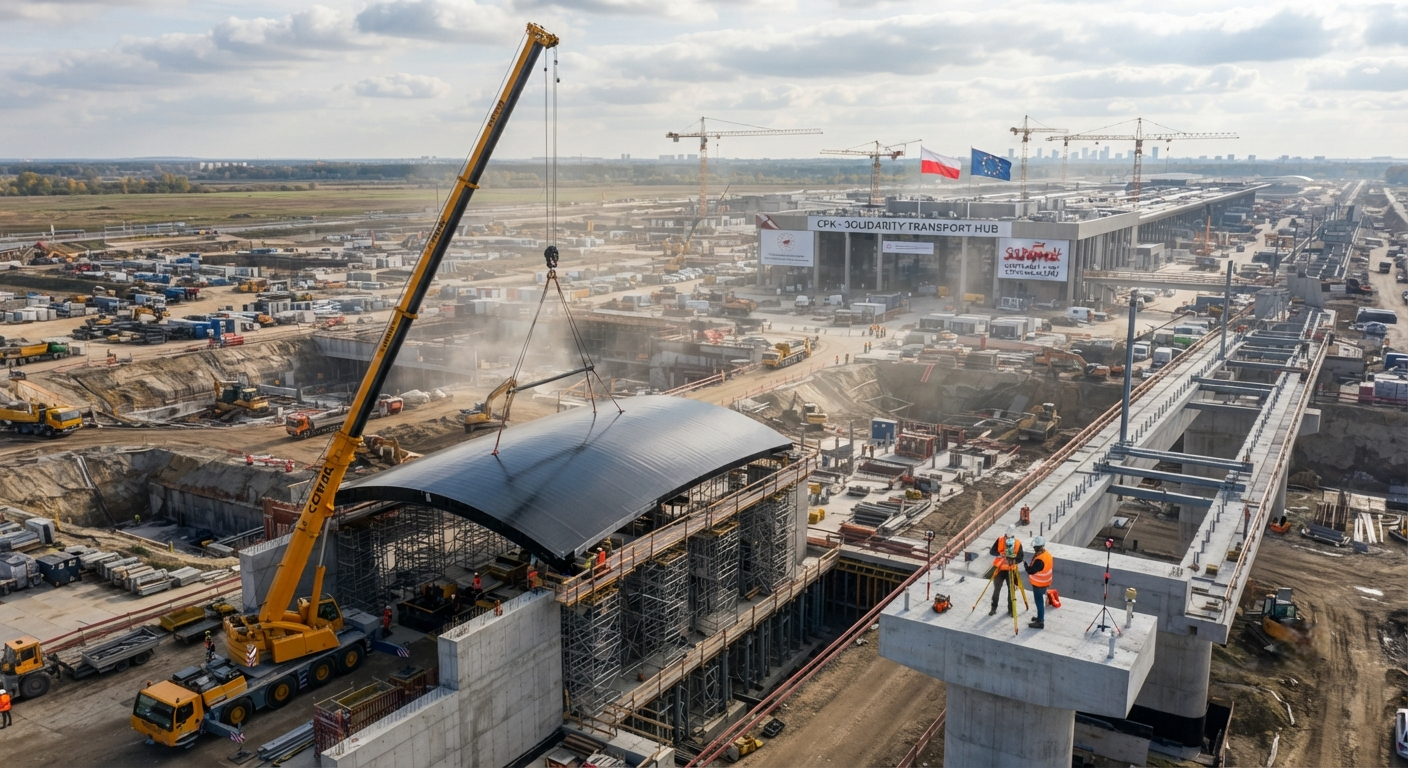
A comprehensive market analysis of Poland's rapidly growing carbon fiber market in 2026, driven by the country's USD 30 billion defense modernisation programme, major expressway and rail infrastructure investments co-financed by the EU 2021-2027 budget, and expanding wind energy sector. Includes market size data, segment analysis, and supply chain opportunities for Asian carbon fiber exporters.
Poland's Carbon Fiber Market: An Emerging Growth Hub in Central Europe
Poland has emerged as the fastest-growing carbon fiber market in Central and Eastern Europe in 2026, driven by three concurrent macroeconomic forces: a historic defence modernisation programme, massive EU-co-funded transport infrastructure expansion, and the accelerating buildout of onshore and offshore wind energy capacity. With total carbon fibre consumption projected to reach 2,800 metric tonnes in 2026 — a year-on-year increase of 18 % — Poland now ranks as the fourth-largest carbon fiber market in Europe behind Germany, France, and Italy. The market is projected to exceed 4,500 tonnes by 2030, representing a compound annual growth rate (CAGR) of 12.6 % from 2025 to 2030.
For Asian carbon fiber manufacturers and exporters, Poland represents a strategic entry point into the broader European market, supported by established logistics corridors via the Port of Gdańsk and overland rail links to the German and Scandinavian markets. YongXian CarbonFiber has identified Poland as a priority market for expansion of its Asian-European composite supply chain network, and is currently evaluating distribution partnerships with Warsaw-based advanced materials trading companies.
Defence Modernization: The Primary Demand Driver
Poland's defence budget reached 4.2 % of GDP in 2026 — the highest among NATO member states — underpinned by the government's Strategic Defence Review and the signing of several major procurement contracts. The USD 30 billion defence modernisation programme (2024–2035) includes significant procurement of carbon fibre-intensive equipment:
- K2 Black Panther main battle tanks (1,000 units): Carbon fibre composite armour panels and structural components. Estimated carbon fibre requirement: 180–220 tonnes per year through 2032.
- FA-50GF light combat aircraft (48 units): Composite airframe components including wing skins, control surfaces, and radome structures. Estimated carbon fibre requirement: 45–65 tonnes per year.
- M142 HIMARS launcher systems (over 500 units): Carbon fibre launch tube assemblies and vehicle structural components. Estimated requirement: 35–50 tonnes per year.
- Bayraktar TB2 and future MQ-9B SkyGuardian UAVs: Carbon fibre airframes. Combined requirement estimated at 25–40 tonnes per year.
- Naval vessels (3 Miecznik-class frigates, 6 ORKA-class submarines): Carbon fibre superstructure panels, mast enclosures, and propeller blades. Estimated requirement: 60–90 tonnes through 2035.
The defence sector currently accounts for approximately 38 % of Poland's total carbon fibre consumption, making it the largest single end-use segment. The high performance requirements — particularly flame resistance, radar cross-section management, and ballistic impact tolerance — favour intermediate and high modulus carbon fibre grades (300–450 GPa), which command a price premium of 40–80 % over standard modulus grades.
Transport Infrastructure Investment
Poland's transport infrastructure modernisation programme, co-financed by the EU's 2021–2027 Cohesion Policy budget (EUR 76 billion allocated to Poland, the largest beneficiary), includes major projects with significant carbon fibre demand:
| Infrastructure Project | Carbon Fiber Application | Est. Volume (tonnes, 2026–2028) | EU Co-Financing Share | Primary Material Spec |
|---|---|---|---|---|
| Via Baltica Expressway (S8/S61) | CFRP prestressing tendons for bridge decks, expansion joint profiles | 280 – 350 | 85 % | UD 600 g/m² + epoxy, 240 GPa modulus |
| CPK High-Speed Rail (Warsaw–Łódź–Wrocław) | CFRP catenary poles, platform canopies, rolling stock body panels | 320 – 420 | 75 % | 2×2 twill 400 g/m², 230 GPa modulus |
| Solidarity Transport Hub (CPK Airport) | CFRP roof tensile membrane reinforcement, façade cladding | 150 – 220 | 60 % | High-strength 6400 MPa UD fabric |
| Świnoujście LNG Terminal Expansion | CFRP pipe reinforcement, cryogenic tank insulation supports | 45 – 70 | 50 % | HM 450 GPa carbon fibre |
| Baltic Offshore Wind Logistics Ports (Gdańsk, Gdynia, Łeba) | CFRP quay wall reinforcement, mooring components, crane booms | 90 – 140 | 70 % | 300 g/m² UD + biaxial fabric |
The civil engineering and infrastructure segment is projected to grow at 14.5 % CAGR through 2030, driven by the continuous rollout of CPK-related projects and bridge rehabilitation programmes utilising CFRP wrapping systems for existing structures built during the socialist era (1950s–1980s). These older structures often lack adequate seismic detailing and corrosion protection, creating a retrofit market analogous to the Japanese and Italian bridge rehabilitation programmes.
Wind Energy and Composites Manufacturing
Poland's offshore wind ambition targets 18 GW of installed capacity by 2040, with the first commercial-scale farms (Baltic Power, MFW Bałtyk II & III) beginning construction in 2026. Each 15 MW offshore wind turbine requires approximately 35–45 tonnes of carbon fibre for the 115–130 metre blades, representing a substantial addressable market for carbon fibre producers. However, blade manufacturers currently source carbon fibre primarily through long-term contracts with major producers (Toray, SGL, Zoltek), creating a barrier for new entrants. The onshore wind repowering market — upgrading 2–3 MW turbines installed in the 2000s to 6–7 MW modern turbines — offers an additional 150–200 tonnes of annual carbon fibre demand through 2030.
Supply Chain Dynamics and Asian Exporter Opportunities
Several factors create favourable conditions for Asian carbon fibre exporters entering the Polish market:
- EU anti-dumping duties on Chinese carbon fibre (57.1 %) expired in January 2025, normalising trade conditions. Chinese producers including YongXian, Zhongfu Shenying, and Guangwei Composites have increased direct exports to Poland by 35–50 % in 2025–2026.
- Polish composite fabricators (Rojek Composites, Borg Automotive Composites, AluTeam) are actively seeking alternative supply sources to reduce dependency on Western European distributors, offering margins of 12–18 % for direct factory-to-fabricator supply arrangements.
- The Polish government's Industrial Development Agency (ARP) offers investment grants of up to 35 % of eligible costs for composite manufacturing facilities under the Polish Investment Zone programme.
- Warehousing and logistics: The Belchatow Special Economic Zone and the Pomeranian Logistics Centre in Gdańsk offer bonded warehousing facilities with rail connections to the Trans-European Transport Network (TEN-T) corridors.
Frequently Asked Questions
What is the current import tariff for carbon fiber entering Poland from Asia in 2026?
Carbon fibre imported from China to the European Union (including Poland) is subject to a standard EU Most Favoured Nation (MFN) tariff of 7.0 % under HS code 6815.11.00 (carbon fibres and articles thereof). The previous anti-dumping duty (57.1 %) on Chinese carbon fibre expired on 23 January 2025 and was not renewed following the European Commission's sunset review. Carbon fibre from Japan and South Korea qualifies under the EU-Japan Economic Partnership Agreement (zero tariff) and EU-Korea FTA (0 % since 2020), respectively.
Which Polish cities have the strongest concentration of carbon fiber composite manufacturing?
The three primary clusters of carbon fibre composite manufacturing in Poland are: (1) the Silesian region (Katowice, Gliwice, Bielsko-Biała) — the historic industrial heartland with 40 % of national composite fabrication capacity, driven by automotive and defence contracts; (2) the Pomeranian region (Gdańsk, Gdynia) — focused on maritime composites, wind energy components, and logistics, benefiting from port access; and (3) the Łódź metropolitan area — emerging as a centre for aerospace composites and CFRP construction materials, supported by the Technical University of Łódź's composite engineering programme.
How does Poland's EU funding for infrastructure affect carbon fiber demand?
Poland is the largest beneficiary of the EU's 2021–2027 Cohesion Policy, receiving EUR 76 billion. Of this, approximately EUR 28 billion is allocated to transport infrastructure. Carbon fibre demand is most directly stimulated by bridge construction and rehabilitation projects (CFRP prestressing and wrapping), high-speed rail catenary systems, and modern port facilities. The EU mandate requires that all major infrastructure projects incorporate life-cycle cost analysis, in which CFRP solutions often demonstrate superior whole-life economics (20–30 % lower total cost of ownership) despite higher upfront material costs, specifically favouring carbon fibre adoption in EU-funded projects.
Market Outlook and Investment Recommendations
Poland's carbon fibre market in 2026 offers a unique combination of defence-driven high-performance demand, EU-subsidised infrastructure volume, and improving trade conditions for Asian exporters. The overall market size of 2,800 tonnes (valued at approximately EUR 85–100 million at current carbon fibre pricing) is projected to grow to 4,500 tonnes by 2030. The key strategic recommendations for carbon fibre suppliers targeting the Polish market include: establishing local warehousing and distribution in the Pomeranian logistics zone, obtaining technical certifications for construction-grade CFRP products per EN 15089 and ETAG 014, developing relationships with Polish defence supply chain primes (PGZ, Huta Stalowa Wola), and pricing competitively against established Western European distributors who currently command 25–40 % gross margins on carbon fibre products in the Polish market.
Part of topic
Related Articles
- Recycled Carbon Fiber Market Forecast 2030: Technology Maturity and Commercialization Path
- South Korea Carbon Fiber Market 2026: Hydrogen Economy and Shipbuilding Innovation
- Wind Turbine Blade Leading Edge Protection 2026: Polyurethane, Tape, and Metallic Shield Solutions
- China Carbon Fiber Overcapacity 2026: Price War Impact and Industry Consolidation
- India Carbon Fiber Market 2026: Wind Energy, Aerospace, and Defense Expansion
- PAN Precursor Market 2026: Acrylonitrile Supply and Carbon Fiber Cost Structure
Interested in Our Products?
Contact our team for competitive pricing and technical specifications.
Get a QuoteRelated Products

Custom Carbon Fiber Medical Device Components
Medical-grade carbon fiber components manufactured for imaging equipment, surgical instruments, and patient support systems. Carbon fiber's radiolucency (X-ray transparency) and high strength-to-weight ratio make it ideal for CT scanner beds, wheelchair frames, surgical robot arms, and MRI-compatible accessories. Biocompatible resin systems available.
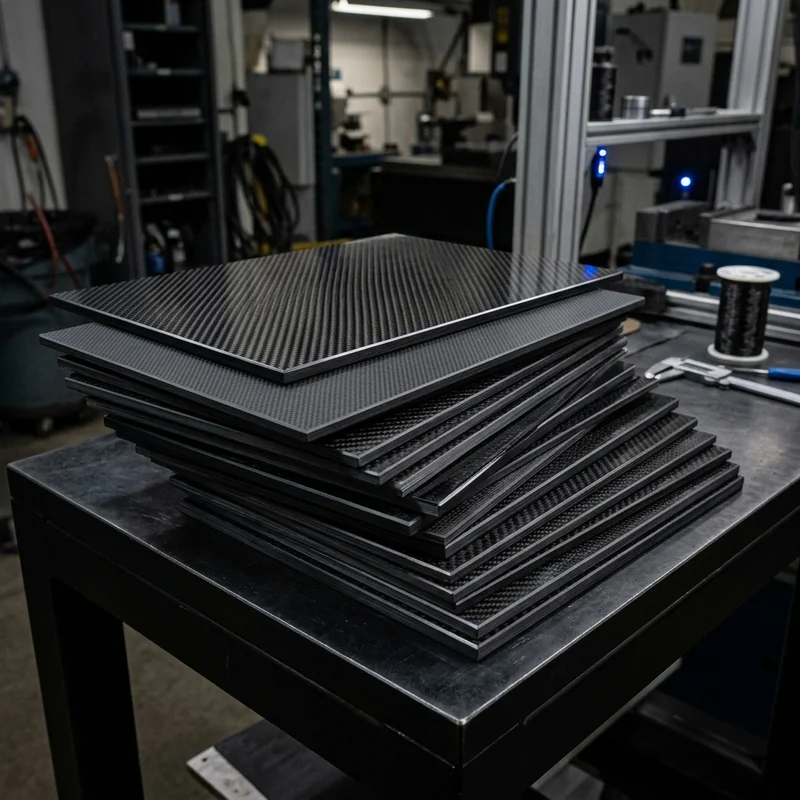
Carbon fiber standard plate-3k stripe
Lightweight, ultra-rigid standard sheets for drone fuselages, robot housings, facades and structural applications.

Square Carbon Fiber Tube — 3K Twill T700
Square cross-section carbon fiber tube manufactured with 3K twill weave for torsional strength. Preferred for structural frames, trusses, and support columns where rectangular geometry offers design flexibility.

Carbon Fiber Plate — 3K Twill T700 3.0mm
Medium-thickness 3.0mm carbon fiber plate offering significantly higher load capacity while maintaining attractive 3K twill finish. Suitable for structural brackets, reinforcement plates, and load-bearing panels.

Carbon Fiber Plate — 3K Twill T700 1.5mm
Thin 1.5mm carbon fiber plate with 3K twill weave surface. Lightweight and stiff, commonly used for covers, panels, drone bodies, and applications requiring a premium aesthetic appearance.