
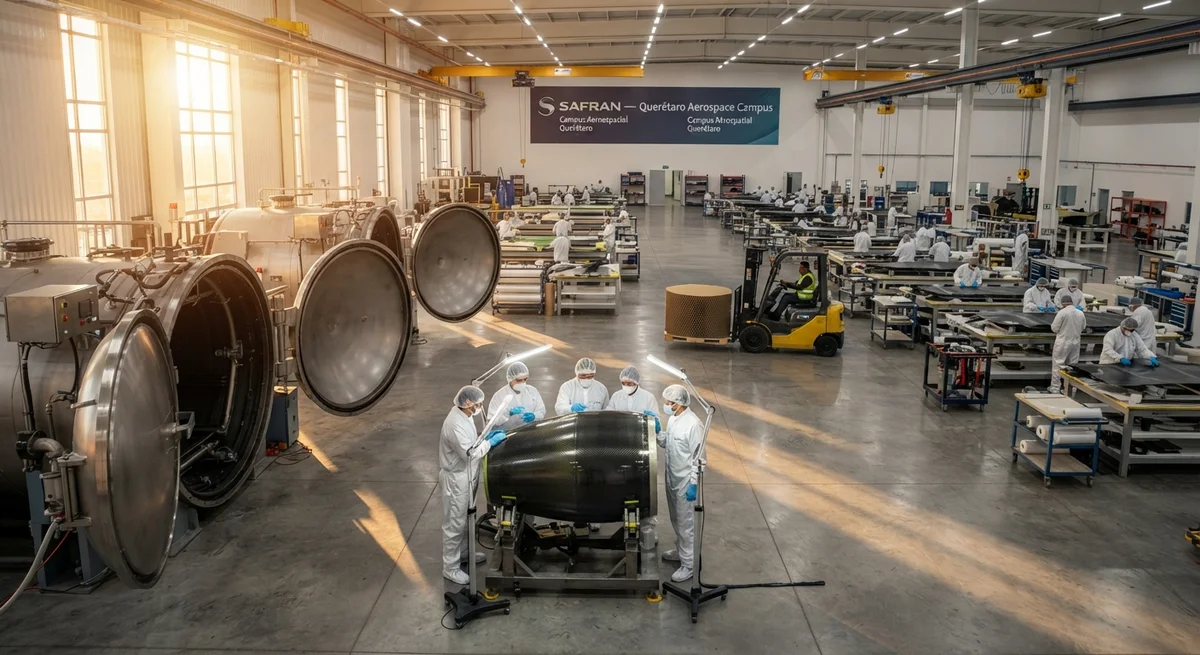
Mexico has emerged as a premier nearshore destination for carbon fiber aerospace component manufacturing, leveraging USMCA trade advantages, a skilled workforce, and rapidly expanding production capacity to serve Boeing, Airbus, and the broader Americas aerospace supply chain.
The Strategic Rise of Mexico in Aerospace Composites
Over the past decade, Mexico has transformed from a modest player in aerospace manufacturing into one of the most strategically significant production hubs for carbon fiber composite components in the Western Hemisphere. Driven by nearshoring demand, favorable trade agreements under the United States–Mexico–Canada Agreement (USMCA), and aggressive investment from Tier 1 aerospace suppliers, the country now hosts over 380 aerospace-related facilities concentrated in clusters across Querétaro, Sonora, Baja California, and Nuevo León.
The carbon fiber aerospace ecosystem in Mexico spans the full value chain from raw material import and prepreg processing through automated layup, autoclave curing, non-destructive testing, and final assembly. In 2025, Mexico's aerospace composite components exports reached an estimated USD 2.8 billion, representing a compound annual growth rate of 14.3% since 2020. This positions the country as the second-largest aerospace supplier in Latin America behind Brazil in absolute terms, but the fastest-growing in composite-specific output.
Key global players including Safran, Bombardier, Airbus, and Boeing have deepened their Mexican manufacturing footprints. Safran's Querétaro campus alone spans over 100,000 square meters and produces composite nacelle components, fan blades, and structural aerostructures for both the LEAP engine family and the CFM56 replacement programs. The site recently added seven new autoclave units in 2024–2025, bringing its total cure capacity to over 18 meters in diameter for monolithic structures.
Production Capacity and Infrastructure Statistics
| Metric | 2020 | 2023 | 2025 (Est.) | CAGR |
|---|---|---|---|---|
| Aerospace composite facilities (total) | 210 | 295 | 382 | 12.7% |
| Composite exports (USD billions) | 1.4 | 2.1 | 2.8 | 14.3% |
| Autoclave units (≥4m diameter) | 42 | 68 | 91 | 16.7% |
| AFP/ATL machines installed | 18 | 31 | 47 | 21.2% |
| Composite workforce (thousands) | 12.5 | 18.3 | 24.1 | 17.8% |
Key Advantages of the Mexican Composite Manufacturing Ecosystem
- USMCA preferential access: Zero-tariff entry into the United States and Canada for aerospace-grade composite components reduces landed costs by 8–12% compared to trans-Pacific or trans-Atlantic sourcing.
- Skilled labor pipeline: Mexico produces over 8,000 engineering graduates annually with specialized aerospace manufacturing curricula through partnerships between CONACYT, the UNAQ, and industry consortia.
- Established logistics infrastructure: The Querétaro Intercontinental Airport (QRO) now operates dedicated air-cargo routes for oversized autoclave-cured composite parts, connecting directly to Seattle (Boeing), Toulouse (Airbus), and Montreal (Bombardier).
- Proximity to raw materials: Major carbon fiber producers including Toray, Hexcel, and Solvay operate distribution hubs within the USMCA corridor, providing just-in-time prepreg delivery with lead times of 24–48 hours.
- Cost competitiveness: Composite fabrication labor rates in Mexico average USD 8.50–12.00 per hour versus USD 28.00–45.00 in the United States, yielding 30–40% total cost savings on labor-intensive layup and finishing operations.
- Quality certifications: Over 140 Mexican aerospace facilities hold AS9100D certification, with 22 sites achieving NADCAP accreditation for non-destructive testing and specialized composite processing.
Major Production Clusters
| Cluster | Primary Specialization | Anchor Tenants | Facilities | Workforce |
|---|---|---|---|---|
| Querétaro | Aerostructures, engine nacelles, fan blades | Safran, Bombardier, Airbus Helicopters | 95 | 9,200 |
| Sonora (Hermosillo) | Wing components, fuselage panels | Boeing, Kaman, Itochu | 42 | 4,800 |
| Baja California (Tijuana/Mexicali) | Interior composites, seating structures | Gulfstream, Honeywell, Collins Aerospace | 58 | 5,300 |
| Nuevo León (Monterrey) | Tooling, prototyping, R&D | Nemak, FACC, Broetje-Automation | 31 | 2,800 |
Technology and Automation Trends
Mexican composite manufacturing is rapidly adopting Industry 4.0 technologies to improve yield, reduce cycle times, and meet the rigorous quality standards demanded by Boeing and Airbus. Automated fiber placement (AFP) installations in Mexico grew 160% between 2020 and 2025, with 47 production-scale machines now operational. These AFP systems, predominantly supplied by Electroimpact and MTorres, are used for skin panels, stringers, and wing spars in single-aisle aircraft programs including the Boeing 737 MAX and Airbus A220.
Digital twin integration is also gaining traction. Safran's Querétaro facility now operates a full digital twin of its autoclave curing line, enabling real-time optimization of thermal cycles and reducing scrap rates from 4.2% to 2.1% over a two-year implementation period. The shift toward out-of-autoclave (OOA) curing methods is another notable development, reducing cure cycle energy costs by up to 35%.
Supply Chain Dynamics with Boeing and Airbus
Both Boeing and Airbus maintain deep procurement relationships with Mexican manufacturers. Boeing sources over USD 1.2 billion in aerospace components annually from Mexico across 145 suppliers, with composite structures representing an estimated 38% of that total. Airbus, through its Airbus Mexico supply chain program, has certified 62 Mexican suppliers for composites and aerostructures.
Frequently Asked Questions
What types of carbon fiber components are manufactured in Mexico for aerospace?
Mexican manufacturers produce a broad spectrum of carbon fiber composite aerospace components including engine nacelle structures, fan blades for LEAP and CFM56 engines, wing spoilers and fairings, fuselage panels, interior floor beams, seating structures, flight control surfaces, and composite tooling. Both primary and secondary structures are manufactured across the four main production clusters.
How does USMCA benefit carbon fiber composite trade between Mexico and North American aerospace OEMs?
USMCA provides zero-tariff access for aerospace-grade composite components moving between Mexico, the United States, and Canada, provided they meet rules of origin requirements. For carbon fiber composite parts, this means substantially lower landed costs compared to sourcing from Asia (which faces tariffs of 2.5–7.5% depending on component classification) or Europe.
What certifications are required for Mexican composite manufacturers supplying Boeing and Airbus?
Mexican aerospace composite manufacturers must hold AS9100D or AS9110 quality management system certification as a baseline. NADCAP accreditation is required for specific processes including non-destructive testing, heat treating, chemical processing, and specialized composite bonding. Each OEM also maintains its own supplier qualification system — Boeing's BQMS and Airbus's AQMS.
Part of topic
Related Articles
- Recycled Carbon Fiber Market Forecast 2030: Technology Maturity and Commercialization Path
- South Korea Carbon Fiber Market 2026: Hydrogen Economy and Shipbuilding Innovation
- Wind Turbine Blade Leading Edge Protection 2026: Polyurethane, Tape, and Metallic Shield Solutions
- China Carbon Fiber Overcapacity 2026: Price War Impact and Industry Consolidation
- India Carbon Fiber Market 2026: Wind Energy, Aerospace, and Defense Expansion
- PAN Precursor Market 2026: Acrylonitrile Supply and Carbon Fiber Cost Structure
Interested in Our Products?
Contact our team for competitive pricing and technical specifications.
Get a QuoteRelated Products
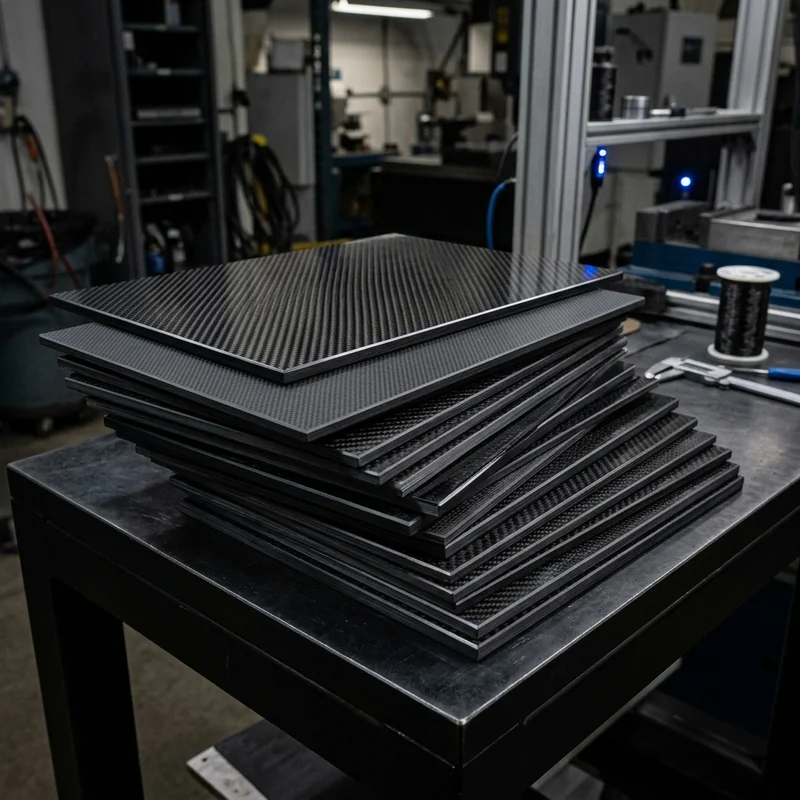
Carbon fiber standard plate-3k stripe
Lightweight, ultra-rigid standard sheets for drone fuselages, robot housings, facades and structural applications.

Carbon Fiber Plate — 3K Twill T700 1.5mm
Thin 1.5mm carbon fiber plate with 3K twill weave surface. Lightweight and stiff, commonly used for covers, panels, drone bodies, and applications requiring a premium aesthetic appearance.

Square Carbon Fiber Tube — 3K Twill T700
Square cross-section carbon fiber tube manufactured with 3K twill weave for torsional strength. Preferred for structural frames, trusses, and support columns where rectangular geometry offers design flexibility.

Carbon Fiber Plate — 3K Twill T700 3.0mm
Medium-thickness 3.0mm carbon fiber plate offering significantly higher load capacity while maintaining attractive 3K twill finish. Suitable for structural brackets, reinforcement plates, and load-bearing panels.
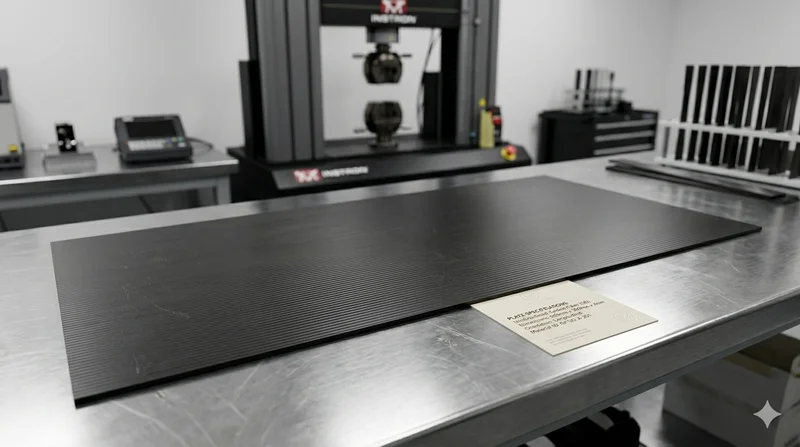
Carbon Fiber Plate — UD Unidirectional T700
Unidirectional carbon fiber plate with all fibers oriented in a single direction for maximum strength along the fiber axis. Essential for structural reinforcements, splints, and applications where load direction is predictable.