
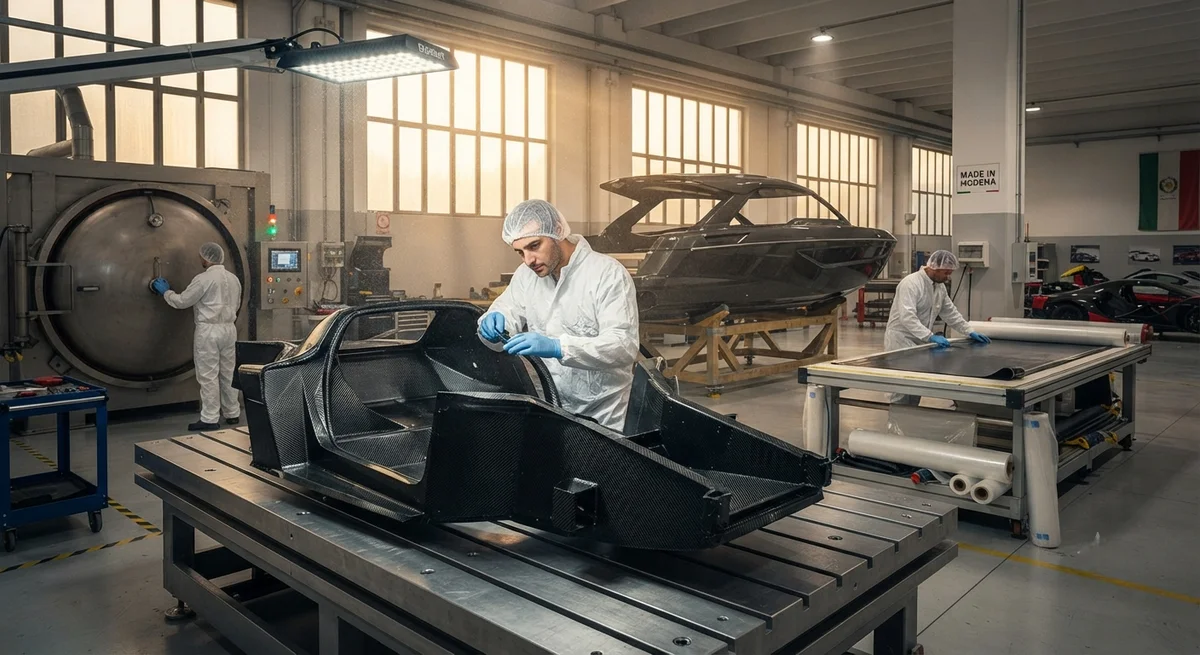
Italy has quietly become one of Europe's most sophisticated carbon fiber markets, and the country's composites industry in 2026 sits at the intersection of three industries where Italy is globally dominant. The Emilia-Romagna motorsport cluster around Modena and Maranello consumes some
Introduction
Italy has quietly become one of Europe's most sophisticated carbon fiber markets, and the country's composites industry in 2026 sits at the intersection of three industries where Italy is globally dominant. The Emilia-Romagna motorsport cluster around Modena and Maranello consumes some of the highest-grade carbon fiber in the world for racing chassis and supercar bodies. The luxury yacht sector on the Ligurian and Adriatic coasts builds carbon fiber hulls and superstructures for owners who demand both performance and craftsmanship. And the aerospace industry, anchored by Leonardo's plants in northern Italy, maintains a steady demand for certified structural composites.
For international suppliers and buyers, understanding the Italian market matters because it is a high-value, high-margin market with distinctive technical requirements. The Italian composites industry is estimated to generate more than €3.5 billion in annual revenue, with carbon fiber accounting for a growing share of advanced composite consumption. This article breaks down the demand structure, key buying segments, and what suppliers need to know to serve Italian customers effectively.
Market Structure and Demand Drivers
The Italian carbon fiber market is unusual because its demand is concentrated in premium and performance applications rather than volume industrial use. Three segments dominate:
- Motorsport and high-performance automotive: Formula 1 teams, GT racing programs, and supercar manufacturers such as Ferrari, Lamborghini, and Pagani use aerospace-grade carbon fiber for monocoques, body panels, and suspension components. The Emilia-Romagna region alone hosts more than 400 motorsport-related companies.
- Luxury and performance yachting: Italian shipyards including Ferretti, Sanlorenzo, and Azimut|Benetti increasingly specify carbon fiber for hull structures, hardtops, and masts. Superyachts over 30 meters are a growth segment where carbon fiber content per vessel is rising sharply.
- Aerospace and defense: Leonardo operates major aerostructures and helicopter production facilities, generating steady demand for certified prepreg and autoclave-processed carbon fiber components, including for the Eurofighter and NH90 programs.
Beyond these core segments, carbon fiber demand in Italy extends to industrial applications including wind energy components, medical equipment, and the design-driven furniture and architecture sectors where Italian aesthetics meet composite performance. The balance of demand gives the Italian market a distinctive character: lower volume than Germany or France, but with higher average product value and stricter technical specifications.
Motorsport: The Technical Standard Setter
The motorsport cluster is the most demanding carbon fiber buyer in Italy, and its technical requirements shape the entire domestic supply chain. Formula 1 teams purchase pre-preg carbon fiber with tightly controlled mechanical properties, and racing suppliers maintain some of the strictest process certifications in the composite industry. The technical requirements of the racing sector are summarized below:
| Parameter | F1 / Racing Standard | Typical Industrial Use | Why It Matters |
|---|---|---|---|
| Fiber tensile modulus | 230-395 GPa (IM to HM grade) | 230-240 GPa (standard modulus) | Stiffness-to-weight for aero-loaded chassis |
| Resin system | 120-180°C cure, toughened epoxy | 120°C cure standard epoxy | Impact tolerance and crash energy absorption |
| Fiber areal weight | 150-380 g/m², tight tolerance ±2% | 200-300 g/m², ±5% | Consistent laminate thickness for aero surfaces |
| Certification | FIA homologation, ISO 9001, NADCAP | ISO 9001 | Crash safety approval and traceability |
| Inspection | 100% ultrasonic C-scan | Sampling inspection | Zero-defect critical components |
The motorsport sector also drives innovation in rapid manufacturing: teams require carbon fiber parts within 2-6 weeks of design freeze, pushing suppliers toward faster curing resin systems, automated layup, and integrated quality control. A supplier that can serve the Italian racing cluster typically earns certification that opens doors across the entire European high-performance market.
Luxury Yacht Building: Performance Meets Craftsmanship
Italian yacht building is the second pillar of the domestic carbon fiber market. The segment spans performance sailing yachts, where carbon fiber masts and rigging have been standard for two decades, and motor yachts, where carbon fiber is now used for hardtops, flybridges, and structural bulkheads. Carbon fiber content in a 40-meter motor yacht has increased from near zero in 2010 to 8-15% of structural weight in current designs, driven by weight savings that improve speed, fuel efficiency, and range.
Yacht builders value carbon fiber for three properties: the ability to lower the center of gravity in tall superstructures, the stiffness-to-weight advantage that reduces displacement, and the design freedom to create sculptural exterior shapes that are difficult to achieve in aluminum or steel. However, the segment has distinctive requirements. Marine-grade carbon fiber must withstand saltwater exposure, UV degradation, and osmotic pressure cycles, which demands careful resin selection and protective coating systems. Quality standards in the sector often follow classification society rules, with RINA, Lloyd's Register, and DNV all active in Italian yacht certification.
Aerospace and Defense: Certified Structural Demand
Leonardo's aerostructures business anchors the Italian aerospace demand for carbon fiber, with production facilities producing fuselage sections, wing components, and helicopter airframes. The aerospace segment differs from motorsport and marine in its emphasis on long qualification cycles and standardized material specifications. Aerospace suppliers must maintain material qualification documentation that often takes 12-24 months to establish, and the purchasing process is characterized by long-term framework agreements rather than spot purchases.
The defense dimension adds further stability: military helicopter and fighter programs guarantee multi-year demand that is less sensitive to commercial cycles. For international carbon fiber suppliers, the aerospace channel is the hardest to enter but the most valuable, with long-term contracts and premium pricing for qualified materials. The Italian aerospace supply chain also includes a dense network of small and medium component manufacturers who serve as Tier 2 and Tier 3 suppliers, creating opportunities for fabric and prepreg producers upstream.
Supply Chain Dynamics and Sourcing Considerations
Italian carbon fiber demand is served by a mix of domestic distributors, European producers, and increasingly, direct sourcing from Asian manufacturers. Several factors are reshaping sourcing decisions in 2026:
- Price pressure in non-aerospace segments: Motorsport and marine buyers are consolidating purchases to control costs, creating opportunities for suppliers who can combine competitive pricing with technical service support.
- Lead time management: Italian manufacturers typically work with 6-12 week procurement cycles, and suppliers who can hold European stock or offer fast logistics gain a significant advantage.
- Technical service requirements: Italian customers expect suppliers to provide processing advice, qualification documentation, and responsive application engineering support — not just material delivery.
- Regional distribution structure: A strong network of Italian distributors and agents remains important for market access, particularly in the fragmented marine and industrial segments.
The outlook for 2026 is constructive. The Italian composites industry is forecast to grow at 5-7% annually through 2030, with carbon fiber demand growth led by yachting and motorsport. Superyacht order books remain at historic highs, and the Emilia-Romagna motorsport cluster continues to expand as new racing series and EV performance programs enter development.
Frequently Asked Questions
Which Italian industries consume the most carbon fiber?
The three largest consuming sectors are motorsport and high-performance automotive, luxury yacht building, and aerospace and defense. Motorsport around Emilia-Romagna consumes the highest-grade aerospace materials, yachting is the fastest-growing volume segment with carbon content per vessel rising steadily, and Leonardo's aerospace operations provide stable certified demand. Together these three segments account for an estimated 70-80% of Italian carbon fiber consumption, with the remainder spread across wind energy, industrial components, medical equipment, and design-driven sectors.
What certifications do suppliers need to serve Italian customers?
Requirements vary by segment. Aerospace customers require NADCAP-accredited processes, material qualification against customer specifications, and usually ISO 9001 or AS9100 quality systems. Motorsport teams require FIA-recognized materials and 100% inspection traceability for safety-critical components. Marine customers typically need materials that comply with classification society requirements from RINA, Lloyd's Register, or DNV, including documented flammability and environmental resistance properties. Most Italian customers will also expect a technical datasheet package in Italian or English and responsive application engineering support.
How does the Italian market compare with other European carbon fiber markets?
The Italian market is smaller in total tonnage than Germany, France, or the UK, but it concentrates on higher-value applications. Germany leads in automotive series production and wind energy; France and the UK have larger aerospace programs. Italy's distinct profile is the combination of motorsport, superyachts, and aerospace with a strong network of specialized small and medium manufacturers. The practical consequence for suppliers is that the Italian market rewards technical differentiation and service quality over pure volume pricing, and margins in the performance segments tend to be higher than in industrial applications elsewhere in Europe.
Conclusion
Italy's carbon fiber market in 2026 offers a distinctive combination of world-class motorsport engineering, the world's leading superyacht industry, and a stable aerospace and defense base. For suppliers, the market rewards technical capability, certification depth, and responsive service more than volume pricing. For buyers, the Italian supply base provides access to some of the most sophisticated carbon fiber processing capabilities in Europe. The growth outlook through 2030 is solid, driven by superyacht demand, racing technology transfer into road cars, and continued aerospace programs.
Whether you are sourcing carbon fiber fabrics for Italian customers or evaluating Italian composite suppliers for your own supply chain, understanding the market's segment structure is the first step to successful engagement. Explore our carbon fiber product range for motorsport, marine, and aerospace applications, or contact our team to discuss sourcing and qualification requirements for your program.
Part of topic
Related Articles
- Recycled Carbon Fiber Market Forecast 2030: Technology Maturity and Commercialization Path
- South Korea Carbon Fiber Market 2026: Hydrogen Economy and Shipbuilding Innovation
- Wind Turbine Blade Leading Edge Protection 2026: Polyurethane, Tape, and Metallic Shield Solutions
- China Carbon Fiber Overcapacity 2026: Price War Impact and Industry Consolidation
- India Carbon Fiber Market 2026: Wind Energy, Aerospace, and Defense Expansion
- PAN Precursor Market 2026: Acrylonitrile Supply and Carbon Fiber Cost Structure
Interested in Our Products?
Contact our team for competitive pricing and technical specifications.
Get a QuoteRelated Products
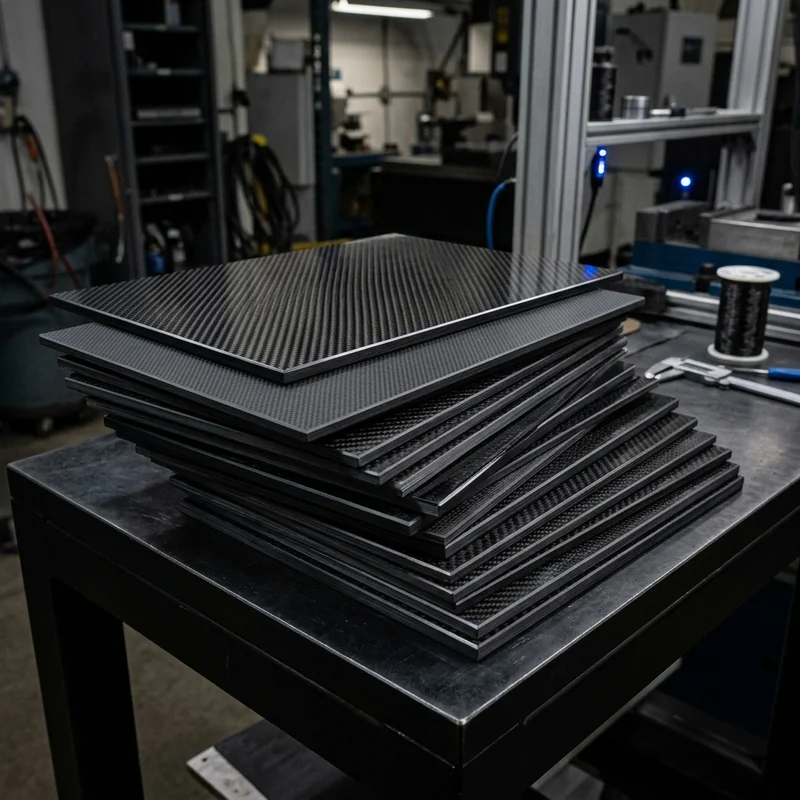
Carbon fiber standard plate-3k stripe
Lightweight, ultra-rigid standard sheets for drone fuselages, robot housings, facades and structural applications.
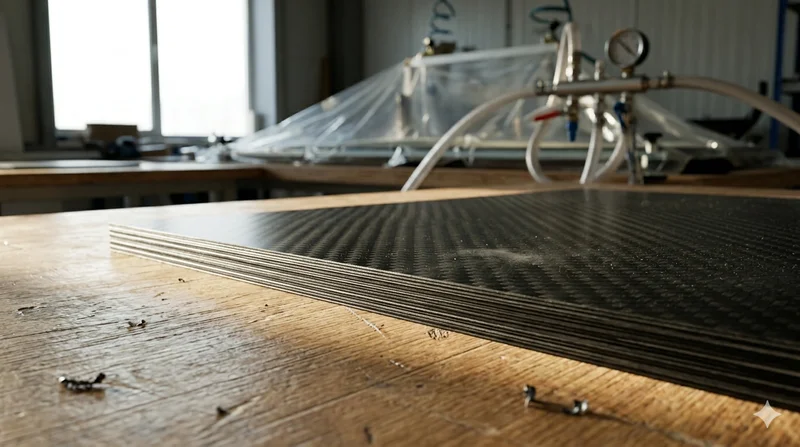
Carbon Fiber Plate — 3K Twill T700 3.0mm
Medium-thickness 3.0mm carbon fiber plate offering significantly higher load capacity while maintaining attractive 3K twill finish. Suitable for structural brackets, reinforcement plates, and load-bearing panels.
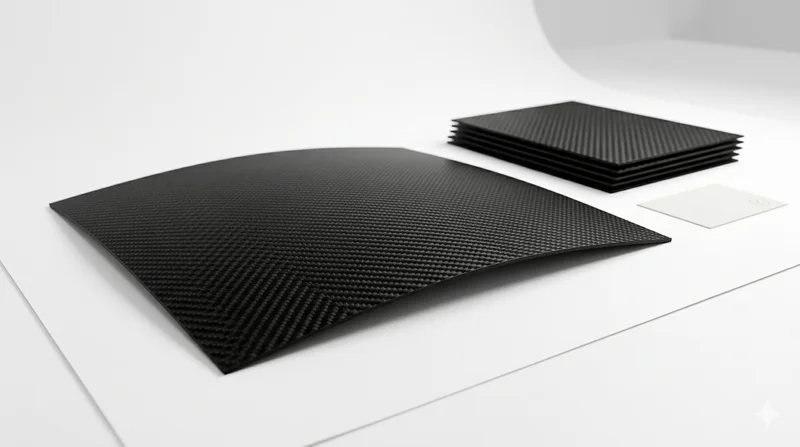
Carbon Fiber Plate — 3K Twill T700 1.5mm
Thin 1.5mm carbon fiber plate with 3K twill weave surface. Lightweight and stiff, commonly used for covers, panels, drone bodies, and applications requiring a premium aesthetic appearance.

Custom Carbon Fiber Medical Device Components
Medical-grade carbon fiber components manufactured for imaging equipment, surgical instruments, and patient support systems. Carbon fiber's radiolucency (X-ray transparency) and high strength-to-weight ratio make it ideal for CT scanner beds, wheelchair frames, surgical robot arms, and MRI-compatible accessories. Biocompatible resin systems available.
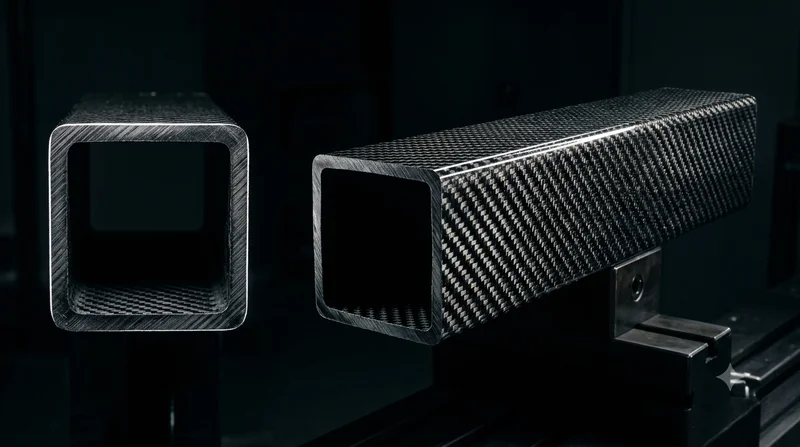
Square Carbon Fiber Tube — 3K Twill T700
Square cross-section carbon fiber tube manufactured with 3K twill weave for torsional strength. Preferred for structural frames, trusses, and support columns where rectangular geometry offers design flexibility.