
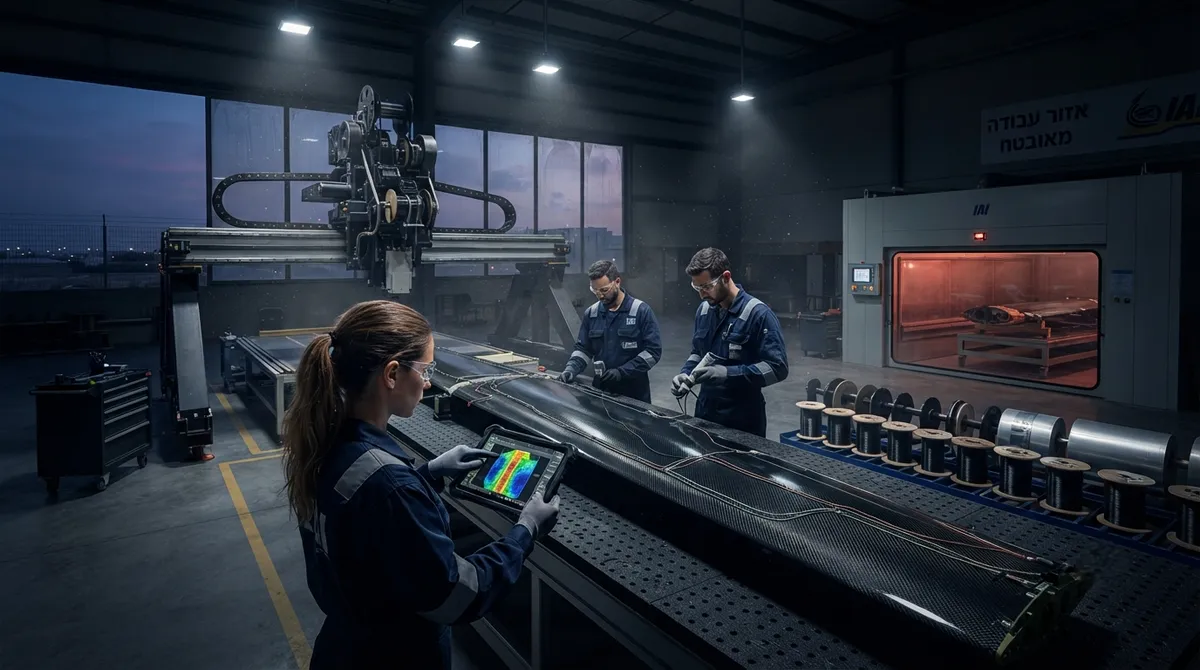
The Israel carbon fiber market in 2026 is small in tonnage but among the most value-dense composites markets in the world. Unlike Germany or the United States, whose demand is spread across automotive and general industry, Israel concentrates its advanced materials consumption in a comp
Introduction
The Israel carbon fiber market in 2026 is small in tonnage but among the most value-dense composites markets in the world. Unlike Germany or the United States, whose demand is spread across automotive and general industry, Israel concentrates its advanced materials consumption in a compact set of defense and security applications: military aviation platforms, unmanned aerial systems, and electronics-hardened structures. For carbon fiber suppliers, the opportunity is not volume but specification — Israel buys engineering-intensity, not commodity carbon fiber weight.
Israel's defense budget reached approximately $31 billion in 2025, equivalent to roughly 5.5% of GDP, one of the highest ratios among industrialized nations. The procurement pipeline is dominated by modernization of the Air Force, missile and air-defense systems, and an unprecedented scale-up of drone and loitering-munition programs. Every one of these platforms carries carbon fiber content in structures ranging from airframes and control surfaces to antennas and embedded sensor housings. This article breaks down the three demand pillars — defense aviation R&D, drone manufacturing, and cybersecurity-embedded systems — and outlines how global carbon fiber manufacturers can position for this niche market.
Defense Aviation R&D: The Composite Airframe Backbone
Israel Aerospace Industries (IAI) and Elbit Systems are the two anchor primes for military aerospace composite structures. IAI has long operated one of the few indigenous design-to-production composite pipelines in the region, covering prepreg layup, autoclave curing, and nondestructive testing for airframe components. This capability extends across the F-35 supply chain, where Israel produces outer wing and center wing components for Lockheed Martin installations — parts that require aerospace-grade intermediate-modulus fiber and strict documentation of process control.
- Fighter and trainer airframes: Qualified prepregs (180 °C cure) and aluminum-lithium alternative evaluation for control surfaces and wing skins.
- Missile and air-defense housings: Filament-wound carbon fiber rocket motor cases and radome structures for air-defense interceptors, where stiffness and radar transparency compete.
- Unmanned and tiltrotor structures: UAV wings, fuselage sections, and payload pods built on autoclave and out-of-autoclave platforms.
- Radomes and antenna structures: Electrically transparent composite radomes with precise thickness control for radar, communications, and electronic-warfare arrays.
The R&D pipeline matters because Israel's primes exchange know-how continuously with subcontractors: dozens of small composites shops around Tel Aviv and Haifa supply wing ribs, fairings, and bespoke bracketry to the big programs. Volumes are small — hundreds of kilograms per part family versus truckloads in civil aerospace — but qualification durability is high once a grade is approved. A supplier accepted into an Israeli aerospace program typically holds the position for a full weapons-system lifecycle.
Drone Manufacturing: The Fastest-Growing Carbon Fiber Destination
Unmanned systems are the fastest-expanding carbon fiber consumer in Israel. The country exports over $3.5 billion in military drones and related systems annually, and the 2023-2026 conflict cycles accelerated production of tactical drones, loitering munitions, and quadcopter ISR platforms. Production volume has driven a shift from labor-intensive hand layup toward rapid out-of-autoclave (OoA) processes and automated tape layup for wing skins.
Two categories dominate: large strategic unmanned systems (IAI Heron, Elbit Hermes 900), which use intermediate-modulus carbon fiber in wings and fins; and large-scale tactical systems (Hermes 450, Rotem, various loitering munitions), which are manufactured in the highest volumes and rely on standard-modulus carbon fiber in smaller-diameter tubes, spars, and structural ribs. The second category is where foreign suppliers find the most repeatable business, since tactical volume flexes with order books.
| Market Segment | Primary Carbon Fiber Use | Fibre Grade Typical | 2026 Est. Volume Trend |
|---|---|---|---|
| Strategic UAS (Heron, Hermes 900) | Wing spars, center fuselage pods | IM 7-class (modulus ~280 GPa) | Stable, quality-driven |
| Tactical UAS & quadrants | Tubes, spars, payload pods | 2K-6K standard modulus | High growth, order-flexible |
| Loitering munitions | Airframe skins, motor cases | High-strength intermediate | Rapid growth since 2023 |
| Missile & air defense | Radome, motor cases, fins | IM + thermally transparent | Steady defense procurement |
| Cyber-hardened hardware | Sensor housings, secure housings | EM composites + shielding | Emerging, niche growth |
The drone segment has an important trait for suppliers: Israeli manufacturers increasingly compressor-out certification by adding vibration/shock qualification, extreme-temperature cycling, and EMI shielding to raw fiber purchase specs. That trend is discussed next.
Cybersecurity-Embedded Systems: Composites Carry Conductivity and Shielding
Israel's other signature composites market is cybersecurity-embedded hardware — tamper-resistant housings, secure communication modules, and electronic-warfare systems where the composite structure is part of the security architecture. When structural carbon fiber must also function as a Faraday cage or tamper-evident layer, buyers specify nickel-plated or copper-loaded carbon fiber, conductive panels, and surface-treated tows that already combine high EM shielding effectiveness with structural rigidity.
The engineering consequence of embedded cybersecurity: carbon fiber housings have to meet weight budgets and EM requirements at the same time. This pushes demand toward materials with validated shielding effectiveness across the 20-1,000 MHz band, and toward unified conductive composite suppliers who can deliver a design spec, not just a fiber tow. The requirement is growing faster than the general composites market because defense, banking hardware, and data-residency modules all need tamper-resistant structures.
Import Structure and Sourcing Strategy for Carbon Fiber Suppliers
Israel has no domestic PAN precursor or carbon fiber production capacity; every gram of fiber is imported. The sourcing chain runs through a handful of local distribution agents that consolidate smaller defense-linked orders, and through the primes themselves for qualified program volumes.
For exporters, the practical reality is a loop: international primes and Tier 1 manufacturers already qualify against the major fiber producers (Toray, Teijin, and other established aerospace suppliers), so a new supplier enters either as an additional qualified source on an existing program or as an exporter of industrial-grade carbon fiber into the broader Israeli electronics and security-hardware ecosystem.
- Qualification portability: An Israeli aerospace prime typically specifies a fiber grade qualified to an international military or civil standard; new suppliers usually need a qualification program, not an immediate contract.
- Small-batch economy: Israeli purchase volumes per part are modest — 20-300 kg per release — which rewards suppliers with responsive small-lot export lines rather than huge annual tonnage.
- Defense-file logistics: Military-related shipments require end-user documentation and dual-use classification discipline; working through Israeli Ministry of Defense or approved export brokers is the standard path.
- Emphasis on documentation: Material CofC, batch-level traceability, surface treatment data, and shear-test data are routinely requested before the first PO.
Frequently Asked Questions
Which carbon fiber grades should a supplier offer for Israeli drone programs?
The tactical-drone market favors standard-modulus fiber in small tows: 3K-12K stacks (usually 12K) with 240-260 GPa modulus and 4,000+ MPa tensile strength, supplied as spool-wound tow, woven fabric, or prepreg. Strategic UAS and missile programs move to intermediate-modulus (~270-290 GPa) grades with 13-150-micron fiber at ~7 micron diameter. Keep a documented traceability chain end-to-end; Israeli primes require datasheets relevant to each lot.
How do cyber-embedded requirements change the carbon fiber spec?
Embedded-system housings usually add an electrical shielding requirement alongside mechanical stiffness. A supplier-oriented answer: offer conductive fiber variants (nickel-coated, copper-loaded) or layered metal-mesh composite panels, and provide datasheets for shielding effectiveness (e.g., above 60 dB at military radar bands). When structure must double as a Faraday cage, panel design and edge sealing dominate — fiber choice is secondary until the spec asks for conductivity.
Can a non-Israeli exporter enter the defense aerospace chain?
Yes, but through a realistic door. New exporters typically start with drone and industrial/sensored applications (tactical, non-lethal payload pods, ground vehicles) before ascending to protected airframe work, because defense primes offshore parts through licensed local or partner primes. Participation begins with non-military industrial applications (medical, computing, vehicles) to build reference under an export channel, then qualify a grade with the local-tonnage buyer. Expect end-user statements, longer lead times, and higher-quality documentation demands than commodity export.
Conclusion
The Israel carbon fiber market in 2026 is compact, defense-weighted, and engineering-driven. Its volume is concentrated where weight, dimensional stability, and (increasingly) embedded-electronic compatibility: fighter and missile airframes, a fast-ramping drone industry, and cybersecurity-hardened structures. For a global carbon fiber supplier, Israel does not offer bulk contracts; it offers high-margin, qualification-protected programs.
We supply intermediate- and standard-modulus carbon fiber with export-grade documentation for such defense-linked and industrial programs. Review our carbon fiber product range sized for small-lot OEM programs, or contact our engineering team to evaluate qualification fit for your next Israeli or drone project.
Part of topic
Related Articles
- Carbon Fibre Sheet Supplier UK: Sourcing Options and Specification Checklist
- Carbon Fiber Sheets Near Me Suppliers: Local Stock vs Factory Direct
- Filament Wound Epoxy Tubes: Industry Standards and Compliance Requirements
- Carbon Fiber Dealers Near Me: What a Good Dealer Actually Adds
- Carbon Fiber Supplies Near Me: Local Sourcing Without Compromising Spec
- Carbon Fiber for Sale: Online Platforms and Direct Sales Channel Comparison
Interested in Our Products?
Contact our team for competitive pricing and technical specifications.
Get a QuoteRelated Products
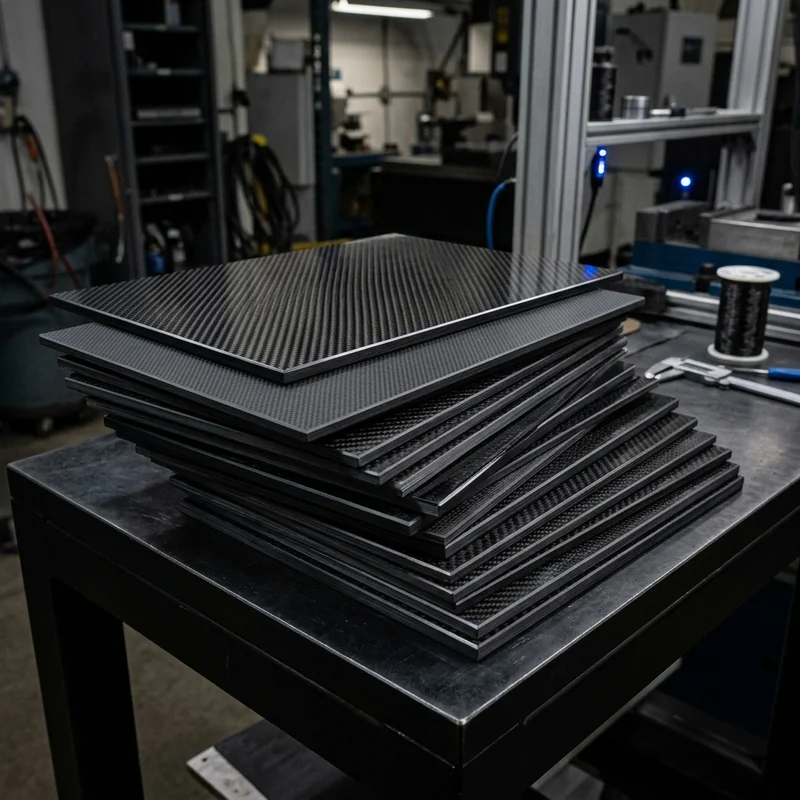
Carbon fiber standard plate-3k stripe
Lightweight, ultra-rigid standard sheets for drone fuselages, robot housings, facades and structural applications.

Carbon Fiber Plate — 3K Twill T700 3.0mm
Medium-thickness 3.0mm carbon fiber plate offering significantly higher load capacity while maintaining attractive 3K twill finish. Suitable for structural brackets, reinforcement plates, and load-bearing panels.
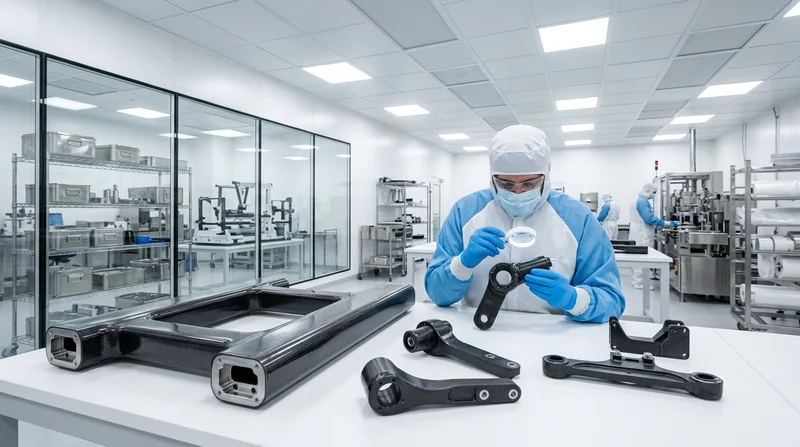
Custom Carbon Fiber Medical Device Components
Medical-grade carbon fiber components manufactured for imaging equipment, surgical instruments, and patient support systems. Carbon fiber's radiolucency (X-ray transparency) and high strength-to-weight ratio make it ideal for CT scanner beds, wheelchair frames, surgical robot arms, and MRI-compatible accessories. Biocompatible resin systems available.

Carbon Fiber Plate — 3K Twill T700 1.5mm
Thin 1.5mm carbon fiber plate with 3K twill weave surface. Lightweight and stiff, commonly used for covers, panels, drone bodies, and applications requiring a premium aesthetic appearance.
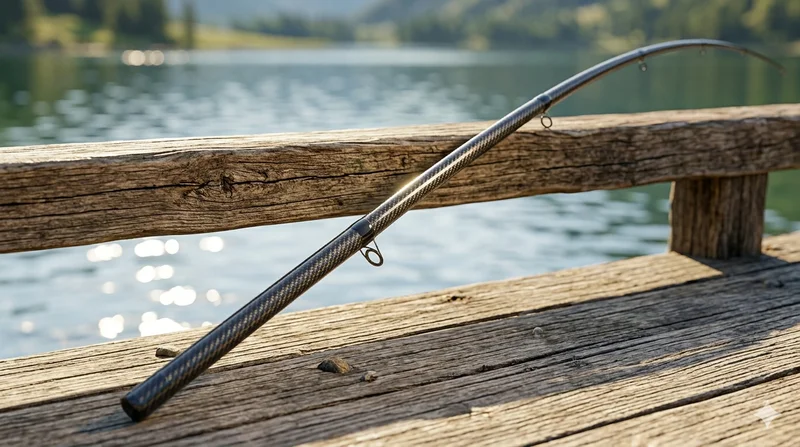
Carbon Fiber Fishing Rod Blank
High-quality carbon fiber fishing rod blank manufactured from multiple grades of Toray carbon fiber cloth. Available in a wide range of lengths, powers, and actions for freshwater and saltwater applications. Suitable for OEM rod building.